Sustainable Tourism DevelopmentUnit 27 min read
Principles of Sustainable Tourism: Definitions, Pillars & Applications
Unit 2 of Sustainable Tourism Development explores the core principles that define sustainable tourism—economic viability, social equity, and environmental protection—through real-world examples, case studies, and comparative analyses to prepare students for TU exams.
Core Concepts
1. Definition of Sustainable Tourism Principles
Sustainable tourism principles are guidelines that ensure tourism development meets the needs of the present without compromising future generations' ability to meet their own needs. These principles are rooted in the three pillars of sustainability:
- Environmental (protecting natural resources)
- Economic (generating long-term benefits)
- Sociocultural (respecting local communities and cultures)
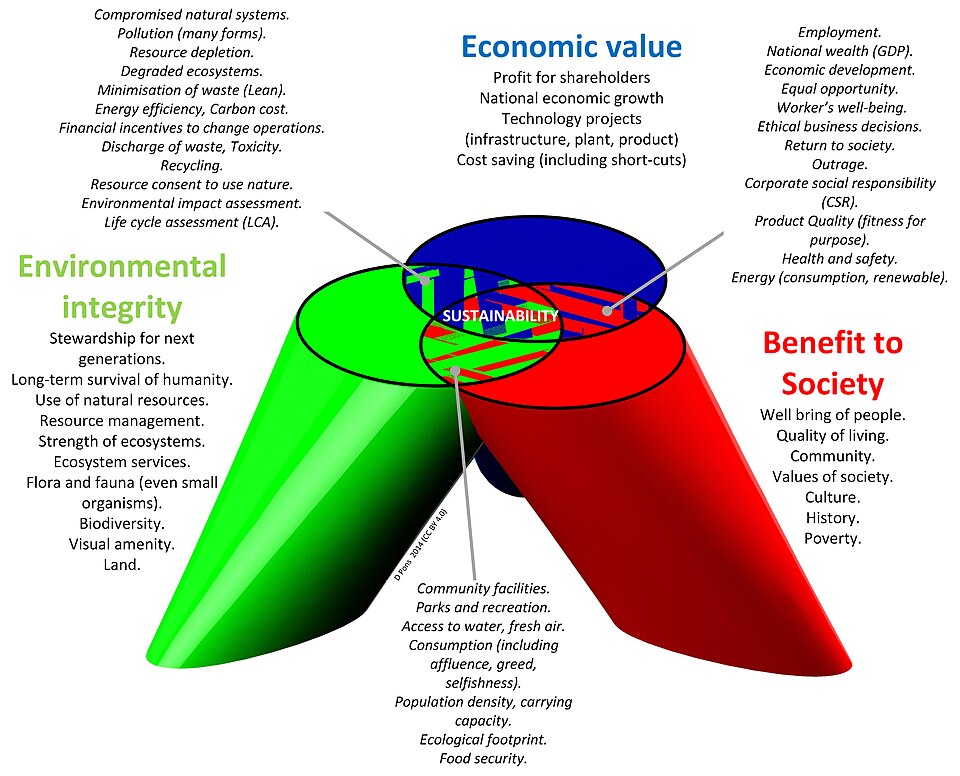 A Venn diagram showing overlapping circles for environmental, economic, and sociocultural sustainability. (Image: Dirk Pons, CC BY 4.0, via Wikimedia Commons)
2. The Three Pillars Explained
A. Environmental Sustainability
Definition: Minimizing negative impacts on ecosystems, wildlife, and natural resources while preserving biodiversity and reducing pollution.
Key Practices:
- Resource conservation: Water, energy, and waste management.
- Wildlife protection: Anti-poaching measures, habitat restoration.
- Low-carbon tourism: Promoting eco-friendly transport (e.g., electric vehicles, cycling).
Example:
- Nepal’s Annapurna Conservation Area Project (ACAP) uses sustainable tourism to fund conservation while limiting visitor numbers to protect fragile ecosystems.
B. Economic Sustainability
Definition: Ensuring tourism benefits local economies long-term, not just short-term profits for foreign investors.
Key Practices:
- Local ownership: Community-based tourism (e.g., homestays, local guides).
- Fair wages: Paying workers (guides, porters) livable salaries.
- Diversification: Reducing dependency on a single tourist activity (e.g., trekking + cultural festivals).
Example:
- Daraz’s "Local Seller" Program in Nepal encourages small businesses to sell products online, ensuring economic benefits stay within communities.
C. Sociocultural Sustainability
Definition: Respecting and preserving local cultures, traditions, and heritage while empowering communities.
Key Practices:
- Cultural sensitivity: Avoiding exploitation of traditions (e.g., not turning festivals into "spectacles").
- Community involvement: Training locals in tourism jobs (e.g., guides, artisans).
- Education: Teaching tourists about local customs (e.g., removing shoes before entering temples).
Example:
- Pathao’s "Respect Local Culture" Campaign educates riders on Nepali customs (e.g., greeting elders, avoiding sensitive topics).
3. How These Principles Work Together
graph LR
    A["Environmental"] -->|"Reduces pollution"| B["Economic"]
    B -->|"Supports jobs"| C["Sociocultural"]
    C -->|"Preserves culture"| A
    A -->|"Protects nature"| D["Tourist Satisfaction"]
    B -->|"Generates income"| D
    C -->|"Enhances experience"| D
Worked Example: Kathmandu’s Traffic Congestion vs. Sustainable Transport
- Problem: Kathmandu’s traffic jams (from private vehicles) harm the environment and economy.
- Solution:
- Environmental: Promote electric rickshaws (used by Pathao’s e-rickshaw service).
- Economic: Create jobs for rickshaw drivers and mechanics.
- Sociocultural: Reduce noise pollution, improving quality of life.
4. Challenges in Implementing Sustainable Tourism
| Challenge | Cause | Solution |
|---|---|---|
| Over-tourism | Uncontrolled visitor numbers | Carrying capacity limits (e.g., Everest permits) |
| Cultural exploitation | Commercialization of traditions | Strict ethical guidelines (e.g., no monkey temples as attractions) |
| Seasonal dependency | Revenue drops in off-seasons | Diversify attractions (e.g., winter festivals in Pokhara) |
| Corporate dominance | Foreign chains (e.g., Marriott) | Support local businesses (e.g., homestays over hotels) |
5. Case Study: Sustainable Tourism in Nepal
A. Pokhara’s Lakeside Management
- Environmental: Banned plastic bags, promoted waste segregation.
- Economic: Local boat operators trained in eco-friendly practices.
- Sociocultural: Cultural programs (e.g., Seto Gundro music festivals) preserve heritage.
B. Sagarmatha National Park (Everest Region)
- Carrying capacity: Only 350 permits/day for Everest Base Camp.
- Waste management: $4,000 deposit for trekkers to return with 8kg of waste.
- Community benefits: 10% of park fees go to local schools and hospitals.
6. Certification and Standards
Sustainable tourism is often verified by global certifications:
| Certification | Issued By | Focus Area |
|---|---|---|
| Green Key | Global Sustainable Tourism Council | Environmental management |
| EarthCheck | EarthCheck Institute | Energy/water efficiency |
| Fair Trade Tourism | Fair Trade Organizations | Social equity |
Example in Nepal:
- Hotel Yak & Yeti (Pokhara) holds Green Key certification for waste recycling and energy efficiency.
7. Role of Technology in Sustainable Tourism
| Technology | Application | Example |
|---|---|---|
| AI for crowd control | Predicts over-tourism hotspots | Google Maps’ "Crowd Alerts" |
| Blockchain for transparency | Tracks fair wages for workers | Khalti’s digital payment system |
| Renewable energy | Solar-powered lodges | Lumbini’s solar-powered guesthouses |
In the Real World
eSewa’s "Digital Payments for Local Guides"
- Principle: Economic sustainability
- How: eSewa’s app allows tourists to pay guides directly, ensuring no middleman cuts. This keeps money in local communities (e.g., a Sherpa guide in Langtang earns full wages instead of a fraction).
Daraz’s "Eco-Friendly Packaging" Initiative
- Principle: Environmental sustainability
- How: Daraz replaced plastic packaging with biodegradable materials for orders. This reduces landfill waste and aligns with Nepal’s Plastic Waste Management Rule (2019).
NTC’s "Electric Train Trials" (Kathmandu-Pokhara)
- Principle: Low-carbon tourism
- How: Nepal’s first electric passenger train (planned for 2025) will cut CO₂ emissions by 30% compared to diesel trains. This supports Nepal’s Paris Agreement commitments.
Exam Tip
- Define and differentiate the three pillars—examiners often ask for real-world examples for each.
- Link theory to Nepal: Always relate principles to Nepali case studies (e.g., ACAP, Pokhara Lakeside, Everest permits).
- Critique challenges: Questions may ask how to overcome over-tourism or corporate dominance—use carrying capacity and community-based tourism as solutions.
- Certifications matter: Memorize Green Key, EarthCheck, and Fair Trade Tourism—they appear in short-answer and essay questions.
- Tech applications: Be ready to explain how AI, blockchain, or renewables support sustainability (e.g., Khalti for fair wages).
Key Formula to Remember: (Use this in essay questions to structure your answer!)
Based on the TU BTTM syllabus for Sustainable Tourism Development, unit 2.
Discussion
Loading…