Science and TechnologyUnit 175 min read
Hydrocarbons: Types, Properties & Uses
Unit 17 of Science and Technology explains hydrocarbons (alkanes, alkenes, alkynes), their structures, reactions, and daily-life applications like fuels and plastics. Learn how they differ, why they burn, and how they impact the environment.
What Are Hydrocarbons?
Hydrocarbons are organic compounds made only of carbon (C) and hydrogen (H) atoms. They are the building blocks of fuels, plastics, and many natural products like petroleum and natural gas.
Example: Methane (CH₄) is the simplest hydrocarbon found in natural gas.
Types of Hydrocarbons
Hydrocarbons are classified based on how carbon atoms are bonded:
1. Saturated Hydrocarbons (Alkanes)
- Single bonds (C–C) only.
- General formula: CₙH₂ₙ₊₂
- Example: Methane (CH₄), Ethane (C₂H₆), Propane (C₃H₈)
2. Unsaturated Hydrocarbons
a) Alkenes (C=C double bond)
- General formula: CₙH₂ₙ
- Example: Ethene (C₂H₄), Propene (C₃H₆)
- Test: Turns bromine water colorless (decolorizes it).
b) Alkynes (C≡C triple bond)
- General formula: CₙH₂ₙ₋₂
- Example: Ethyne (C₂H₂, used in welding torches).
Properties of Hydrocarbons
| Property | Alkanes | Alkenes/Alkynes |
|---|---|---|
| Bond Type | Single (C–C) | Double/Triple (C=C/C≡C) |
| Reactivity | Less reactive | More reactive (addition reactions) |
| Combustion | Burns with blue flame | Burns with sooty flame |
| Test | No color change with Br₂ | Decolorizes Br₂ water |
Reactions of Hydrocarbons
1. Combustion (Burning)
Hydrocarbons burn in oxygen to produce CO₂ + H₂O + energy. Example:
Uses: Fuels (petrol, diesel, LPG).
2. Substitution (Alkanes only)
- Hydrogen atoms are replaced by other atoms (e.g., chlorine).
- Example: Methane + Chlorine → Chloroethane (used in refrigerators).
3. Addition (Alkenes/Alkynes)
- Double/triple bonds break to add atoms.
- Example: Ethene + Bromine → Dibromoethane (colorless).
Sources of Hydrocarbons
- Petroleum (Crude Oil): Refined into petrol, diesel, kerosene.
- Natural Gas: Mainly methane (CH₄).
- Coal: Contains hydrocarbons like benzene.
flowchart TD
    A["Petroleum"] --> B["Petrol"]
    A --> C["Diesel"]
    A --> D["Kerosene"]
    E["Natural Gas"] --> F["Methane CH₄"]
    G["Coal"] --> H["Benzene"]
Uses of Hydrocarbons
| Hydrocarbon | Use |
|---|---|
| Methane (CH₄) | Fuel for cooking (LPG) |
| Ethene (C₂H₄) | Making plastics (polyethylene) |
| Ethyne (C₂H₂) | Welding torches |
| Petrol/Diesel | Vehicle fuel |
Environmental Impact
✅ Pros:
- Provide clean energy (when burned completely).
- Used in plastics, medicines, and fertilizers.
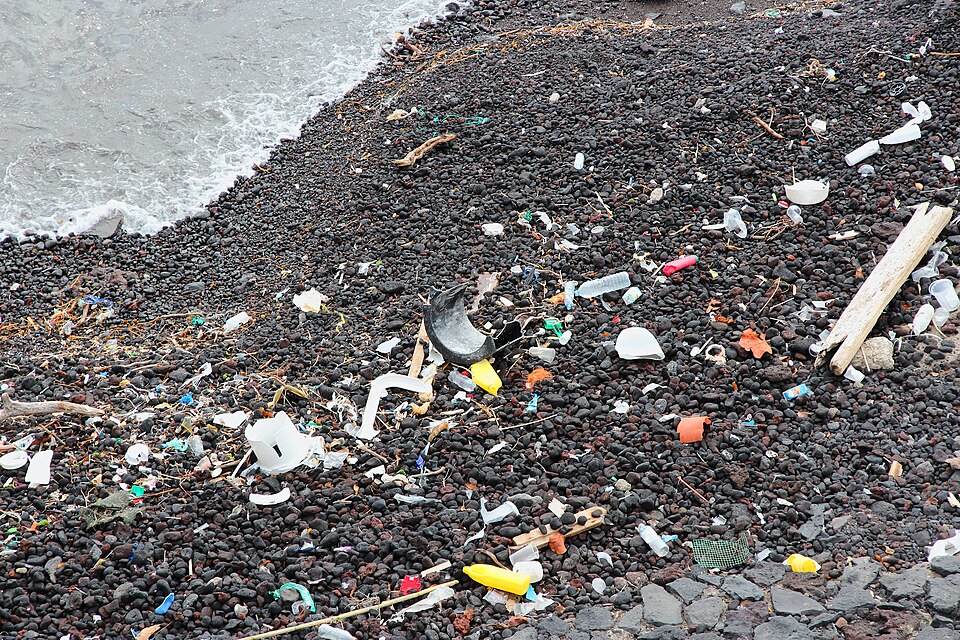 Plastic Waste from Hydrocarbon-Based Products (Real-World Example) (Image: Marek Ślusarczyk (Tupungato) Photo portfolio, CC BY 3.0, via Wikimedia Commons)
❌ Cons:
- Burning releases CO₂ → Global Warming.
- Oil spills harm marine life.
- Plastics take hundreds of years to decompose.
Solved Example
Q: Write the equation for the complete combustion of butane (C₄H₁₀). Solution: Butane burns in oxygen to form CO₂ and H₂O. Balanced equation:
SEE-Style Questions
Short Answer (2 marks)
- What is the general formula for alkenes?
- Name one use of ethyne.
Long Answer (5 marks)
- Explain the difference between saturated and unsaturated hydrocarbons with examples.
- How does burning hydrocarbons affect the environment? Suggest two solutions.
Exam Tip
- Memorize general formulas (alkanes: CₙH₂ₙ₊₂, alkenes: CₙH₂ₙ).
- Draw structures of methane, ethene, and ethyne.
- Know tests: Bromine water turns colorless for alkenes/alkynes.
- Environmental impact is a hot topic—mention CO₂ and pollution.
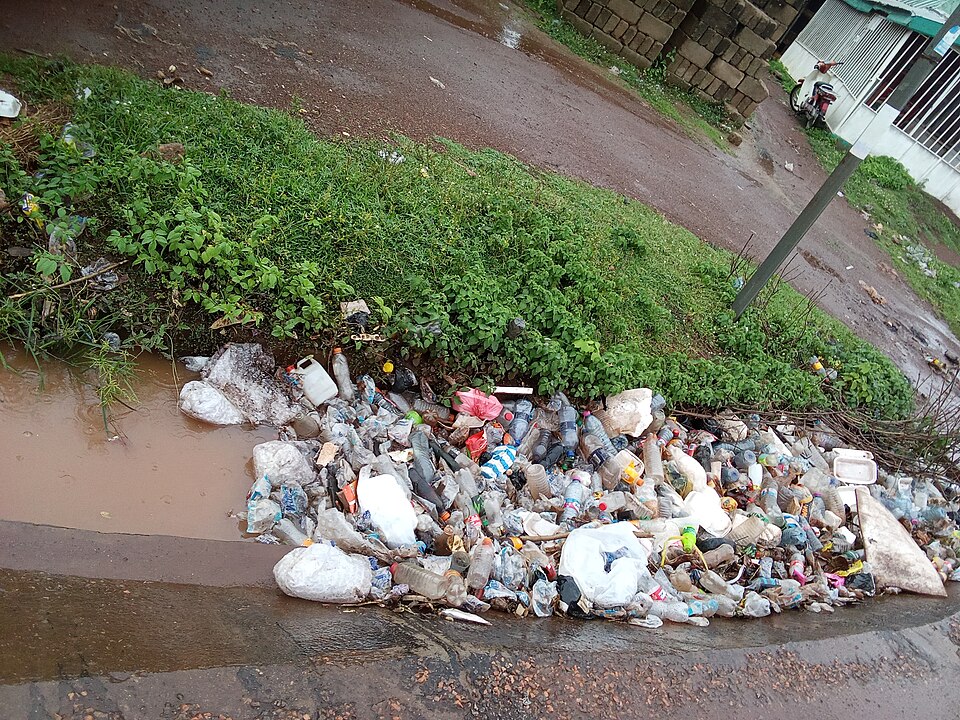 Showing environmental harm (Image: Mandeiya flower, CC BY-SA 4.0, via Wikimedia Commons)
Based on the NEB Class 10 syllabus for Science and Technology (Science), unit 17.
Discussion
Loading…