HistoryUnit 1010 min read
Nationalism in Asia: Causes, Movements & Leaders
Unit 10 of History explores how nationalism spread across Asia in the 19th and 20th centuries, focusing on key movements in India, China, Turkey, and Vietnam, their leaders, and the impact of colonialism and Western ideas.
TAKEAWAYS:
- Nationalism in Asia was a response to foreign domination (British, French, Japanese) and a desire for self-rule.
- Leaders like Sun Yat-sen (China), Mustafa Kemal (Turkey), and Ho Chi Minh (Vietnam) inspired movements through modern ideas.
- Economic exploitation (e.g., British rule in India) and cultural suppression fueled nationalist anger.
- Movements used non-violent protests (Gandhi), armed revolts (Vietnam), or reforms (Turkey) to fight colonialism.
- World War I and II weakened colonial powers, helping nationalist movements gain strength.
- Nationalism led to independence (India 1947, Vietnam 1954) but also created new conflicts (e.g., China-Japan tensions).
What is Nationalism?
Nationalism is a strong feeling of pride and loyalty toward one’s nation (a group of people with shared culture, history, or territory). In Asia, nationalism grew as a response to foreign rule (colonialism) and a desire for freedom.
Why Did Nationalism Rise in Asia?
- Colonial Exploitation: European powers (Britain, France, Japan) controlled Asia’s resources, economies, and governments.
- Example: Britain took India’s raw materials (cotton, spices) and sold cheap British goods, hurting Indian industries.
- Cultural Suppression: Colonizers forced their language, religion, and laws on Asian people.
- Example: French banned Vietnamese from using their own language in schools.
- Western Education: Asian students studying in Europe learned about democracy, equality, and freedom, inspiring them to demand the same at home.
- Economic Hardship: High taxes and poverty made people angry at colonial rulers.
- World Wars: WWI (1914–1918) and WWII (1939–1945) weakened colonial powers, giving nationalists a chance to fight back.
Key Nationalist Movements in Asia
1. India: The Freedom Struggle (1857–1947)
Leaders:
- Mahatma Gandhi (non-violent protests)
- Jawaharlal Nehru (Congress Party leader)
- Subhas Chandra Bose (armed struggle)
Methods:
| Method | Example | Impact |
|---|---|---|
| Non-violence | Salt March (1930) – Gandhi led 24-day protest against British salt tax. | Inspired millions; British arrested Gandhi but failed to stop movement. |
| Civil Disobedience | Boycott of British goods (e.g., spinning khadi instead of buying British cloth). | Hurt British economy; forced reforms. |
| Armed Revolt | Indian National Army (INA) led by Subhas Chandra Bose fought Japan to free India. | Showed India’s willingness to fight for freedom. |
Key Events:
- 1857 Revolt: First major uprising against British rule (failed but inspired later movements).
- 1919 Jallianwala Bagh Massacre: British soldiers killed 379 Indians in Amritsar; turned public opinion against Britain.
- 1947 Independence: India and Pakistan became independent after WWII weakened Britain.
2. China: Revolution and Modernization (1895–1949)
Leaders:
- Sun Yat-sen (founder of Kuomintang/Nationalist Party)
- Mao Zedong (Communist Party leader)
Causes of Nationalism:
- Opium Wars (1839–1842, 1856–1860): Britain forced China to open ports, leading to humiliation.
- Boxer Rebellion (1899–1901): Chinese peasants fought foreign powers but lost.
- May Fourth Movement (1919): Students protested Treaty of Versailles (Japan got German territories in China).
Key Events:
- 1911 Revolution: Overthrew Qing Dynasty; Sun Yat-sen became leader.
- Chinese Civil War (1927–1949): Nationalists (Kuomintang) vs. Communists (Mao Zedong).
- Result: Communists won in 1949; People’s Republic of China formed.
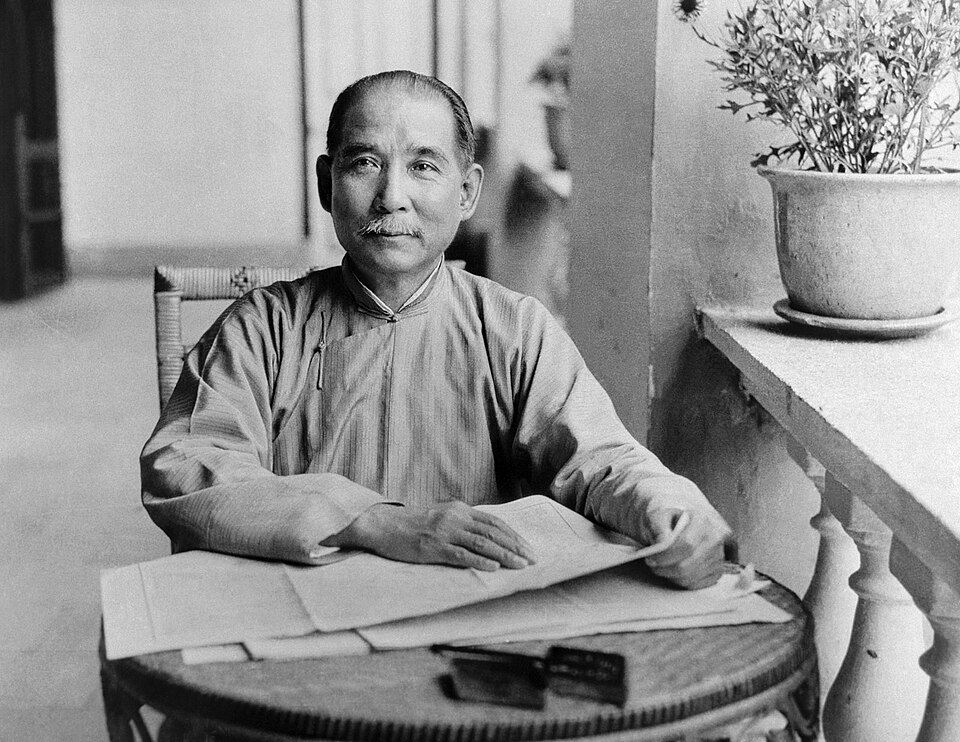 Chinese revolutionary leader in traditional clothing (Image: Public domain, via Wikimedia Commons)
3. Turkey: The Young Turks and Atatürk’s Reforms (1908–1923)
Leader: Mustafa Kemal Atatürk (father of modern Turkey)
Why Did Nationalism Rise?
- Ottoman Empire’s Weakness: Lost wars; European powers took land (e.g., Balkans).
- Young Turks Movement (1908): Group of reformers wanted democracy and modernization.
Atatürk’s Reforms (1923–1938):
| Reform | Change Made | Why? |
|---|---|---|
| Abolished Sultanate | Ended Ottoman monarchy; Turkey became a republic. | Wanted a modern, secular state. |
| Latin Alphabet | Replaced Arabic script with Latin letters. | Made education easier for all Turks. |
| Women’s Rights | Gave women voting rights (1934). | Promoted equality. |
| Secular Laws | Separated religion from government. | Reduced Islamic influence in politics. |
 Turkish leader with modern reforms (Image: SKS News, Public domain, via Wikimedia Commons)
4. Vietnam: Fight Against French Colonialism (19th–20th Century)
Leader: Ho Chi Minh (founder of Viet Minh)
Causes of Nationalism:
- French Colonial Rule: Took Vietnam’s land and resources; forced Vietnamese to work on plantations.
- Cultural Suppression: Banned Vietnamese language in schools; promoted French culture.
Key Events:
- 1945 August Revolution: Ho Chi Minh declared Vietnam independent after Japan surrendered in WWII.
- First Indochina War (1946–1954): Vietnam fought France; won at Battle of Dien Bien Phu (1954).
- Result: Vietnam split into North (Communist) and South (US-backed).
Comparison of Asian Nationalist Movements
| Country | Colonial Power | Key Leader | Main Method | Independence Year |
|---|---|---|---|---|
| India | Britain | Gandhi, Nehru | Non-violence, protests | 1947 |
| China | Japan, Britain | Sun Yat-sen, Mao | Revolution, civil war | 1949 (Communist win) |
| Turkey | Ottoman Empire | Atatürk | Reforms, modernization | 1923 (Republic) |
| Vietnam | France | Ho Chi Minh | Armed struggle | 1954 (North Vietnam) |
Why Did Nationalism Succeed in Some Places but Not Others?
✅ Success Factors:
- Strong Leadership (e.g., Gandhi, Ho Chi Minh).
- Unity Among People (e.g., Indians against British).
- Weakness of Colonial Power (e.g., Britain after WWII).
- Support from Other Countries (e.g., USSR helped Vietnam).
❌ Failure Factors:
- Divisions Among Leaders (e.g., China’s civil war).
- Strong Colonial Military (e.g., France in Vietnam before 1954).
- Lack of Public Support (e.g., some Indians supported British rule).
Impact of Nationalism in Asia
✔ Positive:
- End of Colonialism: Most Asian countries gained independence.
- Modernization: New governments built schools, hospitals, and industries.
- Cultural Revival: People rediscovered their history and traditions.
✖ Negative:
- New Conflicts: Independence led to wars (e.g., India-Pakistan, China-Japan).
- Authoritarian Rule: Some leaders became dictators (e.g., Mao in China).
- Economic Struggles: New countries faced poverty and corruption.
Exam Tip: How to Score Full Marks in NEB Exams
- Understand the Causes: Always explain why nationalism rose (e.g., colonial exploitation, cultural suppression).
- Name Key Leaders and Events: Memorize names like Gandhi, Atatürk, Ho Chi Minh and events like Salt March, August Revolution.
- Compare Movements: Use tables to show similarities/differences (e.g., India’s non-violence vs. Vietnam’s armed struggle).
- Link to Global Events: Show how WWII helped nationalism (e.g., Japan’s defeat weakened France in Vietnam).
- Short Answer Tips:
- For 5-mark questions, give 1 cause + 1 leader + 1 event + 1 impact.
- For 10-mark questions, write a paragraph with introduction (what?), body (how?), and conclusion (why important?).
- Avoid Common Mistakes:
- ❌ Don’t just list names—explain their role.
- ❌ Don’t mix up India’s independence (1947) with Vietnam’s (1954).
NEB Board-Style Questions (Practice!)
Short Answer (5 marks)
Q1: Explain the role of Mahatma Gandhi in India’s freedom struggle. Give two examples of his methods. Answer: Gandhi was the leader of India’s non-violent freedom movement against British rule. His methods included:
- Salt March (1930): Protested British salt tax by walking 240 miles to make salt illegally.
- Civil Disobedience: Encouraged Indians to boycott British goods (e.g., spinning khadi instead of buying British cloth). Impact: His actions inspired millions and forced Britain to negotiate.
Long Answer (10 marks)
Q2: Describe the causes and results of the Chinese Revolution (1911). How did it lead to the rise of nationalism? Answer: Causes:
- Weak Qing Dynasty: Corrupt rulers failed to modernize; lost wars to Japan (e.g., First Sino-Japanese War, 1894–1895).
- Foreign Domination: European powers took Chinese land (e.g., Opium Wars).
- May Fourth Movement (1919): Students protested Treaty of Versailles (Japan got German territories in China), sparking anger.
Results:
- 1911 Revolution: Overthrew Qing Dynasty; Sun Yat-sen became leader.
- Republic of China (1912): First modern Chinese government.
- Rise of Nationalism: People demanded modernization, democracy, and independence from foreign powers.
Link to Nationalism: The revolution showed China could overthrow foreign-backed rulers and inspired later movements (e.g., Communist Revolution, 1949).
Summary Mindmap
mindmap
  root((Nationalism in Asia))
    Causes
      Colonial Exploitation
      Cultural Suppression
      Western Education
      Economic Hardship
    Key Movements
      India
        Leaders: Gandhi, Nehru
        Methods: Non-violence, protests
      China
        Leaders: Sun Yat-sen, Mao
        Methods: Revolution, civil war
      Turkey
        Leader: Atatürk
        Methods: Reforms, secularism
      Vietnam
        Leader: Ho Chi Minh
        Methods: Armed struggle
    Impacts
      Independence (India 1947, Vietnam 1954)
      Modernization (Turkey’s reforms)
      New Conflicts (China-Japan tensions)
    Exam Tips
      Link causes to leaders
      Compare methods (non-violent vs. armed)
      Mention WWI/WWII impact
Based on the NEB +2 Humanities syllabus for History (His), unit 10.
Discussion
Loading…