PsychologyUnit 310 min read
Biological Bases of Behaviour: Brain, Nervous System, Hormones & Genetics
Unit 3 of Psychology explores how our brain, nervous system, hormones, and genes shape thoughts, emotions, and behaviors—with clear diagrams, real-world examples, and NEB-style questions to master the topic.
TAKEAWAYS:
- The nervous system (CNS + PNS) transmits messages via neurons using electrical and chemical signals.
- The brain has specialized regions (e.g., cerebrum, cerebellum) that control different functions like memory and movement.
- Hormones (e.g., adrenaline, oxytocin) act as chemical messengers influencing mood, stress, and social bonds.
- Genetics plays a role in personality, intelligence, and disorders like schizophrenia.
- Neuroplasticity allows the brain to adapt and change throughout life.
- Applications include understanding stress, sleep, and mental health disorders.
What is Biological Psychology?
Biological psychology (or biopsychology) studies how biological systems—like the brain, nervous system, hormones, and genes—affect behavior and mental processes. It answers questions like:
- Why do we feel happy when we see a loved one?
- How does stress make us sick?
- Why do some people have phobias while others don’t?
This unit focuses on four key areas:
- The Nervous System (how messages travel in the body)
- The Brain (its structure and functions)
- Hormones (chemical messengers)
- Genetics and Behavior (how genes influence us)
1. The Nervous System: The Body’s Communication Network
The nervous system is like a highway system that carries messages between the brain and the rest of the body. It has two main parts:
A. Central Nervous System (CNS)
- Brain (controls thoughts, memory, movement)
- Spinal Cord (transmits messages between brain and body)
B. Peripheral Nervous System (PNS)
Divided into:
- Somatic Nervous System (controls voluntary movements, e.g., walking)
- Autonomic Nervous System (ANS) (controls involuntary functions like heartbeat)
- Sympathetic NS ("fight or flight" – speeds up heart rate in stress)
- Parasympathetic NS ("rest and digest" – calms the body)
How Neurons Work (The Building Blocks of the Nervous System) Neurons (nerve cells) send electrical impulses (action potentials) and release chemical neurotransmitters (e.g., dopamine, serotonin) to communicate.
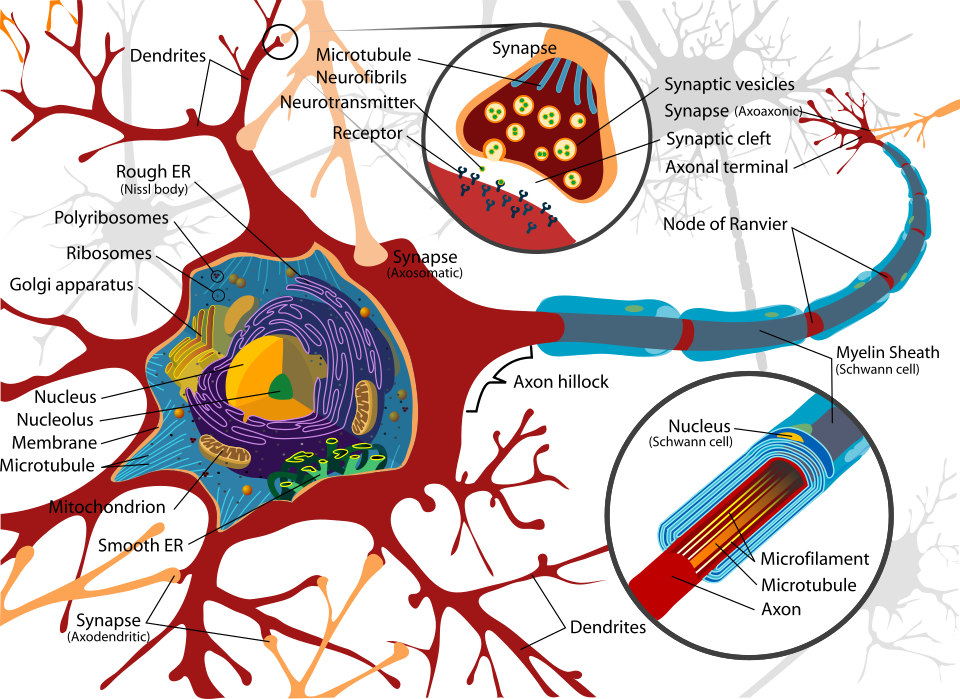 A labeled diagram showing a neuron’s structure: dendrites, cell body, axon, and myelin sheath. (Image: LadyofHats, Public domain, via Wikimedia Commons)
Example: When you touch a hot stove:
- Sensory neurons in your finger detect heat.
- The message travels via the spinal cord to the brain.
- The brain sends a signal back through motor neurons to pull your hand away.
2. The Brain: The Command Center
The brain is divided into four main regions, each with unique functions:
| Brain Region | Function | Example |
|---|---|---|
| Cerebrum | Thinking, memory, language, voluntary movement | Solving math problems |
| Cerebellum | Balance, coordination, fine motor skills | Playing the guitar |
| Brainstem | Controls basic life functions (breathing, heartbeat) | Automatic breathing while sleeping |
| Limbic System | Emotions, memory, motivation (includes amygdala and hippocampus) | Feeling happy when seeing a friend |
Key Brain Structures:
- Amygdala: Processes emotions (especially fear).
- Hippocampus: Stores memories.
- Hypothalamus: Regulates hunger, thirst, and hormones.
Example: Phineas Gage (Case Study) Phineas Gage survived a rod through his brain in 1848. His prefrontal cortex (responsible for personality and decision-making) was damaged, changing his behavior from responsible to impulsive. This showed how the brain controls personality!
3. Hormones: Chemical Messengers
Hormones are chemicals released by endocrine glands (e.g., pituitary, adrenal glands) that travel through the bloodstream to affect organs and behavior.
| Hormone | Gland | Function | Example |
|---|---|---|---|
| Adrenaline | Adrenal Glands | Triggers "fight or flight" response (increases heart rate) | Running from danger |
| Oxytocin | Pituitary Gland | Promotes bonding (e.g., mother-infant attachment) | Holding a baby |
| Testosterone | Testes | Influences aggression and sex drive | Competitive behavior in males |
| Insulin | Pancreas | Regulates blood sugar levels | Feeling hungry after a workout |
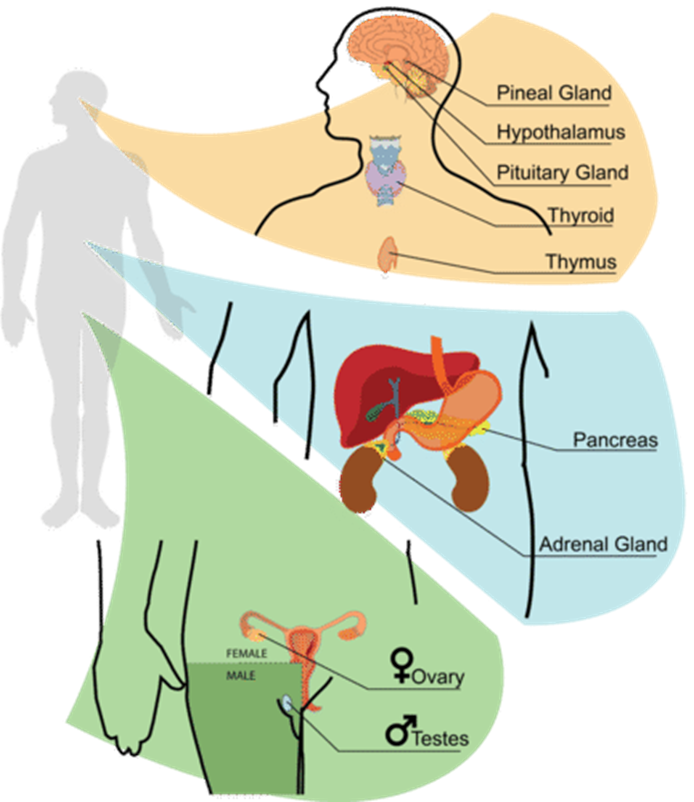 A labeled diagram of major endocrine glands (pituitary, thyroid, adrenal, etc.). (Image: Mariana Ruiz Villarreal (User:LadyofHats/Wikimedia Commons) , CC BY-SA 3.0, via Wikimedia Commons)
Example: Stress Response (Fight or Flight)
- Stressor (e.g., exam) → Hypothalamus activates the adrenal glands.
- Adrenaline is released → Heart rate increases, blood pressure rises, energy boosts.
- After stress passes, parasympathetic NS calms the body.
4. Genetics and Behavior
Genes (segments of DNA) influence:
- Personality (e.g., introversion vs. extroversion)
- Intelligence (heritability estimates ~50-80%)
- Mental Disorders (e.g., schizophrenia has a genetic link)
Example: Twin Studies
- Identical twins (same genes) raised apart often show similar personalities.
- Fraternal twins (different genes) raised together may differ more.
Nature vs. Nurture Debate
| Nature (Genes) | Nurture (Environment) |
|---|---|
| Inherited traits (e.g., eye color) | Learning from parents |
| Genetic disorders (e.g., Down syndrome) | Cultural influences (e.g., language) |
| Temperament (e.g., shyness) | Education and upbringing |
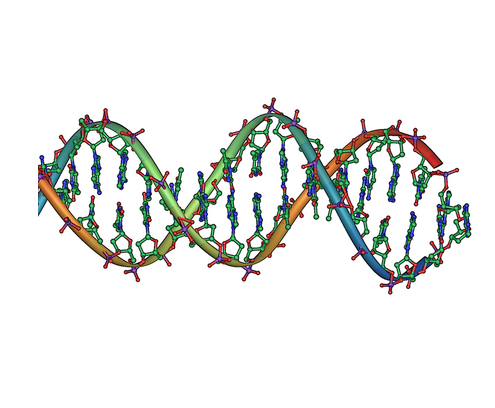 A labeled picture of DNA structure. (Image: Jerome Walker, Public domain, via Wikimedia Commons)
5. Neuroplasticity: The Brain’s Ability to Change
Neuroplasticity means the brain can rewire itself based on experience. Examples:
- London taxi drivers develop larger hippocampus regions due to memorizing routes.
- After a stroke, other brain areas take over lost functions.
- Learning a new skill (e.g., playing piano) strengthens neural connections.
Example: Phantom Limb Pain Some amputees feel pain in a limb that’s no longer there because the brain’s sensory map hasn’t adjusted.
Exam Tip: How to Score Full Marks
Diagrams are Key!
- Always draw and label the brain regions, nervous system, or endocrine glands in answers.
- Example: If asked about the limbic system, draw and label the amygdala and hippocampus.
Use Real-Life Examples
- Link concepts to everyday life (e.g., stress → adrenaline → exam performance).
- Example: "Oxytocin is released when hugging a friend, promoting trust."
Compare and Contrast
- Questions often ask: "How is the sympathetic NS different from the parasympathetic NS?"
- Use tables (like the one above) for clarity.
Case Studies
- Mention Phineas Gage for brain damage or twin studies for genetics.
Common Mistakes to Avoid
- ❌ Saying "The brain controls everything." → ✅ "The brain and nervous system work together with hormones."
- ❌ Mixing neurons and hormones → Neurons = electrical signals; hormones = chemical messengers.
NEB Board-Style Questions (Practice!)
Short Answer (5 marks each)
- Explain the structure and function of a neuron with the help of a labeled diagram.
- Differentiate between the sympathetic and parasympathetic nervous systems with examples.
- How does the limbic system influence emotions and memory? Give one real-life example.
- Describe the role of adrenaline in the body during a stressful situation.
- What is neuroplasticity? Give two examples of how it affects behavior.
Long Answer (10 marks)
- "The brain and hormones together control our behavior." Discuss this statement with reference to:
- The functions of the cerebrum and limbic system.
- The role of adrenaline and oxytocin in behavior.
- An example of neuroplasticity in daily life.
Final Tip: Always revise with diagrams—they help remember complex ideas! Good luck! 🚀
Based on the NEB +2 Humanities syllabus for Psychology (Psy), unit 3.
Discussion
Loading…