PsychologyUnit 108 min read
Emotion: Types, Theories & Functions
Unit 10 of Psychology explores emotions—what they are, how they work, and why they matter. Learn theories (James-Lange, Cannon-Bard, Schachter-Singer), types (primary vs. secondary), and their biological and social roles, with NEB-style questions and solved examples.
TAKEAWAYS:
- Emotions are psychobiological responses to stimuli, involving physiology, cognition, and behavior.
- The James-Lange theory says emotions follow bodily reactions, while Cannon-Bard claims they happen simultaneously.
- Primary emotions (happiness, fear) are universal; secondary emotions (guilt, pride) blend with thoughts.
- The amygdala and prefrontal cortex play key roles in processing emotions.
- Emotions help survival (fear triggers fight/flight) and social bonding (love, empathy).
- NEB exams test definitions, comparisons, and real-life applications of emotional theories.
What Are Emotions?
Emotions are complex psychological states that involve:
- Physiological changes (heart rate, sweating).
- Subjective feelings (happy, angry).
- Behavioral expressions (smiling, crying).
They differ from moods (long-lasting, no clear cause) and feelings (milder, short-lived).
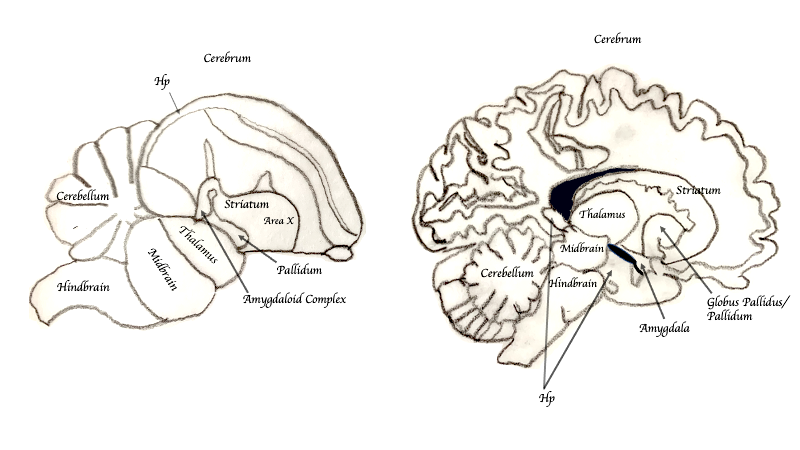 Key brain regions for emotion processing (Image: Profprestos, CC BY-SA 4.0, via Wikimedia Commons)
Theories of Emotion
Three major theories explain how emotions arise:
1. James-Lange Theory (1884)
- Claim: We feel emotions because of bodily changes.
- Process:
- Stimulus → Physiological response (e.g., heart races).
- Brain interprets response → Emotion (e.g., "I’m afraid").
- Example: You see a snake → Your heart pounds → You label it "fear."
- Weakness: Doesn’t explain why some responses (e.g., blushing) don’t always trigger emotions.
2. Cannon-Bard Theory (1927)
- Claim: Emotion and bodily response happen simultaneously, triggered by the thalamus.
- Process:
- Stimulus → Thalamus sends signals to:
- Hypothalamus (bodily response).
- Cortex (emotional experience).
- Stimulus → Thalamus sends signals to:
- Example:
You see a snake → Thalamus sends signals to:
- Heart (pounds) AND
- Brain (feels fear) at the same time.
- Strength: Explains why some people feel emotion without obvious physical signs (e.g., stage fright).
3. Schachter-Singer Two-Factor Theory (1962)
- Claim: Emotions need:
- Physiological arousal (e.g., adrenaline).
- Cognitive label (e.g., "This is exciting!").
- Example: You’re on a rollercoaster → Your body is aroused → You label it "thrilling" (not "terrified").
- Key Study: Participants given adrenaline misattributed their arousal to a happy/sad person → Felt matching emotions.
| Theory | Key Idea | Strength | Weakness |
|---|---|---|---|
| James-Lange | Emotion follows body response | Simple, intuitive | Doesn’t fit all cases |
| Cannon-Bard | Emotion and body response happen together | Explains delayed reactions | Overlooks cognitive role |
| Schachter-Singer | Emotion = arousal + label | Explains misattribution | Requires conscious thought |
Types of Emotions
Emotions are classified into primary (basic) and secondary (complex):
Primary Emotions (6-7 Universal Types)
- Happiness, Sadness, Fear, Anger, Surprise, Disgust, Contempt.
- Why universal?
- Evolutionary advantage (e.g., fear protects us).
- Cross-cultural studies show similar facial expressions (Ekman’s work).
- IMAGE: facial expressions of basic emotions | Ekman’s 6 universal emotions
Secondary Emotions (Blends of Primary + Thought)
- Guilt (sadness + fear of punishment).
- Pride (happiness + self-focus).
- Jealousy (fear + anger + sadness).
- Example: A student fails an exam → Feels sadness (primary) + shame (secondary, due to self-judgment).
Biological Bases of Emotion
Emotions rely on brain structures and hormones:
Key Brain Areas
- Amygdala: Processes fear and aggression (e.g., "fight or flight").
- Prefrontal Cortex: Regulates emotions (e.g., suppressing anger).
- Hypothalamus: Links emotions to hormones (e.g., cortisol for stress).
Hormones and Emotions
| Hormone | Emotion Linked To | Example |
|---|---|---|
| Adrenaline | Fear, excitement | "Adrenaline rush" before a race |
| Cortisol | Stress, anxiety | Chronic stress → high cortisol |
| Oxytocin | Love, bonding | Released during hugging |
| Serotonin | Happiness, calmness | Low serotonin → depression |
Functions of Emotions
- Survival: Fear triggers escape; anger fuels defense.
- Social Bonding: Love and empathy strengthen relationships.
- Decision-Making: Emotions guide quick choices (e.g., "This food looks disgusting!").
- Communication: Facial expressions convey intent without words.
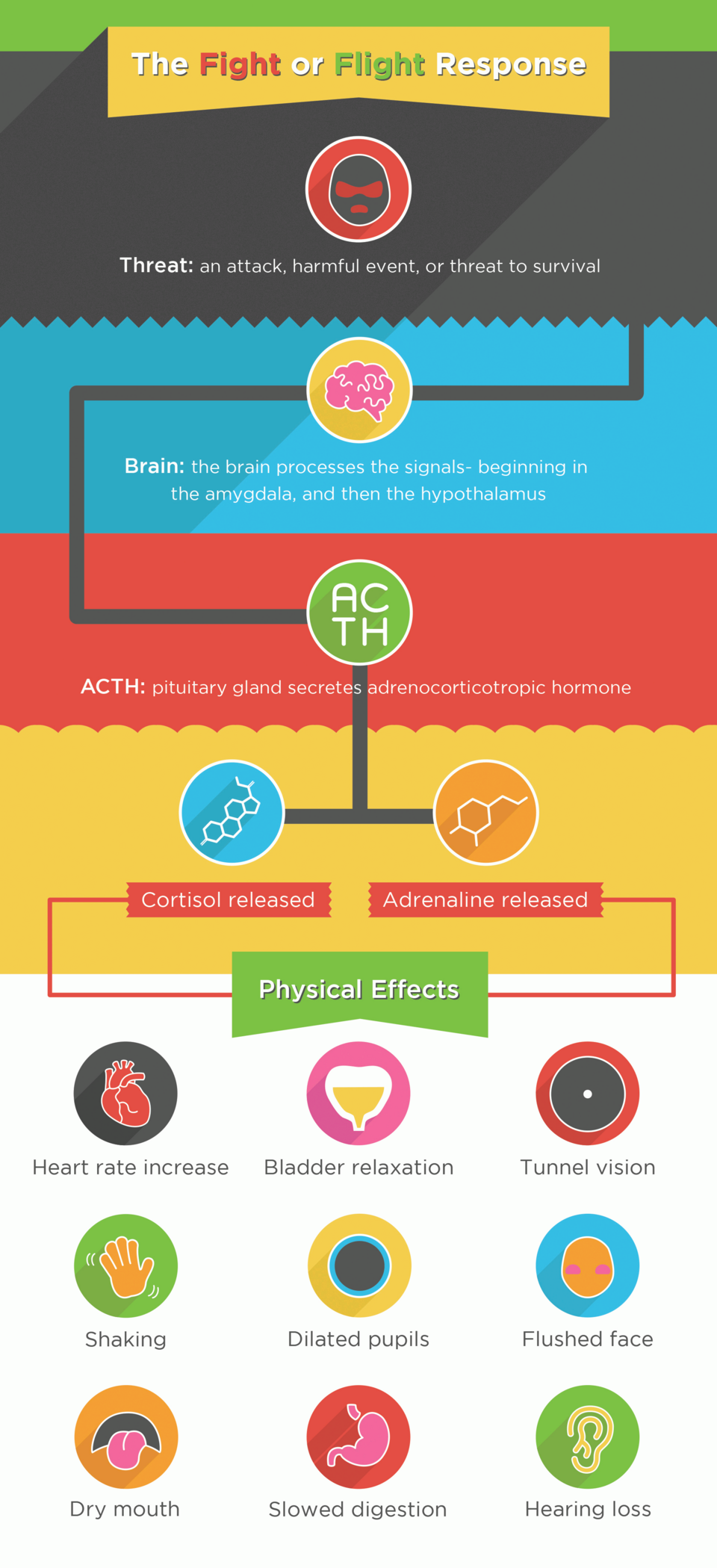 Physiological changes during fear (Image: Jvnkfood (original), converted to PNG and reduced to 8-bit b, CC BY-SA 4.0, via Wikimedia Commons)
Cultural and Individual Differences
- Display Rules: Cultures dictate how emotions are shown.
- Example: Japanese hide sadness in public; Americans show anger openly.
- Gender Differences:
- Women often express empathy and sadness more openly.
- Men may show anger or pride more frequently.
- Personality: Extroverts feel emotions intensely; introverts may suppress them.
Solved Example: Applying Theories
Question: Ramesh sees a spider and feels his heart race. According to James-Lange, what happens next? Answer:
- Ramesh’s body reacts (heart races, sweats).
- His brain interprets these changes → "I must be afraid!"
- Conclusion: Emotion (fear) arises after the physical response.
Question: If Ramesh had no physiological response (e.g., took a drug blocking adrenaline), which theory would predict no emotion? Answer: James-Lange (emotion depends on body response).
NEB-Style Questions
Short Answer (5 marks)
- Differentiate between primary and secondary emotions with examples.
- Explain the Cannon-Bard theory of emotion using a real-life scenario.
Long Answer (10 marks)
- "Emotions are essential for human survival." Discuss this statement with reference to:
- Biological bases (brain/hormones).
- Evolutionary functions (fear, love).
- Social roles (communication, bonding).
Multiple Choice (1 mark each)
Which theory states that emotion and bodily response occur simultaneously? a) James-Lange b) Cannon-Bard c) Schachter-Singer d) Pavlov
The amygdala is primarily linked to: a) Memory storage b) Fear processing c) Language production d) Motor control
Exam Tip
- Memorize the 3 theories and their key differences (use the table above).
- Link emotions to real life: NEB loves examples (e.g., "How does fear help survival?").
- Diagrams score marks: Draw the Cannon-Bard pathway (thalamus → hypothalamus + cortex).
- Define terms clearly:
- Emotion ≠ mood ≠ feeling.
- Primary vs. secondary emotions.
- Apply to exams:
- If asked about "biological bases," mention brain areas + hormones.
- For "functions," cover survival + social roles.
Key Takeaway: Emotions are not just feelings—they’re a mix of biology, thought, and behavior. Master the theories, brain regions, and real-world examples to ace NEB questions!
Based on the NEB +2 Humanities syllabus for Psychology (Psy), unit 10.
Discussion
Loading…