Social Studies and Life SkillsUnit 108 min read
Stress, Emotion & Conflict: Causes, Effects & Solutions
Unit 10 of Social Studies and Life Skills explains stress (types, causes, effects), emotions (positive/negative, management), and conflict (types, resolution techniques) with real-life examples, diagrams, and NEB-style questions to prepare students for exams.
TAKEAWAYS:
- Stress is a response to challenges, but chronic stress harms health and relationships.
- Emotions are signals that guide decisions—positive emotions build resilience, while negative ones need management.
- Conflicts arise from misunderstandings or competing needs but can be resolved through communication and compromise.
- Life skills like time management and empathy reduce stress and prevent conflicts.
- NEB exams test definitions, real-life applications, and short-answer comparisons (e.g., stress vs. emotion).
1. Stress: The Silent Enemy
What is Stress?
Stress is the body’s natural response to demands or pressures. It can be:
- Physical (e.g., illness, injury)
- Emotional (e.g., fear, sadness)
- Mental (e.g., exams, deadlines)
- Environmental (e.g., noise, crowding)
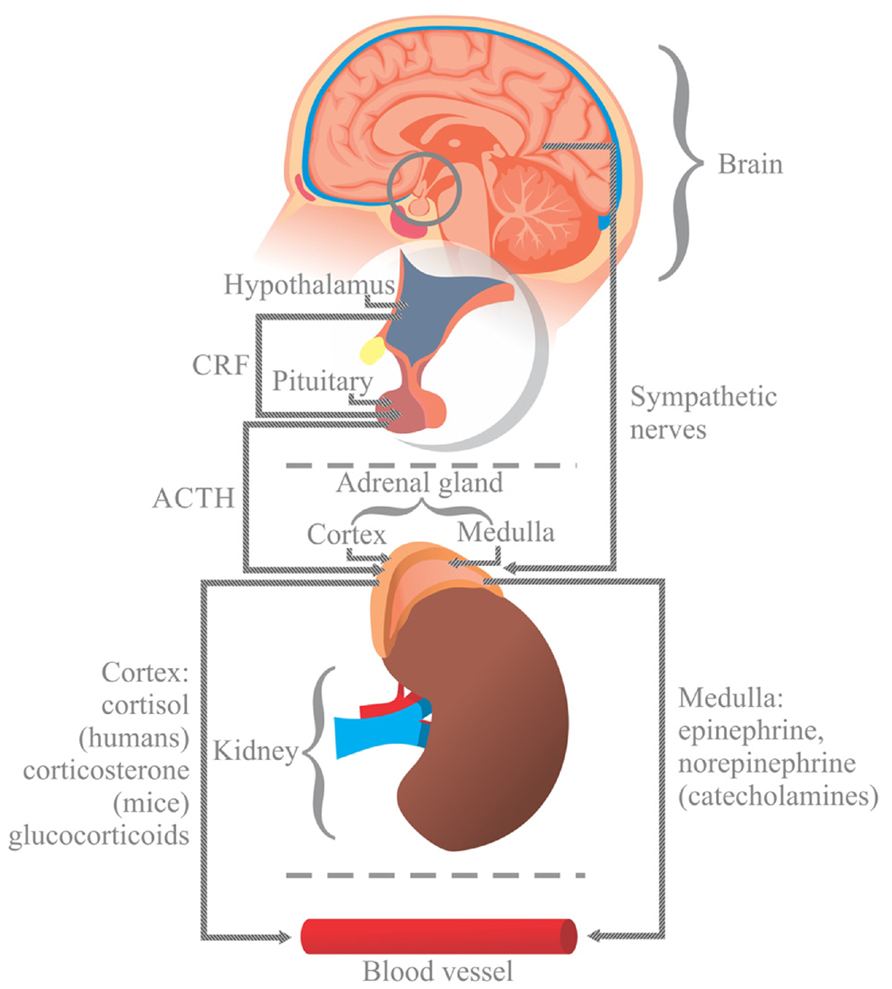 A flowchart showing the body’s stress response: Stressor → Brain (hypothalamus) → Adrenal glands → Adrenaline → Fight-or-flight response. (Image: Campos-Rodríguez R, Godínez-Victoria M, Abarca-Rojano E, Pac, CC BY 3.0, via Wikimedia Commons)
Types of Stress
| Type | Description | Example |
|---|---|---|
| Acute | Short-term, immediate response | Failing an exam |
| Chronic | Long-term, persistent stress | Family conflicts |
| Eustress | Positive stress (motivates you) | Winning a competition |
| Distress | Negative stress (harms health) | Job loss |
Effects of Stress
- Physical: Headaches, fatigue, weakened immunity.
- Emotional: Anxiety, irritability, depression.
- Behavioral: Procrastination, social withdrawal.
Solved Example: Rohan feels nervous before his NEB exam. His heart races, and he can’t sleep. What type of stress is this? Answer: Acute stress (short-term, exam-related).
2. Emotions: The Inner Compass
What Are Emotions?
Emotions are intense feelings that influence thoughts and actions. They can be:
- Primary (happiness, sadness, fear, anger, surprise, disgust)
- Secondary (guilt, pride, shame)
Positive vs. Negative Emotions
| Positive Emotions | Negative Emotions |
|---|---|
| Build resilience | Can harm health |
| Improve relationships | Cause conflicts |
| Example: Joy, gratitude | Example: Anger, fear |
How to Manage Emotions:
- Identify the emotion (e.g., "I’m angry because...").
- Express it healthily (talk, write, or draw).
- Regulate (deep breathing, counting to 10).
Solved Example: Laxmi feels sad after losing a game. What can she do to manage this? Answer: She can write her feelings in a diary or talk to a friend to feel better.
3. Conflict: When Needs Clash
What is Conflict?
Conflict happens when two or more people have opposing needs, goals, or values. It can be:
- Interpersonal (between people, e.g., siblings fighting)
- Intrapersonal (within oneself, e.g., procrastination)
- Intergroup (between groups, e.g., team disagreements)
Causes of Conflict
- Miscommunication (not listening)
- Competition (limited resources)
- Differences (culture, personality)
- Unmet needs (e.g., attention, respect)
Conflict Resolution Techniques
| Technique | How It Works | Example |
|---|---|---|
| Compromise | Both sides give up something | Sharing a toy |
| Collaboration | Work together to find a solution | Planning a group project |
| Avoidance | Ignore the conflict (short-term fix) | Walking away from an argument |
| Force | One side dominates (not healthy) | Boss ordering an employee |
Solved Example: Rohan and Sita argue over who will clean the room. How can they resolve this? Answer: They can compromise (e.g., Rohan cleans today, Sita cleans tomorrow).
4. Linking Stress, Emotion, and Conflict
- Stress can trigger negative emotions (e.g., anger, fear).
- Unmanaged emotions can lead to conflicts.
- Conflicts increase stress if unresolved.
5. Life Skills to Manage Stress, Emotions, and Conflict
| Skill | How to Use It | Example |
|---|---|---|
| Time Management | Plan tasks to avoid last-minute stress | Make a study schedule |
| Empathy | Understand others’ feelings | Listen to a friend’s problem |
| Assertiveness | Express needs calmly | Say, "I feel overwhelmed" |
| Problem-Solving | Break conflicts into small steps | Discuss one issue at a time |
Exam Tip: How NEB Tests This Unit
Definitions: Know key terms like stress, emotion, conflict resolution.
- Example Question: "Define eustress with an example." (1 mark)
Short Answers: Compare concepts in tables (e.g., stress vs. emotion).
- Example Question: "Differentiate between acute and chronic stress." (3 marks)
Real-Life Applications: Explain how to handle stress/conflict in daily life.
- Example Question: "How can a student manage exam stress?" (5 marks)
Diagrams: Draw flowcharts (e.g., stress response) or mindmaps (emotions).
- Example Question: "Illustrate the types of conflict with examples." (4 marks)
Scenario-Based: Solve problems using conflict resolution techniques.
- Example Question: "Your friend ignores you. How will you resolve this?" (6 marks)
NEB Board-Style Questions
- Define stress and explain its four types with examples. (5 marks)
- How do emotions affect our decisions? Give two positive and two negative emotions with examples. (4 marks)
- Describe the steps to resolve a conflict between two friends. (6 marks)
- Draw a flowchart showing the causes and effects of stress. (4 marks)
- Why is compromise a better conflict resolution technique than avoidance? Explain with an example. (5 marks)
Quick Revision Checklist
✅ Can you list 4 types of stress and their effects? ✅ Do you know 3 ways to manage negative emotions? ✅ Can you explain 2 conflict resolution techniques with examples? ✅ Are you ready to draw a diagram of the stress response or emotions?
Remember: NEB loves diagrams + real-life examples! Practice drawing flowcharts and writing short answers. 🚀
Based on the NEB +2 Humanities syllabus for Social Studies and Life Skills (SSLS), unit 10.
Discussion
Loading…