HistoryUnit 29 min read
Panchayat System: Rise, Structure, and Legacy in Nepal
Unit 2 of History explores Nepal’s Panchayat system—its origins under King Mahendra, political structure, local governance, and eventual collapse in 1990, with key comparisons to democracy and global trends.
TAKEAWAYS:
- The Panchayat system was Nepal’s authoritarian political model introduced by King Mahendra in 1960, replacing democracy after the 1959 royal coup.
- It was a three-tiered system (local, district, national) with no political parties, elections, or checks on royal power.
- Advantages: Stability, rural development focus, and centralized control; disadvantages: suppressed dissent, lack of representation, and economic stagnation.
- The system collapsed in 1990 due to mass protests (Jana Andolan I), paving the way for multi-party democracy.
- Legacy: Setbacks for federalism, but its local governance model influenced later decentralization efforts.
- NEB focus: Compare Panchayat to democracy, analyze its failure, and link it to later movements (e.g., 2006 revolution).
Origins and Establishment (1959–1960)
Why was the Panchayat system introduced?
After Nepal’s first democratic elections in 1959, King Mahendra dismissed the government (led by B.P. Koirala) and abolished democracy on December 15, 1960. He claimed:
- Political parties were divisive and caused instability.
- Nepal needed a strong, unified system to develop.
- The 1955–1959 civil war (between Ranas and democrats) proved democracy was weak.
King Mahendra’s move was a coup—he ruled by decree and introduced the Panchayat system in 1962.
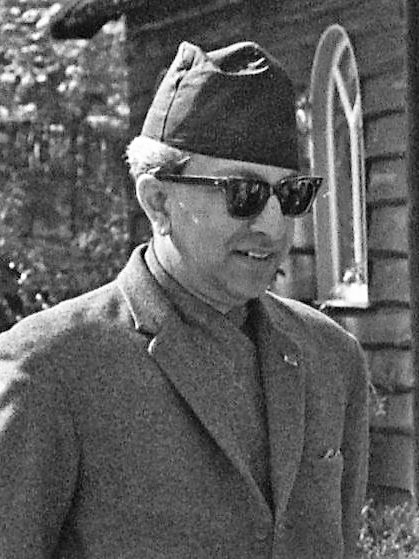 The monarch who abolished democracy in 1960 and established the Panchayat system. (Image: Eric Koch for Anefo, CC BY-SA 3.0 nl, via Wikimedia Commons)
How did the Panchayat system work?
The system was centralized, authoritarian, and hierarchical. It had three levels:
| Level | Name | Role | Elected? |
|---|---|---|---|
| Local | Gaun Panchayat | Managed villages (e.g., roads, schools, disputes). | No (appointed) |
| District | Zonal Panchayat | Coordinated development and law enforcement in zones. | No (appointed) |
| National | Rastriya Panchayat | "National Assembly"—advised the king but had no real power. | Indirectly elected |
- No political parties were allowed.
- No free press—media was controlled.
- King Mahendra (then Birendra) had absolute power.
- Elections were rigged: Voters chose from approved candidates (often loyal to the palace).
MERMAID DIAGRAM: Panchayat System Structure
Key Features of the Panchayat System
1. No Democracy
- No elections for real power (only symbolic votes).
- No political parties—only the Nepal Congress and CPN-UML were banned.
- No constitution until 1990 (previously, the 1959 Interim Constitution was suspended).
2. Economic Policies
- Focus on rural development: Built roads, schools, and health posts.
- Import substitution: Nepal tried to produce goods locally (e.g., textiles, cement).
- But: Economy stagnated due to lack of foreign investment and corruption.
3. Social Control
- Censorship: Books, newspapers, and films were banned or controlled.
- Suppression of dissent: Protesters were jailed or tortured.
- Religious harmony: The system claimed to promote Hindu-Buddhist unity, but minorities (Dalits, Madhesis) were ignored.
Why Did the Panchayat System Fail?
Despite its stability, the system faced growing criticism:
| Reason | Explanation |
|---|---|
| Lack of freedom | No political parties, no free speech, no protests allowed. |
| Economic stagnation | Nepal became poor and dependent on India. |
| Corruption | Officials stole money meant for development. |
| Youth unrest | Students and intellectuals demanded democracy. |
| International pressure | The UN and Western countries criticized Nepal’s human rights record. |
The 1990 Revolution (Jana Andolan I)
- Mass protests started in April 1990 led by:
- Nepal Congress (B.P. Koirala)
- CPN-UML (Man Mohan Adhikari)
- Student unions (e.g., ANCF, NAYAP)
- King Birendra was forced to restore democracy on May 9, 1990.
- New constitution (1990):
- Multi-party system was allowed.
- Panchayat was abolished.
- First democratic elections in 1991.
MERMAID DIAGRAM: Fall of the Panchayat System
timeline
    title Fall of the Panchayat System (1960–1990)
    1960 : Panchayat introduced by King Mahendra
    1962 : First elections (rigged)
    1972 : King Birendra takes over (Panchayat continues)
    1980s : Economic crisis, corruption, protests grow
    1990 : Jana Andolan I (mass protests)
    1990 : Panchayat abolished, democracy restored
Advantages and Disadvantages of the Panchayat System
| Advantages | Disadvantages |
|---|---|
| ✅ Stability: No coups or civil wars. | ❌ No freedom: No political parties, protests banned. |
| ✅ Rural development: Built schools, roads. | ❌ Corruption: Money was misused. |
| ✅ Centralized control: Easy to manage. | ❌ Economic failure: Nepal became poor. |
| ✅ Reduced ethnic conflicts (temporarily). | ❌ Suppressed dissent: Jailed activists. |
Legacy of the Panchayat System
- Setback for democracy: Showed how easily democracy can be abolished.
- Influenced later federalism: The 1990 constitution later led to decentralization.
- Lessons for Nepal:
- Democracy is fragile—needs strong institutions.
- Corruption and authoritarianism hurt development.
- People’s movements can change systems (e.g., 1990 protests).
Comparison: Panchayat vs. Democracy
| Feature | Panchayat System | Democracy (Post-1990) |
|---|---|---|
| Power | King had absolute power. | Power shared between government, king (later republic). |
| Elections | Rigged, no real choice. | Free and fair elections. |
| Political Parties | Banned. | Allowed and active. |
| Freedom of Speech | Banned. | Protected. |
| Economic Growth | Slow, stagnant. | Faster but still challenges. |
| International Image | Isolated, criticized. | Respected, global relations. |
Solved Example: Analyzing Panchayat’s Failure
Question: "Why did the Panchayat system collapse in 1990? Explain with three main reasons." Answer:
- Lack of political freedom: The system banned parties and protests, making people angry and frustrated.
- Economic problems: Nepal became poor because of corruption and bad policies.
- Mass protests (Jana Andolan I): Students and political leaders united and forced the king to restore democracy.
NEB Board-Style Questions (Practice)
Short Answer (5 marks)
"Describe the structure of the Panchayat system in Nepal." Answer:
- Three tiers: Gaun Panchayat (village), Zonal Panchayat (district), Rastriya Panchayat (national).
- King had absolute power.
- No political parties, elections were rigged.
"What were the main causes of the 1990 revolution in Nepal?" Answer:
- No democracy (no parties, no freedom).
- Economic failure (poverty, corruption).
- Mass protests by students and political leaders.
Long Answer (10 marks)
- "Evaluate the success and failure of the Panchayat system in Nepal."
Answer:
- Successes:
- Brought stability (no wars).
- Improved rural infrastructure (roads, schools).
- Failures:
- No freedom (banned parties, protests).
- Economy stagnated due to corruption.
- Collapsed in 1990 due to mass protests.
- Conclusion: It was stable but undemocratic—failed because people wanted freedom.
- Successes:
Exam Tip
✅ For NEB exams, focus on:
- Key dates: 1960 (Panchayat introduced), 1990 (abolished).
- Structure: Three tiers + king’s power.
- Reasons for failure: No democracy, economic problems, protests.
- Comparison: Always compare Panchayat with democracy or later federalism.
- Quotes: Mention King Mahendra’s coup (1960) and Jana Andolan I (1990).
🚫 Avoid:
- Writing too much about King Birendra (focus on Mahendra’s role).
- Ignoring economic failures—NEB loves this point!
- Forgetting student protests—they were key to the 1990 revolution.
Based on the NEB +2 Humanities syllabus for History (His), unit 2.
Discussion
Loading…