Life Skill EducationUnit 108 min read
Disaster Risk Reduction: Causes, Types, and Safety Measures
Unit 10 of Life Skill Education explains what disasters are, their types (natural and human-made), causes, impacts, and how to reduce risks through preparedness and community action. Learn with real examples, safety tips, and NEB-style questions.
TAKEAWAYS:
- Disasters are sudden events causing great harm; they can be natural (earthquakes, floods) or human-made (pollution, wars).
- Risk reduction means preparing before disasters happen to save lives and property.
- Communities play a key role in disaster preparedness through drills, early warnings, and safe building designs.
- Government and NGOs provide support but rely on public awareness and action.
- Simple steps like having an emergency kit and knowing evacuation routes can save lives.
- Sustainable development helps reduce disaster risks by protecting the environment.
What is a Disaster?
A disaster is a sudden, unexpected event that causes great damage to life, property, and the environment. Disasters can be:
- Natural: Caused by nature (e.g., earthquakes, floods, landslides).
- Human-made: Caused by human actions (e.g., pollution, wars, industrial accidents).
Why Do Disasters Happen?
Disasters occur due to a combination of hazards (the event itself, like an earthquake) and vulnerability (how exposed people are to the hazard). For example:
- A flood (hazard) becomes a disaster if people live in low-lying areas (vulnerability) without proper drainage.
Types of Disasters
Disasters can be classified into natural and human-made types. Here’s a comparison:
| Type | Examples | Causes |
|---|---|---|
| Natural | Earthquakes, floods, landslides | Geological activity, weather patterns |
| Human-made | Pollution, wars, industrial accidents | Poor planning, misuse of resources |
Natural Disasters: Causes and Effects
Natural disasters are caused by natural processes. Let’s explore some common ones:
flowchart TD
    A["Heavy Rainfall"] --> B["River Overflow"]
    B --> C["Flooding"]
    C --> D["Destruction of Homes & Crops"]
    C --> E["Waterborne Diseases"]
    C --> F["Loss of Livelihoods"]
Process of flood formation and its effects1. Earthquakes
What causes them? Earthquakes happen when tectonic plates (giant pieces of Earth’s crust) move suddenly. The energy released creates shockwaves.
Effects:
- Buildings collapse.
- Landslides and tsunamis (in coastal areas).
- Loss of life and property.
2. Floods
What causes them? Heavy rainfall, melting snow, or dam failures can cause rivers to overflow.
Effects:
- Homes and crops are destroyed.
- Waterborne diseases spread.
- People may lose their livelihoods.
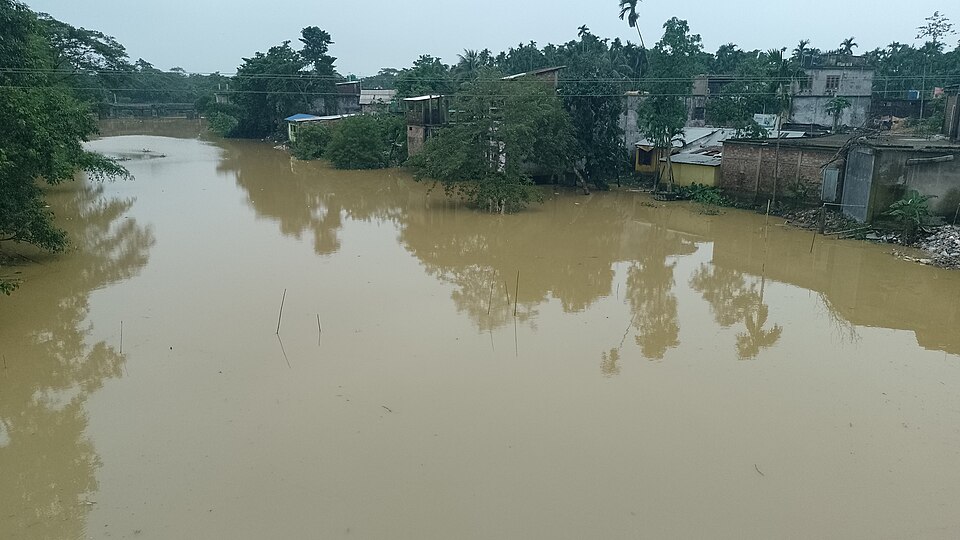 Floodwaters submerging a village (Image: KEmel49, CC BY-SA 4.0, via Wikimedia Commons)
3. Landslides
What causes them? Weak soil, heavy rain, or deforestation can trigger landslides.
Effects:
- Roads and buildings are buried.
- People and animals may be trapped.
- Agriculture is disrupted.
Human-Made Disasters: Causes and Effects
Human-made disasters result from human actions or negligence.
1. Pollution
What causes it? Industrial waste, plastic pollution, and chemical spills harm the environment.
Effects:
- Air and water pollution cause diseases.
- Wildlife and ecosystems are destroyed.
- Long-term health problems for humans.
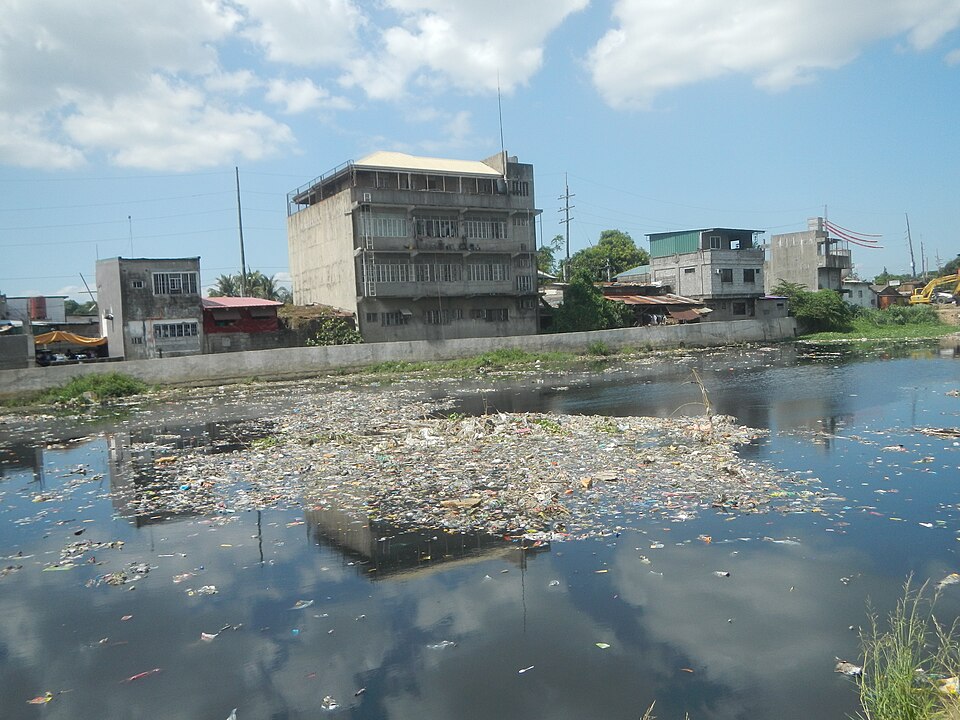 Garbage clogging a waterway (Image: JFVelasquez Floro, CC0, via Wikimedia Commons)
2. Wars and Conflicts
What causes them? Disputes over resources, territory, or political differences lead to wars.
Effects:
- Civilians are killed or displaced.
- Infrastructure (hospitals, schools) is destroyed.
- Economic instability follows.
3. Industrial Accidents
What causes them? Poor safety measures or machinery failures in factories or mines.
Effects:
- Workers are injured or killed.
- Toxic chemicals may leak, harming the environment.
- Long-term health issues for nearby communities.
Disaster Risk Reduction (DRR)
Disaster Risk Reduction (DRR) means taking steps before a disaster to reduce its impact. Key strategies include:
1. Preparedness
- Emergency kits: Keep food, water, first aid, and flashlights.
- Evacuation plans: Know safe routes and meeting points.
- Drills: Practice fire drills, earthquake drills, etc.
2. Community Action
- Early warning systems: Use sirens, SMS alerts, or radio broadcasts.
- Safe building designs: Use earthquake-resistant materials.
- Awareness programs: Teach people how to respond in emergencies.
3. Government and NGO Roles
- Government: Provides funds, builds shelters, and enforces safety laws.
- NGOs: Train communities, provide medical aid, and rebuild homes.
How to Reduce Disaster Risks at Home and School
Here’s what you can do:
At Home:
- Identify hazards: Know if your home is near a river, fault line, or industrial area.
- Secure your home:
- Fix weak walls or roofs.
- Store heavy objects on lower shelves.
- Have an emergency plan:
- Teach family members what to do in a disaster.
- Keep important documents in a waterproof bag.
At School:
- Participate in drills: Practice earthquake or fire drills seriously.
- Learn first aid: Know how to treat minor injuries.
- Spread awareness: Teach friends and classmates about safety.
Sustainable Development and Disaster Risk Reduction
Sustainable development means using resources wisely to protect the environment and reduce disaster risks. For example:
- Afforestation: Planting trees prevents landslides.
- Waste management: Reduces pollution and health risks.
- Renewable energy: Lowers the risk of industrial accidents.
NEB-Style Questions and Answers
Short Answer Questions
What is the difference between a natural and a human-made disaster?
- Answer: Natural disasters are caused by nature (e.g., earthquakes), while human-made disasters result from human actions (e.g., pollution).
Why is preparedness important in disaster risk reduction?
- Answer: Preparedness helps save lives, reduces property damage, and ensures quick recovery after a disaster.
Long Answer Questions
Describe three natural disasters and their effects. How can communities prepare for them?
- Answer:
- Earthquakes: Cause building collapses. Communities can prepare by building earthquake-resistant structures and practicing drills.
- Floods: Destroy homes and crops. Communities can prepare by building drainage systems and evacuating to higher ground.
- Landslides: Bury roads and homes. Communities can prepare by planting trees and avoiding construction on slopes.
- Answer:
Explain the role of the government and NGOs in disaster risk reduction.
- Answer:
- Government: Provides funds for reconstruction, enforces safety laws, and builds shelters.
- NGOs: Train communities, provide medical aid, and rebuild homes. They also raise awareness about disaster risks.
- Answer:
Exam Tip
- Understand the difference between natural and human-made disasters—this is a common question.
- Memorize key strategies for disaster risk reduction (e.g., preparedness, community action).
- Relate examples from Nepal (e.g., earthquakes in 2015, floods in Terai) to show your understanding.
- Practice short and long answers—NEB often asks for explanations with examples.
- Draw diagrams where needed (e.g., tectonic plates for earthquakes, evacuation routes for floods).
Summary
- Disasters are sudden events causing harm; they can be natural or human-made.
- Risk reduction involves preparing before disasters strike.
- Communities, governments, and NGOs all play a role in DRR.
- Simple steps like emergency kits and drills can save lives.
- Sustainable development helps protect against disasters.
Remember: Knowledge and action are your best tools against disasters! Stay safe and help others stay safe too. 🌍💙
Based on the NEB +2 Humanities syllabus for Life Skill Education (LSE), unit 10.
Discussion
Loading…