Political ScienceUnit 79 min read
International Relations: Actors, Theories & Nepal’s Role
Unit 7 of Political Science explains the key concepts of international relations—state and non-state actors, theories (realism, liberalism, idealism), and Nepal’s foreign policy framework—with real-world examples, comparisons, and exam-focused insights.
```figure
{"type":"tree","root":{"v":"International Relations","children":[{"v":"Actors","children":[{"v":"State Actors","children":[{"v":"Nations"},{"v":"Governments"},{"v":"IGOs (e.g., UN, SAARC, BIMSTEC)"}]},{"v":"Non-State Actors","children":[{"v":"NGOs (e.g., Red Cross)"},{"v":"MNCs (e.g., Coca-Cola)"},{"v":"Terrorist Groups (e.g., Al-Qaeda)"}]}]},{"v":"Theories","children":[{"v":"Realism","children":[{"v":"Power Politics"},{"v":"National Interest"}]},{"v":"Liberalism","children":[{"v":"Cooperation"},{"v":"Institutions"}]},{"v":"Idealism","children":[{"v":"Morality"},{"v":"Human Rights"}]}]},{"v":"Nepal’s Role","children":[{"v":"Neutrality"},{"v":"SAARC/BIMSTEC"},{"v":"China-India Balance"}]}]},"caption":"Hierarchical breakdown of IR actors, theories, and Nepal’s role (simplified for clarity)"}
What is International Relations (IR)?
International Relations (IR) studies how countries and other actors interact in the global arena. It includes:
- Actors: Who participates (states, NGOs, corporations).
- Theories: Why they act (power, cooperation, morality).
- Nepal’s Position: How Nepal engages with the world.
1. Key Actors in IR
Actors are the players in global politics. They can be state (governments, nations) or non-state (NGOs, corporations).
A. State Actors
- Nations: Groups of people with shared culture, history, and territory (e.g., Nepal, India).
- Governments: Official bodies that make decisions (e.g., Nepal’s Government of National Accord).
- International Governmental Organizations (IGOs):
- Created by states to solve global issues.
- Examples:
- United Nations (UN): Promotes peace, human rights.
- SAARC: Regional cooperation in South Asia.
- BIMSTEC: Economic and tech cooperation (Bay of Bengal region).
B. Non-State Actors
- Non-Governmental Organizations (NGOs):
- Work for social causes (e.g., Red Cross, Amnesty International).
- Influence global policies (e.g., climate change, human rights).
- Multinational Corporations (MNCs):
- Businesses operating in multiple countries (e.g., Tata Motors, Coca-Cola).
- Affect economies and politics (e.g., tax laws, jobs).
- Terrorist Groups:
- Use violence to achieve goals (e.g., Al-Qaeda, Taliban).
- Challenge state sovereignty.
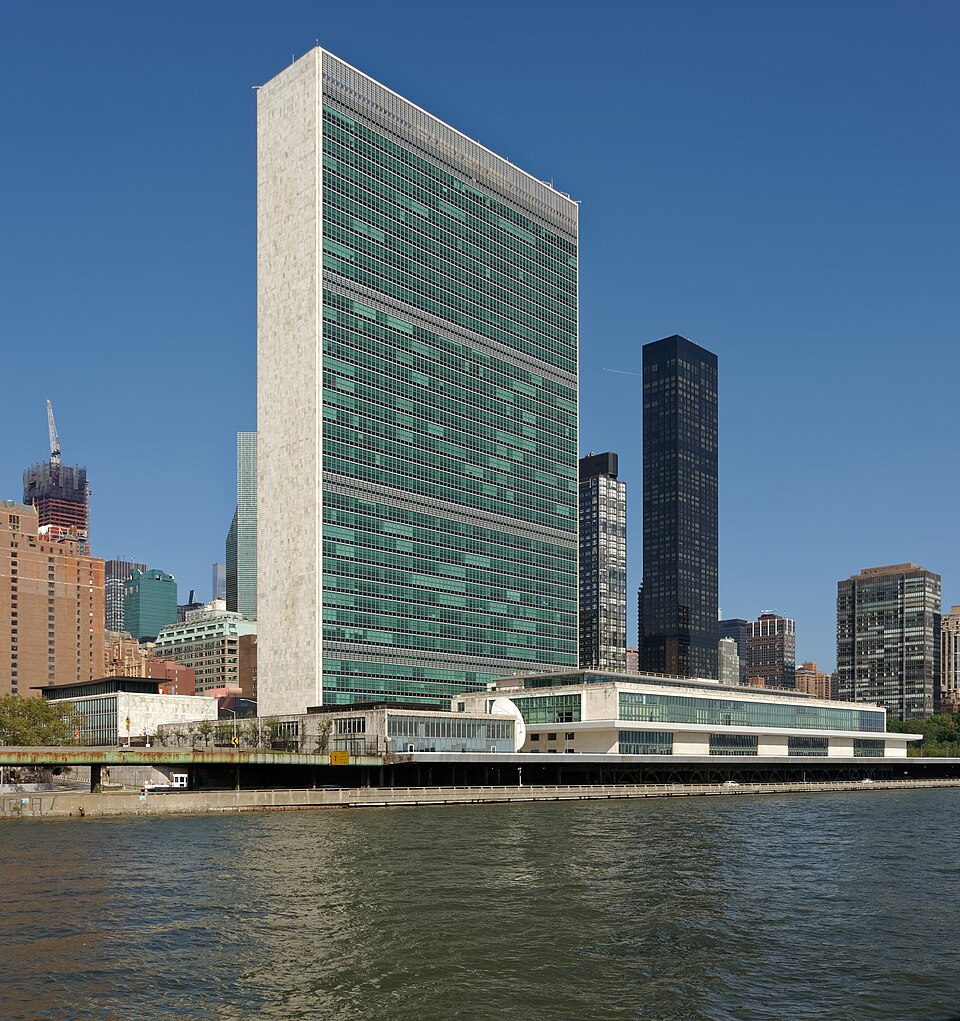 The UN’s global headquarters in New York, symbolizing state cooperation. (Image: Jakub Hałun, CC BY 4.0, via Wikimedia Commons)
2. Major Theories of International Relations
Theories explain why countries act the way they do. The three main theories are:
| Theory | Key Idea | Example | Criticism |
|---|---|---|---|
| Realism | Power and national interest matter most. | USA vs. USSR Cold War. | Ignores morality and cooperation. |
| Liberalism | Cooperation and institutions help. | UN solving climate change. | Too idealistic; powerful states dominate. |
| Idealism | Morality and human rights guide actions. | UN Declaration of Human Rights (1948). | Hard to enforce; states prioritize self-interest. |
A. Realism
- Focus: Power, security, and national interest.
- Key Beliefs:
- States are the most important actors.
- War and conflict are common.
- Example: The Cold War (USA vs. USSR) was driven by power struggles.
- Criticism: Ignores cooperation and global issues like poverty.
B. Liberalism
- Focus: Cooperation, trade, and institutions.
- Key Beliefs:
- States can work together for mutual benefit.
- Example: The World Trade Organization (WTO) helps global trade.
- Criticism: Powerful countries (e.g., USA, China) dominate decisions.
C. Idealism
- Focus: Morality, human rights, and global justice.
- Key Beliefs:
- Countries should act ethically.
- Example: The UN’s role in protecting refugees.
- Criticism: Hard to enforce; states often ignore moral issues for power.
3. Nepal’s Foreign Policy and International Relations
Nepal follows a neutral and non-aligned foreign policy. This means:
- Neutrality: Nepal does not take sides in major conflicts (e.g., USA vs. China).
- Balance: Nepal maintains good relations with both India and China (its two giant neighbors).
- Regional Focus: Nepal is active in SAARC and BIMSTEC for economic and political cooperation.
A. Nepal’s Key Foreign Policy Goals
- Neutrality: Avoiding alliances with superpowers.
- Peaceful Coexistence: Friendly relations with neighbors (India, China, Bangladesh).
- Economic Development: Using foreign aid and trade for growth.
- Humanitarian Role: Helping in disasters (e.g., sending relief to earthquake-hit Turkey in 2023).
B. Nepal’s Role in Regional Organizations
| Organization | Role of Nepal | Benefit to Nepal |
|---|---|---|
| SAARC | Promotes regional cooperation. | Access to South Asian markets and aid. |
| BIMSTEC | Focuses on trade, tech, and security. | Better economic ties with Bay of Bengal nations. |
| UN | Supports global peace and human rights. | Access to UN funds for development. |
C. Challenges in Nepal’s Foreign Policy
- Dependence on India and China: Nepal relies on both for trade, aid, and security.
- Border Disputes: Conflicts with India over Kalapani and Lipulekh.
- Limited Resources: Nepal struggles to balance relations due to small size and economy.
4. Case Study: Nepal’s Relations with India and China
Nepal must balance its ties with India (neighbor and economic partner) and China (growing influence via BRI).
| Issue | India’s Stance | China’s Stance | Nepal’s Challenge |
|---|---|---|---|
| Trade | Major importer of Nepali goods. | Investing in infrastructure (e.g., roads). | Avoiding over-dependence on either. |
| Border Disputes | Claims Kalapani as its territory. | Supports Nepal’s claim. | Needs to negotiate fairly. |
| Military Cooperation | Strong ties (e.g., joint exercises). | Growing influence via BRI projects. | Maintains neutrality. |
Example:
- In 2020, India blocked fuel supplies to Nepal after a border dispute. Nepal had to rely on China for fuel, showing its vulnerability.
Exam Tip: How to Score Full Marks in NEB Exams
- Understand Key Terms:
- Define state actors, non-state actors, realism, liberalism, and idealism clearly.
- Example answer:
"Realism is a theory in International Relations that emphasizes power, security, and national interest as the primary goals of states."
Compare Theories:
- Use a table (like above) to compare realism, liberalism, and idealism.
- Mention one example for each (e.g., Cold War for realism).
Analyze Nepal’s Foreign Policy:
- Explain Nepal’s neutrality and balance between India and China.
- Discuss one challenge (e.g., border disputes, economic dependence).
Use Real-World Examples:
- Mention SAARC, BIMSTEC, or UN when explaining cooperation.
- Refer to recent events (e.g., Nepal’s role in COVID-19 aid).
Diagrams and Maps:
- Draw a mindmap of IR actors or a map of SAARC/BIMSTEC.
- Label clearly for extra marks.
NEB Board-Style Questions (Practice)
Short Answer (5 marks)
"Explain the difference between state and non-state actors in International Relations with examples." Answer:
- State actors: Governments and nations (e.g., Nepal, UN).
- Non-state actors: NGOs (Red Cross), MNCs (Coca-Cola), terrorist groups.
- Difference: State actors have legal authority; non-state actors influence but do not govern.
"What is realism in International Relations? Give one example." Answer:
- Realism focuses on power and national interest.
- Example: The Cold War (USA vs. USSR) was driven by power struggles.
Long Answer (10 marks)
- "Describe Nepal’s foreign policy. How does Nepal balance its relations with India and China?"
Answer:
- Nepal follows neutrality and non-alignment.
- Balancing Act:
- India: Major trade partner but has disputes (Kalapani).
- China: Invests in infrastructure (e.g., roads) but Nepal avoids over-dependence.
- Challenges: Border disputes, economic reliance, limited resources.
- Solution: Nepal engages in SAARC and BIMSTEC for regional cooperation.
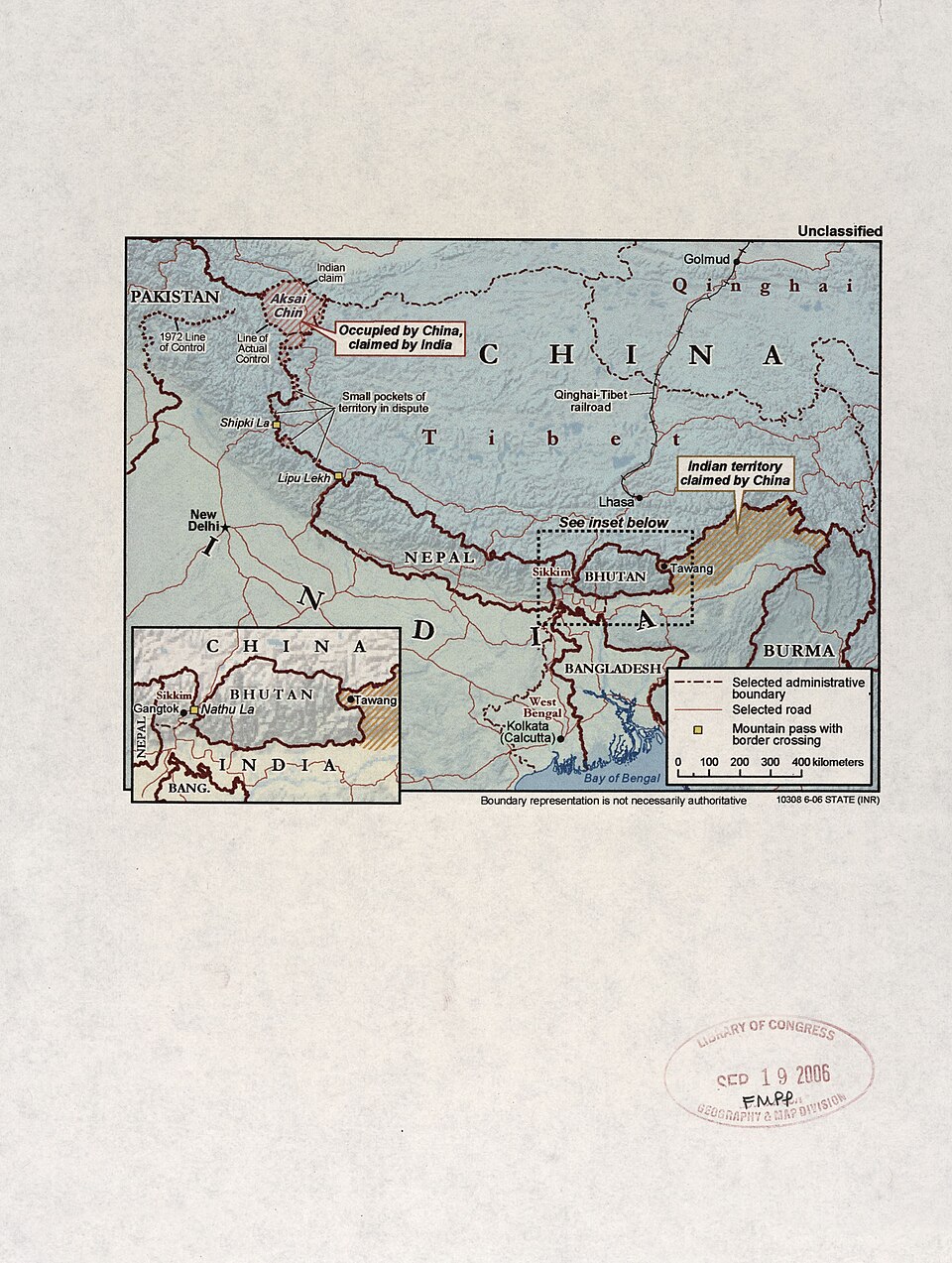 A map showing Nepal’s borders with India and China, highlighting Kalapani and Lipulekh disputes. (Image: United States. Central Intelligence Agency, Public domain, via Wikimedia Commons)
Based on the NEB +2 Humanities syllabus for Political Science (Pol), unit 7.
Discussion
Loading…