AccountancyUnit 18 min read
Intro to Accounting: Definitions, Users, Types & Importance
Unit 1 of Accountancy explains what accounting is, who uses it, its types (financial vs. managerial), and why it matters for businesses and society. Learn key terms, real-world examples, and how accounting helps in decision-making.
TAKEAWAYS:
- Accounting is the language of business that records, classifies, and reports financial transactions.
- It helps businesses, investors, and governments make smart decisions.
- There are two main types: financial accounting (external reports) and managerial accounting (internal decisions).
- Accounting follows rules (GAAP/IFRS) to ensure accuracy and fairness.
- It includes bookkeeping (recording) and reporting (summarizing) financial data.
- Nepal follows Nepal Accounting Standards (NAS) for consistency in financial statements.
1. What is Accounting?
Accounting is the process of identifying, recording, measuring, classifying, verifying, interpreting, communicating, and summarizing financial information of a business or organization.
Key Terms:
- Transaction: Any business activity that affects the financial position (e.g., buying goods, paying salaries).
- Account: A record of all transactions related to a specific item (e.g., Cash Account, Sales Account).
- Bookkeeping: The mechanical part of accounting—just recording transactions in journals and ledgers.
- Accounting: The interpretation and analysis of recorded data to make decisions.
Why is Accounting Important?
Accounting helps: ✔ Track income and expenses ✔ Ensure legal compliance (taxes, laws) ✔ Help businesses grow by analyzing profits and losses ✔ Attract investors with clear financial reports
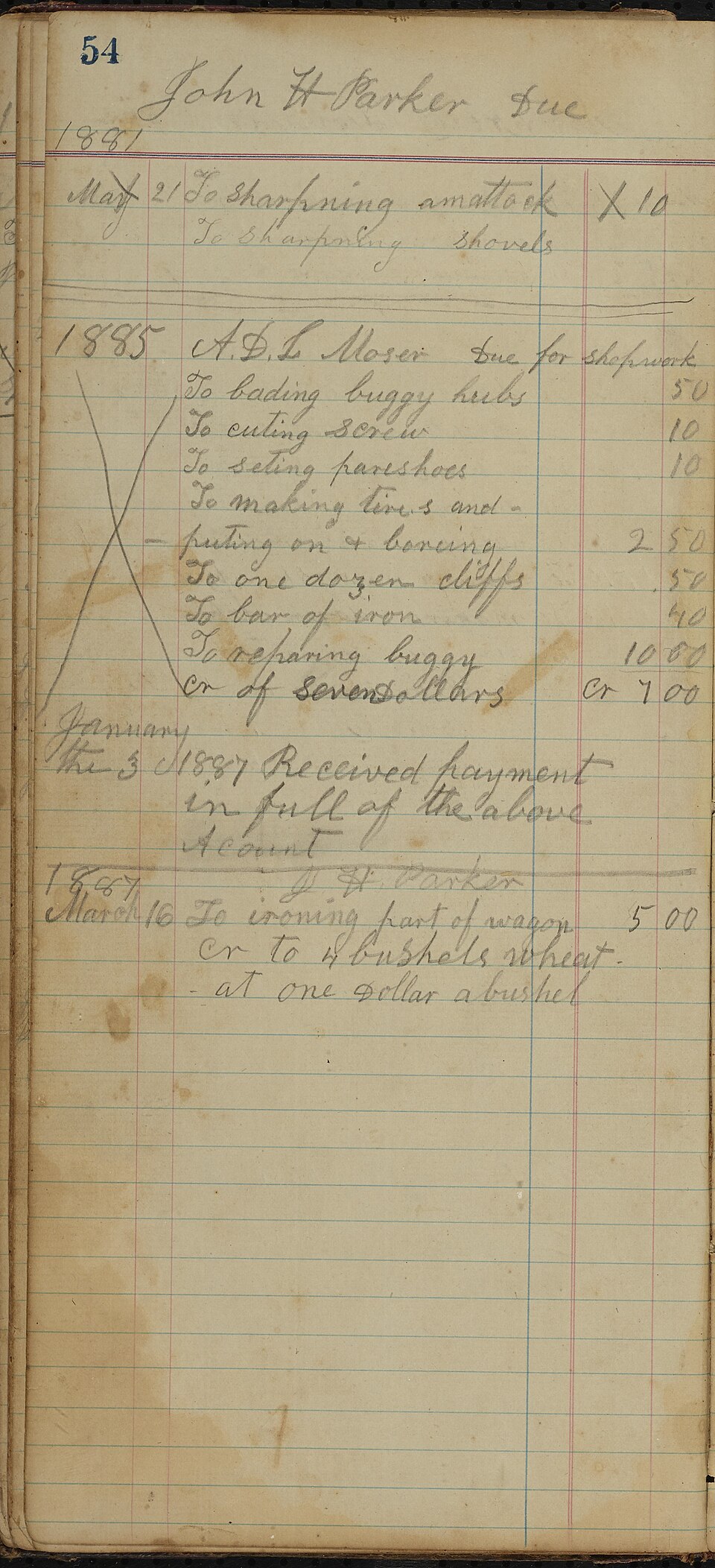 A traditional ledger book showing handwritten transactions (Image: Public domain, via Wikimedia Commons)
2. Who Uses Accounting Information?
Accounting provides useful data to different users:
| Users | How They Use Accounting |
|---|---|
| Owners | Check business performance (profit/loss) |
| Managers | Make decisions (hiring, expansion) |
| Investors | Decide whether to invest money |
| Government | Collect taxes, enforce laws |
| Employees | Understand company stability (job security) |
| Banks | Decide loan approvals |
| Suppliers | Check if a business can pay bills |
Mermaid Diagram: Users of Accounting
mindmap
  root((Accounting Users))
    Owners
    Managers
    Investors
    Government
    Employees
    Banks
    Suppliers
3. Types of Accounting
There are two main types of accounting:
A. Financial Accounting
- Focuses on external reporting (for outsiders like investors, banks, government).
- Follows GAAP (Generally Accepted Accounting Principles) or IFRS (International Financial Reporting Standards).
- Prepares financial statements (Income Statement, Balance Sheet, Cash Flow Statement).
- Example: A company’s annual report showing profits and losses.
B. Managerial Accounting
- Focuses on internal decision-making (for managers inside the company).
- Helps in budgeting, cost control, and performance evaluation.
- Uses special reports (e.g., cost analysis, variance reports).
- Example: A manager checking why production costs increased this month.
| Feature | Financial Accounting | Managerial Accounting |
|---|---|---|
| Purpose | External reporting | Internal decision-making |
| Users | Investors, banks, govt | Managers, employees |
| Rules | GAAP/IFRS | No strict rules |
| Reports | Income Statement, Balance Sheet | Budgets, cost reports |
| Frequency | Yearly/Quarterly | Monthly/Daily |
4. Bookkeeping vs. Accounting
Many people confuse bookkeeping and accounting, but they are different:
| Bookkeeping | Accounting |
|---|---|
| Recording transactions in journals and ledgers | Analyzing and interpreting financial data |
| Mechanical work (like a clerk’s job) | Requires professional judgment (like an accountant’s job) |
| Example: Writing down cash sales | Example: Preparing profit & loss reports |
| Part of accounting | Broader field that includes bookkeeping |
Mermaid Diagram: Bookkeeping vs. Accounting
5. Accounting in Nepal
Nepal follows Nepal Accounting Standards (NAS), which are based on International Financial Reporting Standards (IFRS).
Key Accounting Bodies in Nepal:
- Institute of Chartered Accountants of Nepal (ICAN)
- Nepal Rastra Bank (NRB) – Regulates banking and financial reporting.
- Companies Act, 2063 – Governs accounting practices for businesses.
Example: If a Nepalese company sells goods, it must record the sale price, cost, and profit according to NAS rules.
6. Steps in the Accounting Process
Accounting follows a logical cycle to ensure accuracy:
- Identify Transactions – Record every business activity (e.g., buying raw materials).
- Record in Journal – Write transactions in the Journal (book of original entry).
- Post to Ledger – Transfer journal entries to ledger accounts (e.g., Cash, Sales).
- Prepare Trial Balance – Check if debits = credits.
- Adjust Entries – Correct errors and make adjustments (e.g., depreciation).
- Prepare Financial Statements – Income Statement, Balance Sheet, Cash Flow Statement.
- Close Books – Reset accounts for the next period.
Mermaid Diagram: Accounting Cycle
flowchart TD
  A["Start"] --> B["Identify Transactions"]
  B --> C["Record in Journal"]
  C --> D["Post to Ledger"]
  D --> E["Trial Balance"]
  E --> F["Adjustments"]
  F --> G["Financial Statements"]
  G --> H["Close Books"]
  H -->|"Repeat"| B
7. Advantages and Disadvantages of Accounting
Advantages:
✅ Helps track financial health of a business. ✅ Ensures legal compliance (taxes, laws). ✅ Helps managers make better decisions. ✅ Attracts investors and lenders. ✅ Reduces fraud and errors.
Disadvantages:
❌ Can be time-consuming (especially for small businesses). ❌ Requires training and expertise. ❌ Costly to hire accountants or use software. ❌ Complex rules (GAAP/IFRS/NAS) can be confusing.
8. Solved Example: Identifying Accounting Transactions
Problem: Mr. Ram bought goods worth Rs. 50,000 on credit from Mr. Shyam. Later, he sold goods worth Rs. 30,000 for cash.
Solution:
- Buying Goods on Credit (Asset increases, Liability increases)
- Journal Entry:
Goods A/c   Dr. 50,000
To Shyam A/c   50,000
- Journal Entry:
- Selling Goods for Cash (Asset increases, Revenue increases)
- Journal Entry:
Cash A/c   Dr. 30,000
To Sales A/c   30,000
- Journal Entry:
9. NEB Board-Style Questions (Practice)
Short Answer Questions (SAQ)
- Define accounting in your own words.
- Differentiate between bookkeeping and accounting.
- Who are the users of accounting information? Give two examples.
- What is the purpose of financial accounting?
- Name two accounting standards followed in Nepal.
Long Answer Questions (LAQ)
- Explain the accounting cycle with a diagram. Why is each step important?
- "Accounting is the backbone of every business." Justify this statement with examples.
- Prepare journal entries for the following transactions:
- Bought furniture for Rs. 20,000 in cash.
- Paid rent of Rs. 5,000 by cheque.
- Sold goods worth Rs. 15,000 on credit to Mr. X.
- What are the advantages and disadvantages of maintaining proper accounting records?
Exam Tip
✅ Memorize key definitions (accounting, bookkeeping, transaction). ✅ Understand the difference between financial and managerial accounting. ✅ Practice journal entries—this is a common exam question. ✅ Know Nepal’s accounting standards (NAS)—often asked in exams. ✅ Draw diagrams (accounting cycle, users of accounting) to score extra marks.
Final Note: Accounting is not just about numbers—it’s about telling the story of a business. Whether you run a small shop or a big company, accounting helps you make smart financial decisions! 🚀
Based on the NEB +2 Management syllabus for Accountancy (Acc), unit 1.
Discussion
Loading…