Business StudiesUnit 17 min read
Introduction to Business: Definition, Types, Environment, Entrepreneurship, Functions
Unit 1 of Business Studies: This note explains what business is, the different kinds of businesses, the environment in which they operate, the role of entrepreneurship, the main functions of a business, and how a business plan is prepared, with examples, tables, and visual aids.
Key points
- Business is an activity that creates goods or services for exchange.
- Businesses can be for‑profit or non‑profit and can operate in commercial or non‑commercial sectors.
- The business environment consists of internal and external factors that influence decisions.
- Entrepreneurship is the process of creating and running a new business.
- A business performs four core functions: production, marketing, finance, and human resources.
What is Business?
Business is an organized activity that produces goods or services for sale or exchange.
It involves production, distribution, and consumption of products or services.
A business exists to meet a need or want of society while generating value for its owners or stakeholders.
Key Elements of a Business
| Element | Description |
|---|---|
| Product/Service | The tangible or intangible offering. |
| Market | The group of customers who can buy the offering. |
| Exchange | The act of trading goods/services for money or other goods. |
| Profit | The surplus after deducting costs; a key motive for many businesses. |
Types of Business
Businesses are classified mainly by purpose and ownership.
The following table shows the main categories.
| Purpose | Commercial | Non‑Commercial |
|---|---|---|
| For‑Profit | Seeks profit for owners or shareholders. | Seeks profit but reinvests in social goals. |
| Non‑Profit | Operates for profit but distributes to members. | Operates for social, religious, or charitable aims. |
Commercial vs. Non‑Commercial
- Commercial: Activities that generate revenue for sale (e.g., retail, manufacturing).
- Non‑Commercial: Activities that provide services without direct sales (e.g., education, healthcare).
For‑Profit vs. Non‑Profit
- For‑Profit: Owners receive dividends; focus on financial returns.
- Non‑Profit: Surplus is reinvested; focus on mission or community benefit.
Business Environment
The environment in which a business operates influences its strategy and performance.
It is divided into internal and external factors.
Internal Factors
- Resources: Human, financial, physical, and intellectual.
- Culture: Values, norms, and beliefs within the organization.
- Structure: Hierarchy, departments, and reporting lines.
External Factors
| Category | Examples |
|---|---|
| Economic | Inflation, interest rates, GDP growth. |
| Political/Legal | Regulations, tax policies, labor laws. |
| Social/Cultural | Demographics, lifestyle trends. |
| Technological | Innovations, automation, digitalization. |
| Competitive | Market share, rivalry, barriers to entry. |
| Environmental | Sustainability, climate change, resource scarcity. |
Mermaid Diagram: Business Environment Flow
flowchart TD
  "Internal Factors" --> "Business Strategy"
  "External Factors" --> "Business Strategy"
  "Business Strategy" --> "Decision Making"
  "Decision Making" --> "Performance"
Entrepreneurship
Entrepreneurship is the process of identifying, creating, and exploiting opportunities to start a new business.
Steps in Entrepreneurship
| Step | Description |
|---|---|
| 1. Opportunity Identification | Spot a gap or need in the market. |
| 2. Feasibility Study | Assess technical, economic, and legal viability. |
| 3. Business Plan Development | Outline objectives, strategies, and financial projections. |
| 4. Resource Acquisition | Secure capital, human resources, and technology. |
| 5. Launch | Start operations and market the product/service. |
| 6. Growth & Scaling | Expand market reach, diversify offerings. |
Mermaid Diagram: Entrepreneurship Process
flowchart TD
  "Opportunity" --> "Feasibility Study"
  "Feasibility Study" --> "Business Plan"
  "Business Plan" --> "Resource Acquisition"
  "Resource Acquisition" --> "Launch"
  "Launch" --> "Growth & Scaling"
Advantages of Entrepreneurship
| Advantage | Explanation |
|---|---|
| Innovation | Introduces new products/services. |
| Economic Growth | Creates jobs and stimulates markets. |
| Flexibility | Allows adaptation to changing conditions. |
| Personal Satisfaction | Enables self‑fulfillment and autonomy. |
Disadvantages of Entrepreneurship
| Disadvantage | Explanation |
|---|---|
| Risk of Failure | High uncertainty in new ventures. |
| Financial Pressure | Need for capital and cash flow management. |
| Work‑Life Balance | Long hours and high stress. |
| Regulatory Hurdles | Compliance with laws and regulations. |
Core Functions of a Business
A business performs four essential functions that interact to create value.
| Function | Main Activities | Example |
|---|---|---|
| Production | Designing, manufacturing, or delivering services. | A bakery baking bread. |
| Marketing | Market research, promotion, sales. | A mobile phone company advertising a new model. |
| Finance | Managing money, budgeting, accounting. | A firm preparing a profit‑and‑loss statement. |
| Human Resources | Recruiting, training, employee welfare. | A company hiring new staff and conducting orientation. |
Example: Simple Profit Calculation
A bakery sells 200 loaves of bread at Rs 50 each.
Total revenue = 200 × 50 = Rs 10,000.
Total cost (ingredients, labor, rent) = Rs 7,000.
Profit = Revenue – Cost = 10,000 – 7,000 = Rs 3,000.
Business Planning
A business plan is a written document that outlines the business idea, market analysis, strategy, and financial projections.
Components of a Business Plan
| Section | Content |
|---|---|
| Executive Summary | Brief overview of the business. |
| Business Description | Mission, vision, legal structure. |
| Market Analysis | Target market, competition, trends. |
| Organization & Management | Structure, key personnel. |
| Products/Services | Detailed description of offerings. |
| Marketing & Sales | Pricing, promotion, distribution. |
| Financial Plan | Budget, cash flow, profit projections. |
| Appendices | Supporting documents, resumes, permits. |
Worked Example: Mini Business Plan Outline
- Executive Summary – “Sweet Treats” will sell artisanal cupcakes in Kathmandu.
- Business Description – Sole proprietorship, registered in 2024.
- Market Analysis – Target: 18‑35 year olds, high disposable income.
- Organization – Owner + 2 bakers, 1 cashier.
- Products – 10 cupcake flavors, seasonal specials.
- Marketing – Instagram ads, local food festivals.
- Financial Plan – Initial investment Rs 200,000; projected profit Rs 50,000 in year 1.
Visual Aids
 A typical business office environment (Image: Jaggery, CC BY-SA 2.0, via Wikimedia Commons)
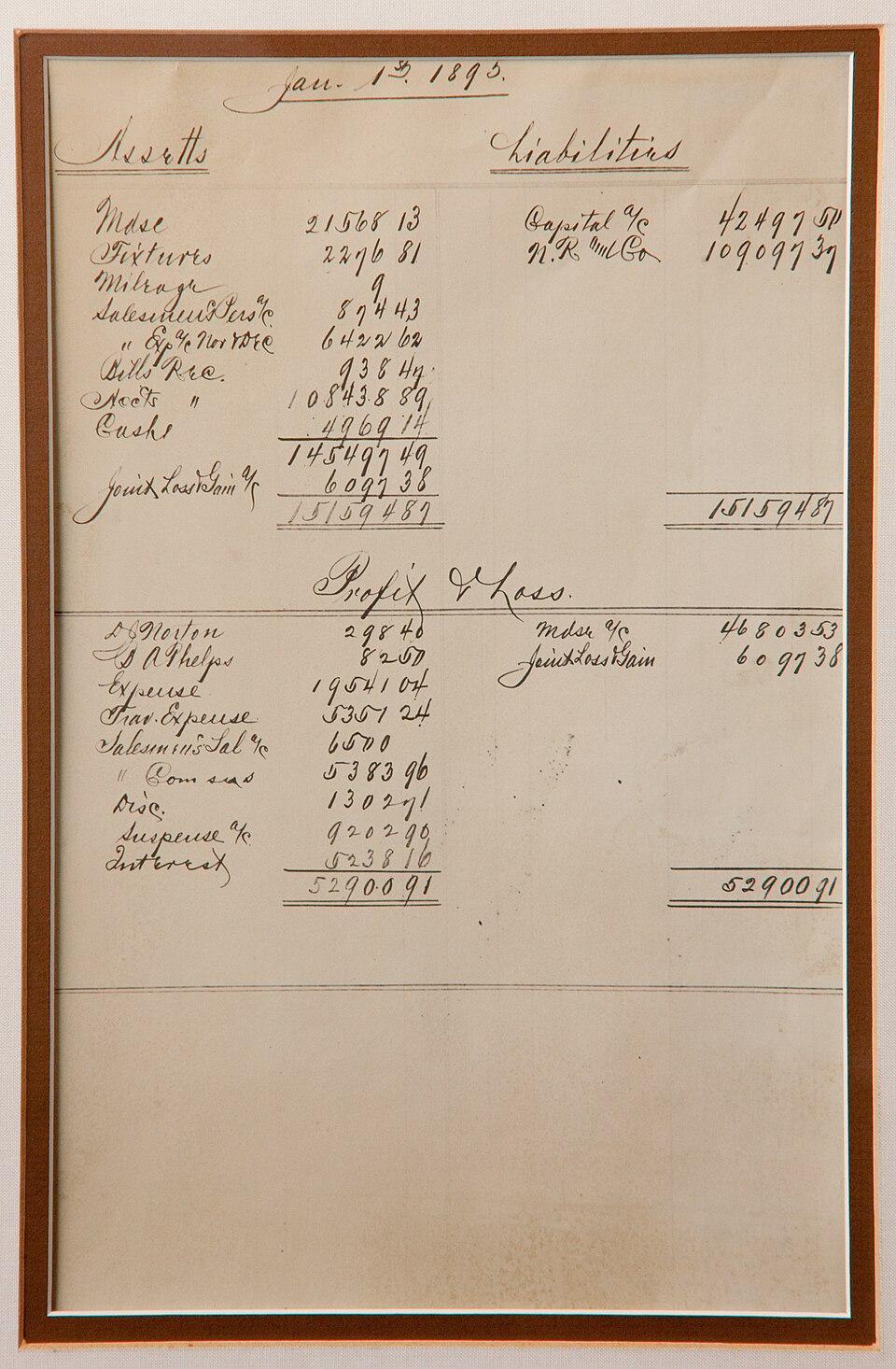 Simple P&L example for a small business (Image: Albert Henry Loeb, Attribution, via Wikimedia Commons)
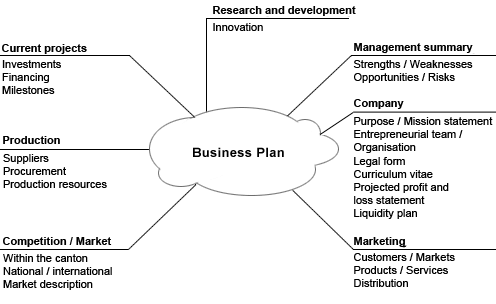 Outline of a business plan (Image: Karimeh, CC BY-SA 3.0, via Wikimedia Commons)
Exam Tip
NEB exams for Unit 1 often include:
- Multiple‑choice questions on definitions and classifications.
- Short answer questions asking to explain concepts like “business environment” or “entrepreneurship.”
- Case study questions where you analyse a small business scenario and suggest improvements.
Strategy:
- Read the question carefully – identify keywords (e.g., “define,” “compare,” “explain”).
- Use bullet points for short answers to keep them concise.
- Include a diagram or table where appropriate; it demonstrates understanding and saves time.
- Answer all parts of a case study: describe the situation, analyse problems, propose solutions, and justify them.
Good luck!
Based on the NEB +2 Management syllabus for Business Studies (BS), unit 1.
Discussion
Loading…