EnglishUnit 914 min read
Arts and Creations: Forms, Functions & Cultural Impact
Unit 9 of English explores the world of arts and creations—from visual arts (painting, sculpture) to performing arts (music, dance, drama), literary arts (poetry, storytelling), and digital creations (animation, graphic design). Learn how these forms express ideas, emotions, and cultures, and how they shape society.
TAKEAWAYS:
- Arts are divided into visual, performing, literary, and digital forms, each with unique techniques and purposes.
- Creativity is the core of all art forms—it solves problems, communicates messages, and preserves cultural identity.
- Arts reflect history, traditions, and social issues, making them powerful tools for change.
- Appreciation and criticism help us understand the deeper meanings behind artistic works.
- Digital arts (like animation and graphic design) blend technology with creativity, opening new career paths.
- NEB exams test analysis, comparison, and personal responses to artworks, so practice describing and interpreting them.
What Are Arts and Creations?
Arts and creations refer to all forms of human expression that use imagination, skill, and creativity. They can be:
- Visual (seen with eyes: paintings, sculptures, photography).
- Performing (experienced live: music, dance, theater).
- Literary (written or spoken: poetry, stories, speeches).
- Digital (created with technology: animations, graphic design, video games).
These forms are not just for entertainment—they tell stories, share emotions, preserve culture, and even solve problems (like using art therapy for mental health).
1. Visual Arts: Painting, Sculpture, and Photography
Visual arts are artworks you can see and touch (or view). They use colors, shapes, and textures to communicate ideas.
Key Types of Visual Arts
| Type | Definition | Examples | Techniques Used |
|---|---|---|---|
| Painting | Art created with paint on a surface. | Portraits, landscapes, abstract art. | Brushwork, color mixing, shading. |
| Sculpture | 3D art made from materials like clay, stone, or metal. | Statues, installations, mobiles. | Carving, molding, welding. |
| Photography | Art of capturing images with a camera. | Nature, street, portrait photography. | Composition, lighting, editing. |
| Graphic Design | Visual communication (logos, posters, ads). | Magazine covers, billboards, app icons. | Typography, color theory, layout design. |
How Do Visual Arts Work?
- Colors evoke emotions (e.g., red = passion, blue = calm).
- Shapes and lines guide the viewer’s eye (e.g., curved lines feel soft; sharp lines feel bold).
- Composition (how elements are arranged) creates balance or tension.
Example: Analyzing a Painting Look at this famous painting (imagine "The Starry Night" by Vincent van Gogh):
- Colors: Swirling blues and yellows create a dreamy, chaotic mood.
- Brushstrokes: Thick, visible strokes show emotion and movement.
- Meaning: The painting might represent van Gogh’s mental state or his fascination with the night sky.
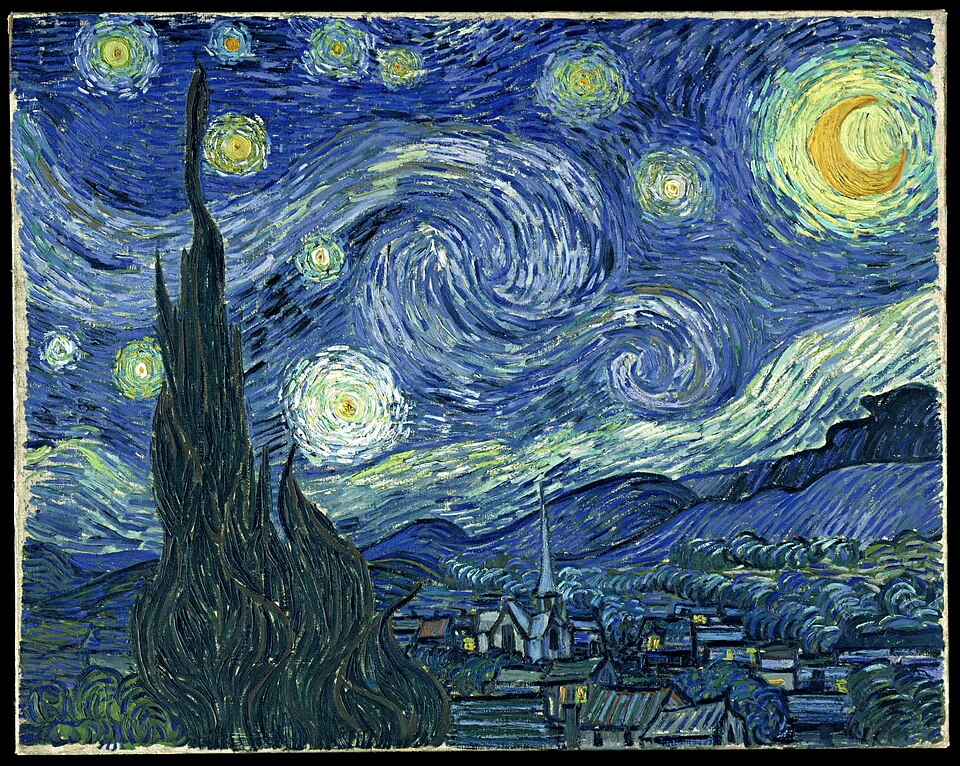 A swirling night sky with a village below, painted with thick, emotional brushstrokes. (Image: Vincent van Gogh, Public domain, via Wikimedia Commons)
Advantages and Disadvantages of Visual Arts
| Advantages | Disadvantages |
|---|---|
| Preserves history and culture. | Requires skill and materials (expensive). |
| Can express emotions words can’t. | Some forms (like sculptures) take time to create. |
| Used in advertising, branding, and therapy. | Misinterpretation—art can be subjective. |
2. Performing Arts: Music, Dance, and Drama
Performing arts are live, interactive experiences where artists perform for an audience.
Key Types of Performing Arts
| Type | Definition | Examples | Skills Needed |
|---|---|---|---|
| Music | Art of sound and rhythm. | Classical, jazz, rock, folk. | Singing, playing instruments, composing. |
| Dance | Movement to express emotions or stories. | Ballet, hip-hop, Kathak, folk dances. | Flexibility, rhythm, storytelling. |
| Drama/Theater | Acting out stories on stage. | Plays, monologues, street performances. | Acting, voice control, stage presence. |
How Do Performing Arts Work?
Music:
- Melody = tune (easy to remember).
- Rhythm = beat (keeps time).
- Harmony = multiple notes played together.
- Example: A sad song might use slow tempo and minor keys.
Dance:
- Body movements tell stories (e.g., Kathak uses footwork to narrate myths).
- Costumes and props add meaning (e.g., a warrior’s mask in a traditional dance).
Drama:
- Characters have motives (why they act).
- Dialogue reveals personality (e.g., a shy character speaks softly).
- Stage design (lights, sets) sets the mood.
Example: Analyzing a Dance Performance Imagine a Kathak dance about Lord Krishna:
- Footwork: Fast taps tell a story (e.g., Krishna’s playful childhood).
- Hand gestures (Mudras): Each gesture means something (e.g., blessing, greeting).
- Costume: Bright colors and jewelry symbolize royalty.
Advantages and Disadvantages of Performing Arts
| Advantages | Disadvantages |
|---|---|
| Brings people together (social bonding). | Requires live audience (no recordings). |
| Can be therapeutic (e.g., music for stress). | Needs practice and performance skills. |
| Preserves traditions (e.g., folk dances). | Expensive costumes/props for big productions. |
3. Literary Arts: Poetry and Storytelling
Literary arts use words to create beauty, tell stories, or share ideas.
Key Types of Literary Arts
| Type | Definition | Examples | Techniques Used |
|---|---|---|---|
| Poetry | Rhythmic, imaginative writing. | Sonnets, free verse, haikus. | Rhyme, meter, imagery, symbolism. |
| Short Stories | Brief fictional narratives. | Fairy tales, flash fiction. | Plot, characters, setting, theme. |
| Speeches | Powerful spoken words. | Motivational speeches, political speeches. | Persuasion, tone, structure. |
How Do Literary Arts Work?
Poetry:
- Imagery = vivid descriptions (e.g., "The moon was a pearl in the night sky").
- Rhyme and rhythm make it musical.
- Example (Haiku):
(5-7-5 syllables, nature theme.)Cherry blossoms fall, a soft pink blanket on the ground— spring’s fleeting beauty.
Short Stories:
- Plot: Beginning (setup), middle (conflict), end (resolution).
- Characters: Protagonist (hero) vs. antagonist (villain).
- Theme: The big idea (e.g., "friendship overcomes fear").
Example: Analyzing a Poem Read this poem:
"If you can keep your head when all about you Are losing theirs and blaming it on you..." (From *"If—" by Rudyard Kipling)
- Theme: Staying calm in tough situations.
- Techniques:
- Repetition ("If you can...") gives advice.
- Imagery ("losing their heads") shows chaos.
Advantages and Disadvantages of Literary Arts
| Advantages | Disadvantages |
|---|---|
| Preserves language and culture. | Hard to perform live (unlike music). |
| Encourages imagination and critical thinking. | Some styles (like haikus) are hard to master. |
| Used in education and therapy. | Overinterpretation—meanings can be debated. |
4. Digital Arts: Animation, Graphic Design, and More
Digital arts use technology to create art. They are fast, flexible, and widely used in ads, movies, and games.
Key Types of Digital Arts
| Type | Definition | Examples | Tools Used |
|---|---|---|---|
| Animation | Moving images (2D or 3D). | Cartoons, movie effects, ads. | Adobe Animate, Blender. |
| Graphic Design | Visual content for digital/media. | Logos, social media posts, websites. | Photoshop, Canva, Illustrator. |
| Video Editing | Combining video clips into a story. | YouTube videos, movies. | Premiere Pro, Final Cut Pro. |
| Digital Painting | Painting on tablets/computers. | Concept art, illustrations. | Procreate, Photoshop. |
How Do Digital Arts Work?
- Animation:
- Frame-by-frame: Drawing each movement (like old cartoons).
- 3D Modeling: Creating digital objects (used in movies like Avatar).
- Graphic Design:
- Typography: Choosing fonts for readability.
- Color Theory: Colors affect mood (e.g., red = urgency in ads).
- Video Editing:
- Cutting clips, adding music, and using effects to tell a story.
Example: Analyzing a Graphic Design Look at a logo for a fast-food chain (e.g., McDonald’s golden arches):
- Shape: Arches are welcoming and fun.
- Color: Red = hunger, yellow = energy.
- Simplicity: Easy to recognize anywhere.
Advantages and Disadvantages of Digital Arts
| Advantages | Disadvantages |
|---|---|
| Fast to create and edit. | Requires expensive software/hardware. |
| Can reach global audiences online. | Overuse of filters can look unnatural. |
| Used in marketing, gaming, and film. | Ethical issues (e.g., deepfake misinformation). |
How Are Arts and Creations Connected to Culture?
Arts preserve traditions and reflect society. For example:
- Folk dances in Nepal (like Dewali dances) tell stories of gods and heroes.
- Music like Dhrupad (classical Indian) carries spiritual messages.
- Street art (graffiti) can protest social issues (e.g., pollution, inequality).
Example: Cultural Art Form Newari Art (Nepal):
- Type: Painting, sculpture, architecture.
- Features:
- Bright colors, intricate patterns.
- Depicts gods (e.g., Bhairab, Tara) and daily life.
- Significance: Shows Newari culture and Hinduism/Bon traditions.
How to Appreciate and Critique Art
To understand and analyze art, ask:
- What do I see? (Colors, shapes, objects.)
- How does it make me feel? (Happy, sad, excited?)
- What might the artist be trying to say? (Look for symbols, themes.)
- How is it made? (Techniques, tools used.)
Example: Critiquing a Song Song: "Imagine" by John Lennon
- What do I see? (Lyrics about peace, no borders.)
- How does it make me feel? (Hopeful, emotional.)
- What’s the message? (A world without war or greed.)
- How is it made? (Simple melody, repetitive chorus for memorability.)
Exam Tip: How NEB Tests This Unit
NEB exams on Arts and Creations usually ask:
Descriptive Questions:
- "Describe the features of a Kathak dance performance."
- How to answer: Use bullet points (costumes, footwork, meaning).
Comparative Questions:
- "Compare a painting with a photograph in terms of expression."
- How to answer: Make a table (see below).
Aspect Painting Photography Creation Made by hand (artist’s imagination). Captured from reality (camera). Emotion Can be abstract or symbolic. Shows real emotions (e.g., a smile). Purpose Often tells a story or expresses feelings. Documents moments or tells stories. Personal Response Questions:
- "How does music affect your mood? Give examples."
- How to answer: Use PEEL (Point, Example, Explanation, Link).
- Point: Music changes emotions.
- Example: Sad songs make me feel reflective.
- Explanation: Lyrics and melody trigger memories.
- Link: This shows how art connects to personal experiences.
Creative Writing:
- "Write a short poem about nature."
- How to answer: Use sensory details (sights, sounds, smells) and rhythm.
NEB Board-Style Questions (Practice!)
Short Answer: "What are the three main types of performing arts? Give one example of each." Answer:
- Music (e.g., Dhrupad).
- Dance (e.g., Kathak).
- Drama (e.g., One-act plays).
Descriptive: "Describe the role of colors in visual arts." Answer:
- Colors evoke emotions (e.g., blue = calm, red = energy).
- They create focus (e.g., a bright object stands out).
- Artists use color contrast (e.g., warm vs. cool tones) for drama.
Comparative: "How is a sculpture different from a painting?" Answer:
Feature Sculpture Painting Dimension 3D (can be touched from all sides). 2D (flat, only seen from front). Materials Stone, metal, clay. Canvas, paper, paint. Creation Carved or molded. Painted with brushes. Critical Thinking: "Why is digital art becoming popular? Give two reasons." Answer:
- Accessibility: Anyone with a computer/tablet can create art.
- Versatility: Used in movies, ads, and social media (reaches global audiences).
Creative: "Write a short poem (4 lines) about a hobby you enjoy." Sample Answer:
"Pens dance on paper bright, Stories take their flight. Ink and words in perfect play, Writing lights my happy day."
Final Tips for NEB Success
✅ Learn key terms (e.g., imagery, rhythm, symbolism). ✅ Practice describing artworks (use PEEL structure). ✅ Compare different art forms (tables help!). ✅ Read poems and short stories to understand techniques. ✅ Watch performances (dances, plays) to see how they work live.
Remember: Arts are not just about talent—they’re about seeing the world differently. Whether it’s painting, dancing, or writing, creativity is a skill you can develop! 🎨🎭✍️
Based on the NEB +2 Management syllabus for English (Eng), unit 9.
Discussion
Loading…