EnglishUnit 517 min read
History & Culture: Roots, Traditions & Global Ties
Unit 5 of English explores Nepal’s rich history, cultural heritage, and how traditions connect with modern life, with focus on key events, festivals, art, and global influences—essential for NEB exams.
TAKEAWAYS:
- History explains why Nepal’s traditions, like Dashain and Tihar, are celebrated today.
- Culture includes language, art, music, and festivals that define Nepal’s identity.
- Globalization shows how foreign ideas (e.g., technology, fashion) mix with local traditions.
- Key figures (e.g., Prithvi Narayan Shah, King Mahendra) shaped Nepal’s past and present.
- Exam focus: Compare traditions vs. modernity, explain cultural symbols, and analyze historical impacts.
1. What is History?
History is the study of past events, especially those that shaped a nation, society, or culture. It helps us understand:
- Why things happen (e.g., why Nepal has a federal system today).
- Our roots (e.g., how Newari culture influenced Kathmandu’s architecture).
- Lessons for the future (e.g., how past conflicts affect peace today).
How does history connect to culture? Culture is the way of life of a people—their beliefs, customs, arts, and traditions. History creates culture, and culture preserves history. For example:
- Dashain (a Hindu festival) has roots in ancient Hindu epics like the Ramayana.
- Newari architecture (e.g., Patan Durbar Square) reflects medieval craftsmanship.
2. Nepal’s Historical Timeline (Key Events)
Nepal’s history can be divided into three major phases:
| Era | Time Period | Key Events | Impact on Culture |
|---|---|---|---|
| Ancient Period | Before 12th century | - Kirati kingdom (first recorded civilization). | - Introduction of Hinduism and Buddhism. |
| - Licchavi dynasty (golden age of art and literature). | - Newari script, stupas (e.g., Swayambhunath), and temple architecture. | ||
| Unification Era | 18th century | - Prithvi Narayan Shah conquered small kingdoms to form Gorkha Kingdom. | - Nepali language and culture spread nationwide. |
| - 1814–16 Anglo-Nepal War: Nepal lost land but gained respect as a warrior nation. | - Gorkha regiments became legendary in the British Army. | ||
| Modern Nepal | 20th–21st century | - 1951: Democracy introduced after Rana rule ended. | - Shift from monarchy to republic (2008). |
| - 1996–2006 Civil War: Maoist insurgency led to federal democracy. | - New constitution (2015) recognizing federalism and indigenous rights. | ||
| - 2015 Earthquake: Destroyed heritage sites but spurred global support. | - Revival of traditional crafts (e.g., dhaka weaving, newari woodcarving). |
Why is this important for exams? NEB often asks about:
- Causes and effects of historical events (e.g., "How did Prithvi Narayan Shah’s unification affect Nepal?").
- Connections between history and culture (e.g., "How does the Kirati period influence modern Nepali festivals?").
3. Culture: The Heart of Nepal
Culture is not just festivals or food—it’s the shared identity of a people. Nepal’s culture includes:
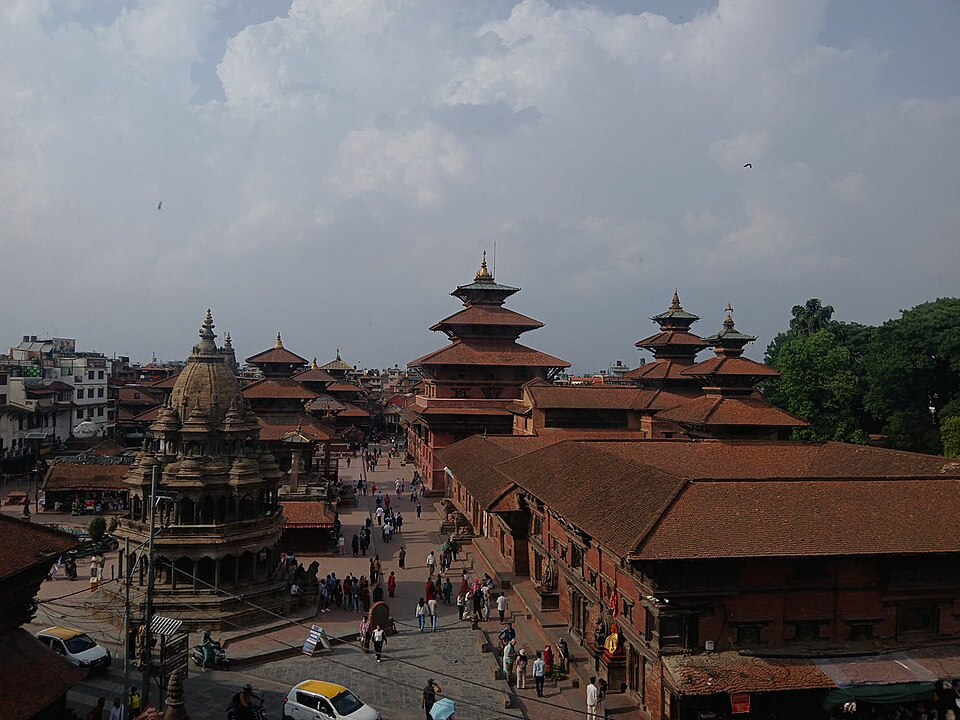 Medieval Newari craftsmanship in Patan Durbar Square (Licchavi-era influence) (Image: SristiAwasthi21, CC0, via Wikimedia Commons)
A. Language and Literature
- Nepali: The official language, but Nepal has 123 mother tongues (e.g., Maithili, Tharu, Tamang).
- Classical Literature:
- Ramayana and Mahabharata (Hindu epics) influence festivals like Dashain.
- Bhaktapur’s poetry and Kathmandu’s oral traditions (e.g., jyapu music).
Example: The Newari language (spoken in Kathmandu Valley) has its own script and is used in ancient manuscripts. Its decline is a concern for cultural preservation.
B. Festivals: Windows to History
Nepal’s festivals are living history. Here’s how they connect to the past:
| Festival | Historical Roots | Modern Celebration | Cultural Symbol |
|---|---|---|---|
| Dashain | Celebrates Durga’s victory over evil (from Ramayana). | Families gather, children fly kites, and elders bless younger ones. | Gai Jatra (cattle parade) honors ancestors. |
| Tihar | Honors Yama (God of Death) and Laxmi (Goddess of Wealth). | Oil lamps (diyos), cow puja, and Bhai Tika (brother-sister bond). | Lighting symbolizes victory over darkness. |
| Losar | Tibetan New Year, linked to Buddhist and Bon traditions. | Butter lamps, prayers, and feasting. | Apples and sweets represent prosperity. |
| Teej | Celebrates Parvati’s reunion with Shiva (from Hindu myths). | Women fast, sing dhoop (traditional songs), and wear red. | Red color symbolizes love and fertility. |
| Indra Jatra | Honors Indra (God of Rain) and the Kumari (living goddess). | Chariot procession, dumhi music, and lingo dance. | Kumari’s blessing ensures prosperity. |
Exam Question Practice: "How does Dashain reflect Nepal’s Hindu cultural heritage?" Answer: Dashain celebrates Durga’s victory over evil, a theme from the Ramayana. The nine nights symbolize Durga’s nine forms, and Gai Jatra (cattle parade) honors ancestors, showing respect for family ties—a core Hindu value.
C. Art and Architecture
Nepal’s art tells stories of its past:
Stupas and Pagodas
- Swayambhunath (monkey temple) dates back to the Licchavi period (4th–8th century).
- Boudhanath is a Buddhist stupa symbolizing enlightenment.
Newari Woodcarving
- Temples like Pashupatinath and Patale Chhango have intricate carvings of gods, myths, and nature.
- Example: The Kumari Ghar (Kathmandu) has 12th-century paintings of Hindu deities.
Thangka Paintings
- Buddhist scroll paintings depict Buddha’s life and teachings.
- Used in monasteries and homes for meditation.
D. Music and Dance
- Traditional Instruments:
- Madal (drum), sarangi (string instrument), bansuri (flute).
- Folk Dances:
- Maruni (Newari dance with masks).
- Charya Nritya (ancient Buddhist dance).
- Tamang Selo (war dance of the Tamang community).
Exam Tip: If asked about cultural preservation, mention:
- UNESCO’s recognition of Kathmandu Valley as a World Heritage Site.
- Government efforts like the National Museum and folk art festivals.
4. History and Culture in the Modern World
Nepal’s past shapes its present and future. Here’s how:
A. Globalization vs. Tradition
Globalization brings new ideas, but Nepal balances them with its culture:
| Global Influence | Traditional Response | Example |
|---|---|---|
| Western fashion | Dhaka topi (traditional cap) remains popular. | Brands like Nepali Topi mix modern designs with dhaka fabric. |
| Social media | Dashain and Tihar posts on Instagram. | Young Nepalis use #NepaliCulture to share traditions globally. |
| Fast food | Momos and sel roti remain staple foods. | Restaurants now offer fusion dishes (e.g., momos with cheese and garlic). |
| Democracy | Federalism respects indigenous cultures. | Constitution of 2015 recognizes 59 languages and federal states. |
Exam Question: "How does globalization affect Nepal’s cultural identity?" Answer: Globalization brings new technologies and ideas, but Nepal preserves culture through:
- Adaptation: Mixing dhaka fabric with modern fashion.
- Education: Teaching history and traditions in schools.
- Tourism: Promoting heritage sites like Lumbini and Patan Durbar Square.
B. Challenges to Cultural Preservation
- Urbanization: Young people move to cities, forgetting traditions.
- Climate Change: Floods and earthquakes damage heritage sites (e.g., Bhaktapur’s Nyatapola Temple).
- Commercialization: Festivals like Dashain now involve expensive gifts instead of family bonds.
Solution:
- Government: Restores temples (e.g., Kathmandu’s Basantapur Durbar Square).
- NGOs: Teach traditional crafts (e.g., newari woodcarving).
- Youth: Use social media to revive languages (e.g., #SaveNewari).
5. Key Historical and Cultural Figures
NEB often asks about important personalities. Here are some:
| Figure | Role | Cultural/Historical Impact |
|---|---|---|
| Prithvi Narayan Shah | Unified Nepal in 1768. | Created a strong central government; Nepali language spread. |
| King Mahendra | Ruled 1955–1972; ended democracy in 1960 (Panchayat System). | Modernized infrastructure but suppressed political freedoms. |
| Bhanubhakta Acharya | First Nepali poet to translate the Ramayana into Nepali (1805). | Made Nepali a literary language; inspired national pride. |
| Ganga Shah | First Nepali woman pilot and social worker. | Promotes women’s education and cultural festivals. |
| Laxmi Prasad Devkota | Modern Nepali poet (e.g., Muna Madan). | Blended traditional themes with modern emotions. |
Exam Question: "Why is Prithvi Narayan Shah considered a national hero?" Answer: He:
- Unified Nepal from small kingdoms.
- Strengthened Nepali identity by promoting the Nepali language and culture.
- Created a strong army, making Nepal a respected nation.
6. Writing About History and Culture (Exam Skills)
NEB exams test analysis and description. Here’s how to score full marks:
A. Descriptive Questions (5–10 marks)
Example Question: "Describe the significance of Dashain in Nepali culture."
Model Answer: Dashain is Nepal’s most important Hindu festival, celebrated for nine nights and ten days. Its significance lies in:
- Religious Roots: It commemorates Durga’s victory over evil (from the Ramayana), symbolizing good over evil.
- Family Bonds: The Bhai Tika ceremony strengthens brother-sister relationships.
- National Unity: Schools and offices close, bringing the entire nation together.
- Cultural Rituals: Animal sacrifices (now reduced), kite flying, and feasting reflect ancient traditions.
- Economic Impact: Boosts businesses (e.g., tika shops, jhijhimi sweets).
Exam Tip:
- Use short paragraphs (1 idea per paragraph).
- Link to history (e.g., "Dashain’s origins trace back to the Ramayana").
- Mention modern practices (e.g., "Today, eco-friendly tikas are used").
B. Comparative Questions (8–12 marks)
Example Question: "Compare the celebration of Dashain in the hills and the Terai."
| Aspect | Hills (Kathmandu, Pokhara) | Terai (Janakpur, Birgunj) |
|---|---|---|
| Duration | Full nine nights + ten days. | Often shortened due to work (e.g., 5–7 days). |
| Rituals | Gai Jatra (cattle parade), kite flying. | Gai Jatra less common; more prayer meetings. |
| Food | Kwati (mixed sprouts), sel roti, jhijhimi. | Rice-based dishes (e.g., bhatmas), fish curry. |
| Work Impact | Schools/offices close for 15 days. | Many return to work after 5–7 days. |
| Cultural Mix | Hindu-dominated; some Buddhist rituals. | More diverse (Hindu, Muslim, and indigenous groups). |
Exam Tip:
- Use a table for comparisons (saves time!).
- Explain why differences exist (e.g., "Terai has more agricultural work").
C. Analytical Questions (10–15 marks)
Example Question: "How has Nepal’s history influenced its cultural identity today?"
Model Answer: Nepal’s history has deeply shaped its cultural identity in three key ways:
Unification and National Language
- Prithvi Narayan Shah’s 18th-century unification spread Nepali language and culture nationwide.
- Example: Today, Nepali is the lingua franca, even though 123 languages are spoken.
Religious Syncretism
- The Licchavi period (4th–8th century) blended Hinduism and Buddhism.
- Example: Festivals like Losar (Buddhist) and Dashain (Hindu) coexist peacefully.
Resilience Against Foreign Rule
- The Anglo-Nepal War (1814–16) and Rana regime (1846–1951) taught Nepalis to preserve identity.
- Example: The Gorkha regiments became symbols of bravery, and traditional dress (e.g., daura suruwal) remains a national pride.
Modern Impact:
- Federalism (2015 constitution) recognizes indigenous cultures, reflecting historical diversity.
- Heritage tourism (e.g., Lumbini, Kathmandu Valley) keeps traditions alive.
7. NEB-Style Practice Questions
Short Answer (3–5 marks)
"What was the main achievement of Prithvi Narayan Shah?" Answer: Unifying Nepal into a single kingdom in 1768, promoting Nepali language and culture.
"Name two Newari cultural contributions." Answer: Newari architecture (e.g., Patan Durbar Square) and Newari script.
Long Answer (10–15 marks)
- "Explain how festivals like Dashain and Tihar reflect Nepal’s cultural values."
Answer:
Dashain and Tihar are not just celebrations but teachings of cultural values:
- Family and Respect: Bhai Tika (Dashain) and Tihar’s sister-brother bond emphasize harmony.
- Victory of Good: Dashain’s story of Durga defeating evil mirrors Nepal’s struggles (e.g., Maoist conflict).
- Ancestor Worship: Gai Jatra (Dashain) and Kukur Tihar (Tihar) honor departed souls.
- Unity in Diversity: Both festivals include Hindu and Buddhist rituals, showing religious coexistence.
Creative Writing (8–10 marks)
- "Imagine you are a tourist visiting Bhaktapur. Write a diary entry describing its cultural heritage." Sample Answer: Date: 2023-10-15 Today, I visited Bhaktapur, a city frozen in time. The Nyatapola Temple (1702) stood tall, its 108-carved windows symbolizing Lord Vishnu’s surasundari (beauty). The pottery square was alive with artisans shaping dhungro (traditional pots), a craft passed down for centuries. I tried jhaneko (local bread) and sel roti, feeling the warmth of Newari hospitality. The Bhaktapur Durbar Square, with its intricate woodcarvings, reminded me of Nepal’s golden Licchavi era. As I left, the sunset over the temple painted the sky gold—just like the royal palaces of old.
Exam Tip: How to Score Full Marks
- Understand the Question: Highlight key words (e.g., "compare," "explain," "describe").
- Structure Your Answer:
- Introduction: State the main point in 1–2 sentences.
- Body: Use bullet points or paragraphs for each idea.
- Conclusion: Summarize with a final thought.
- Use Examples: NEB loves real-life connections (e.g., "Like Prithvi Narayan Shah unified Nepal, modern leaders promote unity").
- Grammar and Clarity: Avoid long sentences; use simple words.
- Time Management: Spend 2–3 minutes planning before writing.
Final Checklist Before Submission
✅ History: Did I mention key events (unification, wars, democracy)? ✅ Culture: Did I cover festivals, art, language, and traditions? ✅ Links: Did I connect history to modern Nepal? ✅ Examples: Did I use real-life cases (e.g., Prithvi Narayan Shah, Dashain rituals)? ✅ Exam Format: Did I follow short/long answer structures?
Good luck! History and culture are easy to score if you practice linking past to present. 🚀
Based on the NEB +2 Management syllabus for English (Eng), unit 5.
Discussion
Loading…