AccountancyUnit 69 min read
Forfeiture & Reissue of Shares: Process, Journal Entries, Reasons
Unit 6 of Accountancy explains how companies handle unpaid shares (forfeiture) and later reissue them, including accounting entries, treatment of forfeited shares, and legal procedures—essential for NEB exams.
TAKEAWAYS:
- Forfeiture occurs when shareholders fail to pay call money, and shares are legally canceled by the company.
- Forfeited shares can be reissued at a higher price to recover losses, with adjustments to the Securities Premium Reserve.
- The forfeiture account is a nominal account that is closed by transferring its balance to the capital reserve.
- Reissue of forfeited shares requires journal entries for the new issue, adjusting the forfeiture account and capital reserve.
- NEB exam focus: Memorize journal entries for forfeiture, reissue, and treatment of forfeited shares in the balance sheet.
- Key terms: Forfeited shares, reissue, call money, capital reserve, securities premium reserve.
What is Forfeiture of Shares?
When a company issues shares, it may ask shareholders to pay in installments (called calls). If a shareholder fails to pay the call money within the given time, the company can forfeit (cancel) those shares. This means the shareholder loses their rights to the shares, and the company can reissue them to new investors.
Why does forfeiture happen?
- Shareholders default on call payments.
- The company wants to penalize non-paying shareholders.
- The company can recover losses by reissuing forfeited shares at a higher price.
Legal Process of Forfeiture
- The company sends a notice to the defaulting shareholder.
- If the shareholder still does not pay, the company forfeits the shares after a specified period (usually 30–90 days).
- The forfeited shares are cancelled and can be reissued later.
Accounting Treatment of Forfeiture
When shares are forfeited, the company must:
- Cancel the shareholder’s name from the register.
- Transfer the unpaid amount to the forfeiture account (a nominal account).
- Adjust the share capital account by reducing it by the amount of forfeited shares.
Journal Entry for Forfeiture
Suppose:
- Face value of shares = Rs. 100 each
- Calls in arrears = Rs. 50 (first call) + Rs. 30 (second call) = Rs. 80
- Number of shares forfeited = 100 shares
The journal entry is:
Forfeited Shares A/c   Dr.    8,000
   To Calls in Arrears A/c       8,000
(Here, 100 shares × Rs. 80 = Rs. 8,000 is transferred to the forfeiture account.)
What Happens to Forfeited Shares?
Forfeited shares can be:
- Reissued (sold again to new investors).
- Cancelled (if the company does not want to reissue them).
Treatment of Forfeited Shares in the Balance Sheet
Forfeited shares appear as a deduction from the share capital until they are reissued or cancelled.
| Particulars | Amount (Rs.) |
|---|---|
| Authorized Share Capital | 1,00,000 |
| Issued Share Capital | 92,000 |
| Less: Forfeited Shares | (8,000) |
| Paid-up Share Capital | 84,000 |
Reissue of Forfeited Shares
Companies often reissue forfeited shares to recover losses. The reissue can be:
- At par (original face value).
- At premium (above face value).
- At discount (below face value, but only if allowed by the company’s articles).
Journal Entries for Reissue
Suppose the company reissues 100 forfeited shares (face value Rs. 100 each) at Rs. 120 per share (including a premium of Rs. 20).
If the full amount is received (Rs. 120 per share):
Bank A/c                     Dr.    12,000
   To Forfeited Shares A/c     10,000
   To Securities Premium A/c   2,000
(Here, Rs. 10,000 is the face value, and Rs. 2,000 is the premium.)
If only part of the amount is received (e.g., Rs. 110 per share):
Bank A/c                     Dr.    11,000
   To Forfeited Shares A/c     10,000
   To Securities Premium A/c   1,000
(The remaining Rs. 10 per share is treated as call money and recorded separately.)
Treatment of Forfeiture Account
The forfeiture account is a nominal account (like an expense account). At the end of the accounting period, it must be closed by transferring its balance to the capital reserve.
Journal Entry to Close Forfeiture Account
Suppose the forfeiture account has a balance of Rs. 8,000 (from earlier example), and the company reissues all forfeited shares.
Capital Reserve A/c             Dr.    8,000
   To Forfeited Shares A/c       8,000
(This transfers the forfeited amount to the capital reserve, which is a permanent reserve.)
Comparison: Forfeiture vs. Calls in Arrears
| Feature | Forfeiture of Shares | Calls in Arrears |
|---|---|---|
| Definition | Shares are legally canceled due to non-payment. | Shareholders fail to pay call money but still hold shares. |
| Accounting Treatment | Forfeited shares are removed from share capital. | Calls in arrears appear as a liability. |
| Reissue Possible? | Yes, forfeited shares can be reissued. | No, calls in arrears must be paid first. |
| Effect on Share Capital | Reduces share capital until reissued. | No direct effect on share capital. |
Advantages and Disadvantages of Forfeiture
Advantages:
✅ Recovers losses – The company can reissue shares at a premium to recover unpaid amounts. ✅ Disciplines shareholders – Encourages timely payment of calls. ✅ Increases capital – Reissuing at a premium boosts the securities premium reserve.
Disadvantages:
❌ Legal complications – Forfeiture involves legal procedures and notices. ❌ Reputation risk – May discourage future investors if handled poorly. ❌ Accounting complexity – Requires careful journal entries and adjustments.
Solved Example (NEB Style)
Problem: X Ltd. issued 10,000 shares of Rs. 100 each at a premium of Rs. 20. All calls were paid except the final call of Rs. 30 on 500 shares. These shares were forfeited. Later, all forfeited shares were reissued as fully paid at Rs. 110 per share.
Required:
- Journal entries for forfeiture and reissue.
- Balance sheet treatment of forfeited shares.
Solution:
Journal Entries:
- Issue of Shares (Assuming all calls were made):
Bank A/c Dr. 1,200,000 To Share Capital A/c 1,000,000 To Securities Premium A/c 200,000 - Forfeiture of Shares (500 shares × Rs. 30):
Forfeited Shares A/c Dr. 15,000 To Calls in Arrears A/c 15,000 - Reissue of Forfeited Shares (500 shares × Rs. 110):
Bank A/c Dr. 55,000 To Forfeited Shares A/c 50,000 To Securities Premium A/c 5,000 - Closing Forfeiture Account:
Capital Reserve A/c           Dr.    15,000
   To Forfeited Shares A/c     15,000
- Issue of Shares (Assuming all calls were made):
Balance Sheet Treatment:
- Before Reissue:
Authorized Share Capital: 10,000 × Rs. 100 = 1,000,000 Issued Share Capital: (10,000 - 500) × Rs. 100 = 950,000 Less: Forfeited Shares: 500 × Rs. 100 = (50,000) Paid-up Share Capital: 900,000 - After Reissue:
- The forfeited shares are now fully paid, so the share capital increases back to Rs. 1,000,000.
- Before Reissue:
NEB Board-Style Questions (Practice)
Short Answer:
- What is the difference between forfeited shares and calls in arrears?
- Why is the forfeiture account closed by transferring it to the capital reserve?
Journal Entries:
- A company forfeits 200 shares of Rs. 100 each for non-payment of the final call of Rs. 30. Later, these shares are reissued at Rs. 115 per share. Show the journal entries.
Theoretical:
- Explain the advantages of reissuing forfeited shares at a premium.
Numerical:
- Y Ltd. issued 5,000 shares of Rs. 100 each at a premium of Rs. 10. The final call of Rs. 40 was not received on 200 shares, which were forfeited. Later, all forfeited shares were reissued at Rs. 90 per share (including premium). Pass the necessary journal entries.
Exam Tip
✔ Memorize journal entries for forfeiture, reissue, and closing the forfeiture account. ✔ Understand the difference between forfeited shares and calls in arrears. ✔ Practice numerical problems where forfeited shares are reissued at a premium or discount. ✔ Know the treatment of forfeited shares in the balance sheet (deduction from share capital). ✔ NEB loves questions on reissue at premium—be ready to calculate securities premium adjustments!
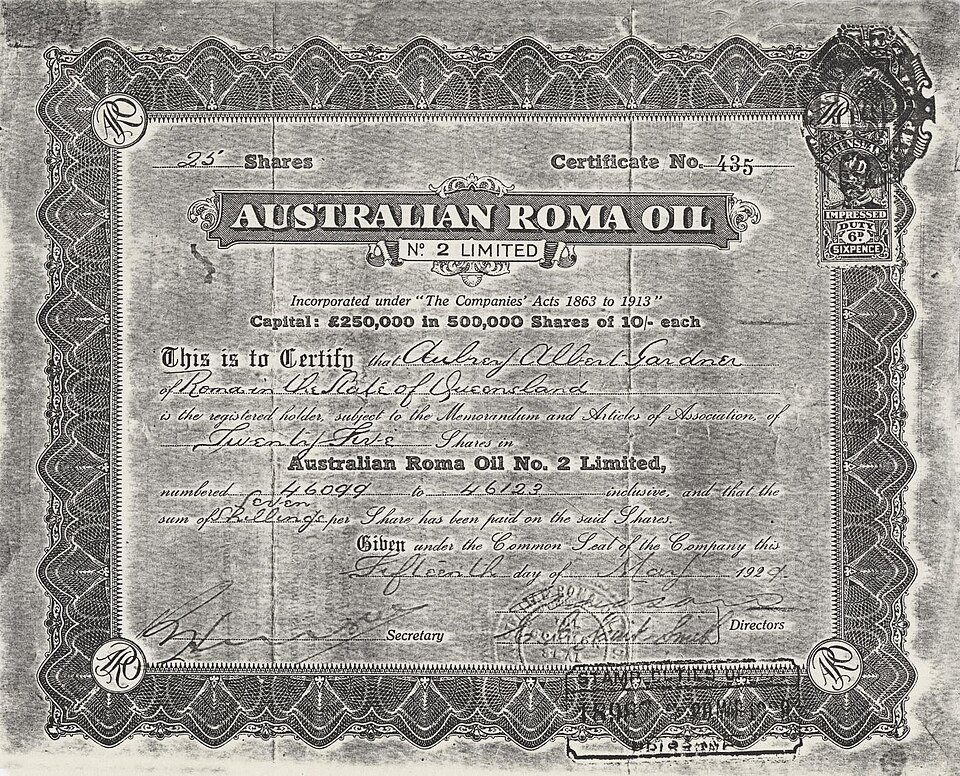 A share certificate issued by a company, showing shareholder details and share value. (Image: CC BY 4.0, via Wikimedia Commons)
flowchart TD
    A["Shareholder Fails to Pay Call"] --> B["Notice Sent"]
    B --> C["If Not Paid: Shares Forfeited"]
    C --> D["Forfeited Shares Account Debited"]
    D --> E["Reissue Forfeited Shares"]
    E --> F["Adjust Forfeiture Account to Capital Reserve"]
Based on the NEB +2 Management syllabus for Accountancy (Acc), unit 6.
Discussion
Loading…