Business StudiesNEB 2076 (old course)
Give the concept of motivation and explain its importance. [2+6]
8Answer
Concept of Motivation
Motivation is an internal force that stimulates, directs, and sustains human behavior toward achieving specific goals. It is the driving power within individuals that influences their actions, decisions, and persistence in pursuing objectives. According to McGregor’s Theory X and Y, motivation can be intrinsic (self-driven) or extrinsic (externally influenced). Similarly, Maslow’s Hierarchy of Needs explains that motivation arises from unfulfilled needs, pushing individuals to act in ways that satisfy those needs.
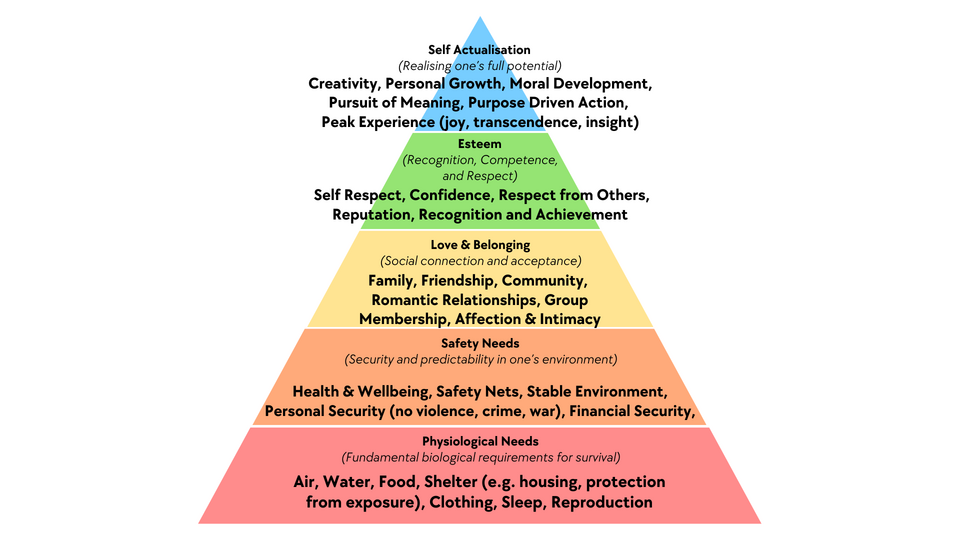 Maslow’s Hierarchy of Needs: A foundational model for understanding motivation (Image: Hamish.croker, CC BY-SA 4.0, via Wikimedia Commons)
Motivation can be classified into two broad categories:
- Intrinsic Motivation: Arises from internal satisfaction, such as personal growth, achievement, or enjoyment of the task.
- Extrinsic Motivation: Comes from external rewards, such as money, promotions, or recognition.
In a business context, motivation plays a crucial role in determining employee performance, productivity, and overall organizational success.
Importance of Motivation
Motivation is essential for both individuals and organizations. Its significance can be explained through the following points:
1. Enhances Performance and Productivity
Motivated employees are more efficient and effective in their work. They put in extra effort, leading to higher output and better quality of work. For example, a salesperson motivated by incentives will work harder to achieve targets, directly impacting the company’s revenue.
2. Increases Job Satisfaction
Motivation leads to higher job satisfaction, reducing dissatisfaction and turnover rates. Employees who feel valued and motivated are more likely to stay committed to their roles. This, in turn, fosters a positive work environment.
3. Reduces Absenteeism and Tardiness
Motivated employees are less likely to be absent or late for work. They take pride in their responsibilities and are more punctual. This ensures smooth business operations and minimizes disruptions.
4. Encourages Innovation and Creativity
A motivated workforce is more innovative and creative. Employees who feel inspired are more likely to suggest new ideas, improve processes, and contribute to organizational growth. Companies like Google and Apple thrive because they foster a culture of motivation and innovation.
5. Improves Teamwork and Cooperation
Motivation fosters collaboration and team spirit. When employees are motivated, they work better in teams, share knowledge, and support each other. This leads to a harmonious work environment and better project outcomes.
6. Ensures Organizational Success
Ultimately, motivation is the key to organizational success. A motivated workforce drives the company toward its goals, enhances customer satisfaction, and strengthens the organization’s competitive position in the market.
Practical Example of Motivation in Business
Consider a manufacturing company where employees are not motivated. The production process slows down, quality declines, and workers frequently call in sick. However, when the company introduces performance-based bonuses, recognition programs, and career growth opportunities, employees become more engaged. As a result:
- Productivity increases by 30%.
- Employee turnover decreases by 20%.
- Customer complaints reduce due to improved product quality.
This demonstrates how motivation directly impacts business success.
Conclusion
Motivation is the driving force behind human behavior, influencing both personal and professional success. In business, it is crucial for improving performance, job satisfaction, innovation, and overall organizational growth. Companies that invest in motivating their employees gain a competitive edge in the market. Thus, understanding and applying motivational techniques is essential for managers and leaders to build a high-performing workforce.
Discussion
Loading…