Life Skill EducationUnit 1211 min read
Financial Literacy: Budgeting, Saving, Investing & Smart Money Use
Unit 12 of Life Skill Education teaches how to manage money wisely—budgeting, saving, investing, and avoiding debt—with real-life examples, NEB-style questions, and visual tools to master financial independence.
TAKEAWAYS:
- Budgeting is the key to controlling spending: track income vs. expenses to avoid financial stress.
- Saving is not just for emergencies—it’s the foundation of future goals (education, home, retirement).
- Investing (stocks, bonds, real estate) grows money over time, but requires research and patience.
- Debt can be useful (for education/housing) or dangerous (credit cards, loans with high interest).
- Financial scams (fake investments, pyramid schemes) are everywhere—always verify before trusting.
- Smart habits (delayed gratification, compound interest) turn small savings into big wealth.
What is Financial Literacy?
Financial literacy means understanding how money works—how to earn, save, spend, invest, and protect it. It helps you:
- Avoid financial mistakes (like overspending or falling for scams).
- Plan for the future (college, home, retirement).
- Make informed choices about loans, insurance, and taxes.
Why is it important?
- 70% of Nepalis struggle with debt or lack savings (Nepal Rastra Bank, 2023).
- Poor money management leads to stress, family conflicts, and missed opportunities.
- Even small savings (₹500/month) can grow into ₹10+ lakhs in 10 years with smart investing!
1. Budgeting: The Money Control Plan
A budget is a monthly plan that shows:
- How much money you earn.
- How much you spend (needs vs. wants).
- How much you save/invest.
How to Make a Budget
- List your income (salary, allowance, side jobs).
- Track expenses (use a notebook or app like MoneyLens).
- Categorize spending:
- Needs (rent, food, school fees).
- Wants (movies, snacks, clothes).
- Savings (emergency fund, goals).
- Adjust if you overspend in one category.
Example: Monthly Budget for a Student
| Category | Amount (₹) | % of Income |
|---|---|---|
| Income (allowance) | 15,000 | 100% |
| Rent | 5,000 | 33% |
| Food | 4,000 | 27% |
| Transport | 1,500 | 10% |
| Books/Stationery | 1,000 | 7% |
| Entertainment | 1,000 | 7% |
| Savings | 2,500 | 16% |
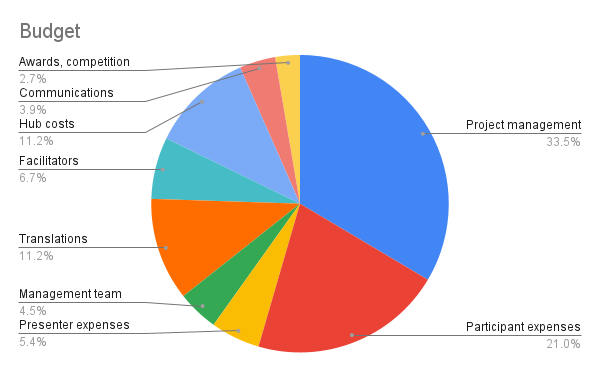 A visual breakdown of income allocation (Image: QW22, CC BY-SA 4.0, via Wikimedia Commons)
Types of Budgets
| Type | Description | Best For |
|---|---|---|
| 50-30-20 Rule | 50% needs, 30% wants, 20% savings | Beginners |
| Zero-Based Budget | Every ₹ is assigned a job (no waste) | Strict savers |
| Pay-Yourself-First | Save first, then spend the rest | Goal-oriented people |
Why Budgeting Fails (and How to Fix It)
| Problem | Solution |
|---|---|
| No emergency fund | Save 3–6 months’ expenses |
| Overspending on wants | Use the 24-hour rule (wait a day before buying) |
| No clear goals | Write down 3 financial goals (e.g., laptop, travel) |
2. Saving: The Power of Small Amounts
Saving is delaying spending today to have more money later. Even small amounts grow with compound interest (interest on interest).
Where to Save?
| Option | Pros | Cons | Best For |
|---|---|---|---|
| Bank Savings Account | Safe, earns interest (5–7%/year) | Low returns | Emergency fund |
| Fixed Deposit (FD) | Higher interest (8–10%/year) | Money locked for 6 months–5 years | Long-term goals |
| Recurring Deposit (RD) | Flexible (₹500–₹50,000/month) | Lower interest than FD | Regular savings |
| Post Office Schemes | Government-backed, low risk | Slower growth | Risk-averse people |
How to Save More
- Automate savings: Set up auto-transfers to a separate account.
- Use the "50p Rule": Save ₹0.50 for every ₹1 spent.
- Avoid lifestyle inflation: Don’t increase spending when you get a raise.
Example: Saving for a Laptop (₹50,000)
- Monthly savings needed: ₹4,167 (if saved for 12 months at 7% interest).
- If you save ₹5,000/month, you’ll have the laptop in 10 months!
3. Investing: Growing Your Money
Investing means using money to earn more money (higher risk = higher potential return).
classDiagram
    class Investment {
        +riskLevel: string
        +liquidity: string
        +returns: string
        +bestFor: string
    }
    class Stocks {
        +riskLevel: High
        +liquidity: High
        +returns: 10–30%/year
        +bestFor: Long-term (5+ years)
    }
    class MutualFunds {
        +riskLevel: Medium
        +liquidity: Medium
        +returns: 8–15%/year
        +bestFor: Beginners
    }
    class Bonds {
        +riskLevel: Low
        +liquidity: Low
        +returns: 5–10%/year
        +bestFor: Safe income
    }
    Investment <|-- Stocks
    Investment <|-- MutualFunds
    Investment <|-- Bonds
Classification of investments with risk, liquidity, and return details.Types of Investments
| Investment | Risk Level | Liquidity | Returns | Best For |
|---|---|---|---|---|
| Stocks | High | High | 10–30%/year | Long-term (5+ years) |
| Mutual Funds | Medium | Medium | 8–15%/year | Beginners (diversified) |
| Bonds | Low | Low | 5–10%/year | Safe, steady income |
| Real Estate | High | Low | 8–20%/year | Long-term wealth |
| Gold | Medium | Medium | 5–12%/year | Inflation protection |
How to Start Investing (Step-by-Step)
- Emergency Fund First: Save 3–6 months’ expenses in a bank.
- Choose 1–2 Investments:
- Beginners: Mutual funds (e.g., Nepal Investment Bank Mutual Fund).
- Aggressive: Stocks (e.g., Nepal Bank, NMB, Global IME).
- Diversify: Don’t put all money in one place.
- Stay Patient: Invest for 5+ years to see real growth.
Example: Investing ₹20,000 in a Mutual Fund (10% annual return)
| Year | Value (₹) |
|---|---|
| 1 | 22,000 |
| 5 | 32,578 |
| 10 | 62,089 |
4. Debt: Good vs. Bad
Not all debt is bad! Good debt helps you grow (e.g., education, home). Bad debt traps you (e.g., credit cards, high-interest loans).
Good Debt vs. Bad Debt
| Good Debt | Bad Debt |
|---|---|
| Student loan (for skills) | Credit card debt |
| Home loan (low interest) | Personal loan (high interest) |
| Business loan (for growth) | Payday loans |
How to Manage Debt
- Pay more than the minimum: Reduces interest.
- Avoid credit cards: Use debit cards or cash.
- Negotiate interest rates: Call banks to lower rates.
Example: Credit Card Trap
- Spent: ₹5,000
- Minimum payment: ₹500
- If you only pay ₹500/month at 24% interest, you’ll pay ₹10,000+ in interest!
5. Financial Scams: How to Stay Safe
Scammers trick people into losing money. Common scams in Nepal:
- Fake investment schemes (promising 50% returns in a month).
- Pyramid schemes (e.g., "Refer 5 friends to earn ₹10,000").
- Phishing emails (fake bank alerts asking for passwords).
How to Spot a Scam
| ✅ Legit Investment | ❌ Scam Red Flags |
|---|---|
| Regulated by SEBON | "Guaranteed high returns" |
| Clear paperwork | Pressure to invest fast |
| Transparent fees | "Secret" or "exclusive" deals |
Example: Ponzi Scheme Warning
- Company X promises 30% monthly returns.
- Reality: Early investors get paid with new investors’ money—then the company collapses.
- Result: Many lose their savings.
6. Smart Financial Habits
| Habit | Why It Matters | How to Start |
|---|---|---|
| Pay yourself first | Builds wealth over time | Save 10–20% of income immediately |
| Avoid lifestyle inflation | Keeps you rich as you earn more | Don’t upgrade phone/car with raises |
| Use cashback apps | Earn money on purchases | Swiggy, Daraz, Khatabook |
| Track spending | Stops overspending | Use MoneyLens or Excel |
Exam Tips for NEB Life Skill Education (Unit 12)
Short Answer Questions (SAQ):
- Define budget, compound interest, and good debt.
- Example:
"What is the 50-30-20 budget rule?" Answer: 50% for needs, 30% for wants, 20% for savings.
Long Answer Questions (LAQ):
- Explain how to save ₹10,000 in 6 months (include budgeting + FD/RD).
- Compare stocks vs. mutual funds (risk, returns, liquidity).
Case Studies:
- Read scenarios like:
"Rama earns ₹20,000/month. She spends ₹15,000 and saves nothing. Suggest a budget." Answer: Use the 50-30-20 rule: ₹10,000 needs, ₹6,000 wants, ₹4,000 savings.
- Read scenarios like:
Diagrams/Tables:
- Draw a budget pie chart or risk vs. return graph in exams.
- Example table for investment options (as shown above).
Real-Life Application:
- NEB loves practical examples. Always relate answers to Nepal (e.g., NMB Bank, SEBON regulations).
Practice Questions (NEB Style)
Short Answers
- Define financial literacy in your own words.
- What is the difference between a fixed deposit and a recurring deposit?
- List two good debts and two bad debts.
Long Answers
- "Budgeting is the key to financial freedom." Explain with a student’s monthly budget.
- How can a person save ₹50,000 in 1 year? Suggest three methods with pros and cons.
- "Investing is riskier than saving." Do you agree? Give two reasons with examples.
Case Study
- Ram earns ₹25,000/month. He spends:
- Rent: ₹8,000
- Food: ₹5,000
- Transport: ₹2,000
- Entertainment: ₹4,000
- Savings: ₹0
- Advise Ram on how to budget and save ₹5,000/month.
Final Checklist Before Exam
✅ Know budgeting methods (50-30-20, zero-based). ✅ Memorize saving options (FD, RD, mutual funds). ✅ Understand good vs. bad debt. ✅ Practice calculating compound interest. ✅ Learn how to spot scams. ✅ Draw diagrams (pie charts, risk graphs) in exams.
Remember: Financial literacy is a skill, not just knowledge. Start today—open a savings account, track your spending, and invest even ₹100/month. Small steps lead to big success! 🚀
Based on the NEB +2 Management syllabus for Life Skill Education (LSE), unit 12.
Discussion
Loading…