Computer ScienceUnit 810 min read
Emerging Tech: IoT, AI, Blockchain, Cloud, Big Data & Cybersecurity
Unit 8 of Computer Science explores the latest technological trends shaping our world—how IoT connects devices, AI mimics human intelligence, blockchain secures transactions, cloud computing delivers services, big data extracts insights, and cybersecurity protects digital assets—with real-world examples and exam-focuse
TAKEAWAYS:
- IoT connects everyday objects to the internet, enabling smart homes, cities, and industries.
- AI uses machine learning to analyze data and make decisions, like chatbots or self-driving cars.
- Blockchain creates tamper-proof digital ledgers for cryptocurrencies and secure contracts.
- Cloud computing provides on-demand storage and computing power (e.g., Google Drive, AWS).
- Big data analyzes massive datasets to uncover trends (e.g., social media analytics).
- Cybersecurity protects systems from hackers using firewalls, encryption, and ethical practices.
1. Internet of Things (IoT)
IoT connects physical devices (sensors, appliances, vehicles) to the internet, allowing them to send and receive data. These devices communicate with each other and with users, enabling automation and real-time monitoring.
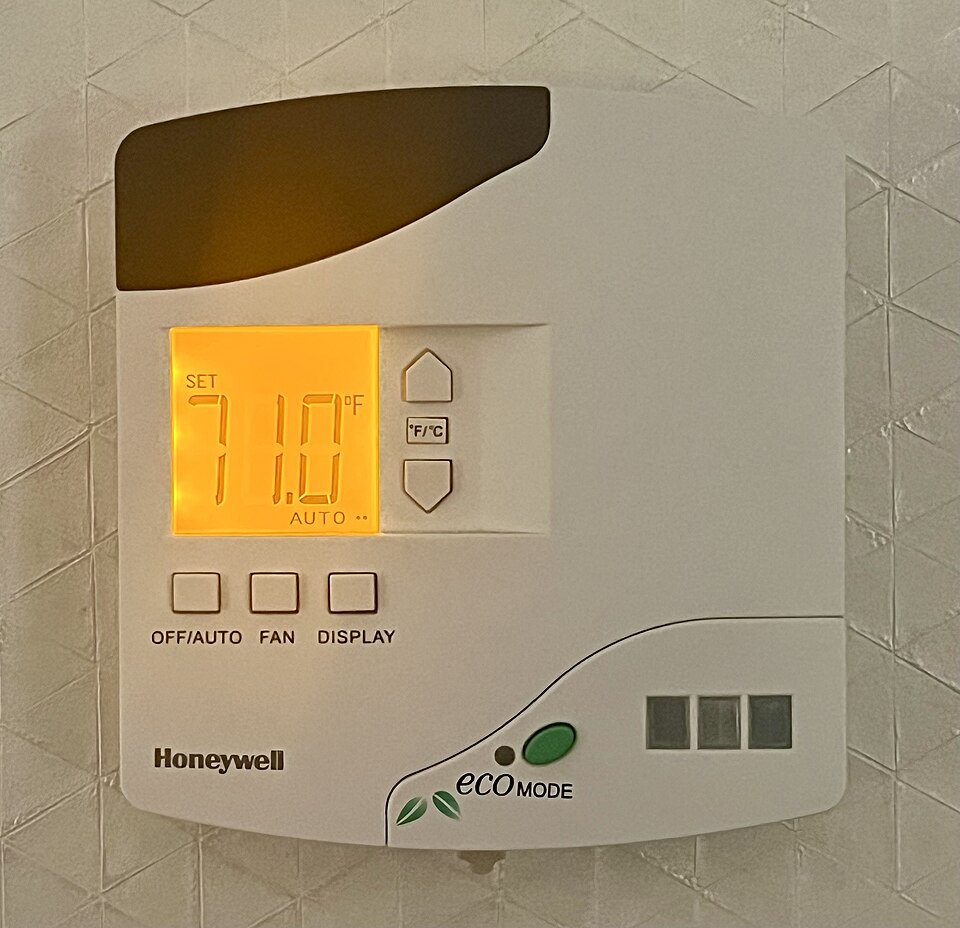 Smart thermostat used in IoT applications (Image: TaurusEmerald, CC BY-SA 4.0, via Wikimedia Commons)
How IoT Works
- Sensors collect data (e.g., temperature, motion).
- Connectivity (Wi-Fi, Bluetooth, cellular networks) sends data to the cloud.
- Processing analyzes data (e.g., adjusting thermostats).
- User Interface (apps, dashboards) displays results.
Applications of IoT
| Field | Example | Benefit |
|---|---|---|
| Smart Homes | Smart lights, security cameras | Energy savings, remote control |
| Healthcare | Wearable fitness trackers | Monitor heart rate, glucose levels |
| Industry | Factory sensors for predictive maintenance | Reduce downtime, improve efficiency |
| Agriculture | Soil moisture sensors | Optimize irrigation, increase yield |
Challenges of IoT
- Security Risks: Hackers can exploit weak passwords or unencrypted data.
- Privacy Concerns: Constant data collection raises privacy issues.
- High Cost: Setting up IoT systems requires investment in hardware and software.
2. Artificial Intelligence (AI)
AI is the simulation of human intelligence in machines. It includes:
- Machine Learning (ML): Systems learn from data (e.g., spam filters).
- Natural Language Processing (NLP): Computers understand human language (e.g., chatbots).
- Computer Vision: Systems interpret images/videos (e.g., facial recognition).
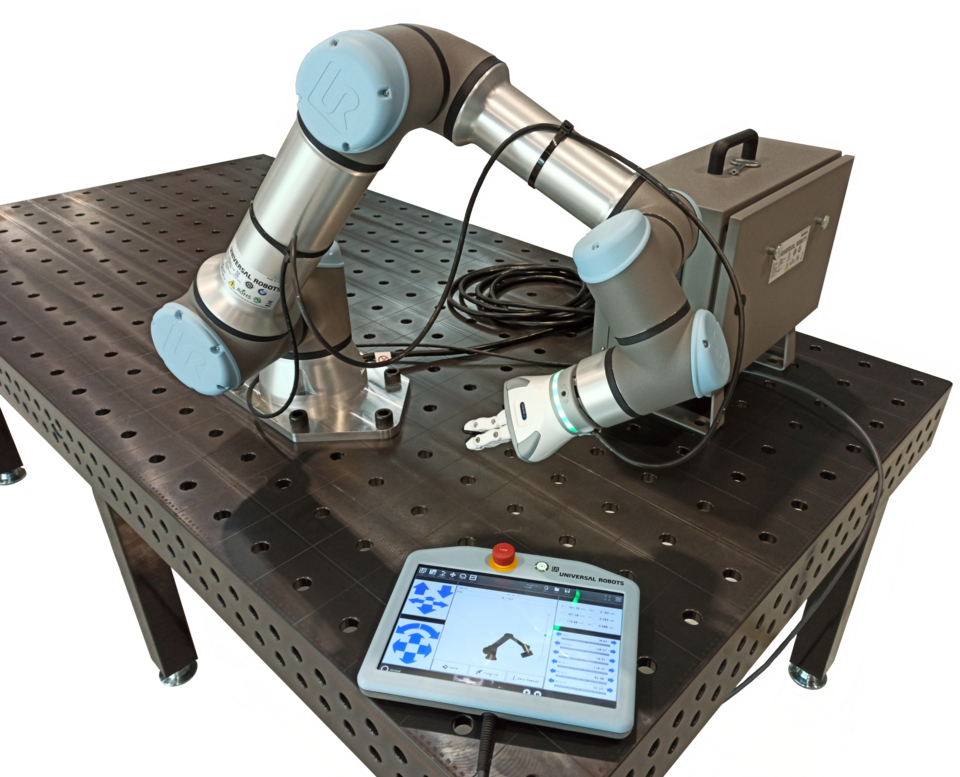 Industrial robot arm demonstrating AI in manufacturing (Image: Auledas, CC BY-SA 4.0, via Wikimedia Commons)
Types of AI
mindmap
  root((AI))
    Machine Learning
      Supervised Learning
        Example: Email spam detection
      Unsupervised Learning
        Example: Customer segmentation
    Deep Learning
      Neural Networks
        Example: Self-driving cars
    NLP
      Example: Google Translate
    Robotics
      Example: Industrial robots
Applications of AI
- Healthcare: Diagnosing diseases from X-rays.
- Finance: Fraud detection in transactions.
- Entertainment: Recommendation systems (Netflix, Spotify).
- Education: Personalized learning (e.g., Duolingo).
Limitations of AI
- Bias: AI can reinforce human biases if trained on biased data.
- Ethical Concerns: Job displacement, lack of accountability.
- High Computational Cost: Requires powerful hardware.
3. Blockchain Technology
Blockchain is a decentralized, digital ledger that records transactions across multiple computers. It ensures transparency, security, and immutability (cannot be altered).
How Blockchain Works
- Transaction: Alice sends Bob 1 Bitcoin.
- Block Creation: The transaction is grouped with others into a block.
- Hashing: Each block gets a unique hash (digital fingerprint).
- Consensus: Nodes (computers) verify the transaction.
- Adding to Chain: The block is added to the existing blockchain.
Key Features
| Feature | Explanation |
|---|---|
| Decentralized | No single entity controls the blockchain. |
| Transparent | All transactions are visible to participants. |
| Secure | Encryption and consensus prevent fraud. |
| Immutable | Once recorded, data cannot be changed. |
Applications of Blockchain
- Cryptocurrencies: Bitcoin, Ethereum.
- Supply Chain: Track products from origin to consumer.
- Voting Systems: Secure and tamper-proof elections.
- Smart Contracts: Self-executing agreements (e.g., real estate).
Challenges
- Scalability: Slow transaction speeds.
- Energy Consumption: Bitcoin mining uses massive energy.
- Regulation: Governments struggle with oversight.
4. Cloud Computing
Cloud computing delivers computing services (servers, storage, databases) over the internet ("the cloud"). Users access these services on-demand.
Cloud Service Models
| Model | Description | Example |
|---|---|---|
| IaaS | Infrastructure as a Service (virtual machines, storage) | AWS, Azure |
| PaaS | Platform as a Service (development tools) | Google App Engine |
| SaaS | Software as a Service (ready-to-use apps) | Google Workspace, Zoom |
Advantages of Cloud Computing
- Cost-Effective: No need for physical hardware.
- Scalability: Easily adjust resources (e.g., during traffic spikes).
- Accessibility: Access data from anywhere with an internet connection.
- Reliability: Cloud providers offer backups and disaster recovery.
Disadvantages
- Security Risks: Data breaches if not properly secured.
- Dependency on Internet: Offline access is limited.
- Privacy Concerns: Data stored on third-party servers.
5. Big Data
Big data refers to extremely large datasets that require advanced tools to analyze. It helps businesses and governments make data-driven decisions.
Characteristics of Big Data (5 V’s)
| V | Meaning | Example |
|---|---|---|
| Volume | Huge amount of data | Social media posts, sensor data |
| Velocity | Speed of data generation | Stock market transactions |
| Variety | Different data types (structured/unstructured) | Text, images, videos |
| Veracity | Accuracy and reliability of data | Clean vs. noisy data |
| Value | Usefulness of data | Predicting customer behavior |
Technologies Used in Big Data
- Hadoop: Distributed storage and processing.
- Spark: Fast data processing.
- NoSQL Databases: Flexible data models (e.g., MongoDB).
Applications
- Retail: Personalized recommendations (Amazon).
- Healthcare: Predictive analytics for diseases.
- Transportation: Traffic management (Google Maps).
6. Cybersecurity
Cybersecurity protects systems, networks, and data from digital attacks. It includes:
- Firewalls: Block unauthorized access.
- Encryption: Secures data (e.g., HTTPS).
- Authentication: Verifies user identity (passwords, biometrics).
Common Cyber Threats
| Threat | Description | Prevention |
|---|---|---|
| Malware | Harmful software (viruses, ransomware) | Use antivirus software |
| Phishing | Tricking users into revealing sensitive data | Verify sender emails, avoid suspicious links |
| DDoS Attacks | Overloading a system with traffic | Use DDoS protection services |
| Insider Threats | Employees or contractors misusing access | Implement access controls |
Best Practices for Cybersecurity
- Use Strong Passwords: Combine letters, numbers, and symbols.
- Enable Two-Factor Authentication (2FA): Adds an extra layer of security.
- Keep Software Updated: Patches security vulnerabilities.
- Educate Users: Train employees on recognizing phishing attempts.
Exam Tip
- Understand Definitions: Know the key terms (e.g., IoT, blockchain, cloud models).
- Compare Technologies: Be ready to compare IoT vs. AI or SaaS vs. PaaS in short answers.
- Real-World Examples: Link concepts to examples (e.g., "Blockchain is used in Bitcoin").
- Diagrams: Practice drawing simple diagrams (e.g., blockchain structure, cloud layers).
- Short vs. Long Answers:
- Short (2 marks): Define IoT or list 2 applications of AI.
- Long (5 marks): Explain how blockchain ensures security in transactions (include steps and advantages).
- Case Studies: Expect questions like, "How does IoT improve agriculture?" (Discuss sensors + automation).
Practice Questions
Short Answer (2 marks)
- What is the difference between SaaS and PaaS?
Short Answer (3 marks)
- Explain two applications of AI in healthcare.
Long Answer (5 marks)
- Describe the working of blockchain with a real-world example. Discuss its advantages and challenges.
Diagram-Based (4 marks)
- Draw and label the layers of cloud computing (IaaS, PaaS, SaaS).
Answers
- SaaS provides ready-to-use software (e.g., Gmail), while PaaS offers a platform for developers to build applications (e.g., Heroku).
- AI in Healthcare:
- Diagnosis: AI analyzes medical images (e.g., detecting tumors in X-rays).
- Drug Discovery: AI simulates molecular interactions to find new drugs.
- Blockchain:
- Working: Transactions → Block creation → Hashing → Consensus → Chain addition.
- Example: Bitcoin uses blockchain to record transactions securely.
- Advantages: Decentralized, transparent, secure.
- Challenges: Slow transactions, high energy use.
- Cloud Layers Diagram:
Based on the NEB +2 Science syllabus for Computer Science (Comp), unit 8.
Discussion
Loading…