EnglishUnit 612 min read
Travel & Adventure: Narratives, Descriptions & Writing Skills
Unit 6 of English explores how to write vivid travelogues, adventure stories, and descriptive essays while analyzing real-life narratives and key techniques for NEB exam success.
TAKEAWAYS:
- Learn the 3 key elements of travel writing: sensory details, chronological structure, and emotional engagement.
- Master adventure story techniques like pacing, suspense, and character motivation.
- Understand NEB’s preferred formats for travel/adventure essays (500–600 words, 3-paragraph structure).
- Practice descriptive language (similes, metaphors, vivid verbs) to score high in Section B (Writing).
- Avoid common mistakes: clichés, irrelevant details, and weak conclusions.
- Know NEB’s marking scheme for creativity, coherence, and grammatical accuracy.
What is Travel Writing?
Travel writing describes places, people, and experiences from a personal or journalistic perspective. It can be:
- Descriptive (painting a picture of a location).
- Narrative (telling a story of a journey).
- Reflective (sharing lessons or emotions from travel).
Example from NEB’s past papers: "Describe a place you visited that changed your perspective on life." → This expects sensory details (sights, sounds, smells) + emotional impact.
Key Features of Effective Travel Writing
| Feature | What to Do | Example |
|---|---|---|
| Sensory Details | Use 5 senses (sight, sound, touch, taste, smell) to make scenes vivid. | "The salty breeze stung my cheeks as the waves crashed against the rocks." |
| Chronological Order | Structure events in time sequence (beginning → middle → end). | "First, we hiked through the jungle… Then, we reached the waterfall…" |
| Emotional Engagement | Show how the place made you feel (excited, scared, inspired). | "Standing atop the mountain, I felt tiny—yet free." |
| Vivid Verbs | Avoid weak verbs ("went," "saw"). Use strong ones ("wandered," "gaped"). | "We plunged into the icy river, gasping at the shock." |
| Show, Don’t Tell | Instead of "The place was beautiful," describe why it was beautiful. | "The sunset painted the sky in hues of gold and violet, like a painter’s masterpiece." |
How to Write an Adventure Story
Adventure stories hook readers with:
- A compelling setting (e.g., a jungle, mountain, or unknown city).
- A challenge or conflict (e.g., a storm, a lost path, a wild animal).
- A protagonist’s journey (their thoughts, fears, and triumphs).
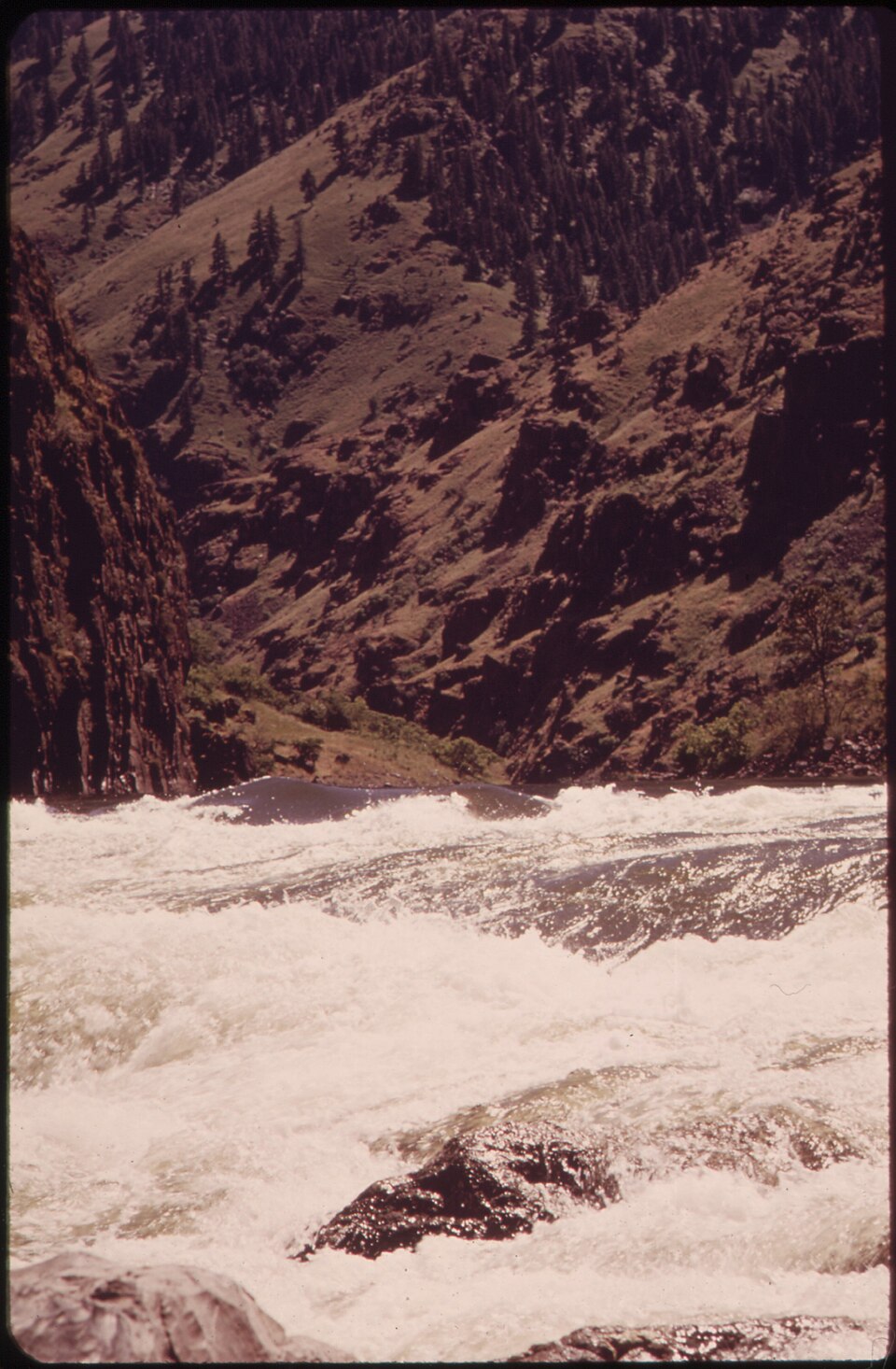 Real-life example of a high-stakes adventure setting (use for pacing/suspense discussion). (Image: Boyd Norton, Public domain, via Wikimedia Commons)
NEB-Style Adventure Story Starter: "The moment our boat hit the rapids, I knew we were in trouble. The water roared like a lion, and my heart pounded as the current dragged us sideways. My friend, Raju, gripped the paddle, his knuckles white. ‘Hold on!’ he shouted over the noise. I closed my eyes—then heard a sickening crack. The boat was breaking apart."
Why this works:
- Suspense: Short sentences, strong verbs ("roared," "pounded," "cracked").
- Emotion: Reader feels the fear and urgency.
- Action: Clear problem (boat breaking) + character reaction.
Descriptive vs. Narrative Travel Writing
| Aspect | Descriptive Writing | Narrative Writing |
|---|---|---|
| Purpose | To paint a picture of a place. | To tell a story of an event. |
| Structure | Static (focuses on one moment/place). | Dynamic (follows a sequence of events). |
| Language | Adjectives, similes, metaphors. | Action verbs, dialogue, pacing. |
| Example Topic | "Describe a market in your village." | "Tell about a time you got lost on a trip." |
Solved Example (Descriptive): "The Kathmandu Durbar Square at dawn is a sight to behold. The ancient stones, worn by centuries of monsoons, glow amber in the rising sun. Hawkers set up their stalls, the scent of sel roti and chai mixing with the earthy smell of damp soil. A dhime drummer beats a rhythm that echoes off the crumbling palaces, while tourists snap photos, their voices a soft murmur against the grand silence of history."
Solved Example (Narrative): "It was my first solo trek to Annapurna Base Camp. On the third day, the weather turned. Thick clouds swallowed the mountain peaks, and the trail became a slippery maze of rocks. My boots sank into the mud with every step. Then, I saw it—a yeti footprint, deep and fresh. My breath hitched. Was it real? Before I could think, a sherpa grabbed my arm. ‘Come!’ he urged. We ran until we reached a shelter, where a fire burned bright against the creeping dark."
Common Mistakes to Avoid
Too many facts, not enough emotion
- ❌ "The Everest Base Camp trek is 13.5 km long and takes 2 days."
- ✅ "My legs burned like fire as I dragged myself up the final slope, the thin air making every breath a struggle."
Clichés (overused phrases)
- ❌ "The view was breathtaking."
- ✅ "The valley stretched endlessly, a sea of green under a sky so blue it looked painted."
Weak conclusions
- ❌ "That’s my travel story."
- ✅ "That trip taught me that adventure isn’t about the destination—it’s about the courage to keep going when the path disappears."
NEB Exam Tips for Unit 6
1. Understanding the Question
NEB often asks:
- "Describe a place you visited that was unforgettable."
- "Write an adventure story based on this picture."
- "How does travel broaden one’s perspective? Write an essay."
Key:
- Underline key words (e.g., "unforgettable" → focus on emotional impact).
- Plan before writing (use the 3-paragraph structure).
2. Structure for Full Marks
| Paragraph | What to Include | Example Starter |
|---|---|---|
| Introduction | Hook + brief setting + main idea. | "The first time I saw the Himalayas, I understood why people travel—not just to see, but to feel." |
| Body 1 | Detailed description (senses, emotions). | "The air smelled of pine and damp earth, while the sound of the river rushing below drowned out my own racing heart." |
| Body 2 | Key event or challenge (for adventure). | "As we climbed higher, the oxygen grew thinner, and my head spun. Then, I slipped—only Raju’s strong hand pulled me back." |
| Conclusion | Lesson or reflection (tie back to intro). | "That day, I learned that adventure isn’t about reaching the top—it’s about the trust and teamwork along the way." |
3. Vocabulary Boosters
| Topic | Weak Word | Strong Word | Example |
|---|---|---|---|
| Journey | went | trekked, wandered, hiked | "We hiked for hours until the trail vanished." |
| Weather | cold | freezing, biting, icy | "The biting wind made my fingers numb." |
| Emotion | happy | elated, overjoyed, thrilled | "I was overjoyed when I saw the ocean for the first time." |
4. Grammar Checklist
NEB deducts marks for:
- Incorrect tenses (e.g., "I go to the mountain" → "I went to the mountain").
- Awkward phrasing (e.g., "There are many beautiful things in nature" → "Nature is filled with breathtaking sights.").
- Missing articles (e.g., "I saw a sunset" vs. "I saw sunset").
Quick Fix:
- Read your essay aloud. If a sentence sounds clunky, rewrite it.
NEB-Style Practice Questions
Question 1 (Descriptive Writing – 10 marks)
"Describe a place in Nepal that you find fascinating. Use sensory details to make your description vivid."
Sample Answer: "The Pashupatinath Temple complex is a place where time seems to stand still. The golden spires of the main temple glint in the sun, while the sacred Bagmati River flows beneath, its waters carrying whispers of prayers. The air is thick with the scent of joss sticks and incense, mixed with the earthy smell of the riverbank. Priests in saffron robes chant mantras, their voices blending with the distant dhime drums. Tourists and devotees move in a slow, respectful rhythm, their footsteps muffled by the thick carpet of marigold petals. For me, this place isn’t just a temple—it’s a living story of faith, history, and Nepal’s soul."
Why this scores high: ✅ Sensory details (sight, sound, smell, touch). ✅ Emotional connection ("Nepal’s soul"). ✅ Vivid verbs ("glint," "carrying," "chant").
Question 2 (Adventure Story – 10 marks)
"You were on a boat trip when a sudden storm hit. Write an adventure story based on this situation."
Sample Answer: "The sky had been clear just moments ago. Now, dark clouds swallowed the sun, and the Lake Phewa turned from glassy blue to a churning monster. The boat’s engine sputtered, then died. ‘Hold on!’ our guide shouted as the waves pounded against the sides. I gripped the seat, my knuckles white. Then—CRACK! The boat’s hull split open. Water rushed in, and I was thrown into the icy lake. Gasping, I kicked toward the surface. A hand grabbed my arm—it was Sita, our guide’s daughter. ‘Swim!’ she yelled. We fought the current until we reached the shore, our clothes dripping, our hearts racing. That storm taught me that fear can be a wild beast, but courage is the rope that saves you."
Why this scores high: ✅ Suspense (short sentences, action verbs). ✅ Character development (shows fear → teamwork → relief). ✅ Strong ending (lesson learned).
Question 3 (Essay – 15 marks)
"Travel broadens one’s perspective. To what extent do you agree with this statement? Write an essay."
Sample Answer: *"Travel is more than just visiting new places—it’s a mirror that reflects back a wider world. When we step beyond our comfort zones, we meet people with different beliefs, traditions, and ways of life. For example, my trip to Mustang taught me that simplicity can be more fulfilling than material wealth. The Thakali people live in high-altitude villages with little technology, yet their hospitality and resilience are unmatched. I also saw how environmental challenges (like melting glaciers) affect their daily lives—a reality far removed from my urban concerns.
Moreover, travel challenges our assumptions. In Pokhara, I expected tourists to be carefree, but many were volunteers teaching English to rural children. Their dedication made me question my own priorities. Similarly, festivals like Indra Jatra in Kathmandu showed me how culture binds communities together, something I had never truly understood before.
However, some argue that social media can give a ‘travel experience’ without real exposure. While virtual tours are useful, they lack the emotional depth of firsthand encounters. The smell of rain in the hills, the laughter of street vendors, or the silence of a sunrise—these cannot be replicated online.
In conclusion, travel expands our minds by exposing us to new ideas, cultures, and challenges. It reminds us that the world is vast, diverse, and interconnected. As the saying goes, ‘Not all who wander are lost’—but those who do often find more than they expected."*
Why this scores high: ✅ Clear stance (agrees with the statement). ✅ Examples (Mustang, Pokhara, Indra Jatra). ✅ Counterargument (social media) + rebuttal. ✅ Strong conclusion (ties back to the theme).
Final Checklist Before Submitting
- Read the question carefully—answer exactly what’s asked.
- Use the 3-paragraph structure (intro, body, conclusion).
- Add sensory details (at least 3 senses per description).
- Avoid clichés—be original in your word choice.
- Proofread for grammar (tenses, articles, spelling).
- Write neatly—NEB marks presentation too!
Based on the NEB +2 Science syllabus for English (Eng), unit 6.
Discussion
Loading…