Life Skill EducationUnit 710 min read
Sexual & Reproductive Health: Anatomy, Rights, and Safe Practices
Unit 7 of Life Skill Education covers the biological systems of male/female reproduction, key health rights, contraception methods, STI prevention, and legal protections under Nepal’s laws—with clear diagrams, case studies, and exam-style questions to master the NEB CDC curriculum.
TAKEAWAYS:
- Understand the anatomy and functions of male/female reproductive organs using labeled diagrams.
- Know reproductive health rights (Nepal’s laws, consent, and confidentiality) and how to access services.
- Compare contraceptive methods (barrier, hormonal, permanent) with pros/cons and side effects.
- Identify STIs (symptoms, transmission, prevention) and the role of regular check-ups.
- Learn safe sex practices, emergency contraception, and how to support peers in need.
- Recognize legal protections (e.g., abortion laws, child marriage bans) and where to seek help.
1. Reproductive Anatomy: How the Body Works
1.1 Female Reproductive System
The female system produces eggs, allows fertilization, and supports pregnancy. Key parts:
- Ovaries: Store eggs (ova) and release hormones (estrogen, progesterone).
- Fallopian tubes: Path for eggs; fertilization occurs here.
- Uterus: Muscular organ where a fertilized egg implants and grows.
- Cervix: Opening to the uterus; dilates during childbirth.
- Vagina: Birth canal and passage for menstrual blood.
graph LR
A["Ovaries\n(egg + hormones)"] -->|"releases egg"| B["Fallopian tube\n(fertilization site)"]
B --> C["Uterus\n(embryo grows here)"]
C --> D["Cervix\n(opens during birth)"]
D --> E["Vagina\n(birth canal)"]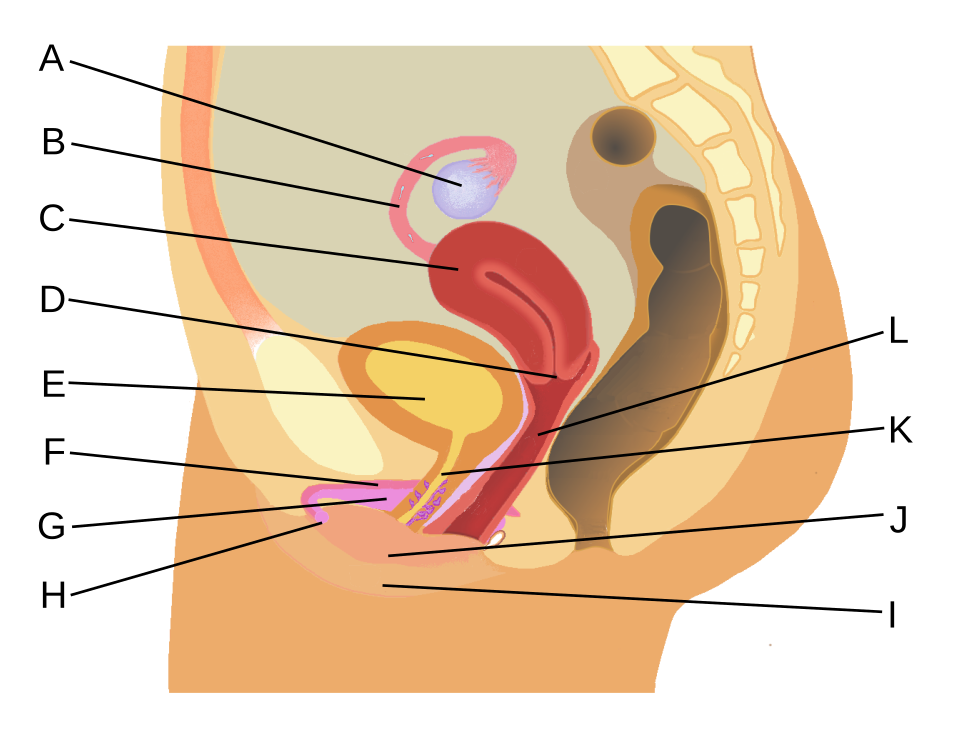 Label the ovaries, uterus, and cervix. (Image: RWhitwam, CC BY-SA 4.0, via Wikimedia Commons)
Example: If an egg is not fertilized, the uterus sheds its lining during menstruation (period). This cycle repeats ~every 28 days.
1.2 Male Reproductive System
The male system produces sperm and delivers it to the female body. Key parts:
- Testes: Produce sperm and testosterone.
- Epididymis: Stores and matures sperm.
- Vas deferens: Tube carrying sperm to the urethra.
- Urethra: Passage for sperm and urine (but never both at once!).
- Penis: Delivers sperm during sex.
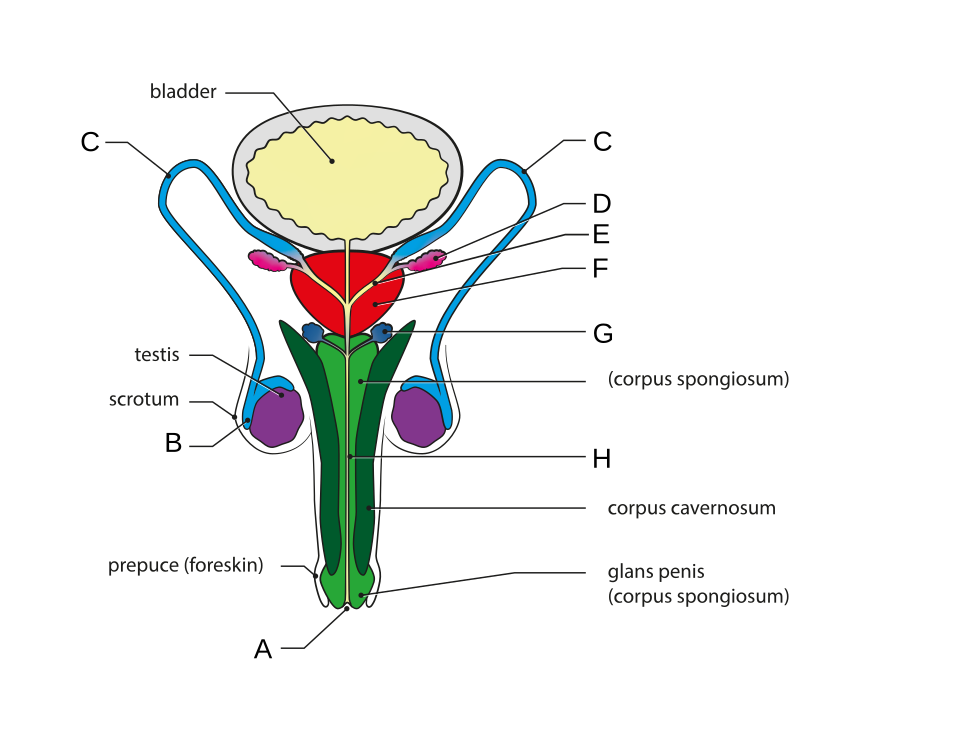 Label the testes, vas deferens, and urethra. (Image: RWhitwam, CC BY-SA 4.0, via Wikimedia Commons)
Trace: Sperm travels from the testes → epididymis → vas deferens → urethra → out of the body during ejaculation.
2. Reproductive Health Rights in Nepal
Nepal’s laws protect reproductive health. Key rights:
- Right to Information: Free access to accurate sex education (e.g., in schools).
- Confidentiality: Doctors/nurses cannot share your health info without consent.
- Consent: Sex must be voluntary and between people who freely agree.
- Safe Abortion: Legal up to 12 weeks (extendable to 18 weeks for risk to life/health).
- No Child Marriage: Minimum age for marriage is 20 for both genders (2018 law).
Comparison Table:
| Right | What It Means | Where to Access |
|---|---|---|
| Free condoms | Available at hospitals/clinics | Government health posts |
| Safe abortion | Legal with medical approval | Licensed hospitals/clinics |
| STI testing | Free or low-cost | Family Welfare Centers (FWC) |
| Counseling | Free for sexual/reproductive issues | Youth clubs, schools, FWCs |
Exam Tip: Memorize the 12-week abortion limit and 20-year marriage age—these are high-yield facts!
3. Contraception: Methods and Choices
Contraception prevents pregnancy and STIs. Methods vary in effectiveness (how well they work) and side effects.
3.1 Types of Contraception
| Method | How It Works | Effectiveness (%) | Pros | Cons |
|---|---|---|---|---|
| Condoms (male/female) | Blocks sperm from entering uterus | 85–98 | Protects against STIs | Must use every time |
| Pills (oral) | Hormones stop ovulation | 91–99 | Reversible, no surgery | Must take daily; side effects |
| IUD (Intrauterine Device) | Copper/normone device in uterus | 99 | Long-term (3–10 years) | Rare cramping/bleeding |
| Implant | Rod under skin releases hormones | 99 | Lasts 3–5 years | Minor surgery to remove |
| Sterilization (female/male) | Permanent surgery (tubal ligation/vasectomy) | 99+ | Permanent solution | Irreversible; not for young people |
Worked Example: Rita (20) wants contraception but fears side effects. Which method is best for her?
- Best choice: Condom + pill (protects against STIs + pregnancy).
- Why? Condoms prevent STIs; pills are reversible and have fewer side effects than an IUD/implant.
4. Sexually Transmitted Infections (STIs)
STIs spread through unprotected sex, sharing needles, or mother-to-baby. Common STIs:
- HIV/AIDS: Weakens immunity (no cure, but treatable).
- Syphilis: Starts as sores, can damage organs if untreated.
- Gonorrhea/Chlamydia: Often silent; can cause infertility.
- HPV: Causes cervical cancer (vaccine available).
Symptoms to Watch For:
- Unusual discharge
- Pain during urination/sex
- Sores/bumps near genitals
- Itching or rash
Prevention:
- Use condoms every time.
- Get regular check-ups (every 6 months if sexually active).
- Vaccinate against HPV (given in schools).
- Avoid alcohol/drugs that lower judgment.
NEB-Style Question: "List two symptoms of HIV and one way to prevent it." Answer:
- Symptoms: Weight loss, frequent infections, fatigue.
- Prevention: Use condoms + get tested regularly.
5. Safe Sex and Emergency Options
5.1 Safe Sex Practices
- Consent: Both partners must freely agree (no pressure, coercion, or intoxication).
- Communication: Discuss STI status, contraception, and boundaries.
- Hygiene: Wash before sex; avoid sharing sex toys.
- Limit Partners: Fewer partners = lower STI risk.
5.2 Emergency Contraception
If unprotected sex occurs, use within 72 hours (3 days):
- Pill (e.g., I-pill): High-dose hormones to delay ovulation.
- Copper IUD: Most effective (works up to 5 days after).
Warning: Emergency pills are not regular birth control—use them only in emergencies!
6. Legal Protections and Where to Seek Help
6.1 Nepal’s Laws on Sexual Health
- Abortion: Legal up to 12 weeks (extendable to 18 weeks for health risks).
- Rape: Punishable by life imprisonment (Muluki Ain 2074).
- Child Marriage: Illegal below age 20 (2018 law).
- STI Treatment: Free at Family Welfare Centers (FWC).
6.2 Helplines and Services
| Issue | Where to Go |
|---|---|
| Free condoms | FWCs, hospitals, youth clubs |
| STI testing/treatment | FWCs, Pathshala clinics |
| Abortion counseling | Licensed hospitals (e.g., KIST Medical) |
| Sexual violence support | Women’s rights organizations (e.g., FIDA) |
Example: If you’re raped, go to the nearest hospital—they provide free medical care and legal support.
Exam Tip: How to Score Full Marks
- Diagrams: Always label female/male reproductive organs correctly.
- Laws: Memorize 12-week abortion limit and 20-year marriage age.
- Contraception: Compare effectiveness (%) and side effects in tables.
- STIs: Know symptoms and prevention (condoms + testing).
- Case Studies: Practice answering "What would you do if..." questions (e.g., peer pressure, STI exposure).
NEB Board-Style Questions:
"Draw and label the female reproductive system. Explain the role of the uterus." Answer: [Insert diagram] + "The uterus holds the fertilized egg and grows the fetus during pregnancy."
"List three contraceptive methods and one side effect of each." Answer:
- Pill: Nausea/vomiting
- IUD: Cramping/bleeding
- Condom: Allergic reaction (rare)
"How can Nepal’s laws protect a 17-year-old girl from child marriage?" Answer: "The law sets the minimum marriage age at 20. She can report violations to police or child welfare organizations."
Summary Checklist
Before the exam, ensure you can: ✅ Draw and label male/female reproductive systems. ✅ List 3 contraceptive methods and their pros/cons. ✅ Name 2 STIs, their symptoms, and prevention. ✅ Explain Nepal’s abortion laws and consent rules. ✅ Identify where to get free condoms/STI testing.
Final Note: Sexual and reproductive health is your right. Stay informed, make safe choices, and seek help when needed—no question is too sensitive to ask a trusted doctor or counselor. Good luck! 🌟
Based on the NEB +2 Science syllabus for Life Skill Education (LSE), unit 7.
Discussion
Loading…