Introduction to international BusinessUnit 19 min read
Globalization & IB: Definitions, Drivers, Impacts & Real-World Cases
Unit 1 of Introduction to International Business explores globalization’s mechanics, its economic/political/cultural drivers, and how it reshapes businesses (e.g., Daraz, Ncell). Covers definitions, key theories (e.g., hyperglobalists vs. skeptics), trade blocs (SAARC, WTO), and case studies like Nepal’s FDI policies a
TAKEAWAYS:
- Globalization is the interconnectedness of economies, cultures, and politics via trade, tech, and migration—driven by cost reduction, market access, and innovation.
- Theories (hyperglobalists, skeptics, transformationalists) explain whether globalization is inevitable, cyclical, or shaped by power structures.
- Trade blocs (e.g., SAARC, ASEAN) reduce barriers but require cultural adaptation (e.g., Daraz’s localization in Nepal vs. India).
- E-commerce (e.g., eSewa, WhatsApp Pay) leverages globalization for financial inclusion but faces regulatory hurdles (e.g., Nepal’s FX controls).
- FDI (e.g., Toyota’s Nepal plant) brings jobs but risks dependency on foreign capital.
- Contemporary issues include digital divide, sustainability trade-offs, and geopolitical tensions (e.g., US-China tech wars).
1. What Is Globalization?
Globalization is the accelerating integration of economies, societies, and cultures through cross-border flows of:
- Goods/services (e.g., Daraz selling Chinese electronics in Nepal).
- Capital (e.g., Nabil Bank’s loans to Indian SMEs).
- Technology (e.g., Pathao using Google Maps for ride-hailing).
- People (e.g., Nepali migrant workers in the Gulf).
- Ideas (e.g., WhatsApp replacing SMS in rural Nepal).
Key Drivers of Globalization
mindmap
root((Globalization Drivers))
Economic
Cost Reduction ["Lower production costs (e.g., Nepal’s garment factories in India)"]
Market Access ["Expanding to SAARC nations via e-commerce"]
Competition ["Daraz vs. Amazon in Nepal"]
Technological
Internet ["eSewa’s digital payments"]
Transport ["Container ships reducing trade costs"]
Political
Trade Agreements ["SAARC Preferential Trading Agreement (SAPTA)"]
Deregulation ["Nepal’s FDI liberalization in 2002"]
Cultural
Media ["YouTube homogenizing pop culture"]
Migration ["Nepali diaspora remittances ($10B/year)"]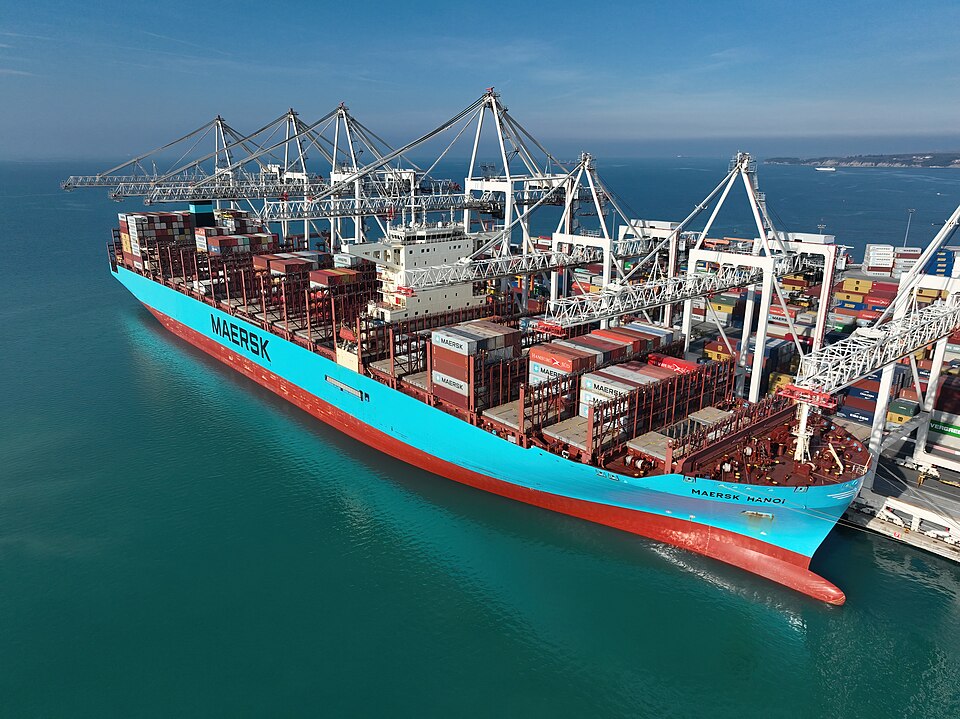 Globalization’s backbone: 90% of trade relies on shipping (e.g., Daraz’s inventory from China). (Image: Petar Milošević, CC BY-SA 4.0, via Wikimedia Commons)
2. Theories Explaining Globalization
Three perspectives debate globalization’s scope, causes, and outcomes:
| Theory | View on Globalization | Example | Criticism |
|---|---|---|---|
| Hyperglobalists | Irreversible, erodes national sovereignty. | McDonald’s in Kathmandu, same menu worldwide. | Ignores cultural resistance (e.g., Hindu vegetarianism). |
| Skeptics | Overstated; nations still prioritize local interests. | Nepal’s ban on Chinese apps (e.g., TikTok) despite globalization trends. | Underestimates tech’s homogenizing effect. |
| Transformationalists | Shapes but doesn’t destroy nation-states. | WTO rules forcing Nepal to open telecom sector (Ncell vs. NTC competition). | Too optimistic about "win-win" outcomes. |
Worked Example: Nepal’s FDI Policy
- Hyperglobalist View: Nepal’s 2002 FDI law (allowing 100% foreign ownership in most sectors) reflects global capital flows.
- Skeptic View: Yet, political instability (e.g., 2023 protests) scares investors like Toyota, limiting FDI to $1.2B/year (vs. India’s $80B).
- Transformationalist View: FDI brought Toyota’s hybrid cars but also dependency on Chinese components.
3. Globalization’s Impact on Business
A. Opportunities
flowchart TD
  A["Globalization"] --> B["Market Expansion"]
  A --> C["Cost Efficiency"]
  A --> D["Innovation"]
  A --> E["Risk Diversification"]
  B --> B1["Daraz entering Nepal (2018) via SAARC ties"]
  C --> C1["Nepalese garment firms outsourcing to Bangladesh"]
  D --> D1["Ncell adopting 5G via Huawei (despite US sanctions)"]
  E --> E1["Nepal Rastra Bank hedging FX risk via SWIFT"]
B. Challenges
| Challenge | Example | Solution |
|---|---|---|
| Cultural Missteps | Coca-Cola’s failed "Thums Up" rebrand in Nepal (2010s). | Localize marketing (e.g., eSewa’s Nepali UI). |
| Regulatory Barriers | Nepal’s FX controls limit Daraz’s cross-border payments. | Partner with licensed banks (e.g., Nabil). |
| Geopolitical Risks | US-China trade war → higher costs for Nepali importers. | Diversify suppliers (e.g., Vietnam instead of China). |
| Digital Divide | Rural Nepal lacks internet for e-commerce (only 30% penetration). | Mobile-first solutions (e.g., USSD codes). |
4. Trade Blocs and Nepal’s Role
Trade blocs reduce barriers but require adaptation. Nepal’s key blocs:
| Bloc | Members | Nepal’s Benefit | Challenge |
|---|---|---|---|
| SAARC | 8 South Asian nations | Preferential tariffs (e.g., 0% on textiles). | Slow decision-making (e.g., RTA stalled). |
| WTO | 164 countries | Access to global markets (e.g., coffee exports). | Must comply with TRIPS (e.g., patent laws). |
| BIMSTEC | 7 nations (India, Bangladesh) | Infrastructure projects (e.g., trans-Asian highways). | Limited funding vs. ASEAN’s $1T+ budget. |
Case Study: Daraz in Nepal
- Why it works: Leverages SAARC’s free trade for low-cost Chinese goods.
- Localization: Nepali language, cash-on-delivery (90% of users), and partnerships with Ncell for mobile payments.
- Risk: 30% of orders fail due to poor logistics (Nepal’s mountainous terrain).
5. E-Commerce and Digital Globalization
eSewa’s Cross-Border Payments
- How it uses globalization:
- Tech: Integrates with Visa/Mastercard for international remittances.
- Regulation: Partners with Nepal Rastra Bank to comply with FX laws.
- Culture: Supports Nepali diaspora (e.g., payments to India/Bangladesh).
- Challenge: 2% transaction fee vs. WhatsApp Pay’s 0% (but WhatsApp lacks banking licenses).
6. Contemporary Issues in Globalization
Digital Divide
- Example: Rural Nepal’s 10% internet access vs. Kathmandu’s 80%.
- Impact: Excludes farmers from e-commerce (e.g., Daraz’s agri-mart).
Sustainability vs. Growth
- Trade-off: Nepal’s hydropower exports (e.g., to India) vs. local energy shortages.
Geopolitical Fragmentation
- Example: US sanctions on Huawei → Ncell delays 5G rollout.
In the Real World
Daraz (Nepal)
- Idea: Trade blocs + e-commerce.
- How: Uses SAARC’s free trade to sell Chinese goods at 30% cheaper than local retailers. Localizes with Nepali language support and cash-on-delivery.
eSewa (Nepal)
- Idea: Digital globalization + financial inclusion.
- How: Partners with Nepal Rastra Bank to enable cross-border remittances (e.g., Nepali workers in Malaysia). Faces regulatory hurdles (e.g., 2% fee vs. WhatsApp’s 0%).
Toyota Kirloskar Nepal
- Idea: FDI + local adaptation.
- How: Assembles hybrid cars in Nepal using Chinese components but struggles with high import costs due to US-China tensions.
Exam Tip
How to Score Full Marks
Definitions + Examples
- Globalization: "The process of increasing interconnectedness..." + Daraz/eSewa case.
- FDI: "Long-term investment by a firm in one country into business interests..." + Toyota’s Nepal plant.
Theory Application
- For hyperglobalists vs. skeptics, pick one example (e.g., McDonald’s in Kathmandu vs. Nepal’s app ban).
Trade Bloc Analysis
- SAARC: "Reduces tariffs but suffers from slow implementation..." + Daraz’s success.
- WTO: "Enforces TRIPS but requires patent compliance..." + Nepal’s pharmaceutical sector.
Diagrams
- Draw a mindmap for globalization drivers (as above) or a flowchart for e-commerce challenges.
Critical Thinking
- FDI in Nepal: "Opportunities (jobs, tech) vs. risks (dependency, instability)." Use Toyota’s case.
Past Exam Questions Covered:
- Define globalization → Section 1.
- Foreign culture in IB → Section 3 (Daraz’s localization).
- FDI opportunities → Section 5 (Toyota case).
- WTO functions → Section 4 (TRIPS compliance).
- Outsourcing → Section 3 (garment firms in Bangladesh).
Based on the PU BBA (PU) syllabus for Introduction to international Business, unit 1.
Discussion
Loading…