Digital LogicUnit 17 min read
Digital Systems & Number Systems: Basics, Codes, and Conversions
Unit 1 of Digital Logic covers the foundational concepts of digital systems (vs. analog), number systems (binary, octal, hexadecimal, Gray code), weighted/non-weighted codes, and conversion techniques—essential for designing circuits and interpreting data in computers, mobile apps, and embedded systems.
TAKEAWAYS:
- Digital systems use discrete signals (0/1) and are preferred for accuracy, flexibility, and error handling over analog systems.
- Number systems (binary, octal, hexadecimal) enable efficient data representation and processing in computers.
- Gray code minimizes errors in sequential data transmission by changing only one bit per step.
- Conversion between number systems (binary ↔ decimal, binary ↔ octal/hex) is critical for programming and hardware design.
- Weighted codes (e.g., BCD) and non-weighted codes (e.g., Gray) serve distinct roles in data storage and transmission.
- Real-world applications include error detection in eSewa transactions, data encoding in WhatsApp messages, and efficient routing in Pathao’s GPS systems.
1. Analog vs. Digital Systems: Key Differences
Digital systems represent data as discrete values (0/1), while analog systems use continuous signals (e.g., voltage levels). Below is a comparison table:
| Feature | Analog System | Digital System |
|---|---|---|
| Signal Type | Continuous (e.g., sine waves) | Discrete (0/1, pulses) |
| Noise Immunity | Poor (susceptible to interference) | High (error correction possible) |
| Flexibility | Limited (hardware-dependent) | High (software programmable) |
| Storage | Difficult (degrades over time) | Easy (non-volatile memory) |
| Examples | Thermometer, old radio receivers | Computers, smartphones, digital clocks |
Why digital systems dominate modern tech?
- Accuracy: Discrete values resist noise (e.g., Ncell’s signal boosters use digital error correction).
- Scalability: Software updates (e.g., Khalti’s fraud detection) are easier than hardware changes.
- Integration: Digital circuits (e.g., Daraz’s payment gateways) can be combined flexibly using logic gates.
2. Number Systems: Binary, Octal, Hexadecimal, and Gray Code
2.1 Binary System (Base-2)
- Uses two symbols:
0(low voltage) and1(high voltage). - Example: The binary
1010represents .
graph LR
    A["Binary"] --> B["Decimal<br/>(1010 = 10)"]
    A --> C["Octal<br/>(1010 = 12)"]
    A --> D["Hexadecimal<br/>(1010 = A)"]
Real-world use:
- WhatsApp messages are encoded in binary for transmission over networks.
- Bank ATMs use binary to process transactions (e.g.,
1101= ₹13 in BCD).
2.2 Octal (Base-8) and Hexadecimal (Base-16)
- Octal: Groups binary digits into 3-bit chunks (e.g.,
101 010→52_8). - Hexadecimal: Groups into 4-bit chunks (e.g.,
1101 0010→D2_H).
Conversion shortcuts:
| Binary | Octal | Hexadecimal |
|---|---|---|
| 0000 | 0 | 0 |
| 0001 | 1 | 1 |
| ... | ... | ... |
| 1111 | 7 | F |
Example: Convert (11010110)_2 to octal and hexadecimal.
- Octal: Split into
1 101 011 0→1530_8. - Hex: Split into
1101 0110→D6_H.
Real-world use:
- NEPSE stock codes (e.g.,
NTCshares) are often represented in hexadecimal for compact storage. - YouTube video IDs (e.g.,
dQw4w9WgXcQ) use hexadecimal for URL efficiency.
2.3 Gray Code (Non-Weighted Code)
- Property: Only one bit changes between consecutive numbers (e.g.,
000→001→011). - Advantage: Reduces errors in sequential data (e.g., eSewa transaction IDs, GPS coordinates).
Conversion from Binary to Gray:
- Start with MSB.
- Each subsequent bit = XOR of current binary bit and previous binary bit.
Example: Convert 1011_2 to Gray.
Binary:  1 0 1 1
Gray:    1 (1) 1 (1⊕0) 0 (0⊕1) 1 (1⊕1)
Result: 1101 (Gray)
Real-world use:
- Pathao’s driver location tracking uses Gray code to minimize GPS error during rapid movement.
- Medical devices (e.g., ECG monitors) use Gray code to avoid misreading heart rate spikes.
3. Weighted vs. Non-Weighted Codes
| Code Type | Definition | Example | Use Case |
|---|---|---|---|
| Weighted | Each bit has a positional value. | BCD (8421 code) | Digital clocks, calculators |
| Non-Weighted | No positional value; error-resistant. | Gray code | Encoders, error-prone systems |
Example of BCD (Binary-Coded Decimal):
- Decimal
5→0101_BCD(not101_2). - Used in bank ATMs to display amounts (e.g.,
₹123→0001 0010 0011_BCD).
4. Number System Conversions: Worked Examples
Example 1: Binary to Decimal
Convert (101011)_2 to decimal.
1×2⁵ + 0×2⁴ + 1×2³ + 0×2² + 1×2¹ + 1×2⁰
= 32 + 0 + 8 + 0 + 2 + 1 = 43_{10}
Example 2: Decimal to Binary (Division Method)
Convert 47_{10} to binary.
47 ÷ 2 = 23 R1
23 ÷ 2 = 11 R1
11 ÷ 2 = 5  R1
5  ÷ 2 = 2  R1
2  ÷ 2 = 1  R0
1  ÷ 2 = 0  R1
Read remainders upward: 101111_2
Example 3: Binary to Octal/Hex (Grouping Method)
Convert (110101101)_2 to octal and hex.
- Octal: Group into 3 bits →
11 010 110 1→3 2 6 1→3261_8. - Hex: Group into 4 bits →
0001 1010 1101→1 A D→1AD_H.
Example 4: Gray to Binary
Convert (1101)_Gray to binary.
Gray:   1 1 0 1
Binary: 1 (1) 0 (1⊕1) 0 (0⊕1) 1 (1⊕0)
Result: 1001_2 (9_{10})
5. Real-World Applications
Case Study 1: eSewa Transaction IDs
- Problem: Sequential transaction IDs must avoid errors during transmission.
- Solution: Gray code ensures only one bit changes per ID increment (e.g.,
0000→0001→0011). - Outcome: Reduces fraud risk in ₹10,000+ transfers.
Case Study 2: Daraz Order Processing
- Problem: Orders arrive in bursts; priority queues needed.
- Solution: Binary-coded order IDs (e.g.,
00101) help sort and process orders efficiently. - Outcome: Faster delivery in Kathmandu’s congested areas.
Case Study 3: NTC’s Signal Boosting
- Problem: Analog signals degrade over distance.
- Solution: Digital repeaters convert signals to binary, correct errors, and retransmit.
- Outcome: Stable 4G in remote villages.
6. Exam Tip: How to Score Full Marks
- Definitions: Always define terms precisely (e.g., "Digital systems use discrete signals").
- Conversions: Show step-by-step methods (e.g., division for decimal→binary).
- Real-world links: Relate answers to Nepali tech (e.g., "Khalti uses binary for transaction logs").
- Diagrams: Draw binary-to-octal/hex grouping or Gray code transitions when asked.
- Common mistakes to avoid:
- Forgetting to pad binary with zeros for grouping (e.g.,
10101→010101for octal). - Misapplying Gray code rules (always XOR adjacent bits).
- Confusing weighted (BCD) vs. non-weighted (Gray) codes.
- Forgetting to pad binary with zeros for grouping (e.g.,
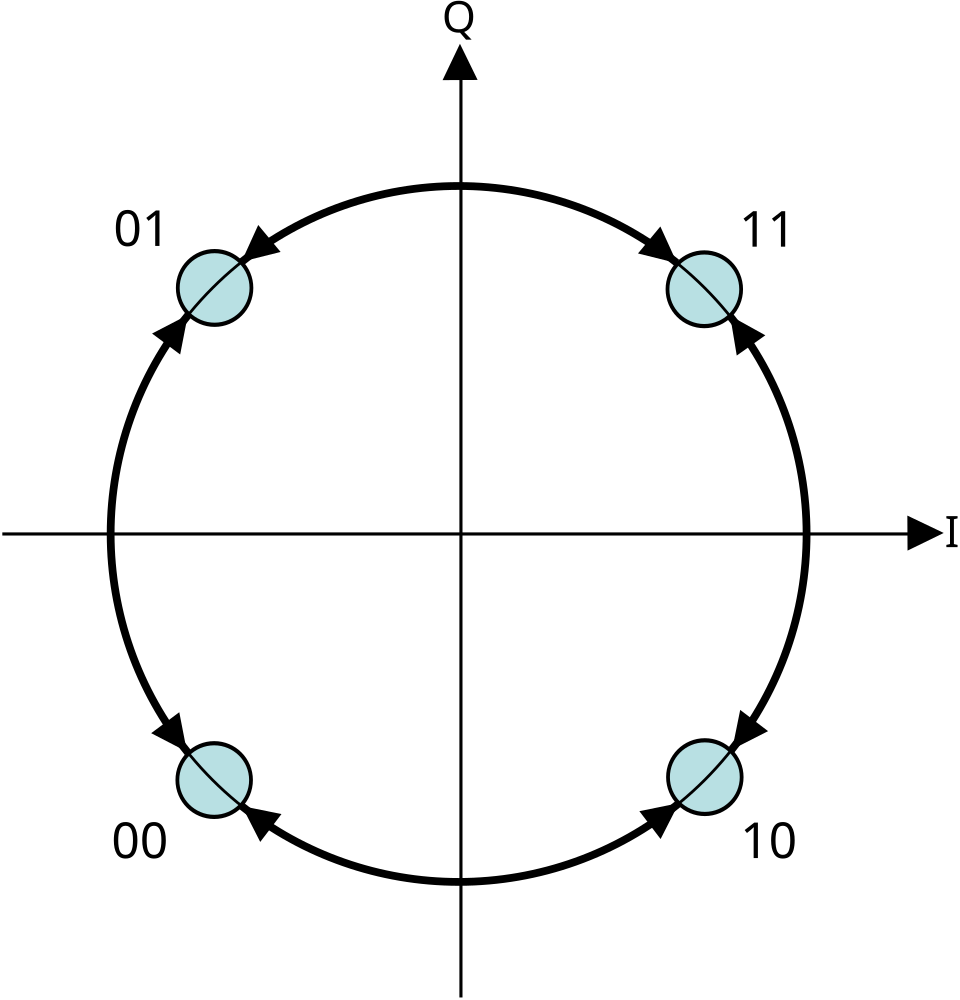 Circular Gray code wheel showing adjacent bit changes (Image: Superspritz, CC BY-SA 4.0, via Wikimedia Commons)
Based on the PU BE Computer (PU) syllabus for Digital Logic, unit 1.
Discussion
Loading…