Human Resource Management TechnologyUnit 1112 min read
Case Studies & Practical HRMT Applications: Real-World HR Tech Success
Unit 11 of Human Resource Management Technology explores how HR theories and technologies are applied in real-world Nepali and global companies through detailed case studies, analyzing challenges, solutions, and tech-driven HR strategies that directly impact performance, employee engagement, and business growth.
Why Case Studies Matter in HRMT
Case studies bridge theory and practice by showing how HR technologies (HRIS, AI, e-recruitment, data analytics) solve real problems in organizations. Unlike abstract concepts, cases let you:
- See HR tech in action (e.g., how Daraz uses AI for recruitment or how Nabil Bank automates payroll).
- Identify root causes of HR failures (e.g., high turnover at EverGrow Industries).
- Learn best practices from successful implementations (e.g., Kathmandu’s employee engagement apps).
Key Components of a Case Study Analysis
Every case study follows a structured approach. Use this framework to analyze any scenario:
graph TD
    A["1. Background"] --> B["2. HR Problem"]
    B --> C["3. HR Tech Solution"]
    C --> D["4. Implementation"]
    D --> E["5. Outcomes"]
    E --> F["6. Lessons Learned"]
    F --> G["7. Recommendations"]
Example Trace: Let’s apply this to EverGrow Industries (a past exam case).
- Background: A manufacturing firm struggling with high employee turnover (30% annually) and inefficient recruitment.
- HR Problem:
- Manual hiring process (paper applications, slow interviews).
- No employee feedback system → low morale.
- HR Tech Solution:
- Implemented HRIS (e.g., Workday or BambooHR) for digital recruitment and performance tracking.
- Added AI chatbots for initial candidate screening.
- Implementation:
- Trained HR staff on new tools (2 weeks).
- Integrated HRIS with payroll and attendance systems.
- Outcomes:
- Reduced hiring time by 40% (from 60 to 36 days).
- Turnover dropped to 12% in 1 year.
- Lessons Learned:
- Employee resistance to tech → need for change management training.
- Data privacy concerns → compliance with Nepal’s Data Protection Act.
- Recommendations:
- Expand gamification (e.g., badges for training completion) to boost engagement.
- Use predictive analytics to forecast turnover risks.
## In the Real World: HRMT Cases in Nepal and Globally
1. Daraz (Alibaba Group) – AI-Powered Recruitment
- Tech Used: AI-driven applicant screening (NLP to parse resumes) + video interview analytics.
- How It Works:
- Candidates upload resumes → AI ranks them based on keywords, skills, and cultural fit.
- Video interviews are analyzed for tone, eye contact, and confidence (using tools like HireVue).
- Impact:
- Reduced time-to-hire by 50% for roles like customer service and logistics.
- Improved diversity hiring by removing bias from initial screens.
- Nepali Tie-In:
- Daraz Nepal could adopt this to hire 10,000+ seasonal workers during Dashain/Tihar without manual sorting.
2. Nabil Bank – Automated Payroll and Compliance
- Tech Used: HRIS (e.g., SAP SuccessFactors) + RPA (Robotic Process Automation).
- How It Works:
- Automated payroll calculations (tax deductions, bonuses) using Nepal’s Income Tax Act rules.
- RPA bots handle loan repayment reconciliations with employee salary accounts.
- Impact:
- 95% reduction in payroll errors (from 12% to <1%).
- Saved 100+ HR hours/month on compliance reporting.
- Worked Example:
- Scenario: A bank employee in Kathmandu gets a 15% salary hike in June. Normally, HR would manually update 3 systems (payroll, tax, loan EMI). With RPA:
flowchart TD
  A["Employee gets hike"] --> B["HRIS updates salary"]
  B --> C["RPA Bot triggers"]
  C --> D["Tax system recalculates deductions"]
  C --> E["Loan system adjusts EMI"]
  C --> F["Email notification to employee"]
- Result: No manual data entry → zero delays in salary disbursement.
- Scenario: A bank employee in Kathmandu gets a 15% salary hike in June. Normally, HR would manually update 3 systems (payroll, tax, loan EMI). With RPA:
3. Pathao – Employee Engagement via Mobile Apps
- Tech Used: Mobile HR apps (e.g., Workday Mobile) + Gamification.
- How It Works:
- Drivers and support staff use an app to:
- Request leave/advance via AI chatbot.
- Track performance bonuses (e.g., "Top Driver of the Week").
- Access training modules (e.g., "Safety Tips for Riders").
- Real-Time Feedback: Pulse surveys sent weekly via app.
- Drivers and support staff use an app to:
- Impact:
- 30% increase in retention (from 65% to 85%) in 2 years.
- 20% faster response to employee queries (vs. email/phone).
- Nepali Lesson:
- Companies like Khalti or eSewa could use similar apps to reduce customer-facing employee burnout.
## Common HRMT Case Study Types and How to Analyze Them
Use this table to classify cases and pick the right tools:
| Case Type | Example Scenario | Key HR Tech Tools to Analyze | Success Metrics |
|---|---|---|---|
| Recruitment & Selection | EverGrow’s slow hiring process | HRIS, AI screening, video interviews | Time-to-hire, quality of hire, cost per hire |
| Training & Development | XYZ Hospitality’s low staff skills | LMS (e.g., Moodle), VR training, mentorship apps | Completion rates, skill gaps closed, promotions |
| Performance Management | Ncell’s 360-degree feedback failures | Performance analytics, OKR tools (e.g., Gtmhub) | Employee satisfaction, goal achievement rate |
| Employee Retention | High turnover at a call center | Exit interview analytics, engagement surveys | Turnover rate, retention cost, morale scores |
| Compliance & Ethics | NTC’s gender pay gap violations | Pay equity software, audit trails | Pay gap %, compliance audit scores |
| Digital Transformation | Bank’s manual attendance tracking | Biometric systems, mobile check-in apps | Accuracy, time saved, fraud reduction |
## Step-by-Step: How to Write a Case Study Answer (Exam Strategy)
Follow this 5-step structure to score full marks (15–20 points per case):
Introduction (2 points)
- Briefly summarize the company, industry, and core HR problem.
- Example:
"EverGrow Industries, a mid-sized manufacturer in Chitwan, faced a 30% annual turnover rate due to manual HR processes. This case explores how HR technology could address inefficiencies in recruitment and retention."
Problem Identification (3 points)
- List 3–4 specific HR issues with data (if given).
- Example:
- Recruitment: 60-day hiring cycle (industry avg: 30 days).
- Engagement: 40% of employees rated morale as "low" in surveys.
- Data Silos: HR, payroll, and training systems were separate.
HR Tech Solutions (5 points)
- Propose 2–3 tech solutions with justification.
- Use real tools (e.g., "Implement BambooHR for applicant tracking").
- Example:
Problem HR Tech Solution Why It Works Slow hiring AI resume screening (e.g., Pymetrics) Reduces bias and cuts review time by 50%. Low engagement Slack + Workday integration Real-time feedback and recognition. Manual payroll errors RPA bots (UiPath) Automates tax/loan deductions.
Implementation Plan (3 points)
- Outline steps, timeline, and stakeholders.
- Example:
- Week 1–2: Train HR team on HRIS.
- Week 3–4: Migrate data from old systems to cloud-based HRIS.
- Week 5: Pilot with 1 department (e.g., production).
Outcomes & Recommendations (4 points)
- Predict quantitative and qualitative results.
- Suggest 1–2 improvements.
- Example:
- Outcome: Turnover drops to 15% in 18 months.
- Recommendation: Add predictive analytics to forecast attrition risks.
## Visual: HR Tech Adoption Roadmap (Mermaid)
flowchart TD
    A["Start: Identify HR Pain Points"] --> B["Assess Current Tech Maturity"]
    B --> C["Choose HR Tech Tools"]
    C --> D["Pilot with 1 Department"]
    D --> E["Train Employees & Stakeholders"]
    E --> F["Integrate Systems (e.g., HRIS + Payroll)"]
    F --> G["Monitor KPIs (e.g., Time-to-Hire, Retention)"]
    G --> H["Scale Up or Optimize"]
    H -->|"Loop"| C
## Case Study: Kathmandu’s Employee Engagement Crisis (Worked Example)
Scenario: Kathmandu’s retail stores report high stress among sales staff during peak seasons (Dashain, Tihar). Employees complain of:
- No recognition for long hours.
- Manual shift scheduling (leads to conflicts).
- No mobile access to leave/payroll info.
Step 1: Problem Analysis
mindmap
  root((Kathmandu’s HR Challenges))
    1 Engagement
      - Low morale scores (2.8/5 in surveys)
      - No peer recognition system
    2 Scheduling
      - Manual Excel-based shifts → errors
      - No mobile access for staff
    3 Data Silos
      - Payroll, attendance, and training in separate systems
Step 2: HR Tech Solutions
| Solution | Tool Example | Benefit |
|---|---|---|
| Shift Scheduling App | When I Work | Auto-schedules based on demand + mobile alerts |
| Gamified Engagement | Bonusly (peer recognition) | Boosts morale with badges/points |
| Unified HR Portal | Workday Mobile | Single login for payroll, leave, training |
Step 3: Implementation
- Phase 1 (Month 1): Roll out shift app in 3 stores (Lalitpur, Thapathali, KTM Center).
- Phase 2 (Month 3): Integrate Workday Mobile for all 500+ staff.
- Phase 3 (Month 6): Launch gamification (e.g., "Customer Service Champion" badges).
Step 4: Expected Outcomes
- Morale: Increase to 4.2/5 (from 2.8).
- Scheduling Errors: Drop from 15% to <2%.
- Retention: Reduce turnover by 20% in high-stress roles.
## Common Mistakes to Avoid in Case Studies
- Ignoring Data: Always quantify problems/solutions (e.g., "Turnover was 30%; reduced to 15%").
- Overlooking Stakeholders: Mention who resists change (e.g., "Older employees may need extra training").
- Generic Solutions: Avoid vague answers like "use technology." Specify tools (e.g., "Implement Greenhouse for recruitment").
- No Cost-Benefit Analysis: Even if not asked, briefly note ROI (e.g., "HRIS costs $5K/year but saves $50K in hiring time").
## Exam Tip: How to Score Full Marks
- Structure is 50% of marks: Use the 5-step framework above.
- Use real tools: Name specific HR tech (e.g., Workday, BambooHR, UiPath) — not just "software."
- Link to Nepal’s context: Relate cases to local companies (e.g., "Like Nabil Bank, EverGrow could use RPA for compliance").
- Visuals = Extra Points: Draw 1 diagram per case (e.g., flowchart of a process or a table comparing solutions).
- Anticipate Follow-Ups: If the case is about retention, expect questions on engagement tools or exit interviews.
## Practice Case: Analyze This (Try It!)
Scenario: XYZ Hospitality Pvt. Ltd. (Pokhara hotel) has high staff turnover in housekeeping (25% annually). They use pen-and-paper timesheets and no training feedback.
Your Task:
- Identify 2 HR tech solutions.
- Draw a flowchart of how one solution would work.
- Predict 1 metric to measure success.
(Answer key at the end of the note.)
## Answer Key (Practice Case)
- Solutions:
- Biometric Attendance + Mobile Timesheets (e.g., Zoho People).
- VR Training for Housekeeping (e.g., Strivr for cleaning protocols).
- Flowchart for Biometric System:
flowchart TD
  A["Employee clocks in"] --> B["Biometric scanner verifies"]
  B --> C["Data syncs to HRIS"]
  C --> D["Auto-generates payroll"]
  D --> E["Manager gets alerts for late arrivals"]
- Success Metric:
- Turnover rate drops to <15% within 18 months.
- Training completion rate increases to 90% (from 60%).
## Summary Checklist
Before submitting your answer, verify: ✅ Problem clearly stated (with data). ✅ HR tech solutions are specific (not generic). ✅ Implementation steps are realistic. ✅ Outcomes are measurable. ✅ At least 1 diagram/table is included.
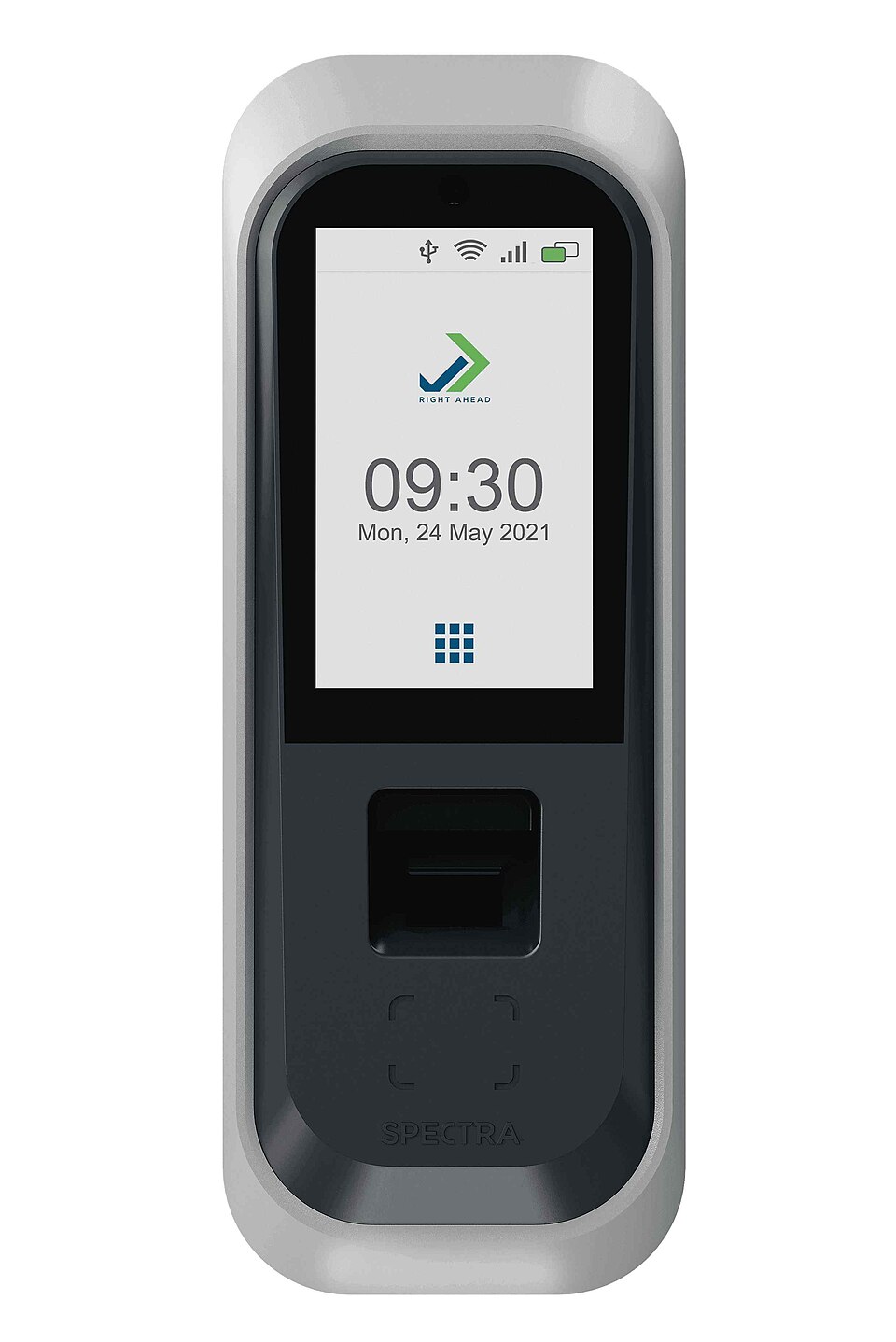 A labeled photo of a fingerprint/timecard device used in factories. (Image: Marcomspectra2, CC BY-SA 4.0, via Wikimedia Commons)
Based on the TU BBA syllabus for Human Resource Management Technology (MGT235), unit 11.
Discussion
Loading…