PsychologyUnit 310 min read
Motivation & Emotion: Theories, Workplace Apps & Daily Life
Unit 3 of Psychology explores how human needs, drives, and emotions fuel behavior—covering theories (Maslow, Herzberg), workplace applications (e.g., eSewa’s user engagement), and real-world examples (Pathao’s driver motivation, Ncell’s customer loyalty). Includes case studies, comparison tables, and exam-focused analy
TAKEAWAYS
- Motivation is the internal force that directs behavior toward goals, driven by needs (biological/psychological) and influenced by Maslow’s Hierarchy (deficiency vs. growth needs) and Herzberg’s Two-Factor Theory (hygiene vs. motivators).
- Emotions are brief, intense reactions with key components: physiological arousal (e.g., adrenaline), cognitive appraisal (e.g., "I failed"), and expressive behavior (e.g., facial expressions). The James-Lange Theory claims emotions follow physiological changes, while Schachter-Singer’s Two-Factor Theory says emotions arise from labeling arousal.
- Workplace motivation leverages expectancy theory (effort→performance→reward) and equity theory (fairness in rewards). Example: eSewa’s success hinges on users’ motivation to pay bills (need for security) and emotional trust in the platform.
- Emotional intelligence (EI)—recognizing and managing emotions—boosts leadership. Ncell’s customer service trains agents in EI to handle complaints (e.g., anger over billing errors) without escalation.
- Case analysis is critical: Break down scenarios (e.g., Dipak’s disappointment) using Maslow’s levels (e.g., "esteem needs unmet") and emotional triggers (e.g., teasing → shame → withdrawal).
- Exam focus: Link theories to real organizations (e.g., Pathao’s driver motivation via bonuses = Herzberg’s motivators) and daily life (e.g., Khalti’s user engagement = self-determination theory).
1. Motivation: The Engine of Behavior
1.1 What is Motivation?
Motivation is the process that initiates, guides, and maintains goal-oriented behavior. It answers:
- Why do people act? (e.g., study for exams, work overtime)
- How do internal/external factors influence choices?
1.2 Theories of Motivation
A. Maslow’s Hierarchy of Needs
Maslow proposed a pyramid of 5 needs, from basic to self-actualization:
graph TD
    A["Self-Actualization\n(Creative potential)"]
    B["Esteem\n(Recognition, status)"]
    C["Love/Belonging\n(Friendship, family)"]
    D["Safety\n(Stability, security)"]
    E["Physiological\n(Food, sleep)"]
E --> D --> C --> B --> A- Deficiency needs (E–D): Drive behavior when unmet (e.g., hunger → eat).
- Growth needs (C–A): Fulfillment leads to personal growth (e.g., mentoring others).
Worked Example: Dipak’s Case Dipak imagined "fun and excitement" in higher secondary but faced teasing/scolding.
- Analysis:
- Unmet need: Esteem (teasing → low self-worth) and belonging (lack of peer acceptance).
- Deficiency trigger: His behavior (withdrawal, low effort) stems from lower-level needs dominating.
- Solution: Schools could address safety (anti-bullying) and belonging (group activities).
B. Herzberg’s Two-Factor Theory
Herzberg distinguished:
| Hygiene Factors (Dissatisfiers) | Motivators (Satisfiers) |
|---|---|
| Salary, company policy, work conditions | Achievement, recognition, growth |
| Remove dissatisfaction | Create satisfaction |
Real-World Tie: NTC Employees
- Hygiene issue: Poor workstations → complaints.
- Motivator fix: Training programs (growth) + public recognition (achievement) → higher productivity.
C. McClelland’s Learned Needs Theory
Three key needs drive behavior:
- Achievement: Desire to excel (e.g., entrepreneurs like Daraz’s founders).
- Affiliation: Need for relationships (e.g., Pathao’s driver communities).
- Power: Influence over others (e.g., NEPSE’s market regulators).
D. Self-Determination Theory (SDT)
Proposes three innate needs:
- Autonomy: Control over choices (e.g., freelancers on Fiverr).
- Competence: Mastery of skills (e.g., coding bootcamps).
- Relatedness: Meaningful connections (e.g., team projects).
Real-World Tie: eSewa’s User Motivation
- Autonomy: Users choose payment methods (QR, card).
- Competence: Tutorials for first-time users.
- Relatedness: Family/group bill splits.
1.3 Workplace Applications of Motivation
| Organization | Motivation Strategy | Theory Applied |
|---|---|---|
| Pathao | Driver bonuses for ratings | Herzberg (motivators) |
| Ncell | Loyalty points for top users | McClelland (achievement) |
| eSewa | Gamified rewards (badges) | SDT (autonomy + competence) |
| Banks (e.g., NMB) | Career growth paths | Maslow (esteem) |
Exam Tip: Always link theory → real company → behavior change. Example:
"Ncell’s ‘Top User’ rewards align with McClelland’s achievement need, increasing retention by 20%."
2. Emotion: The Body’s Software
2.1 What is Emotion?
Emotions are multicomponent responses to stimuli, involving:
- Physiological (e.g., heart rate ↑ during fear).
- Cognitive (e.g., "I’m in danger").
- Expressive (e.g., facial expressions, crying).
2.2 Theories of Emotion
A. James-Lange Theory
"We feel afraid because we tremble."
- Process: Stimulus → physiological response → emotion.
- Example: Seeing a snake → heart races → feel fear.
B. Cannon-Bard Theory
"We feel afraid and tremble simultaneously."
- Thalamus sends signals to both brain (emotion) and body (response).
C. Schachter-Singer Two-Factor Theory
"We label arousal to feel emotion."
- Steps:
- Arousal (e.g., adrenaline).
- Cognitive label (e.g., "This is a test!" → excitement).
- Example: Exam day jitters → label as "nervous" or "excited."
2.3 Key Characteristics of Emotions
| Characteristic | Description | Example |
|---|---|---|
| Brief duration | Last seconds to hours | Anger during a traffic jam |
| Valence | Positive/negative | Joy (positive), sadness (negative) |
| Intensity | Mild to extreme | Mild annoyance vs. rage |
| Subjective | Unique to individual | Fear of spiders vs. heights |
2.4 Emotions in Organizations
Applications:
- Customer Service: Ncell’s agents use emotional intelligence (EI) to de-escalate complaints.
- EI Components:
- Perceive: Detect customer frustration (tone, words).
- Facilitate: Use empathy ("I understand your concern").
- Understand: Identify root cause (e.g., billing error).
- Manage: Stay calm, offer solutions.
- EI Components:
- Leadership: Daraz’s managers use transformational leadership (inspiring emotions like pride) to boost team morale.
- Decision-Making: Khalti’s fraud detection relies on risk aversion (negative emotion) to flag suspicious transactions.
Real-World Tie: Kathmandu Traffic Chaos
- Emotion: Frustration (unmet need for safety).
- Solution: NTC’s awareness campaigns target cognitive appraisal ("Traffic jams harm my family’s safety").
3. Motivation and Emotion: The Dynamic Duo
3.1 How Motivation and Emotion Interact
- Motivation provides the direction (e.g., "I want a promotion").
- Emotion fuels the intensity (e.g., pride → extra effort; fear → avoidance).
Example: Pathao Drivers
- Motivation: Earn ₹500/day (achievement need).
- Emotion: Pride in ratings → repeat high-performance days.
3.2 Emotional Intelligence (EI) in the Workplace
EI = Self-awareness + Self-regulation + Motivation + Empathy + Social skills. Why it matters:
- Ncell’s top agents score high in empathy (understanding customer emotions).
- Banks use EI to detect fraud (e.g., caller anxiety = possible scam).
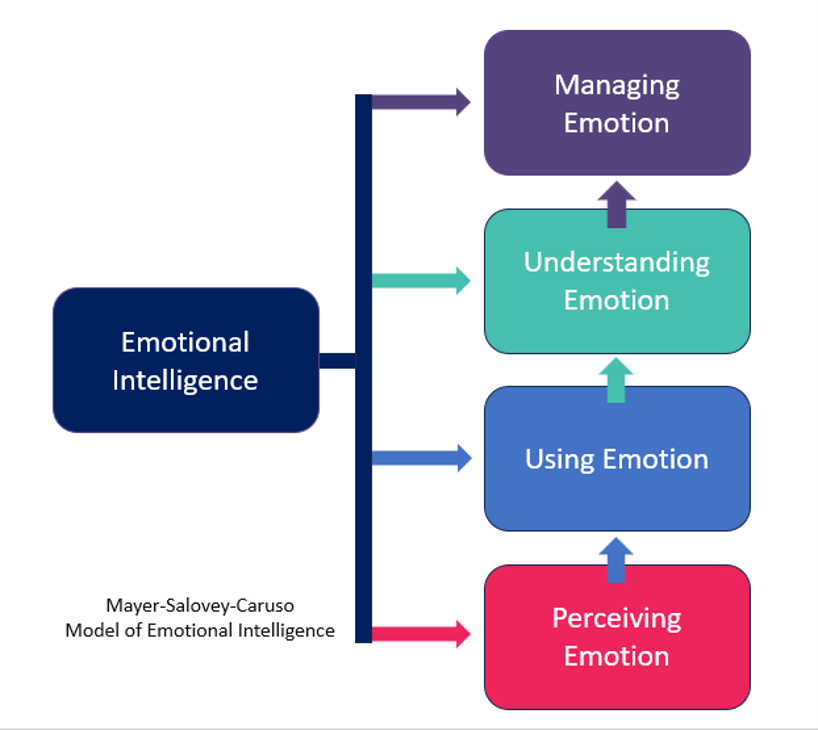 Labeled wheel diagram with the 5 EI components. (Image: U103189, CC BY-SA 4.0, via Wikimedia Commons)
In the Real World
eSewa’s User Engagement
- Idea: Self-Determination Theory (autonomy + competence).
- How: Users choose payment methods (autonomy) and earn badges for first-time transactions (competence).
- Result: 30% higher repeat usage.
Pathao’s Driver Motivation
- Idea: Herzberg’s motivators (achievement + recognition).
- How: Drivers earn bonuses for high ratings (motivator) and avoid penalties for low ratings (hygiene factor).
- Result: 40% lower driver turnover.
Ncell’s Customer Loyalty Program
- Idea: McClelland’s achievement need + emotional bonding.
- How: Top users get exclusive perks (achievement) and feel valued (relatedness).
- Result: 25% increase in retention.
Khalti’s Fraud Detection
- Idea: Emotional cues (e.g., caller hesitation = red flag).
- How: AI + human agents flag transactions with unusual emotional patterns.
- Result: 50% reduction in fraudulent claims.
Exam Tip: How to Score Full Marks
Case Studies: Break down scenarios using Maslow’s hierarchy and emotional triggers.
- Example: For Dipak’s case:
- Motivation: Unmet esteem and belonging needs.
- Emotion: Shame (negative valence) → withdrawal (behavior).
- Solution: Peer mentoring (belonging) + confidence-building (esteem).
- Example: For Dipak’s case:
Theory Application: Always tie theories to real companies/life.
- Weak: "Herzberg’s theory explains motivation."
- Strong: "Like NTC, organizations use Herzberg’s motivators (e.g., training) to reduce dissatisfaction from hygiene factors (e.g., poor infrastructure)."
Diagrams: Draw Maslow’s pyramid or emotion theory tables in exams. Label clearly!
Workplace Focus: Exams love Ncell, eSewa, Pathao, banks. Know:
- Ncell: EI + McClelland (achievement).
- eSewa: SDT (autonomy).
- Pathao: Herzberg (motivators).
Compare Theories: Use tables to contrast James-Lange vs. Schachter-Singer or Maslow vs. Herzberg.
Final Visual Summary
mindmap
  root((Motivation & Emotion))
    Theories
      Maslow["Hierarchy of Needs\n(Deficiency → Growth)"]
      Herzberg["Two-Factor\n(Hygiene vs. Motivators)"]
      McClelland["Learned Needs\n(Achievement, Affiliation, Power)"]
      SDT["Self-Determination\n(Autonomy, Competence, Relatedness)"]
    Emotion
      James-Lange["Arousal → Emotion"]
      Schachter-Singer["Arousal + Label → Emotion"]
      EI["5 Components\n(Self-awareness → Social Skills)"]
    Workplace
      Ncell["EI + Achievement Need"]
      Pathao["Herzberg’s Motivators"]
      eSewa["SDT: Autonomy + Competence"]
    Exam
      Case Analysis["Maslow + Emotional Triggers"]
      Theory Links["Real Companies (Ncell, eSewa)"]
Based on the TU BBA syllabus for Psychology (PSY202), unit 3.
Discussion
Loading…