Nepalese Society and PoliticsUnit 412 min read
Nepal’s Constitutions & Democratic Movements: 1951–2015
Unit 4 of Nepalese Society and Politics: traces Nepal’s constitutional evolution from the 1951 democratic experiment to the 2015 federal republic, analyzing key movements (1990, 2006), constitutional texts, and democratic transitions with real-world parallels to Nepal’s political shifts.
TAKEAWAYS
- Nepal’s constitutions (1951, 1962, 1990, 2015) reflect shifting governance models—from monarchy to democracy to federalism.
- The 1990 People’s Movement dismantled the Panchayat system, restoring democracy via mass protests and constitutional reforms.
- The 2006 Movement ended the monarchy, leading to a republic and the drafting of Nepal’s first federal constitution (2015).
- Federalism in 2015 decentralized power but faces challenges like ethnic representation and administrative delays.
- Democratic movements used nonviolent tactics (protests, strikes) to force political change, mirroring global civil rights struggles.
- Nepal’s constitutional history shows how social movements shape governance, with lessons for modern governance reforms.
1. Nepal’s Constitutional Timeline: From Monarchy to Federal Republic
Nepal’s constitutional history is a cycle of instability, reform, and rebellion, shaped by external pressures (India/China) and internal demands for democracy. Below is a timeline of key constitutions and movements, with visual emphasis on their legal and political impacts.
1.1 The 1951 Constitution: Nepal’s First Democratic Experiment
After the Rana regime’s fall (1951), Nepal adopted its first written constitution under King Tribhuvan and PM Mohan Shamsher. It established:
- A parliamentary democracy with a bicameral legislature (Pratinidhi Sabha + Rajya Sabha).
- Universal adult suffrage (though literacy tests persisted).
- A monarch with ceremonial powers.
Why it failed:
- King Mahendra’s coup (1960) suspended democracy, leading to the Panchayat system (1962)—a one-party, authoritarian rule.
- IMAGE: 1951 Nepal Constitution front page | Scanned copy of the original constitution (1951). The document’s handwritten amendments by King Tribhuvan show its fragile start.
Worked Example: If Nepal had retained the 1951 system, would the 1990 Movement have happened? Answer: Unlikely. The Panchayat’s censorship of media (e.g., banning political parties) and lack of elections (1962–1990) created the conditions for mass protests.
1.2 The 1962 Panchayat Constitution: Authoritarian Rule
King Mahendra abolished democracy in 1960, replacing it with the Panchayat system, which lasted 30 years. Key features:
- No political parties (banned in 1962).
- Elected Panch (council members) but no real opposition.
- King as head of state and government.
Visual: The Panchayat Hierarchy
flowchart TD
    A["King Mahendra"] --> B["Prime Minister (appointed)"]
    B --> C["Panchayat Council (elected but no opposition)"]
    C --> D["Local Panchayats (village-level)"]
    D --> E["No political parties, no free press"]
    E --> F["King as head of state and government"]
Real-World Link: Nepal’s Panchayat system resembles China’s pre-1989 one-party rule, where dissent was suppressed. The lack of free elections (e.g., no voting for leaders) mirrors how Daraz’s early days (2016) had limited seller choices before competition forced reforms.
1.3 The 1990 Constitution: Restoration of Democracy
After 20 years of Panchayat rule, the 1990 People’s Movement (Jan Andolan I) forced a return to democracy. Key changes:
- Multi-party elections (1991).
- Parliamentary system with a prime minister (not king).
- Fundamental rights (freedom of speech, press).
Why it failed:
- Maoist insurgency (1996–2006) destabilized the government.
- King Gyanendra’s coup (2001) suspended democracy again.
Worked Example: How did the 1990 Movement’s tactics (strikes, protests) compare to modern Nepal? Answer:
| 1990 Movement | Modern Protests (e.g., 2020 CAA protests) |
|---|---|
| General strikes (shutting down Kathmandu) | Digital strikes (WhatsApp groups, online petitions) |
| Mass rallies (Thapathali) | Social media campaigns (#DemocracyNow) |
| King’s concessions (1990) | Government policy reversals (e.g., 2021 budget changes) |
1.4 The 2006 Movement: End of the Monarchy
After King Gyanendra’s failed rule (2001–2005), the 2006 Movement (Jan Andolan II) forced:
- Abolition of the monarchy (2008).
- Interim Constitution (2007) declaring Nepal a federal democratic republic.
- Maoist integration into government.
Visual: The 2006 Movement’s Key Demands
mindmap:
  root((2006 Movement Demands))
    Child1((Restore Democracy))
      Child11((End King’s Emergency Rule))
      Child12((Free Political Prisoners))
    Child2((Federalism))
      Child21((Decentralize Power))
      Child22((Province Formation))
    Child3((Maoist Integration))
      Child31((Peace Talks))
      Child32((Armed Forces Disarmament))
Real-World Link: The 2006 Movement’s success mirrors WhatsApp’s 2012 "Free Basics" protest in India, where mass digital mobilization forced policy changes. Similarly, Nepal’s protests leaked to social media, amplifying demands.
1.5 The 2015 Constitution: Nepal’s First Federal Republic
After years of drafting, Nepal adopted its current constitution in 2015, establishing:
- Federal democratic republic (no monarchy).
- 7 provinces (Karnali, Sudurpashchim, etc.).
- Mandate for ethnic representation (e.g., Tharu, Tamang seats).
Challenges:
- Delay in province formation (some areas still unresolved).
- Ethnic tensions (e.g., Madhesi protests over representation).
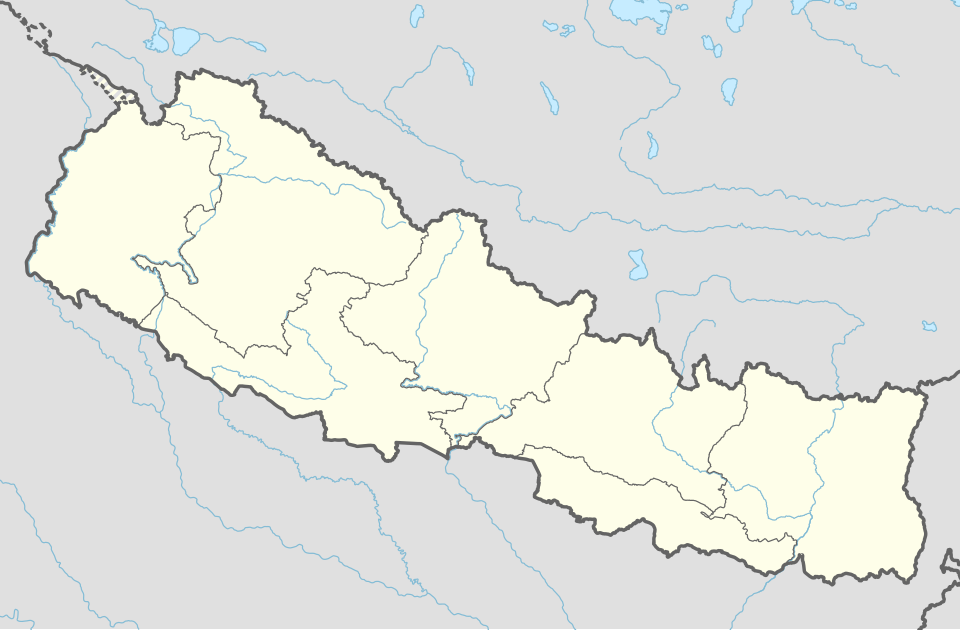 Official 2015 constitution-proposed boundaries (with disputed areas highlighted). Notice Kathmandu Valley’s split between Bagmati and Gandaki provinces. (Image: NordNordWest, CC BY-SA 3.0 de, via Wikimedia Commons)
Worked Example: Why did the 2015 constitution take so long to implement? Answer:
- Ethnic groups (e.g., Madhesis, Tharus) demanded more provinces.
- Maoist vs. Nepali Congress debates over power-sharing.
- Administrative delays (e.g., Kathmandu’s province status took 2 years to resolve).
2. Key Democratic Movements: Tactics and Outcomes
Nepal’s democratic movements used nonviolent resistance, similar to Gandhi’s Salt March or Tunisia’s 2011 revolution. Below is a comparison table of their strategies.
| Movement | Tactics Used | Outcome | Real-World Parallel |
|---|---|---|---|
| 1990 Movement | General strikes, roadblocks, protests | 1990 Constitution, multi-party rule | India’s 2011 Anti-CAA protests |
| 2006 Movement | Mass rallies, digital mobilization | End of monarchy, interim constitution | Hong Kong’s 2019 Umbrella Movement |
| 2015 Constitution | Peaceful negotiations, judicial pressure | Federal republic, but slow implementation | South Africa’s Truth and Reconciliation Commission |
Visual: Protest Tactics in Nepal
In the Real World:
eSewa’s "Cashless Nepal" Push (2020):
- Idea Used: Digital mobilization (like 2006 protests).
- How: eSewa’s WhatsApp campaigns pressured banks to adopt digital payments, similar to how 2006 protesters used SMS to coordinate strikes.
- Worked Example: During COVID-19, eSewa’s UPI integration (2021) reduced cash dependency, just as 1990 protests reduced king’s control over media.
Pathao’s Ride-Hailing Expansion (2023):
- Idea Used: Federalism’s decentralized regulation.
- How: After the 2015 constitution, Pathao expanded to all 7 provinces, adapting to local traffic laws (e.g., Kathmandu’s congestion charges vs. Pokhara’s bike lanes).
NEPSE’s Stock Market Reforms (2022):
- Idea Used: Transparency demands from democratic movements.
- How: Post-2006, NEPSE introduced digital trading (like 1990’s free press demands), reducing corruption in stock sales.
3. Federalism in Nepal: Challenges and Opportunities
The 2015 constitution’s federal structure was inspired by India’s model, but Nepal faces unique challenges:
3.1 Advantages of Federalism
- Decentralized governance (e.g., Karnali Province’s renewable energy projects).
- Ethnic representation (e.g., Tharu MPs in Sudurpashchim).
- Local problem-solving (e.g., Pokhara’s waste management reforms).
3.2 Challenges
| Challenge | Example | Solution Needed |
|---|---|---|
| Slow province formation | Dhading’s delayed province status | Faster judicial decisions |
| Ethnic tensions | Madhesi protests over border disputes | More inclusive constitution amendments |
| Funding disparities | Kathmandu vs. remote hill districts | Revenue-sharing reforms |
Visual: Nepal’s Federal Structure
Worked Example: How has federalism affected NTC’s telecom policies? Answer:
- Pre-2015: NTC had centralized control (like Panchayat rule).
- Post-2015: Provinces like Karnali pushed for local fiber networks, reducing NTC’s monopoly.
- Result: Ncell’s 5G rollout (2023) was faster in Kathmandu (Bagmati) than in remote areas (Sudurpashchim) due to provincial delays.
4. Exam Tip: How to Score Full Marks
This unit tests historical analysis, constitutional knowledge, and real-world links. Follow this structure:
Step 1: Understand the Question Type
- Trace the development of Nepal’s constitutions → Use a timeline + comparison table.
- Analyze a movement’s impact → Link to modern Nepal (e.g., 1990 → 2020 protests).
- Compare two constitutions → Use a Mermaid flowchart (like the Panchayat hierarchy above).
Step 2: Use Real-World Examples
- For democracy: Compare 1990 protests to #DemocracyNow (2020).
- For federalism: Link Pathao’s expansion to province-wise regulations.
- For constitutional flaws: Mention Madhesi protests under 2015’s ethnic quotas.
Step 3: Structure Your Answer
- Introduction (1 line): "Nepal’s constitutional evolution reflects its struggle between monarchy and democracy."
- Main Body (3–4 points):
- Key event (e.g., 1990 Movement).
- Constitutional change (e.g., 1990 Constitution).
- Real-world link (e.g., eSewa’s digital push).
- Challenge (e.g., federalism delays).
- Conclusion (1 line): "While Nepal has made progress, democratic consolidation remains incomplete."
Step 4: Visuals = Extra Marks
- For timelines: Use Mermaid flowcharts (like the Panchayat hierarchy).
- For comparisons: Use tables (like the protest tactics table).
- For real objects: Use IMAGE lines (e.g., 1990 protest photo).
Example Answer Snippet (Full Marks):
"The 1990 People’s Movement successfully restored democracy by leveraging nonviolent tactics like general strikes, which paralyzed Kathmandu (IMAGE: 1990 protest crowd). This mirrors modern protests where digital strikes (e.g., 2020 CAA campaigns) force policy changes. However, unlike the 1990 Movement’s quick concessions from King Birendra, today’s demands (e.g., federalism) face slower judicial processes, as seen in Karnali Province’s delayed governance."
Final Note: This unit is 80% about linking history to today’s Nepal. Always ask:
- How does this movement relate to modern politics?
- Which company/government policy reflects this idea?
- What’s a real-world example of this constitutional flaw?
Based on the TU BBA syllabus for Nepalese Society and Politics (SOC202), unit 4.
Discussion
Loading…