PsychologyUnit 112 min read
Psychology’s Roots, Views & Real-World Uses
Unit 1 of Psychology: Explores psychology’s history, major theoretical approaches (biological, behavioural, cognitive, humanistic, psychodynamic, evolutionary, and sociocultural), their key figures, methods, and practical applications in business, marketing, and daily life.
TAKEAWAYS:
- Psychology is the scientific study of human behaviour and mental processes, rooted in philosophy and biology, with applications from workplace productivity to consumer behaviour.
- Six major approaches (biological, behavioural, cognitive, humanistic, psychodynamic, evolutionary) explain behaviour differently, each with strengths and limitations.
- Evolutionary psychology explains human traits (e.g., social hierarchies, mate preferences) through natural selection, while cognitive psychology studies mental processes like memory and decision-making.
- Research methods (observation, experiments, surveys) are essential for validating theories, and ethical guidelines (informed consent, confidentiality) protect participants.
- Psychology applies to business (employee motivation, customer psychology), marketing (advertising strategies), and everyday life (conflict resolution, stress management).
- Case studies (e.g., Phineas Gage’s brain injury) and real-world examples (e.g., Daraz’s recommendation algorithms) illustrate theoretical concepts in action.
1. What Is Psychology?
Psychology is the scientific study of human behaviour, thoughts, and emotions. It explores how individuals perceive, process, and respond to their environment. Unlike philosophy (which asks "why?"), psychology seeks empirical explanations through observation and experimentation.
Key Definitions
- Behaviour: Observable actions (e.g., smiling, buying decisions).
- Mental processes: Unobservable thoughts, feelings, and perceptions (e.g., decision-making, memory).
- Scientific method: Systematic approach to testing hypotheses (e.g., experiments, surveys).
Origins of Psychology
Psychology emerged from philosophy (e.g., Plato’s Tabula Rasa idea) and biology (e.g., Darwin’s evolution theory). The first psychology lab was established by Wilhelm Wundt in 1879 in Leipzig, Germany.
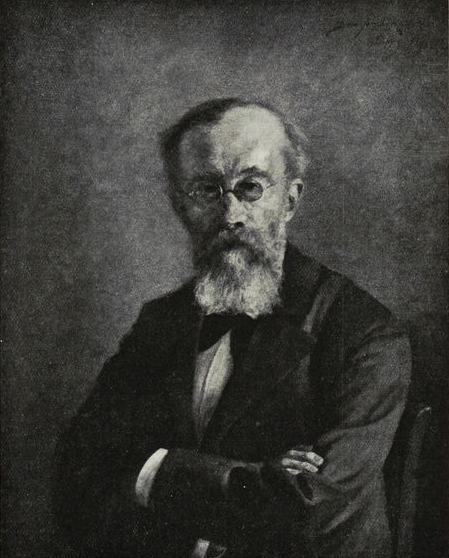 Father of modern experimental psychology (Image: Dora Arnd al Raschid / Dora Arndt al Raschid / Dora Arnd-Ras, Public domain, via Wikimedia Commons)
2. Major Approaches in Psychology
Psychology lacks a single unified theory, so different approaches explain behaviour from distinct perspectives. Below is a comparison:
| Approach | Focus | Key Figures | Strengths | Limitations |
|---|---|---|---|---|
| Biological | Brain, genetics, hormones | Paul Broca, Roger Sperry | Explains physical causes (e.g., ADHD) | Ignores environmental/social factors |
| Behavioural | Observable behaviour | Ivan Pavlov, B.F. Skinner | Predictable responses (e.g., ads) | Overlooks internal thoughts/emotions |
| Cognitive | Mental processes (memory, thinking) | Ulric Neisser, Jean Piaget | Explains problem-solving, decision-making | Hard to measure directly |
| Humanistic | Personal growth, self-actualization | Carl Rogers, Abraham Maslow | Focuses on human potential | Subjective, lacks empirical rigor |
| Psychodynamic | Unconscious mind, childhood trauma | Sigmund Freud, Carl Jung | Explains deep-seated behaviours | Difficult to test scientifically |
| Evolutionary | Adaptive traits from natural selection | Leda Cosmides, John Tooby | Explains universal human tendencies | Overemphasizes biology, ignores culture |
| Sociocultural | Social and cultural influences | Lev Vygotsky, Albert Bandura | Explains group behaviours | Hard to isolate cultural effects |
Worked Example: Evolutionary Psychology
Question: Why do people prefer symmetrical faces? Answer: Evolutionary psychologists argue that symmetry signals genetic health (a trait favoured by natural selection). Studies show that symmetrical faces are perceived as more attractive because they indicate low parasite load and strong immune function.
3. Evolutionary Psychology in Real Life
Evolutionary psychology explains why humans behave the way they do based on survival advantages passed down through generations.
Real-World Example 1: E-Sewa & Khalti (Trust & Reciprocity)
- Idea: Evolutionary psychology suggests humans have an innate trust mechanism (reciprocity principle).
- Application:
- E-Sewa and Khalti (Nepal’s digital payment platforms) rely on trust between users and the system.
- The reciprocity norm (people return favours) explains why users keep transacting after initial trust is established.
- Worked Example: If E-Sewa offers a referral bonus, users are more likely to recommend it to friends (altruism as a social survival strategy).
Real-World Example 2: Daraz’s Recommendation Algorithms (Social Learning)
- Idea: Observational learning (Bandura’s social learning theory) + evolutionary preference for efficiency.
- Application:
- Daraz’s "Frequently Bought Together" feature uses algorithmic social proof (like humans copying others’ choices).
- Evolutionarily, humans save time by following group norms (e.g., "If many buy X with Y, it must be useful").
- Worked Example: If a customer buys a laptop, Daraz suggests accessories (mouse, charger) based on past user behaviour—mirroring how people historically learn from others.
4. Cognitive Psychology: How the Mind Works
Cognitive psychology studies mental processes like:
- Perception (how we interpret sensory input)
- Memory (encoding, storage, retrieval)
- Thinking & Problem-Solving (algorithms, heuristics, insight)
Key Concepts
Algorithms vs. Heuristics
- Algorithm: Step-by-step logical procedure (e.g., solving a math problem).
- Heuristic: Mental shortcut (e.g., "If it’s expensive, it’s better").
- Example: When choosing a mobile plan, Ncell uses heuristics (e.g., "More data = better") instead of complex calculations.
Insight Learning (Gestalt Psychology)
- Sudden understanding (e.g., solving a puzzle after struggling).
- Example: A Daraz customer realizes they need a power bank after their phone dies during delivery—aha! moment.
Mermaid Diagram: Problem-Solving Approaches
flowchart TD
    A["Problem"] --> B["Algorithm\n(Step-by-step)"]
    A --> C["Heuristic\n(Mental shortcut)"]
    A --> D["Insight\n(Sudden realization)"]
    B -->|"Example"| E["Calculating loan EMI"]
    C -->|"Example"| F["Choosing Ncell over NTC\n'because everyone uses it'"]
    D -->|"Example"| G["Realizing you need a charger\nfor your new laptop"]
5. Research Methods in Psychology
Psychologists use scientific methods to study behaviour. Key methods:
| Method | Description | Example | Strengths | Limitations |
|---|---|---|---|---|
| Observation | Watching behaviour in natural settings | Studying Kathmandu traffic jams | Real-world validity | Observer bias, ethics |
| Experiment | Manipulating variables in controlled settings | Testing advertisement impact on Khalti users | Cause-effect clarity | Artificial settings |
| Survey | Collecting self-reported data | Asking Ncell customers about satisfaction | Quick, large samples | Response bias |
| Case Study | In-depth analysis of a single case | Phineas Gage’s brain injury | Rich details | Not generalizable |
| Correlational | Measuring relationships between variables | Linking sleep duration and productivity | Identifies trends | Doesn’t prove causation |
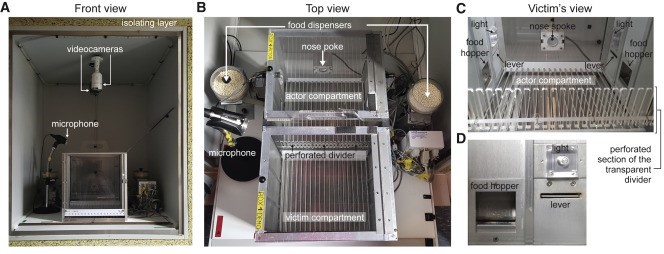 Controlled observation of behaviour (Image: Julen Hernandez-Lallement, Augustine Triumph Attah, Efe Soym, CC BY 4.0, via Wikimedia Commons)
6. Ethical Guidelines in Psychological Research
Psychologists must follow ethical principles to protect participants:
- Informed consent (participants know the study’s purpose).
- Confidentiality (data remains private).
- Right to withdraw (participants can leave anytime).
- No harm (physical or psychological).
Example: If a researcher studies stress levels in Pathao drivers, they must:
- Explain the study’s purpose.
- Ensure anonymity.
- Provide a way to opt out.
7. Applications of Psychology in Business & Daily Life
Psychology is everywhere—from marketing strategies to workplace productivity.
Real-World Example 3: NEPSE Stock Market (Cognitive Biases)
- Idea: Loss aversion (people fear losses more than they value gains).
- Application:
- Investors often hold losing stocks too long (e.g., NEPSE’s 2020 crash) because selling feels like a bigger loss.
- Worked Example: A trader sees a stock drop 10% but refuses to sell, hoping it recovers—even if data suggests it won’t.
Real-World Example 4: Pathao’s Driver Scheduling (Behavioural Economics)
- Idea: Loss aversion + default effects.
- Application:
- Pathao uses automatic scheduling (default shifts) to reduce driver no-shows.
- If a driver misses a shift, they lose potential earnings (loss aversion).
- Worked Example: A Pathao driver pre-selects a shift because changing it feels like losing money.
8. Case Study: Insight Learning (Gestalt Psychology)
Case: A student struggles with math problems for hours but suddenly solves them after taking a break.
Analysis:
- Gestalt psychology explains this as insight learning—the brain reorganizes information when relaxed.
- Real-world link: Many Nepali students experience this when studying for TU exams—sudden clarity after revisiting notes.
Mermaid Diagram: Insight Learning Process
stateDiagram-v2
    [*] --> Struggle
    Struggle --> Break
    Break --> Reorganize
    Reorganize --> Insight
    Insight --> Solution
In the Real World
E-Sewa & Khalti (Trust & Evolutionary Psychology)
- Idea: Reciprocity norm (evolutionary survival trait) explains why users keep transacting.
- How it works: When you refer a friend, E-Sewa gives you a bonus—activating the altruism mechanism.
Daraz’s Recommendation System (Social Learning + Cognitive Psychology)
- Idea: "Frequently Bought Together" uses heuristics (mental shortcuts) to guide purchases.
- How it works: If you buy a laptop, Daraz suggests a mouse—mirroring how humans learn from others.
NEPSE Investors (Loss Aversion & Cognitive Bias)
- Idea: Investors hold losing stocks because selling feels like a bigger loss.
- How it works: A trader sees a stock drop 10% but refuses to sell, hoping it recovers—even if data says it won’t.
Exam Tip
For short-answer questions:
- Define the approach (e.g., "Behavioural psychology studies observable actions").
- Give a real-world example (e.g., "Skinner’s operant conditioning explains why Pathao drivers complete more trips for bonuses").
- Mention limitations (e.g., "Behavioural psychology ignores internal thoughts").
For case studies:
- Link the case to a psychological approach (e.g., "Phineas Gage’s brain injury shows how the prefrontal cortex affects decision-making").
- Explain why it matters (e.g., "This helps understand neuropsychology in workplace safety").
For essay questions:
- Structure as:
- Introduction (define psychology + its scope).
- Approaches (compare 2-3 with examples).
- Applications (business, marketing, daily life).
- Conclusion (why psychology is useful).
- Structure as:
Common mistakes to avoid:
- Overgeneralizing (e.g., "All psychologists agree on X"—they don’t!).
- Ignoring ethics (always mention informed consent if discussing research).
- Not linking theory to real life (examiners love Nepali examples like E-Sewa, Daraz, or NEPSE).
Final Thought: Psychology is not just about understanding people—it’s about applying that understanding to improve lives, businesses, and societies. Whether it’s Ncell’s customer service, Daraz’s recommendations, or NEPSE’s investor behaviour, psychology is everywhere. Master the approaches, link them to real life, and you’ll ace the exam!
Based on the TU BBM syllabus for Psychology (PSY201), unit 1.
Discussion
Loading…