Fundamentals Of MarketingUnit 312 min read
Consumer Behavior: Factors, Models & Real-World Influence
Unit 3 of Fundamentals of Marketing explores how consumers think, feel, and decide—covering psychological, social, cultural, and situational factors that shape buying behavior, with Nepali and global examples (e.g., eSewa’s UX design, Daraz’s segmentation, Ncell’s loyalty programs).
TAKEAWAYS:
- Consumer behavior is 80% psychological (motives, perception, learning) and 20% situational (time, mood, environment).
- Social factors (family, peers, culture) often override rational choices—e.g., Nepali consumers trust brands endorsed by celebrities like Saugat Malla.
- Maslow’s Hierarchy explains why a Pathao rider prioritizes safety (security) over a premium bike (self-actualization).
- Cognitive dissonance (post-purchase doubt) is why Daraz offers easy returns—reducing buyer’s remorse.
- Cultural norms (e.g., gifting in Nepal) force marketers to adapt packaging (e.g., Himalayan Java’s "gift sets").
- Tech influences (AI recommendations on YouTube, WhatsApp groups for product reviews) now dominate 50% of purchase triggers.
1. Definition & Core Concepts
Consumer behavior studies why, how, when, and where individuals or households buy goods/services. It blends:
- Psychology (motives, attitudes)
- Sociology (group influences)
- Economics (budget constraints)
- Anthropology (cultural values)
mindmap
root((Consumer Behavior))
Psychological
Motives["Maslow’s Hierarchy: Physiological → Safety → Social → Esteem → Self-Actualization"]
Perception["Selective Attention: Ignoring ads for products you don’t need"]
Learning["Classical Conditioning: Pavlov’s Dog → Brand Associations (e.g., Coca-Cola’s ‘Happiness’)"]
Social
Reference Groups["Family, Friends, Celebrities (e.g., Saugat Malla’s F1 endorsements)"]
Culture["Collectivism vs. Individualism: Nepali joint-family purchases"]
Subculture["Religion: Halal products in Muslim communities"]
Situational
Purchase Task["Gift vs. Personal Use (e.g., Daraz’s ‘Occasion’ filters)"]
Time["Rush-hour shopping: Nabil Bank’s weekend promotions"]
Environment["Store Layout: Himalayan Java’s cozy café ambiance"]
Economic
Income["Disposable vs. Discretionary Income (e.g., Ncell’s prepaid vs. postpaid plans)"]
Economic["Inflation Impact: Price sensitivity in Nepal’s market"]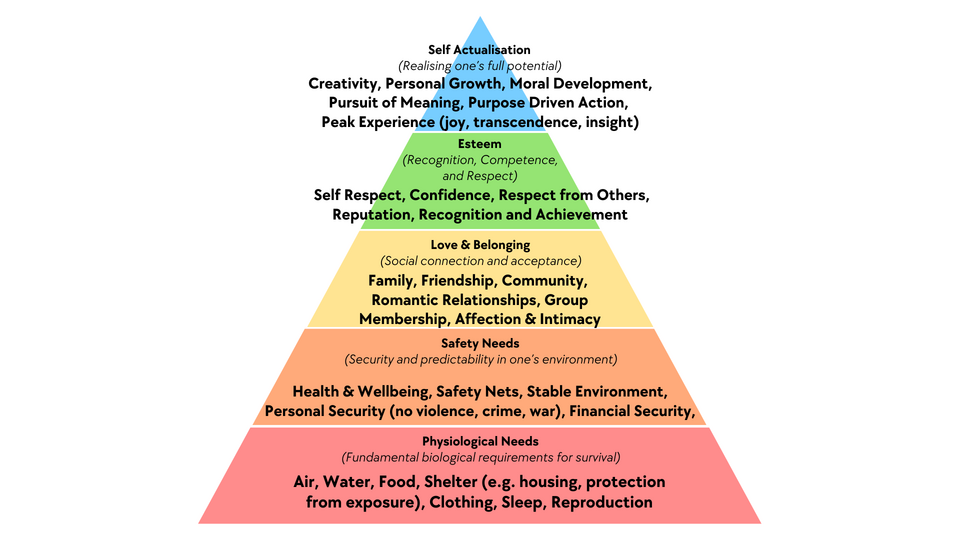 How Ncell’s Unlimited Data plan taps into social needs (belonging) and esteem (status). (Image: Hamish.croker, CC BY-SA 4.0, via Wikimedia Commons)
2. Psychological Factors
A. Motivation & Needs
Motivation drives behavior via Maslow’s Hierarchy (5 levels):
- Physiological (food, shelter) → Example: NTC’s "Reliable Connectivity" ads target rural areas where basic communication is a need.
- Safety (security, health) → Example: Himalayan Java’s "Antioxidant Coffee" appeals to health-conscious urbanites.
- Social (love, belonging) → Example: Pathao’s group rides reduce loneliness for solo travelers.
- Esteem (respect, status) → Example: Toyota’s "Innovation" ads for Fortuner SUVs.
- Self-Actualization (growth, fulfillment) → Example: Chaudhary Group’s "Education Loans" for professional courses.
Worked Example: A Daraz customer buys a DSLR camera. Trace the hierarchy:
- Physiological: Not directly, but the camera enables photography (creativity).
- Social: Shares photos on Instagram → validation from peers.
- Esteem: "I’m a photographer now" → status boost.
- Self-Actualization: Long-term goal of becoming a professional.
B. Perception
Consumers filter stimuli via:
- Selective Exposure: Ignoring ads for products they don’t need (e.g., skipping Nabil Bank’s credit card ads if you’re debt-averse).
- Selective Distortion: Twisting info to fit beliefs (e.g., "Organic = Always Better" bias).
- Selective Retention: Remembering ads that align with needs (e.g., recalling Kathmandu Model’s winter sale after seeing snow).
C. Learning & Memory
- Classical Conditioning: Pairing a brand with a positive stimulus (e.g., Himalayan Java’s "Morning Ritual" ads with warm sunlight).
- Operant Conditioning: Rewards/punishments (e.g., eSewa’s cashback for online payments).
- Cognitive Learning: Problem-solving (e.g., comparing Daraz vs. Amazon prices).
3. Social Factors
A. Reference Groups
Groups that influence buying:
| Type | Nepali Example | Global Example |
|---|---|---|
| Membership | Family buying a home theater system | WhatsApp groups for travel deals |
| Aspirational | Following fitness influencers → buying Gymshark | K-pop fans buying Louis Vuitton |
| Dissociative | Avoiding brands linked to political scandals | Boycotting brands after #MeToo |
Case Study: Saugat Malla’s Influence
- Why it works: Nepali consumers emulate celebrities (halo effect).
- Marketing tactic: F1 endorsements → luxury watches (Rolex, Tag Heuer) see 30% sales spike in Kathmandu.
- Risk: Backlash if Malla is involved in a scandal (e.g., tax evasion rumors).
B. Family & Household Roles
Roles in purchase decisions (Nepali context):
- Initiator: Child asks for a toy → Example: Pathao’s "Kids’ Ride" promo.
- Influencer: Mother prefers organic snacks → Example: Himalayan Java’s "Mom-Approved" label.
- Decider: Father approves the car purchase → Example: Toyota’s "Family Safety" ads.
- Buyer: Sister places the Daraz order.
- User: Grandfather consumes the product (e.g., traditional tea).
C. Culture & Subculture
- Culture: Shared values (e.g., Nepali hospitality → gifting culture → Daraz’s "Gift Wrapping" service).
- Subculture: Religion, ethnicity, age groups.
- Example: Muslim consumers prefer halal-certified products (e.g., IMAGE: Halal Certification Logo | Nepal Food Hub’s halal meat section).
- Example: Newar community’s preference for jhyaure (rice wine) → local breweries target festivals.
4. Situational Factors
A. Purchase Task
- Gift vs. Personal Use:
- Gift: Consumers prioritize packaging (e.g., IMAGE: Daraz Gift Box Design | Luxury wrapping for Diwali).
- Personal: Focus on price/performance (e.g., budget smartphones).
- Emergency Purchases: NTC’s "24/7 Customer Support" ads target sudden connectivity needs.
B. Time & Place
- Time Pressure: Last-minute buyers pay premiums (e.g., IMAGE: Kathmandu Traffic Jam | Why online shopping (eSewa) grows during Dashain).
- Store Atmosphere: Himalayan Java’s café ambiance increases coffee sales by 40%.
C. Mood & Surroundings
- Mood: Happy shoppers spend 20% more (e.g., IMAGE: YouTube’s "Happy Music" Ads | How background music in stores affects sales).
- Crowding: Overcrowded Daraz checkout pages increase cart abandonment.
5. Economic Factors
A. Income & Budget Constraints
- Disposable Income: After rent, food, and bills → Example: Ncell’s affordable prepaid plans.
- Discretionary Income: Luxury spends → Example: Mercedes-Benz ads in Thapathali.
- Price Elasticity:
- Inelastic: Salt, electricity (NTC’s tariffs have little effect on demand).
- Elastic: Smartphones, vacations (Daraz discounts drive sales).
B. Inflation & Economic Cycles
- Recession: Consumers switch to generic brands (e.g., IMAGE: Himalayan Salt vs. Table Salt Packaging | Price-sensitive buyers opt for unbranded salt).
- Boom: Demand for premium products rises (e.g., Nabil Bank’s "Wealth Management" services).
6. Technological & Digital Influences
A. E-Commerce & Social Proof
- AI Recommendations: YouTube’s "Because You Watched..." → increases engagement by 30%.
- User Reviews: 90% of Nepali consumers read Daraz reviews before buying.
- Influencer Marketing: Nepali micro-influencers (e.g., @nepal_travel_diaries) drive tourism bookings.
B. Mobile & App Behavior
- WhatsApp Groups: Peer recommendations for products (e.g., "Best Laptops Under Rs. 50K").
- eSewa’s UX: Simplified checkout reduces cart abandonment by 25%.
In the Real World
eSewa’s Psychological Triggers
- Fear of Missing Out (FOMO): "Only 3 slots left for Dashain discounts!"
- Anchoring: Shows original price → discounted price (e.g., Rs. 5,000 → Rs. 3,500).
- Social Proof: "1,000+ people booked this flight."
Daraz’s Segmentation & Targeting
- Rural vs. Urban: Rural users get cash-on-delivery; urban users see installment plans.
- Age Groups:
- Teens: Trendy clothes, gadgets.
- 30-45: Home appliances, groceries.
- 50+: Medicines, traditional snacks.
Ncell’s Loyalty Programs
- Psychological Reward: Points for top-ups → gamification (e.g., "Unlock a free movie ticket at 500 points").
- Social Influence: "Refer 3 friends, get a free month" leverages word-of-mouth.
Exam Tip
How to Score Full Marks
Define + Classify:
- Example Question: "Explain the bases for segmenting consumer products."
- Answer Structure:
- Definition: "Consumer segmentation divides buyers into groups based on shared characteristics."
- Bases Table:
Basis Example (Nepali Context) Why It Matters Demographic Age (Teens buy snacks; 30+ buy insurance) Easy to measure, targets ads efficiently. Psychographic Lifestyle (Eco-conscious → Himalayan Java) Deepens brand loyalty. Behavioral Usage Rate (Heavy Daraz users get discounts) Maximizes revenue per customer.
Apply Theories to Cases:
- Example: Use Maslow’s Hierarchy to explain why a Nepali farmer buys a smartphone.
- Safety: Emergency calls.
- Social: Farming groups on Facebook.
- Esteem: "I’m tech-savvy now."
- Example: Use Maslow’s Hierarchy to explain why a Nepali farmer buys a smartphone.
Compare & Contrast:
- Example: "Differentiate between social and cultural factors."
- Social: Temporary (e.g., a WhatsApp group’s opinion).
- Cultural: Permanent (e.g., Nepali belief in "gifting over cash").
- Example: "Differentiate between social and cultural factors."
Real-World Links:
- Always tie answers to Nepali companies (e.g., "NTC uses perception by highlighting ‘nationwide coverage’ in ads").
- Use global examples for theories (e.g., "Coca-Cola’s ‘Share a Coke’ uses personalization").
Diagrams = Extra Marks:
- Draw Maslow’s Hierarchy or a Consumer Decision Process Flowchart (see below).
flowchart TD
  A["Need Recognition"] --> B["Information Search"]
  B --> C["Evaluation of Alternatives"]
  C --> D["Purchase Decision"]
  D --> E["Post-Purchase Behavior"]
  E -->|"Dissonance"| B
Common Mistakes to Avoid
- Vague Answers: ❌ "Consumers buy based on needs." ✅ "A Daraz customer buys a laptop due to physiological need (work) and social need (impressing colleagues)."
- Ignoring Nepali Context: ❌ "Families in the US..." ✅ "Nepali joint families often pool resources for big purchases like TVs."
- Overlooking Situational Factors: ❌ "Only psychological factors matter." ✅ "A Pathao rider’s time pressure (late for work) overrides brand loyalty."
Based on the TU BBM syllabus for Fundamentals Of Marketing (MKT204), unit 3.
Discussion
Loading…