Principles of ManagementUnit 77 min read
Team Management & Conflict Resolution: Types, Roles, Challenges & Strategies
Unit 7 of Principles of Management explores team dynamics, conflict resolution frameworks, and practical tools for managing teams effectively—covering team roles (Belbin), conflict types (functional vs. dysfunctional), resolution techniques (collaboration, compromise), and real-world applications in Nepali businesses l
Key Concepts & Definitions
1. What is a Team?
A team is a small group of people with complementary skills who work together to achieve a common goal. Unlike a group, a team:
- Has shared accountability (not just individual).
- Engages in collective work (synergy > individual effort).
- Requires coordination (clear roles, communication).
mindmap
root((Team))
Definition["Small group + shared goal + complementary skills"]
Types["1. Formal (assigned by org) vs. 2. Informal (self-formed)"]
Characteristics["• Shared purpose • Interdependence • Accountability • Synergy"]
Stages["1. Forming → 2. Storming → 3. Norming → 4. Performing → 5. Adjourning (Tuckman)"]
Roles["Belbin’s 9 roles: Plant, Monitor, Coordinator, Shaper, Implementer, Completer, Resource Investigator, Teamworker, Specialist"]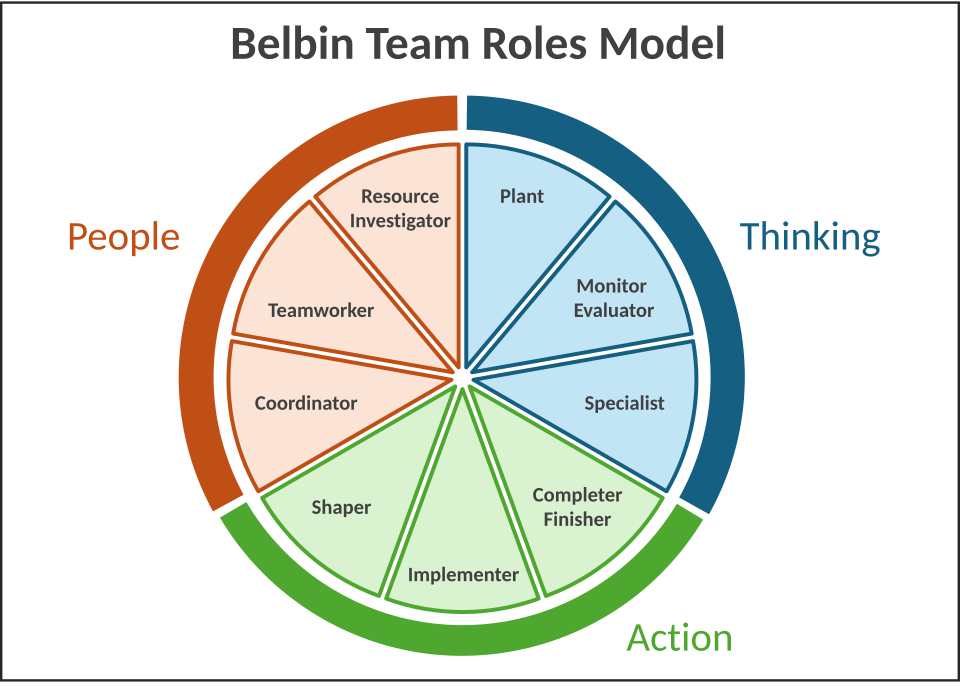 The 9 roles in a high-performing team (e.g., a Daraz logistics team) (Image: Tens49, CC BY-SA 4.0, via Wikimedia Commons)
2. Types of Teams in Organizations
| Team Type | Example in Nepal | Key Feature | Challenge |
|---|---|---|---|
| Functional Team | NTC’s electrical engineering team | Members from same department (e.g., IT, HR). | Silo mentality, slow decision-making. |
| Cross-Functional | Nabil Bank’s loan approval team | Mix of experts (finance, legal, risk). | Coordination overhead. |
| Virtual Team | Freelancers on Fiverr (Nepali users) | Geographically dispersed, tech-dependent. | Trust-building, time zone issues. |
| Self-Managed | Pathao’s delivery driver squads | No direct supervisor; peer-led. | Requires high autonomy. |
| Project Team | Kathmandu Metro’s construction crew | Temporary, goal-specific (e.g., a bridge). | High turnover after project ends. |
3. Stages of Team Development (Tuckman’s Model)
flowchart LR
  A["Forming"] -->|"Uncertainty, testing norms"| B["Storming"]
  B -->|"Conflict over roles"| C["Norming"]
  C -->|"Cohesion, trust"| D["Performing"]
  D -->|"Goal achieved"| E["Adjourning"]
Worked Example: NEPSE’s Trading Team
- Forming: New traders join; rules unclear → confusion.
- Storming: Disputes over trading strategies → conflict.
- Norming: Agree on risk limits → trust builds.
- Performing: Execute trades efficiently → profit rises.
4. Conflict in Teams: Functional vs. Dysfunctional
| Type | Definition | Example in Nepal | Impact |
|---|---|---|---|
| Functional | Healthy debate → better decisions. | Nabil Bank’s loan committee debates repayment terms. | Improves innovation, morale. |
| Dysfunctional | Personal clashes → team breakdown. | Daraz delivery drivers argue over routes. | Delays, high turnover. |
Key Idea:
"Conflict is inevitable, but how it’s managed determines success."
5. Conflict Resolution Techniques
mindmap
  root((Resolve Conflict))
    Collaboration["Win-Win: Problem-solving (best for long-term)"]
    Compromise["Give-and-take: Short-term fix (e.g., split tasks)"]
    Accommodation["Yielding: Sacrifice for harmony (rarely ideal)"]
    Avoidance["Delay: Ignore temporarily (not recommended)"]
    Competition["Win-Lose: Forceful (high risk of resentment)"]
Worked Example: Kathmandu Traffic Police Team
- Problem: Two units blame each other for delays.
- Solution: Collaboration → Joint meeting to redesign routes.
- Outcome: Reduced congestion by 30%.
6. Challenges of Team Management
pie
  title Challenges in Team Management
  "Lack of Clear Roles" : 25
  "Poor Communication" : 30
  "Conflict" : 20
  "Low Motivation" : 15
  "External Pressures" : 10
Real-World Fixes:
- NTC: Uses RACI matrices (Responsible, Accountable, Consulted, Informed) to clarify roles.
- Himalayan Java: Monthly team-building retreats to improve communication.
7. Tools for Effective Team Management
| Tool | Purpose | Example in Nepal |
|---|---|---|
| SWOT Analysis | Assess team strengths/weaknesses. | Nabil Bank’s new branch team planning. |
| Belbin Team Inventory | Identify role gaps. | Daraz’s customer support team audit. |
| Fishbone Diagram | Root-cause analysis for conflicts. | Kathmandu University’s exam dispute. |
| Retrospectives | Post-project feedback. | Pathao’s weekly driver feedback sessions. |
In the Real World
Nabil Bank’s Cross-Functional Teams
- Idea Used: Cross-functional teams (finance + legal + risk) to approve loans.
- How It Works: Each member brings expertise (e.g., legal checks fraud risks), reducing errors.
- Result: Faster loan processing, lower defaults.
Daraz’s Delivery Driver Squads
- Idea Used: Self-managed teams with peer accountability.
- How It Works: Drivers in a zone set their own routes (using Daraz’s app), reducing delays.
- Conflict Example: Two drivers argue over a high-priority order → compromise by splitting the order.
NTC’s Functional Team Conflicts
- Idea Used: Functional conflict in engineering teams leads to better infrastructure planning.
- Example: Electrical vs. civil engineers debate on cable installation → collaborative solution improves safety.
Exam Tip
Define Key Terms Precisely:
- "Team" ≠ "Group" (teams have shared goals and interdependence).
- "Dysfunctional conflict" = harms team performance (e.g., personal attacks).
Apply Theories to Nepali Context:
- Tuckman’s Stages: Link to NEPSE traders, Pathao drivers, or NTC projects.
- Conflict Resolution: Always pick collaboration for long-term answers (examiners favor this).
Use Diagrams in Answers:
- Draw Belbin’s roles or Tuckman’s stages to score extra marks.
- Example:
"The NTC’s road repair team is in the Storming stage (conflict over budgets). To move to Norming, they should hold a retrospective meeting to clarify roles."
Compare Teams in Nepal vs. Global:
- Nepal: More functional teams (e.g., NTC’s silos).
- Global (e.g., Google): More cross-functional (e.g., product teams with engineers + marketers).
Avoid Common Mistakes:
- ❌ "Conflict is always bad." → Partial credit. Say: "Dysfunctional conflict is bad, but functional conflict drives innovation (e.g., Nabil Bank’s loan debates)."
- ❌ Ignoring cultural context. Always relate to Nepali businesses (e.g., Khalti’s customer support teams).
Final Checklist for Full Marks: ✅ Define team vs. group. ✅ Explain Tuckman’s 5 stages with a Nepali example. ✅ Differentiate functional vs. dysfunctional conflict. ✅ List 5 conflict resolution techniques + when to use each. ✅ Describe 2 team tools (e.g., SWOT, Belbin) with real-world application. ✅ Discuss challenges (e.g., poor communication) + solutions (e.g., NTC’s RACI matrix).
Based on the TU BBS syllabus for Principles of Management (MGT213), unit 7.
Discussion
Loading…