Artificial IntelligenceUnit 1011 min read
AI Agents, PEAS Framework & Turing Test
Unit 10 of Artificial Intelligence explores AI agents (their types, architectures, and PEAS framework), the Turing Test (history, criteria, and modern debates), and real-world applications in chatbots, recommendation systems, and autonomous systems—with visual traces of agent decision-making and test simulations.
TAKEAWAYS:
- An AI agent is an entity that perceives its environment and acts to achieve goals, classified by perception, action, and architecture (e.g., reflex, goal-based, utility-based).
- The PEAS framework (Performance, Environment, Actuators, Sensors) systematically analyzes agents by their operational constraints and capabilities.
- The Turing Test evaluates an agent’s human-like intelligence through text-based interactions, with modern variants like the Loebner Prize and Winograd Schema Challenge.
- Real-world agents include chatbots (e.g., WhatsApp’s AI assistant), recommendation systems (e.g., Daraz’s product suggestions), and autonomous systems (e.g., Pathao’s route optimization).
- Limitations of agents include bounded rationality, partial observability, and ethical dilemmas (e.g., self-driving cars’ utility trade-offs).
- Exam focus: Compare agent types, design PEAS for a custom agent, and critique the Turing Test’s validity in modern AI.
1. What is an AI Agent?
An AI agent is a system that perceives its environment through sensors and acts upon it via actuators to achieve goals. Agents are the fundamental building blocks of AI, bridging theory and real-world applications.
Key Components of an Agent
Every agent has:
- Perceptors (Sensors): Input devices (e.g., cameras, microphones, GPS) that gather data from the environment.
- Effectors (Actuators): Output mechanisms (e.g., motors, speakers, screens) that perform actions.
- Agent Program: The logic (e.g., rules, neural networks) that maps perceptions to actions.
classDiagram
    class Agent {
        +perceive() Environment
        +act() Action
        +agentProgram() Logic
    }
    class Environment {
        +getState() State
        +executeAction(Action) State
    }
    Agent --> Environment : perceives
Environment --> Agent : updatesExample: A thermostat agent perceives room temperature (sensor) and turns the heater on/off (actuator) to maintain a set temperature (goal).
2. Types of AI Agents
Agents are classified based on their perception, action, and decision-making capabilities. Below is a comparison table:
| Agent Type | Description | Example | Advantages | Disadvantages |
|---|---|---|---|---|
| Simple Reflex Agent | Acts based on current perception (no memory). | Vending machine | Fast, simple | No history-dependent decisions |
| Model-Based Agent | Maintains an internal state of the world (e.g., maps, models). | GPS navigation system | Handles partial observability | Requires accurate world models |
| Goal-Based Agent | Chooses actions to achieve a goal (e.g., shortest path). | Pathao’s route optimizer | Optimizes for objectives | Needs goal representation |
| Utility-Based Agent | Selects actions that maximize expected utility (trade-offs). | Daraz’s recommendation system | Balances multiple objectives | Computationally expensive |
| Learning Agent | Improves performance over time (e.g., via reinforcement learning). | WhatsApp’s spam filter | Adapts to new data | Requires training data |
Worked Example: Simple Reflex Agent Scenario: Design a traffic light controller agent for a single intersection.
- Percepts: Sensor inputs for car presence at each direction (N, S, E, W).
- Actions: Turn green/red for each direction.
- Rule: If cars detected in North, turn North green, others red.
- PEAS Framework (see next section) would analyze this agent’s performance.
3. The PEAS Framework: Analyzing Agents
The PEAS framework evaluates agents by four dimensions:
- Performance Measure: How success is defined (e.g., "minimize wait time at traffic lights").
- Environment: Fully observable? Dynamic? Discrete/continuous?
- Actuators: What actions can the agent take?
- Sensors: What data can the agent perceive?
Worked Example: English-to-Nepali Translating Agent PEAS Analysis:
| Dimension | Details |
|---|---|
| Performance | Accuracy: 95% translation correctness; latency: <2s response time. |
| Environment | Partially observable (input text may be ambiguous); static (no real-time changes). |
| Actuators | Outputs translated text via API or UI. |
| Sensors | Input text, user feedback (e.g., corrections), language context. |
Agent Architecture:
- Simple Reflex: If input = "hello", output = "नमस्ते".
- Model-Based: Uses a pre-trained neural machine translation (NMT) model.
- Utility-Based: Prioritizes formal vs. casual translations based on user history.
flowchart LR
    A["Input: English Text"] --> B["Preprocessing: Tokenization"]
    B --> C["NMT Model: Translation"]
    C --> D["Postprocessing: Grammar Check"]
    D --> E["Output: Nepali Text"]
    E --> F["User Feedback Loop"]
Real-World Tie-In:
- Google Translate uses a utility-based agent to balance speed, accuracy, and context awareness. For example, translating "I’m hungry" to "म मलाई खानेको छ" (Nepali) vs. "मलाई खाना खान्छ" (formal).
4. The Turing Test: Measuring Intelligence
Proposed by Alan Turing (1950), the Imitation Game tests whether a machine can exhibit human-like intelligence by convincing a judge in a text-based conversation that it is human.
How the Test Works
- A human judge interacts via text with:
- A human (hidden).
- A machine (the AI agent).
- If the judge cannot reliably distinguish the machine from the human, the machine passes.
Modern Variants
- Loebner Prize: Annual competition with cash prizes for best chatbot.
- Winograd Schema Challenge: Tests commonsense reasoning (e.g., "The city councilmen refused the demonstrators a permit because they [feared/advocated] violence").
- Conversational AI: Google’s LaMDA and Meta’s BlenderBot are evaluated using similar criteria.
Criticisms of the Turing Test:
- Narrow Focus: Tests only language, not other intelligences (e.g., visual, spatial).
- Cheating: Machines can mimic without understanding (e.g., memorizing scripts).
- Ethical Concerns: Could enable deception (e.g., scam bots).
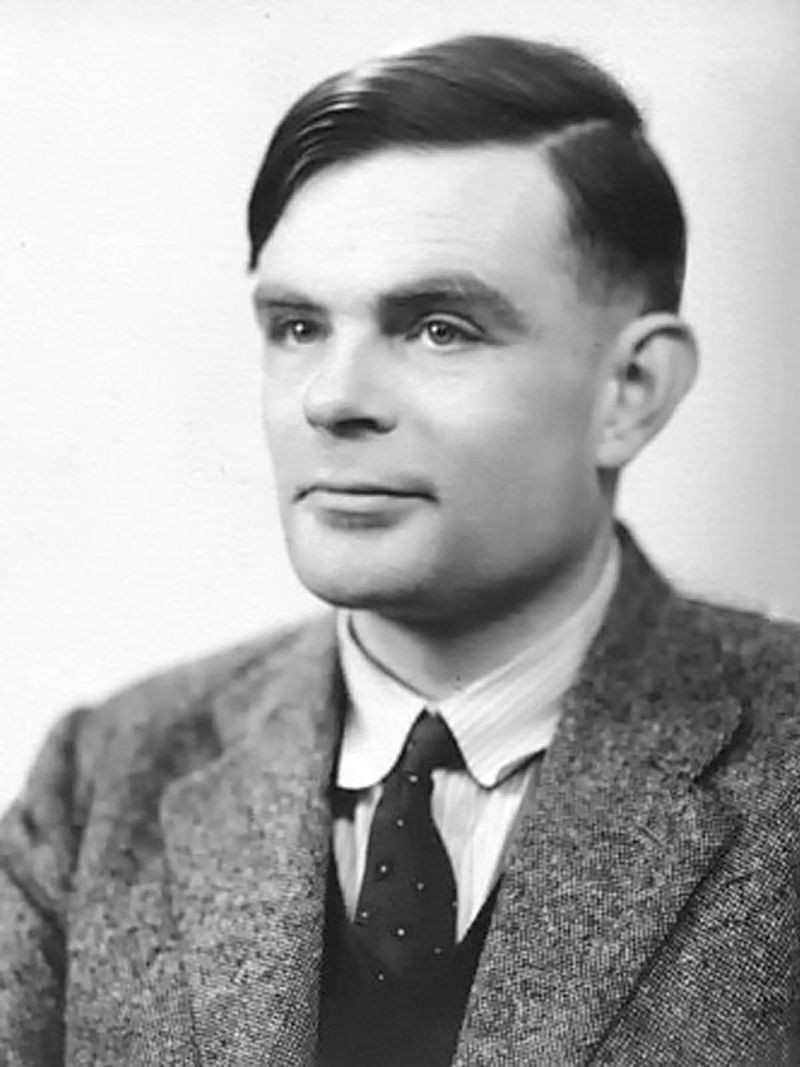 Father of the Turing Test, 1950 (Image: Elliott & Fry, Public domain, via Wikimedia Commons)
5. Real-World AI Agents in Nepal
Example 1: eSewa’s Payment Agent
- Type: Utility-based agent (balances security, speed, and user convenience).
- PEAS:
- Performance: 99% transaction success rate, <5s processing time.
- Environment: Partially observable (network issues, fraud attempts).
- Actuators: Sends payment confirmations, deducts funds.
- Sensors: User input (amount, recipient), bank API responses.
- How It Works:
- User requests payment via app.
- Agent validates input (e.g., sufficient balance).
- Agent executes transaction and updates ledger.
- Sends OTP for confirmation.
Example 2: Pathao’s Ride-Matching Agent
- Type: Goal-based + learning agent (optimizes for driver-passenger matching).
- PEAS:
- Performance: Minimize wait time, maximize driver earnings.
- Environment: Dynamic (traffic, demand fluctuations).
- Actuators: Assigns rides, updates driver/passenger locations.
- Sensors: GPS, ride requests, driver availability.
- Decision Tree:
Example 3: NTC’s Traffic Management System
- Type: Model-based agent (simulates traffic flow).
- PEAS:
- Performance: Reduce congestion by 20% in peak hours.
- Environment: Fully observable (cameras, sensors) but stochastic (accidents, events).
- Actuators: Adjusts traffic light timings.
- Sensors: Vehicle counts, speed data.
- Challenge: Partial observability (e.g., hidden accidents) leads to suboptimal decisions.
6. Designing an Agent: Step-by-Step
Scenario: Design a Khalti Fraud Detection Agent.
- Define Goals:
- Detect fraudulent transactions with >95% accuracy.
- Minimize false positives (legitimate transactions blocked).
- Choose Agent Type:
- Model-based + learning agent (uses historical fraud patterns).
- PEAS Framework:
Dimension Details Performance Precision: 98%, Recall: 92% (from training data). Environment Partially observable (new fraud tactics emerge). Actuators Flags transactions, blocks high-risk ones, alerts user. Sensors Transaction amount, time, location, user history, device fingerprint. - Algorithm:
- Train a random forest classifier on labeled fraud/non-fraud data.
- Update model weekly with new fraud patterns.
7. The Turing Test in Practice: Chatbots
Example: WhatsApp Business AI Assistant
- How It Passes the Test:
- Mimics human responses (e.g., "Sorry, I didn’t understand. Can you rephrase?").
- Uses contextual memory (remembers past messages in a conversation).
- Limitations:
- Fails on ambiguous queries (e.g., "What’s the capital of Nepal?" vs. "What’s the capital of your country?").
- No true understanding (e.g., cannot explain why it gave an answer).
8. Ethical and Practical Challenges
- Bias in Agents:
- Example: If a loan approval agent is trained on historical data where women were denied loans, it may perpetuate bias.
- Autonomy vs. Control:
- Example: Self-driving cars (e.g., Tesla) must decide between utility-based trade-offs (e.g., swerving to avoid pedestrians).
- Accountability:
- Who is responsible if an agent makes a harmful decision? (e.g., a medical diagnosis AI misclassifies a tumor.)
Exam Tip: How to Score Full Marks
For Agent Types:
- Always compare two types (e.g., "Goal-based agents use internal goals like Pathao’s route optimization, while reflex agents act instantly like a vending machine").
- Draw a decision tree for goal-based agents to show how they evaluate actions.
For PEAS Questions:
- Use a table format (as shown above).
- Relate to real systems: "Like eSewa’s agent, this system must handle [partial observability/network issues]."
For the Turing Test:
- Critique it: Mention Searle’s Chinese Room argument (symbol manipulation ≠ understanding).
- Modern examples: "LaMDA passed some Turing-like tests but failed the Winograd Schema Challenge."
Worked Examples:
- Show every step: For a reflex agent, list all possible percept-action pairs.
- Use small numbers: "If percept = {car at North}, action = turn North green."
Final Visual Summary:
mindmap
  root((AI Agents))
    Types
      Simple Reflex
      Model-Based
      Goal-Based
      Utility-Based
      Learning
    PEAS Framework
      Performance
      Environment
      Actuators
      Sensors
    Turing Test
      Imitation Game
      Loebner Prize
      Winograd Schema
    Real-World
      eSewa (Utility-Based)
      Pathao (Goal-Based)
      WhatsApp (Learning)
Based on the TU BCA syllabus for Artificial Intelligence (CACS410), unit 10.
Discussion
Loading…