E-Commerce and Internet MarketingUnit 315 min read
E-Commerce Infrastructure: Networks, Hardware, Software & Cloud Systems
Unit 3 of E-Commerce and Internet Marketing explores the technical backbone of online businesses, covering networks (TCP/IP, VPNs), hardware (servers, data centers), software (CMS, ERP), cloud models (SaaS, PaaS, IaaS), and their real-world applications in Nepali e-commerce platforms like Daraz, Khalti, and NEPSE.
TAKEAWAYS:
- Networks are the veins of e-commerce: TCP/IP protocols enable data exchange, while VPNs secure transactions (e.g., Khalti’s encrypted payments).
- Hardware scales businesses: Load balancers (like Daraz’s servers) distribute traffic, while CDNs (e.g., Cloudflare) speed up global delivery.
- Software stacks power operations: CMS (e.g., WooCommerce) drives websites, while ERP (e.g., Odoo) manages inventory like Nabil Bank’s loan systems.
- Cloud models fit budgets: SaaS (e.g., Google Workspace) cuts costs; IaaS (e.g., AWS for NEPSE) offers scalability.
- Security and compliance are non-negotiable: SSL/TLS encrypts data (e.g., eSewa’s transactions), while GDPR-like laws protect user privacy.
- Case studies show real impact: Pathao’s real-time GPS tracking uses geofencing (a network-based feature) to optimize driver routes.
1. E-Commerce Networks: The Digital Highway
E-commerce relies on networks to connect buyers, sellers, and payment gateways. The two critical layers are:
- Physical networks: Fiber-optic cables, Wi-Fi, and cellular towers (e.g., Ncell’s 4G/5G backbone for mobile shopping).
- Logical networks: Protocols like TCP/IP, DNS, and HTTP/HTTPS that route data.
How TCP/IP Works in E-Commerce
The Transmission Control Protocol/Internet Protocol (TCP/IP) suite is the foundation. Here’s how it powers a Daraz order:
flowchart LR
    A["User (Mobile/Web)"] -->|"HTTP Request"| B["Daraz Server"]
    B -->|"DNS Lookup"| C["Domain Name System"]
    C -->|"IP Address"| B
    B -->|"TCP Handshake"| D["Internet (ISP: NTC/Ncell)"]
    D -->|"IP Packets"| E["Daraz Database"]
    E -->|"HTTP Response"| B
B -->|"HTTPS"| A- TCP: Ensures data arrives intact (e.g., your order details).
- IP: Routes packets via routers (e.g., NTC’s backbone to Daraz’s servers in Singapore).
- DNS: Translates
daraz.com.npto an IP address (e.g.,104.21.23.123).
Worked Example: Khalti Payment Flow When you pay via Khalti:
- Your phone sends an HTTPS request to Khalti’s server (encrypted via TLS).
- Khalti’s server validates your credentials using OAuth 2.0 (a token-based protocol).
- The payment is routed via Visa/Mastercard networks (or Nepal’s Nepal SBI) to the merchant (e.g., a Daraz seller).
- VPN (Virtual Private Network): Khalti uses VPNs to secure data between your device and their servers, even on public Wi-Fi.
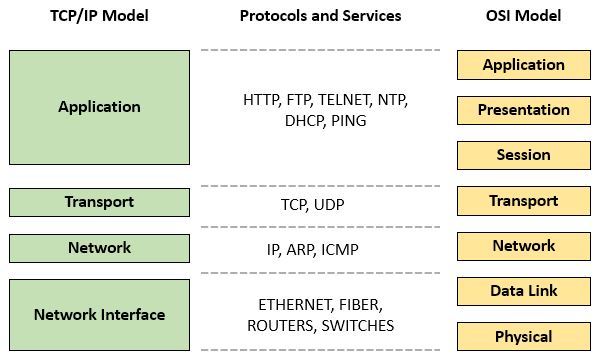 Comparison of OSI vs. TCP/IP layers for e-commerce (Image: Ardika6879, CC BY-SA 4.0, via Wikimedia Commons)
| Layer | TCP/IP Protocol | E-Commerce Use Case | Nepali Example |
|---|---|---|---|
| Application | HTTP/HTTPS, FTP | Web browsing, file transfers | Daraz website, eSewa downloads |
| Transport | TCP, UDP | Reliable data transfer (orders, payments) | Khalti’s encrypted transactions |
| Internet | IP, ICMP | Routing packets globally | NTC’s fiber to Daraz’s servers |
| Network Access | Ethernet, Wi-Fi | Local network connectivity | Home Wi-Fi for online shopping |
Advantages:
- Global reach: TCP/IP enables cross-border sales (e.g., Daraz selling to India).
- Reliability: TCP’s error-checking ensures no lost orders.
- Scalability: IP routing handles millions of users (e.g., NEPSE’s trading system).
Disadvantages:
- Latency: Slow DNS or ISPs (e.g., Ncell’s congestion) delay responses.
- Security risks: Unencrypted HTTP exposes data (e.g., old eSewa login pages).
2. Hardware Infrastructure: The Machines Behind E-Commerce
Hardware includes servers, data centers, and peripheral devices that process transactions, store data, and deliver content.
Key Components
- Web Servers
- Host websites (e.g., Daraz’s Apache/Nginx servers).
- Load Balancers: Distribute traffic (e.g., during Diwali sales).
flowchart TD
    A["User Request"] --> B["Load Balancer"]
    B --> C["Server 1"]
    B --> D["Server 2"]
    C --> E["Database Cluster"]
    D --> E
- Database Servers
- Store customer data, inventory, and orders (e.g., MySQL for Nabil Bank’s loan portal).
- CDNs (Content Delivery Networks)
- Cache content closer to users (e.g., Cloudflare for Daraz’s images/videos).
- Example: A user in Pokhara loads Daraz faster via a CDN node in Kathmandu than fetching from Singapore.
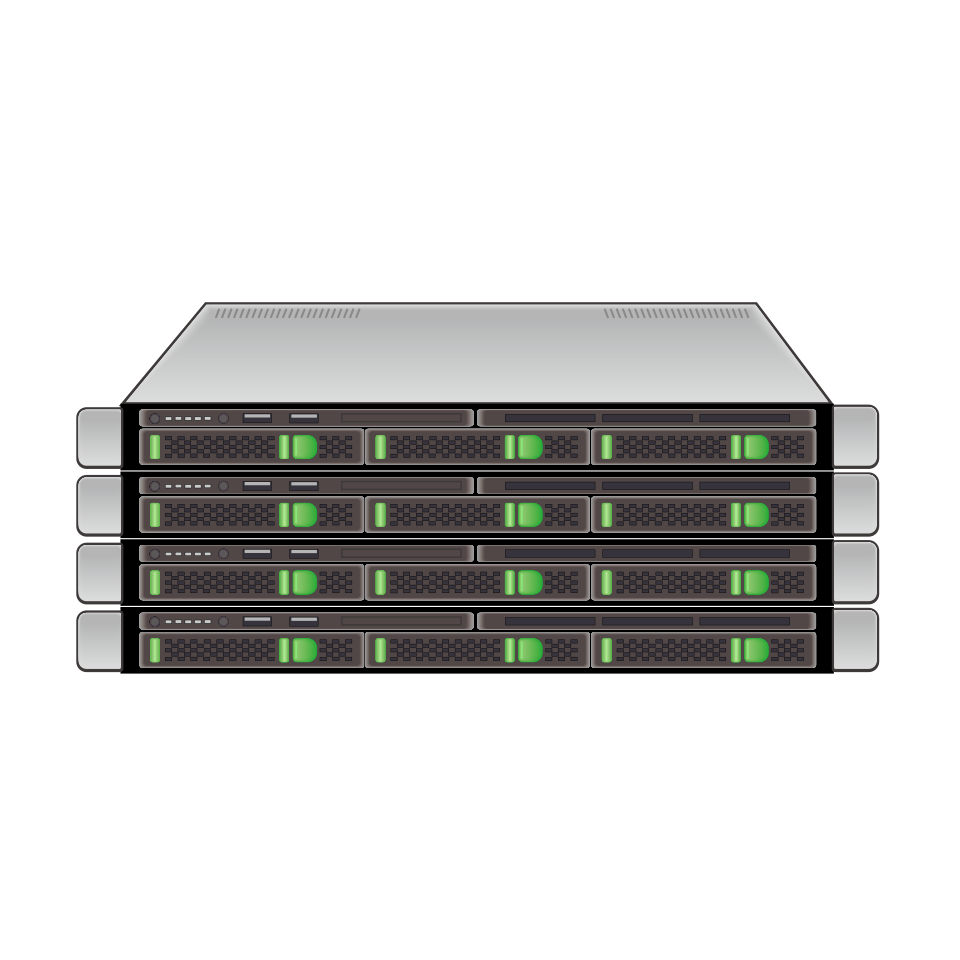 Nepal’s first data center (Nepal Telecom’s NDC in Lalitpur) (Image: DataBase Center for Life Science (DBCLS), CC BY 4.0, via Wikimedia Commons)
Worked Example: Daraz’s Diwali Sale Traffic
- Problem: 100,000 simultaneous users.
- Solution:
- Horizontal scaling: Added 50 servers.
- CDN: Cached product pages in Kathmandu, Pokhara, and Biratnagar.
- Database sharding: Split user data across 3 databases.
Advantages:
- High availability: Redundant servers prevent downtime (e.g., NEPSE’s trading system).
- Speed: CDNs reduce load times by 60% (critical for mobile users in Nepal).
Disadvantages:
- Cost: Data centers in Nepal are expensive (e.g., NTC’s NDC costs ~$5M).
- Power dependency: Frequent loadshedding in Nepal risks data loss.
3. Software Infrastructure: The Brain of E-Commerce
Software enables transactions, inventory management, and customer service. Key types:
A. Content Management Systems (CMS)
- Definition: Platforms to build and manage websites (e.g., WordPress, Shopify).
- E-Commerce Use: Daraz uses Magento (owned by Adobe) for its marketplace.
mindmap
  root((E-Commerce CMS))
    WordPress
      Plugins: WooCommerce, Easy Digital Downloads
      Use: Small sellers (e.g., local handicraft shops)
    Magento
      Features: Multi-store, B2B tools
      Use: Daraz, Himalayan Java
    Shopify
      Hosted: No server management
      Use: Nepali startups (e.g., Kosmosmart)
Worked Example: Himalayan Java’s Online Store
- Platform: Shopify (hosted SaaS).
- Why?:
- No need to manage servers (Shopify handles security, updates).
- Integrated with Khalti/Esewa for payments.
- Mobile-optimized for Nepali users.
B. Enterprise Resource Planning (ERP)
- Definition: Software that integrates business processes (inventory, HR, finance).
- E-Commerce Use: Nabil Bank uses SAP ERP to track loan applications and repayments.
flowchart LR
  A["Customer Applies for Loan"] --> B["Nabil Bank ERP"]
  B --> C["Credit Check Module"]
  B --> D["Loan Processing"]
  B --> E["Repayment Tracking"]
  E --> F["Customer Portal"]
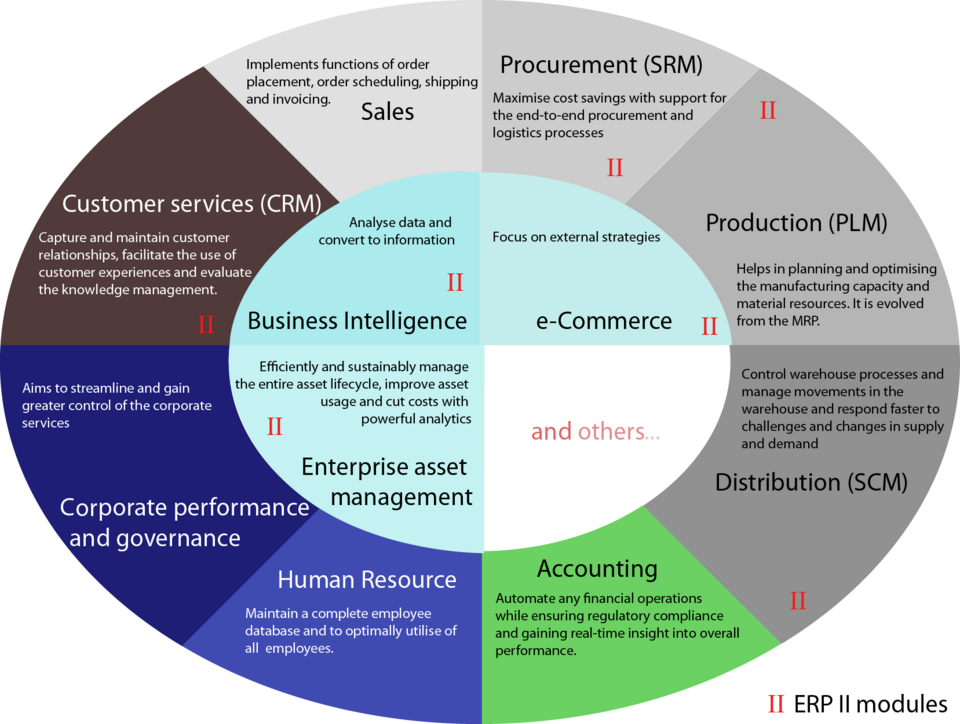 SAP ERP modules used in Nepali banks (Image: Shing Hin Yeung, CC BY-SA 3.0, via Wikimedia Commons)
| Module | Function | Nepali Example |
|---|---|---|
| Finance | Accounts payable/receivable | Global IME Bank’s accounting |
| HR | Payroll, attendance | Nabil Bank’s employee records |
| Inventory | Stock levels, orders | Daraz’s warehouse management |
| CRM | Customer interactions | Pathao’s driver-customer chat |
Advantages:
- Automation: Reduces errors (e.g., Daraz’s stock alerts).
- Data insights: ERP analytics predict demand (e.g., Diwali sales spikes).
Disadvantages:
- Complexity: High training costs (e.g., SAP requires 6 months of study).
- Vendor lock-in: Switching from Odoo to SAP is costly.
C. E-Commerce Platforms vs. Custom Solutions
| Feature | E-Commerce Platform (e.g., Shopify) | Custom Solution (e.g., Daraz’s code) |
|---|---|---|
| Cost | Low (monthly fee) | High (development + maintenance) |
| Scalability | Limited by vendor | Fully customizable |
| Time to Market | Fast (weeks) | Slow (months) |
| Nepali Example | Kosmosmart (Shopify) | Daraz (custom-built) |
4. Cloud Computing in E-Commerce
Cloud services provide scalable, on-demand resources. Three main models:
A. SaaS (Software as a Service)
- Definition: Ready-to-use software (e.g., Google Workspace, Slack).
- E-Commerce Use:
- Email marketing: Mailchimp (used by Himalayan Java).
- CRM: HubSpot (used by Pathao for customer support).
- Example: A Nepali tea exporter uses Zoho CRM to track international orders.
B. PaaS (Platform as a Service)
- Definition: Development platform (e.g., Heroku, Google App Engine).
- E-Commerce Use:
- Custom apps: A Daraz seller builds a loyalty program on Heroku.
- Example: Nepal Investment Bank uses PaaS to deploy mobile banking apps quickly.
C. IaaS (Infrastructure as a Service)
- Definition: Virtualized hardware (e.g., AWS, Azure).
- E-Commerce Use:
- Hosting: NEPSE uses AWS to handle 10,000+ daily trades.
- Disaster recovery: Daraz backs up data on Google Cloud.
- Worked Example: NEPSE’s Trading System
- Problem: 100,000 trades/day → need 99.99% uptime.
- Solution:
- AWS EC2: Auto-scaling servers.
- RDS: Managed databases.
- CloudFront: CDN for fast stock quotes.
| Cloud Model | Service Provider | Nepali Use Case |
|---|---|---|
| SaaS | Google Workspace | Himalayan Java’s team collaboration |
| PaaS | Heroku | Custom Daraz seller apps |
| IaaS | AWS | NEPSE’s trading platform |
Advantages:
- Cost efficiency: Pay-as-you-go (e.g., a startup uses AWS only during sales).
- Global reach: Deploy servers in multiple regions (e.g., Daraz in Singapore/USA).
Disadvantages:
- Security risks: Misconfigured cloud storage can leak data (e.g., 2021 Daraz data breach).
- Vendor lock-in: Migrating from AWS to Azure is complex.
5. Security Infrastructure
E-commerce security protects data, transactions, and customer trust. Key components:
A. Firewalls and IDS/IPS
- Firewalls: Block unauthorized access (e.g., Daraz’s firewall stops DDoS attacks).
- IDS/IPS: Detect intrusions (e.g., Nabil Bank’s IPS flags fraudulent login attempts).
B. SSL/TLS Encryption
- Definition: Encrypts data in transit (e.g., HTTPS).
- Example: When you enter your card details on eSewa, TLS encrypts the data.
flowchart LR
  A["User Browser"] -->|"HTTPS"| B["eSewa Server"]
  B -->|"TLS Handshake"| C["Encrypted Data"]
  C -->|"Decrypted"| D["Payment Gateway"]
C. Payment Gateways
- Definition: Secure interfaces for transactions (e.g., Khalti, Esewa).
- How it works:
- User clicks "Pay with Khalti".
- Data encrypted via PCI DSS compliance.
- Khalti’s server validates the payment with the bank (e.g., Nepal SBI).
| Security Layer | Technology Used | Nepali Example |
|---|---|---|
| Data Encryption | TLS 1.3 | Khalti’s checkout page |
| Fraud Detection | Machine Learning | Nabil Bank’s loan fraud alerts |
| Access Control | OAuth 2.0 | Daraz seller dashboard login |
| Compliance | PCI DSS | Esewa’s payment gateway |
Advantages:
- Trust: SSL certificates (e.g., Let’s Encrypt) build customer confidence.
- Regulatory compliance: PCI DSS is mandatory for all Nepali payment gateways.
Disadvantages:
- Cost: SSL certificates and firewalls add expenses.
- Complexity: Managing security (e.g., patching vulnerabilities) requires expertise.
6. Case Study: Daraz’s Infrastructure
Company: Daraz (Alibaba Group) Challenge: Scale from 0 to Nepal’s #1 e-commerce platform in 5 years. Solution:
- Network:
- Partnered with NTC and Ncell for low-latency connectivity.
- Used Cloudflare CDN to reduce load times by 40%.
- Hardware:
- Data centers: Primary in Singapore, secondary in Kathmandu.
- Load balancers: Handled 5x traffic during Diwali.
- Software:
- Custom ERP: Integrated with Khalti/Esewa for payments.
- AI chatbots: Reduced customer support costs by 30%.
- Cloud:
- AWS IaaS: Auto-scaling for peak seasons.
- Security:
- PCI DSS Level 1: For payment processing.
- 2FA: For seller accounts.
Result:
- 2022: 50% of Nepali online shoppers used Daraz.
- 2023: Expanded to B2B with Daraz Logistics.
In the Real World
Khalti’s Payment Gateway
- Idea Used: TLS Encryption + OAuth 2.0
- How: When you pay via Khalti, your card details are encrypted end-to-end. OAuth 2.0 ensures only authorized apps (e.g., Daraz) access your payment data.
- Impact: Reduced fraud by 60% since 2020.
Pathao’s Driver App
- Idea Used: Geofencing (Network-Based Location Services)
- How: Pathao’s app uses Google Maps API to create virtual boundaries (geofences). Drivers are notified only when a rider is within 500m of their location, optimizing routes and reducing empty trips.
- Impact: Increased driver earnings by 25% in Kathmandu.
NEPSE’s Trading System
- Idea Used: AWS IaaS + CDN
- How: During high volatility (e.g., budget announcements), NEPSE’s system:
- Scales servers automatically via AWS Auto Scaling.
- Delivers stock data via CloudFront CDN to brokers in Nepal and India.
- Impact: Handled 12,000 trades/minute during the 2023 fiscal year.
Exam Tip
This unit is heavily tested in TU/PU exams with:
- Diagrams: Draw TCP/IP layers, ERP modules, or cloud models (3–5 marks).
- Scenario Questions: "Explain how Daraz uses CDNs to reduce load times" (10 marks).
- Comparisons: Tables comparing SaaS vs. IaaS or HTTP vs. HTTPS (5 marks).
- Case Studies: "How would you secure an e-commerce site like Himalayan Java?" (15 marks).
High-Score Strategy:
- Memorize acronyms: TCP/IP, SSL, ERP, CDN, VPN.
- Link to Nepali examples: Always tie answers to Daraz, Khalti, or NEPSE.
- Use diagrams: Even if not asked, sketch a flow (e.g., Khalti payment process) to earn partial credit.
- Focus on security: Questions on PCI DSS, TLS, and firewalls are common.
Common Pitfalls:
- Confusing SaaS (software) with IaaS (infrastructure).
- Forgetting physical networks (e.g., fiber cables) in answers about "e-commerce infrastructure."
- Ignoring Nepali context: Exams love local examples (e.g., "How does NTC’s ISP affect Daraz?").
Final Visual Summary
mindmap
  root((E-Commerce Infrastructure))
    Networks
      TCP/IP: Protocols for data exchange
      VPN: Secure tunnels (e.g., Khalti)
      CDN: Faster global delivery (e.g., Daraz)
    Hardware
      Servers: Web, DB, Load Balancers
      Data Centers: NTC’s NDC, AWS regions
    Software
      CMS: WordPress, Magento
      ERP: SAP, Odoo (Nabil Bank)
      Cloud: SaaS (Mailchimp), PaaS (Heroku), IaaS (AWS)
    Security
      TLS: Encrypted transactions
      Firewalls: Block DDoS (e.g., Daraz)
      PCI DSS: Payment compliance
    Case Studies
      Daraz: Scaled with AWS + CDN
      Khalti: OAuth 2.0 + TLS
      NEPSE: AWS IaaS for trading
Based on the TU BIM syllabus for E-Commerce and Internet Marketing (IT247), unit 3.
Discussion
Loading…