PsychologyUnit 68 min read
Emotion & Motivation: Theories, Triggers & Real-World Impact
Unit 6 of Psychology explores the biological and psychological foundations of emotions (types, functions, and neural pathways) alongside motivation theories (instinct, drive, arousal, hierarchy of needs), with applications in behavior change, workplace productivity, and consumer psychology.
Core Concepts: Emotion
1. Definition & Function
Emotions are multicomponent psychological states that involve:
- Subjective experience (feeling happy/sad)
- Physiological response (heart rate, hormone release)
- Behavioral expression (facial expressions, body language)
Why do emotions matter? They drive decision-making, social bonding, and survival (e.g., fear triggers fight-or-flight). Without emotions, humans would lack empathy, creativity, or even basic motivation.
2. Theories of Emotion
Three dominant models explain how emotions arise:
| Theory | Key Idea | Example |
|---|---|---|
| James-Lange | Emotion follows physiological response ("I tremble, so I’m afraid"). | Seeing a snake → heart races → you feel fear. |
| Cannon-Bard | Physiological + emotional response occur simultaneously (not sequentially). | Hearing a loud noise → fear and adrenaline surge at the same time. |
| Schachter-Singer | Emotion = physiological arousal + cognitive label ("I’m shaking because I’m excited, not scared"). | Same adrenaline rush at a concert vs. a horror movie → labeled differently. |
3. Basic Emotions & Their Functions
Paul Ekman identified 6 universal emotions (cross-cultural facial expressions):
- Happiness → Social bonding, reward-seeking.
- Sadness → Signals need for support, slows activity to conserve energy.
- Anger → Protects boundaries, motivates action (e.g., standing up to injustice).
- Fear → Triggers avoidance (e.g., pulling hand from a hot stove).
- Surprise → Broadens attention to assess threats/opportunities.
- Disgust → Protects from harm (e.g., rejecting spoiled food).
Worked Example: Fear in Pathao Riders
- Scenario: A Pathao rider receives a low rating after a passenger complains about a "scary route."
- Emotion Trigger: The rider’s amygdala detects a threat (loss of income + reputation).
- Physiological Response: Adrenaline spikes, hands shake (preparing for "fight" by improving service).
- Behavioral Change: Rider avoids the route next time (learned avoidance).
Core Concepts: Motivation
1. Definition & Types
Motivation is the process that initiates, guides, and maintains goal-oriented behavior. Two broad categories:
| Type | Definition | Example |
|---|---|---|
| Intrinsic | Driven by internal satisfaction (e.g., curiosity, mastery). | A programmer coding for personal joy, not money. |
| Extrinsic | Driven by external rewards/punishments (e.g., salary, praise). | A Daraz delivery executive working for bonuses. |
2. Theories of Motivation
Four key perspectives explain why people act:
A. Instinct Theory (Evolutionary)
- Idea: Motivation stems from innate, fixed patterns (like hunger or mating).
- Criticism: Overlooks learned behaviors (e.g., cultural habits like tea-drinking in Nepal).
- Example: A mother’s nurturing instinct (evolutionary drive to protect offspring).
B. Drive Reduction Theory
- Idea: Behavior arises from reducing internal tension (e.g., hunger → eat → homeostasis).
- Homeostasis: Body’s tendency to maintain equilibrium (e.g., thirst → drink water).
- Limitation: Doesn’t explain behaviors that increase arousal (e.g., skydiving).
C. Arousal Theory
- Idea: People seek optimal levels of stimulation (neither too bored nor overstimulated).
- Yerkes-Dodson Law: Performance peaks at moderate arousal (e.g., exam stress helps up to a point, then harms).
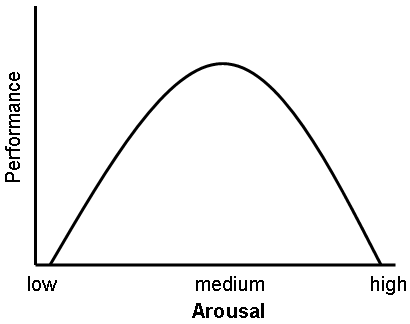 Performance vs. arousal for simple vs. complex tasks. (Image: Public domain, via Wikimedia Commons)
- **Real-World Link**: **Nepalese traffic** – Drivers in Kathmandu experience **high arousal** (horns, crowds), which can impair complex decision-making (e.g., navigating a jam).

##### **D. Hierarchy of Needs (Maslow)**
Abraham Maslow’s **pyramid of human needs**, from basic to self-actualization:
- Worked Example: Ncell Customer Loyalty
- Lower Needs: Ncell ensures safety (network reliability) and physiological (affordable plans).
- Higher Needs: "Ncell Super Fan" rewards target esteem (exclusive perks) and belonging (community status).
Emotion & Motivation in Action
1. Emotional Regulation Strategies
How people manage emotions to achieve goals:
| Strategy | Description | Example |
|---|---|---|
| Cognitive Reappraisal | Reinterpreting a situation to change its emotional impact. | Failing an exam → "This is feedback, not a failure." |
| Suppression | Inhibiting emotional expression (short-term fix). | Smiling at a boss while feeling angry. |
| Problem-Focused | Addressing the root cause of the emotion. | Quitting a toxic job to reduce stress. |
2. Motivation in Organizations
Herzberg’s Two-Factor Theory:
- Hygiene Factors (extrinsic): Salary, work conditions (prevent dissatisfaction).
- Motivators (intrinsic): Recognition, growth opportunities (drive satisfaction).
- Application: eSewa motivates employees with bonuses (hygiene) and training programs (motivator).
In the Real World
Khalti’s Emotional Design
- Idea Used: Fear of missing out (FOMO) + Positive reinforcement.
- How: Khalti sends real-time transaction alerts (dopamine hit) and limited-time offers (urgency). Users associate payments with security (reducing fear of fraud) and social approval (sharing receipts).
Daraz’s Motivation Hacks
- Idea Used: Variable rewards (like a slot machine).
- How: Random discounts ("Flash Sale!") trigger arousal and purchases, mimicking gambling’s dopamine spikes.
NTC’s Customer Service
- Idea Used: Empathy (emotional connection) + Hierarchy of Needs.
- How: NTC’s "Nepal First" campaign addresses safety needs (reliable internet) and belonging (national pride), reducing complaints.
Exam Tip
- Theories Are Key: Expect comparison questions (e.g., "How does James-Lange differ from Cannon-Bard?").
- Real-World Applications: Link concepts to Nepali contexts (e.g., traffic stress = arousal theory).
- Diagrams: Draw Maslow’s pyramid or Yerkes-Dodson curve for full marks.
- Case Studies: Prepare to analyze emotional triggers in ads (e.g., Daraz’s "Limited Stock" fear tactic).
- Short-Answer Traps: Avoid vague answers like "money motivates people." Specify which theory (e.g., "Extrinsic motivation under Drive Reduction Theory").
Practice Questions
- Compare intrinsic vs. extrinsic motivation using a Nepali example (e.g., a farmer’s choice to grow organic crops).
- Explain how emotional suppression might backfire in a workplace conflict (e.g., a team lead ignoring feedback).
- Design a motivational strategy for a Pathao driver using Herzberg’s theory and Maslow’s hierarchy.
Based on the TU BIT syllabus for Psychology (PSY359), unit 6.
Discussion
Loading…