Software Project ManagementUnit 613 min read
Agile vs. Waterfall: Methodologies, Scrum, Kanban, XP & Quality Techniques
Unit 6 of Software Project Management explores software development methodologies (Waterfall, Agile, RAD, Spiral) and Agile practices (Scrum, Kanban, XP), their workflows, tools, and quality-enhancement techniques, with real-world examples from Nepali tech companies like eSewa and Daraz.
TAKEAWAYS:
- Waterfall is linear and rigid; Agile is iterative and flexible—choose based on project uncertainty and stakeholder needs.
- Scrum uses sprints, daily standups, and backlogs; Kanban visualizes workflow with WIP limits; XP emphasizes coding standards and pair programming.
- Quality techniques (reviews, testing, metrics) reduce defects early—critical for apps like eSewa where downtime costs money.
- RAD (Rapid Application Development) speeds up prototyping but risks scope creep; Spiral balances risk analysis with iteration.
- Real-world tie: Pathao’s driver app uses Kanban for real-time order tracking, while NTC’s billing system follows Waterfall for regulatory compliance.
1. Software Development Methodologies: The Big Picture
Software development methodologies are structured approaches to planning, designing, building, and delivering software. They define:
- Process flow (sequential vs. iterative)
- Roles (developers, testers, PMs)
- Deliverables (requirements, prototypes, code)
- Adaptability (rigid vs. flexible)
The 4 Core Methodologies
classDiagram
    class Methodology {
        +name: String
        +type: String ["Plan-driven", "Agile", "Hybrid"]
        +phases: String[]
        +bestFor: String
    }
    class Waterfall {
        +phases: ["Requirements", "Design", "Implementation", "Testing", "Deployment", "Maintenance"]
        +type: "Plan-driven"
    }
    class Agile {
        +phaces: ["Iterative cycles", "Sprints", "Continuous feedback"]
        +type: "Agile"
    }
    class RAD {
        +phases: ["Requirements", "Prototyping", "Iterative development"]
        +type: "Agile (Fast-tracked)"
    }
    class Spiral {
        +phases: ["Risk analysis", "Iterative cycles", "Customer feedback"]
        +type: "Hybrid"
    }
    Methodology <|-- Waterfall
    Methodology <|-- Agile
    Methodology <|-- RAD
    Methodology <|-- Spiral
1.1 Waterfall Model: The Classic Linear Approach
Definition: A sequential, phase-based model where each phase must complete before the next begins. Phases:
- Requirements (gather user needs)
- Design (system architecture)
- Implementation (coding)
- Testing (QA)
- Deployment (release)
- Maintenance (bug fixes)
When to Use:
- Projects with clear, unchanging requirements (e.g., government systems like Nepal’s voter ID portal).
- Regulated industries (e.g., NTC’s billing software).
Pros:
- Simple to manage.
- Works well for documentation-heavy projects.
Cons:
- No going back: Changes in later phases are costly.
- Late testing: Bugs found in deployment are expensive to fix.
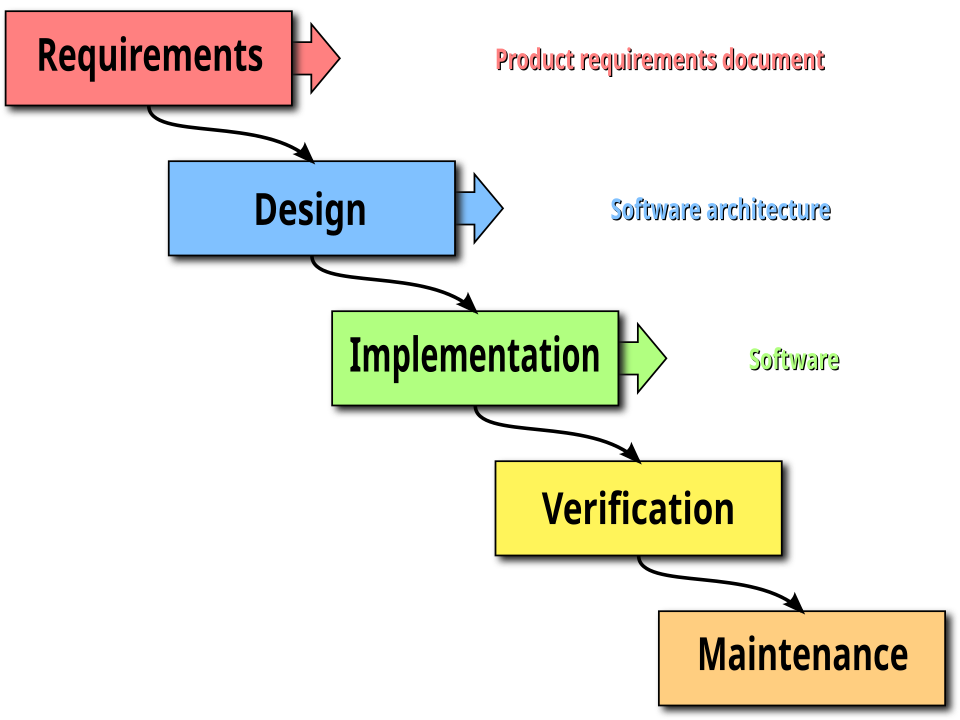 Phases of the Waterfall model with feedback loops (Image: Peter Kemp / Paul Smith, CC BY 3.0, via Wikimedia Commons)
1.2 Agile Methodology: Iterative and Flexible
Definition: A non-linear, iterative approach where work is divided into small increments (sprints), with continuous feedback. Core Principles (Agile Manifesto):
- Individuals and interactions over processes.
- Working software over comprehensive documentation.
- Customer collaboration over contract negotiation.
- Responding to change over following a plan.
When to Use:
- Dynamic requirements (e.g., Daraz’s frequent feature updates).
- Startups or MVP (Minimum Viable Product) development.
Pros:
- Adaptability: Changes are welcome.
- Early delivery: Functional software in weeks, not months.
- Customer satisfaction: Frequent demos ensure alignment.
Cons:
- Requires disciplined teams.
- Documentation can suffer if not managed.
REAL WORLD:
- eSewa uses Agile to roll out new payment features weekly.
- Pathao’s ride-hailing app updates driver UI bi-weekly via Agile sprints.
1.3 Rapid Application Development (RAD)
Definition: A fast, iterative model focusing on prototyping and user feedback. Key Techniques:
- Joint Application Development (JAD): Workshops with stakeholders.
- Reusable components: Pre-built modules (e.g., Khalti’s payment API).
- Automated tools: Low-code platforms (e.g., Bubble.io for MVP).
When to Use:
- Short timelines (e.g., Nepal’s COVID-19 tracking app).
- High user involvement (e.g., Ncell’s USSD menu redesign).
Pros:
- Speed: Delivers working prototypes in days.
- User-centric: Reduces miscommunication.
Cons:
- Scope creep: Features keep adding.
- High risk: May not scale for large systems.
1.4 Spiral Model: Risk-Driven Iteration
Definition: Combines Waterfall’s structure with Agile’s iteration, focusing on risk analysis in each cycle. Phases per Spiral:
- Planning: Define objectives.
- Risk analysis: Identify threats (e.g., tech constraints).
- Engineering: Develop prototypes.
- Evaluation: Review with stakeholders.
When to Use:
- High-risk projects (e.g., Nepal Rastra Bank’s core banking system).
- Complex systems (e.g., NTC’s fiber-optic network upgrade).
Pros:
- Risk mitigation: Addresses issues early.
- Flexibility: Can switch between models.
Cons:
- Complex: Requires expert risk analysis.
- Costly: Multiple prototypes.
2. Agile Practices: Scrum, Kanban, and XP
Agile is an umbrella term—Scrum, Kanban, and XP are its most popular frameworks.
2.1 Scrum: The Sprint-Based Framework
Definition: Work is divided into 2-4 week sprints, with fixed roles and ceremonies. Key Components:
stateDiagram-v2
    [*] --> Sprint_Planning
    Sprint_Planning --> Daily_Standup
    Daily_Standup --> Development
    Development --> Sprint_Review
    Sprint_Review --> Sprint_Retrospective
Sprint_Retrospective --> [*]Roles:
- Product Owner: Defines priorities (backlog).
- Scrum Master: Removes obstacles.
- Development Team: Delivers increments.
Artifacts:
- Product Backlog: Prioritized feature list.
- Sprint Backlog: Tasks for the current sprint.
- Increment: Deliverable at sprint end.
REAL WORLD:
- Khalti’s team uses Scrum to release payment gateways every 3 weeks.
- Worked Example:
- Sprint Goal: Add "UPI payment" to eSewa.
- Sprint Backlog:
- Design UPI API integration (3 days).
- Test with 50 users (2 days).
- Fix bugs (1 day).
- Result: Feature deployed in 2 weeks with 95% success rate.
2.2 Kanban: Visual Workflow Management
Definition: A visual board (e.g., Trello, Jira) tracking work items through stages with WIP (Work in Progress) limits. Key Concepts:
- Columns: "To Do," "In Progress," "Done."
- Cards: Tasks with details.
- WIP Limits: Prevents overloading (e.g., max 3 tasks in "In Progress").
REAL WORLD:
- Pathao’s support team uses Kanban to track driver complaints:
- Column 1 (To Do): New tickets.
- Column 2 (In Progress): Being resolved (WIP limit = 5).
- Column 3 (Done): Closed with feedback.
2.3 Extreme Programming (XP): Quality-First Agile
Definition: Focuses on technical excellence and customer feedback via:
- Pair Programming: Two devs work together.
- Test-Driven Development (TDD): Write tests before code.
- Continuous Integration (CI): Merge code frequently.
REAL WORLD:
- Ncell’s app development team uses XP to ensure zero-downtime updates.
- Worked Example:
- Feature: Add "Emergency SOS" in Pathao app.
- XP Steps:
- Write test for SOS button (fails).
- Code the button (passes test).
- Pair with QA to test edge cases (e.g., no network).
3. Enhancing Software Quality: Techniques and Metrics
Quality isn’t an afterthought—it’s built in via:
- Reviews: Peer code reviews (e.g., GitHub pull requests).
- Testing:
- Unit Testing: Test individual functions.
- Integration Testing: Test modules together.
- System Testing: Test the whole system.
- Metrics:
- Defect Density: Bugs per 1000 lines of code.
- Cycle Time: Time from task start to finish.
REAL WORLD:
- eSewa uses automated testing (Selenium) to catch payment failures before release.
- Nepal Stock Exchange (NEPSE) relies on manual reviews for trading system updates to avoid market crashes.
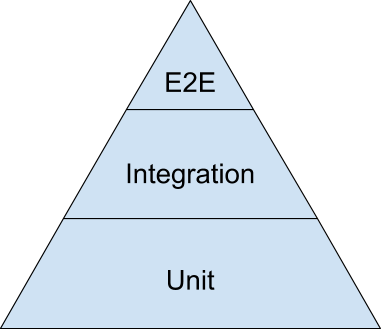 Unit, integration, and system testing layers (Image: Mike Wacker, Public domain, via Wikimedia Commons)
4. Methodology Comparison Table
| Criteria | Waterfall | Agile (Scrum/Kanban) | RAD | Spiral |
|---|---|---|---|---|
| Flexibility | Low (rigid) | High (adaptive) | Medium (prototype-based) | Medium (risk-focused) |
| Best For | Stable requirements | Changing requirements | Fast MVPs | High-risk projects |
| Customer Involvement | Low (late phases) | High (continuous) | High (workshops) | Medium (reviews) |
| Risk Handling | Late (testing phase) | Early (iterative) | Early (prototyping) | Early (risk analysis) |
| Example in Nepal | NTC billing system | eSewa payments | COVID-19 app | NRB core banking |
5. Choosing the Right Methodology
Decision Factors:
- Project Size:
- Small: Agile or RAD.
- Large: Spiral or Waterfall.
- Requirements Stability:
- Fixed: Waterfall.
- Dynamic: Agile.
- Budget:
- Tight: RAD (fast but risky).
- Flexible: Spiral (risk-aware).
- Team Expertise:
- New to Agile? Start with Scrum.
- Need speed? Try Kanban.
REAL WORLD:
- Daraz Nepal uses Agile (Scrum) for its e-commerce platform because customer demands change daily.
- NTC’s fiber network upgrades use Spiral to manage technical risks like signal interference.
In the Real World
eSewa’s Payment System
- Methodology: Agile (Scrum) with 2-week sprints.
- Why? Users expect new features (e.g., QR payments) every few weeks. Scrum allows eSewa to prioritize based on user feedback and government regulations.
- Quality Technique: Automated regression testing ensures no payment failures after updates.
Pathao’s Driver App
- Methodology: Kanban for real-time issue tracking.
- Why? Drivers report problems (e.g., GPS glitches) constantly. Kanban’s WIP limits ensure no ticket is ignored, and the team responds within 24 hours.
- Worked Example:
- Board Column: "Driver Complaints" (WIP limit = 10).
- Action: If >10 complaints pile up, Pathao’s tech team adds a new sprint to fix the issue.
Nepal Rastra Bank’s Core Banking System
- Methodology: Spiral Model.
- Why? The system handles billions of rupees. Each spiral cycle includes penetration testing to find security flaws (e.g., SQL injection risks) before deployment.
- Real Picture:
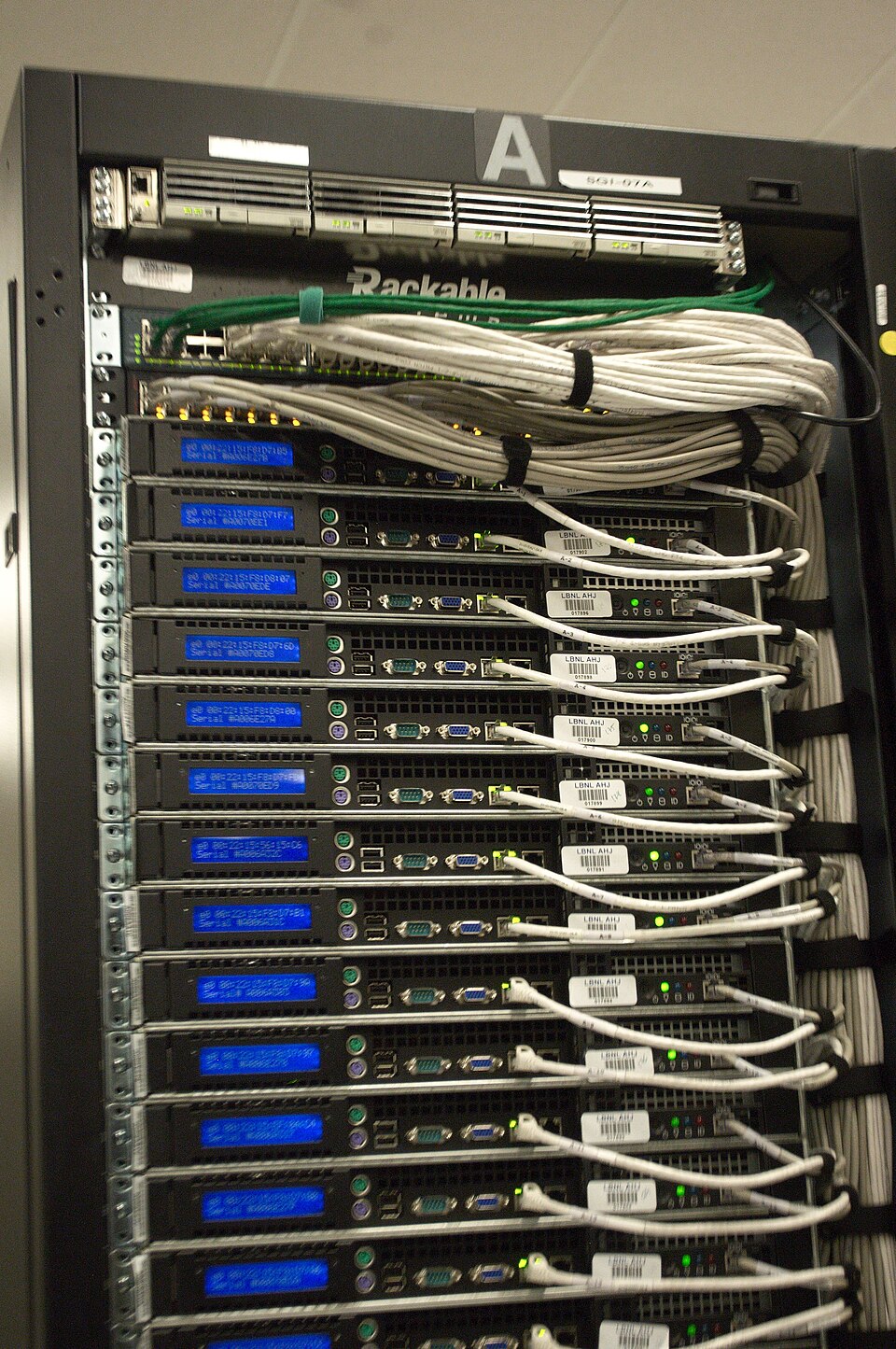 NRB’s secure data center where the core banking system runs (Image: Derrick Coetzee from Berkeley, CA, USA, CC0, via Wikimedia Commons)
Exam Tip
What Examiners Want to See
- Definitions with Examples:
- Don’t just say "Agile is iterative." Explain how eSewa uses sprints or how Pathao uses Kanban.
- Comparisons:
- Always contrast Waterfall vs. Agile in a table or bullet points.
- Example: "Waterfall is like building a house with fixed blueprints, while Agile is like renovating a house room by room based on the owner’s feedback."
- Quality Techniques:
- Link techniques to real tools:
- Code reviews → GitHub/GitLab.
- Testing → Selenium (automated), JIRA (manual).
- Link techniques to real tools:
- Diagrams:
- Draw (or describe) a Scrum board, Kanban column, or Spiral cycle in your answer.
- Example:
Sprint 1: [ ] Add login | [X] Fix bug | [ ] Test API
- Common Pitfalls:
- ❌ "Agile has no documentation." → ✅ "Agile prioritizes working software but uses lightweight docs like user stories."
- ❌ "Waterfall is obsolete." → ✅ "Waterfall is still used for regulated projects like NTC’s billing system."
High-Score Answer Structure
For a 5-mark question like "Explain Agile practices with examples":
- Define Agile (1 mark).
- List 2 frameworks (Scrum, Kanban) with one key feature each (1 mark).
- Give 2 Nepali examples (eSewa + Pathao) with how they apply the framework (2 marks).
- Compare with Waterfall (1 mark).
Practice Question with Model Answer
Question: "How does Daraz use software development methodologies? Explain with a suitable methodology and quality technique."
Model Answer: Daraz Nepal primarily uses the Agile methodology with Scrum frameworks to develop its e-commerce platform. Here’s how:
Methodology: Scrum
- Daraz divides development into 2-week sprints, with daily standups to track progress.
- Example: The "Wishlist Feature" was developed in a single sprint:
- Sprint Planning: Team selected 3 tasks (UI design, backend integration, testing).
- Daily Standups: Each developer reported blockers (e.g., API delays).
- Sprint Review: Stakeholders tested the feature with 1000 users; feedback led to a fix for mobile lag.
Quality Technique: Automated Testing
- Daraz uses Selenium for regression testing to ensure new features (e.g., "One-Click Checkout") don’t break existing functions.
- Metric: Defect Density is tracked—Daraz aims for <0.5 bugs per 1000 lines of code.
Why Agile?
- Dynamic Requirements: Customer demands (e.g., cash-on-delivery options) change frequently.
- Competitive Edge: Faster releases than competitors using Waterfall.
Visual:
sequenceDiagram
    participant User
    participant Daraz_ScrumTeam
    participant QA
    User->>Daraz_ScrumTeam: Requests "Add to Wishlist"
    Daraz_ScrumTeam->>Daraz_ScrumTeam: Sprint Planning (2 weeks)
    Daraz_ScrumTeam->>QA: Automated Test Suite (Selenium)
    QA-->>Daraz_ScrumTeam: Bug Report (0 critical)
    Daraz_ScrumTeam->>User: Deploys Feature
Based on the TU BIT syllabus for Software Project Management (BIT402), unit 6.
Discussion
Loading…