Financial AccountingUnit 210 min read
Accounting Process & Double-Entry System: Cycle, Journal, Ledger, Trial Balance
Unit 2 of Financial Accounting explains the complete accounting cycle—from recording transactions to preparing trial balances—using the double-entry system, with real-world examples from Nepali businesses like eSewa and Daraz.
TAKEAWAYS:
- The accounting cycle is a 10-step process that starts with transactions and ends with financial statements, using the double-entry system to maintain balance.
- Every transaction affects at least two accounts (debit and credit) to ensure the accounting equation remains balanced.
- The journal is the first book of entry where transactions are recorded chronologically, while the ledger organizes these entries by account.
- A trial balance is a summary of ledger balances to check for arithmetic errors before preparing financial statements.
- Errors like omissions, commissions, or principle errors can disrupt the accounting cycle and must be corrected via journal entries.
- Real-world applications include eSewa’s transaction recording (double-entry), Daraz’s inventory tracking (ledger), and bank reconciliations (cash management).
1. The Accounting Process (Cycle)
The accounting cycle is a structured sequence of steps that ensures financial data is accurately recorded, summarized, and reported. It begins with identifying transactions and ends with preparing financial statements. Below is the 10-step accounting cycle visualized:
flowchart TD
    A["1. Identify Transactions"] --> B["2. Journalize (Record in Journal)"]
    B --> C["3. Post to Ledger"]
    C --> D["4. Prepare Trial Balance"]
    D --> E["5. Adjusting Entries"]
    E --> F["6. Adjusted Trial Balance"]
    F --> G["7. Prepare Financial Statements"]
    G --> H["8. Closing Entries"]
    H --> I["9. Post-Closing Trial Balance"]
    I --> J["10. Reversing Entries (if applicable)"]
    J --> A
Key Steps Explained
- Identify Transactions: Every business activity (e.g., sales, purchases, payments) that affects the financial position must be recorded.
- Journalize: Transactions are recorded in the journal (book of original entry) in chronological order.
- Post to Ledger: Entries from the journal are transferred to the ledger (a book of accounts) under specific account headings.
- Trial Balance: A summary of all ledger balances is prepared to check for arithmetic accuracy.
- Adjusting Entries: Adjustments are made for accruals, prepayments, depreciation, etc., to ensure accuracy.
- Adjusted Trial Balance: A new trial balance is prepared after adjustments.
- Financial Statements: Income Statement, Balance Sheet, and Cash Flow Statement are prepared.
- Closing Entries: Temporary accounts (e.g., revenue, expenses) are closed to the Profit & Loss Account and Retained Earnings.
- Post-Closing Trial Balance: Ensures all temporary accounts are zeroed out.
- Reversing Entries (Optional): Used to simplify accounting for accruals and prepayments in the next period.
2. Double-Entry System
The double-entry system is the cornerstone of accounting, where every transaction affects at least two accounts to maintain the accounting equation:
How It Works
- Debit (Dr): Left side of an account (increases Assets, Expenses, Dividends).
- Credit (Cr): Right side of an account (increases Liabilities, Equity, Revenue).
Example: Purchase of Inventory on Credit
Suppose Kathmandu Retail Shop buys goods worth Rs 50,000 on credit from Nepal Furniture Mart.
| Account | Debit (Dr) | Credit (Cr) |
|---|---|---|
| Purchases (Asset) | Rs 50,000 | |
| Creditors (Liability) | Rs 50,000 |
Explanation:
- Purchases (Asset) increases → Debit Rs 50,000.
- Creditors (Liability) increases → Credit Rs 50,000.
3. Journal and Ledger
Journal (Book of Original Entry)
- Records transactions chronologically.
- Contains columns for Date, Particulars, Journal Folio (JF), Ledger Folio (LF), Debit, and Credit.
Example: Journal Entry for Kathmandu Retail Shop
| Date       | Particulars                     | LF | Dr (Rs) | Cr (Rs) |
|------------|---------------------------------|----|---------|---------|
| 2079-05-10 | Purchases A/c Dr                |    | 50,000  |         |
|            | To Nepal Furniture Mart A/c    |    |         | 50,000  |
|            | (Purchase of goods on credit)   |    |         |         |
Ledger (Book of Final Entry)
- Organizes transactions by account.
- Shows debit and credit balances for each account.
Example: Ledger Account for Purchases
Purchases Account
| Date       | Particulars                     | JF | Dr (Rs) | Cr (Rs) | Balance (Dr) |
|------------|---------------------------------|----|---------|---------|--------------|
| 2079-05-10 | Nepal Furniture Mart A/c        | 1  | 50,000  |         | 50,000       |
4. Trial Balance
A trial balance is a summary of all ledger accounts to ensure:
- Debit total = Credit total (no arithmetic errors).
- Helps in preparing financial statements.
Example: Trial Balance for Kathmandu Retail Shop (as of 2079-05-10)
| Particulars               | Debit (Rs) | Credit (Rs) |
|---------------------------|------------|-------------|
| Cash                      | 100,000    |             |
| Purchases                  | 50,000     |             |
| Nepal Furniture Mart (Cr) |            | 50,000      |
| Capital                   |            | 150,000     |
| **Total**                 | **150,000**| **150,000** |
Note: If Debit ≠ Credit, errors like omissions, commissions, or compensating errors must be rectified.
5. Errors and Their Rectification
Common errors in accounting:
- Omission Error: A transaction is completely omitted.
- Solution: Record the missing entry.
- Commission Error: A transaction is recorded in the wrong account.
- Example: Purchases recorded in Sales Account.
- Solution: Pass a correcting entry.
- Principle Error: A transaction is recorded in violation of accounting principles.
- Example: Recording capital expenditure as revenue expenditure.
- Solution: Reverse the incorrect entry and pass the correct one.
Example: Rectifying an Error
- Error: Goods purchased for Rs 15,000 were recorded in the Sales Book.
- Correcting Journal Entry:
| Date       | Particulars                     | LF | Dr (Rs) | Cr (Rs) |
|------------|---------------------------------|----|---------|---------|
| 2079-05-15 | Purchases A/c Dr                |    | 15,000  |         |
|            | To Sales A/c                    |    |         | 15,000  |
|            | (Rectification of error)        |    |         |         |
6. Real-World Applications
1. eSewa (Digital Transactions)
- Double-Entry System: Every transaction (e.g., Rs 1,000 paid for electricity) is recorded as:
- Debit: Expense Account (Electricity).
- Credit: Cash/Bank Account.
- Ledger: Maintains records of all users’ transactions for reconciliation.
2. Daraz (Inventory Management)
- Journal Entries: When Daraz purchases goods from suppliers, it records:
- Debit: Inventory Account.
- Credit: Supplier’s Account.
- Ledger: Tracks inventory levels for stock valuation.
3. Ncell (Mobile Recharges)
- Double-Entry: When a customer recharges Rs 500:
- Debit: Cash/Bank Account.
- Credit: Revenue Account.
- Trial Balance: Ensures total debits = total credits for financial reporting.
7. Worked Example: Accounting Cycle for a Nepali Business
Scenario: Kathmandu Café starts business with Rs 200,000 cash, buys furniture for Rs 50,000, and sells goods for Rs 30,000 (cost Rs 20,000).
Step 1: Journal Entries
| Date       | Particulars                     | LF | Dr (Rs) | Cr (Rs) |
|------------|---------------------------------|----|---------|---------|
| 2079-05-01 | Cash A/c Dr                     | 1  | 200,000 |         |
|            | To Capital A/c                  |    |         | 200,000 |
| 2079-05-02 | Furniture A/c Dr                | 2  | 50,000  |         |
|            | To Cash A/c                     |    |         | 50,000  |
| 2079-05-05 | Cash A/c Dr                     | 3  | 30,000  |         |
|            | To Sales A/c                    |    |         | 30,000  |
| 2079-05-05 | Cost of Goods Sold A/c Dr        | 4  | 20,000  |         |
|            | To Purchases A/c                |    |         | 20,000  |
Step 2: Ledger Accounts
Cash Account
| Date       | Particulars                     | JF | Dr (Rs) | Cr (Rs) | Balance (Dr) |
|------------|---------------------------------|----|---------|---------|--------------|
| 2079-05-01 | Capital A/c                     | 1  | 200,000 |         | 200,000      |
| 2079-05-02 | To Furniture A/c                | 2  |         | 50,000  | 150,000      |
| 2079-05-05 | To Sales A/c                    | 3  | 30,000  |         | 180,000      |
Sales Account
| Date       | Particulars                     | JF | Dr (Rs) | Cr (Rs) | Balance (Cr) |
|------------|---------------------------------|----|---------|---------|--------------|
| 2079-05-05 | To Cash A/c                     | 3  |         | 30,000  | 30,000       |
Step 3: Trial Balance
| Particulars               | Debit (Rs) | Credit (Rs) |
|---------------------------|------------|-------------|
| Cash                      | 180,000    |             |
| Furniture                 | 50,000     |             |
| Capital                   |            | 200,000     |
| Sales                     |            | 30,000      |
| Purchases                 | 20,000     |             |
| **Total**                 | **250,000**| **230,000** |
Error Detected: Debit (250,000) ≠ Credit (230,000). Correction: The Cost of Goods Sold (20,000) was not included in the trial balance. After adjustment:
| Particulars               | Debit (Rs) | Credit (Rs) |
|---------------------------|------------|-------------|
| **Total**                 | **270,000**| **230,000** |
Final Correction: The Sales (30,000) – Cost of Goods Sold (20,000) = Profit (10,000) must be recorded in the Profit & Loss Account.
Exam Tip
- Memorize the Accounting Cycle: Know the 10 steps and their order.
- Double-Entry System: Always ensure Debit = Credit in journal entries.
- Error Rectification: Practice correcting omissions, commissions, and principle errors.
- Real-World Links: Relate concepts to eSewa (transactions), Daraz (inventory), and banks (loan accounting).
- Trial Balance: Always verify Debit = Credit before finalizing financial statements.
- Worked Examples: Solve numerical problems step-by-step, showing journal entries, ledger postings, and trial balances.
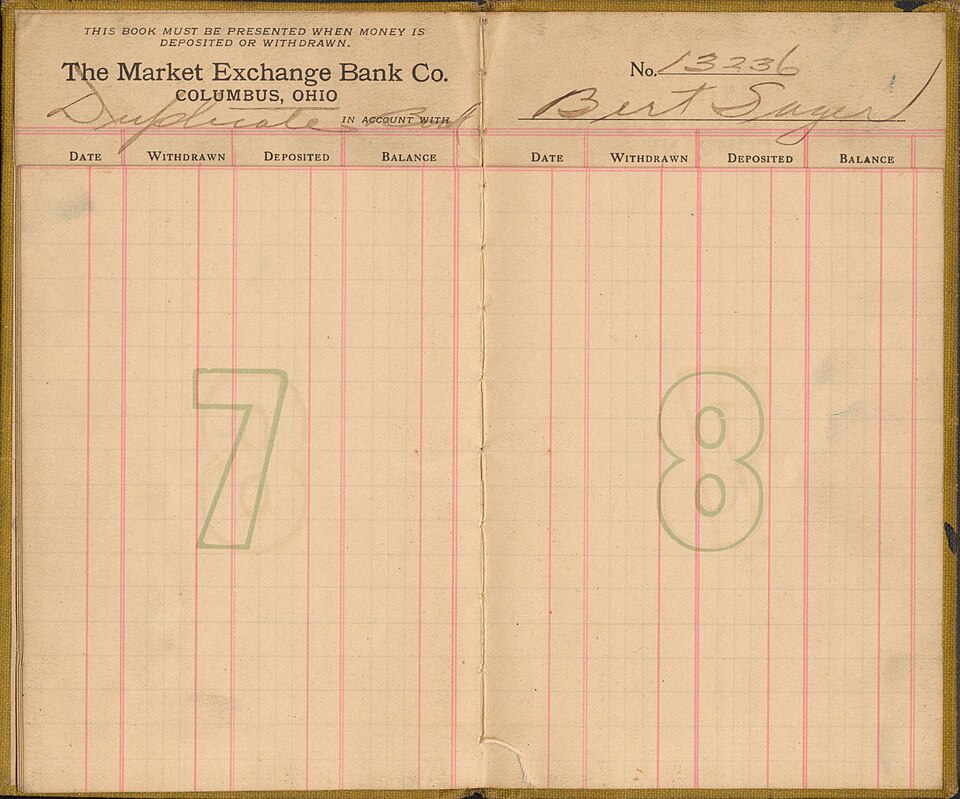 A T-account layout showing debit and credit sides. (Image: Market Exchange Bank Company, Public domain, via Wikimedia Commons)
Based on the TU BITM syllabus for Financial Accounting (ACC201), unit 2.
Discussion
Loading…