Financial AccountingUnit 118 min read
Financial Accounting Basics: Definitions, Roles & Users
Unit 1 of Financial Accounting introduces the core concepts, objectives, and users of financial accounting, distinguishing it from bookkeeping and accountancy while explaining its role in business decision-making and regulatory compliance.
TAKEAWAYS:
- Financial accounting records, classifies, and reports business transactions to external users (investors, tax authorities, creditors) using standardized rules (GAAP/IFRS).
- It differs from bookkeeping (recording transactions) and accountancy (analysis/advice) by focusing on financial statements for stakeholders.
- The accounting equation (Assets = Liabilities + Equity) is the foundation for double-entry bookkeeping and financial reporting.
- Users include investors (profitability), creditors (repayment ability), tax authorities (compliance), and management (performance tracking).
- Key objectives: measure performance, assess financial health, and ensure transparency for decision-making.
- Nepal’s Companies Act 2063 and Nepal Accounting Standards (NAS) govern financial reporting, aligning with global GAAP principles.
Core Definitions and Concepts
1. What is Financial Accounting?
Financial accounting is the process of identifying, recording, measuring, classifying, verifying, summarizing, interpreting, and communicating financial information about a business entity to external users (investors, creditors, regulators) to help them make informed decisions.
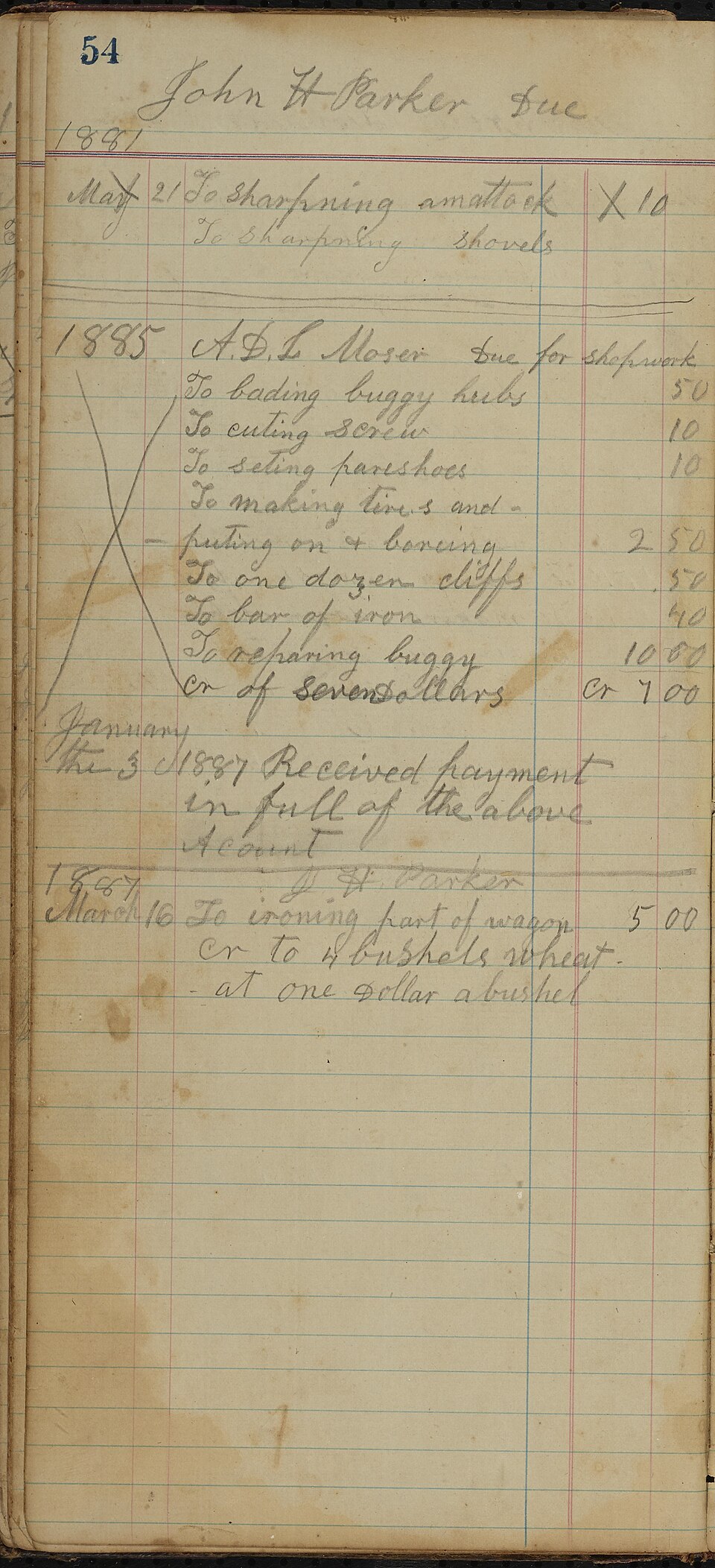 A traditional ledger showing handwritten journal entries (pre-computer era). (Image: Public domain, via Wikimedia Commons)
2. Key Differences: Bookkeeping vs. Accounting vs. Accountancy
| Term | Focus | Output | Example |
|---|---|---|---|
| Bookkeeping | Recording transactions systematically | Journal entries, ledgers, trial balance | Entering cash sales in a sales journal. |
| Accounting | Classifying, summarizing, and reporting financial data | Financial statements (Income Statement, Balance Sheet) | Preparing a profit and loss statement. |
| Accountancy | Analyzing, advising, and interpreting financial data | Audits, tax strategies, financial forecasts | Advising a business on cost-cutting measures. |
Why it matters in Nepal:
- Bookkeepers (e.g., in small shops) record daily transactions.
- Accountants (e.g., in banks like NMB or Nabil) prepare financial statements.
- Accountants (e.g., at KPMG Nepal) provide strategic advice to clients like NEPSE-listed companies.
The Accounting Process and Cycle
1. The Accounting Cycle (Mermaid Diagram)
Real-World Example: Daraz Nepal
- Step 1: Daraz records a sale (e.g., Rs 50,000 from a customer in Pokhara).
- Step 2: The transaction is journalized: Debit Cash/Bank Rs 50,000; Credit Sales Rs 50,000.
- Step 3: Posted to the Cash Ledger and Sales Ledger.
- Step 4: Included in the trial balance to check for errors.
- Step 5: Adjustments (e.g., depreciation on Daraz’s servers) are made.
- Step 6: Financial statements show Daraz’s profitability for investors.
2. The Accounting Equation: The Foundation
The accounting equation is the backbone of double-entry accounting:
Assets = Liabilities + Equity
Visualization: T-Account for a Nepali Retail Shop (Kathmandu Mart)
Worked Example: Starting a Business Mr. Bista starts a furniture shop with:
- Cash: Rs 1,000,000
- Furniture: Rs 500,000 (purchased on credit from SB Furniture)
- Loan from Bank: Rs 300,000
Journal Entry:
| Date | Particulars | L.F. | Dr (Rs) | Cr (Rs) |
|---|---|---|---|---|
| 2079 Baisakh 1 | Cash A/c | Dr | 1,000,000 | |
| To Capital A/c | 1,000,000 | |||
| 2079 Baisakh 1 | Furniture A/c | Dr | 500,000 | |
| To Creditors A/c | 500,000 | |||
| 2079 Baisakh 1 | Bank A/c | Dr | 300,000 | |
| To Loan A/c | 300,000 |
Balance Sheet (After Transactions):
| Assets | Liabilities | Equity |
|---|---|---|
| Cash: 1,000,000 | Creditors: 500,000 | Capital: 1,000,000 |
| Furniture: 500,000 | Loan: 300,000 | |
| Total Assets: 1,500,000 | Total Liabilities: 800,000 | Total Equity: 700,000 |
Users of Financial Accounting and Their Needs
Financial statements serve diverse users with different objectives. Here’s how they use them in Nepal:
| User | Information Needed | Example in Nepal |
|---|---|---|
| Investors | Profitability, growth potential | Shareholders of NEPSE-listed companies (e.g., Nabil Bank) review annual reports to decide whether to buy/sell shares. |
| Creditors | Repayment ability, liquidity | NTC checks a business’s cash flow before approving a loan for expanding telecom towers. |
| Government (IRD) | Tax compliance, income verification | IRD audits Khalti’s financial statements to ensure correct tax payments. |
| Management | Performance evaluation, planning | Daraz’s management uses financial statements to decide on expanding delivery routes. |
| Employees | Job security, wage negotiations | Union leaders at Ncell review profit reports to demand better salaries. |
| Public | Transparency, social responsibility | NGOs like Practical Action assess a company’s CSR (e.g., NMB’s community projects) through financial disclosures. |
## In the Real World
eSewa and Kathmandu Traffic Management
- Concept: Revenue Recognition
- How it works: eSewa records transactions (e.g., Rs 500 for a traffic fine paid via its app) as revenue when earned, not when cash is received. This aligns with accrual accounting (a key principle you’ll learn in Unit 8).
- Impact: Helps Kathmandu Metropolitan City track fine collections accurately for road maintenance.
Nabil Bank’s Loan Approvals
- Concept: Financial Statements Analysis
- How it works: Before approving a loan for a small business (e.g., a Kathmandu-based bakery), Nabil Bank reviews:
- Balance Sheet: Checks if the bakery has enough assets (e.g., oven, inventory) to secure the loan.
- Income Statement: Verifies if the bakery’s profitability (e.g., Rs 200,000 annual profit) can cover loan repayments.
- Real Example: A Rs 500,000 loan was approved for a bakery after seeing its current ratio (Current Assets / Current Liabilities = 1.5:1), indicating it could repay short-term debts.
NEPSE Stock Exchange Listings
- Concept: Financial Disclosure and Transparency
- How it works: Companies like Nabil Bank or Global IME must submit audited financial statements to NEPSE annually. These include:
- Income Statement: Shows net profit (e.g., Nabil’s Rs 12 billion profit in FY 2079).
- Balance Sheet: Lists assets (e.g., branches, loans given) and liabilities (e.g., deposits from customers).
- Why it matters: Investors use this data to decide whether to buy/sell shares. For example, if Nepal Investment Bank’s profit drops, its stock price may fall on NEPSE.
Key Accounting Concepts (With Nepali Examples)
1. Business Entity Concept
- Definition: The business is treated as a separate entity from its owners. Personal transactions of the owner are not recorded in the business books.
- Example:
- Mr. Thapa owns a shop in Thamel. He uses Rs 50,000 of his personal savings to buy a new refrigerator for the shop.
- Incorrect Entry (Violates Entity Concept): | Dr: Refrigerator A/c | 50,000 | | Cr: Mr. Thapa’s Personal A/c | 50,000 |
- Correct Entry: | Dr: Refrigerator A/c | 50,000 | | Cr: Capital A/c (Business) | 50,000 |
2. Dual Aspect Concept (Double-Entry System)
- Definition: Every transaction affects at least two accounts (one debit, one credit) and keeps the accounting equation balanced.
- Example: Pathao’s Ride Transaction
- A customer pays Rs 800 for a ride in Kathmandu.
- Journal Entry: | Dr: Cash/Bank A/c | 800 | | Cr: Revenue A/c | 800 |
- Impact on Accounting Equation:
- Assets (Cash) ↑ by Rs 800.
- Equity (Revenue) ↑ by Rs 800.
- Assets = Liabilities + Equity remains balanced.
3. Going Concern Concept
- Definition: Assumes the business will continue operating for the foreseeable future (not liquidated).
- Example:
- Depreciation (e.g., Rs 10,000/year for a Rs 100,000 delivery van in Pathao) is recorded over 5 years, not written off immediately.
- If Pathao planned to shut down, the van’s full cost (Rs 100,000) would be expensed at once.
Financial Statements: A Preview
While fully covered in Unit 4, here’s a sneak peek into the two primary statements:
1. Income Statement (Profit and Loss Statement)
Shows revenue, expenses, and net profit/loss over a period (e.g., a year). Example for a Kathmandu Grocery Shop (FY 2079):
| Particulars | Amount (Rs) |
|---|---|
| Revenue: | |
| Sales | 5,000,000 |
| Less: Sales Returns | (50,000) |
| Net Sales | 4,950,000 |
| Expenses: | |
| Cost of Goods Sold (COGS) | 3,000,000 |
| Rent | 200,000 |
| Salaries | 800,000 |
| Utilities | 100,000 |
| Total Expenses | 4,100,000 |
| Net Profit | 850,000 |
2. Balance Sheet
Shows assets, liabilities, and equity at a specific date (e.g., end of FY 2079). Example for the Same Grocery Shop:
| Assets | Liabilities | Equity |
|---|---|---|
| Current Assets: | Current Liabilities: | Owner’s Equity: |
| Cash | 500,000 | Creditors |
| Inventory | 1,200,000 | Outstanding Rent |
| Accounts Receivable | 300,000 | Total Liabilities |
| Total Current Assets | 2,000,000 | |
| Non-Current Assets: | Non-Current Liabilities: | |
| Furniture & Fixtures | 800,000 | |
| Total Assets | 2,800,000 | Total Liabilities |
| Total Liabilities + Equity |
Verification: Assets (2,800,000) = Liabilities (1,350,000) + Equity (5,350,000).
## Exam Tip
What Examiners Look For in Unit 1
Definitions with Examples:
- Always define terms (e.g., "Financial accounting is...") and support with a Nepali example (e.g., eSewa, Nabil Bank).
- Avoid: Generic definitions without context.
Accounting Equation Applications:
- Practice: Given transactions, show how the equation changes (e.g., buying inventory on credit increases both Assets and Liabilities).
- Common Mistake: Forgetting to adjust Equity when transactions involve owner’s capital.
Users and Their Needs:
- Memorize the table above and link users to real Nepali entities (e.g., "Investors use NEPSE’s financial reports to...").
- Exam Question: "Who are the users of financial accounting? Explain with reference to a Nepali company." → Answer: Discuss Nabil Bank’s shareholders, IRD, and employees.
Concepts vs. Principles:
- Concepts (e.g., Business Entity) are rules of thought.
- Principles (e.g., Dual Aspect) are practical applications.
- Example Question: "Distinguish between the Business Entity Concept and the Dual Aspect Concept." → Answer: Use Mr. Thapa’s shop (Entity) and Pathao’s ride (Dual Aspect).
Numerical Problems:
- Always show the accounting equation before and after transactions.
- Example Question: "Journalize the following transactions for a furniture shop."
- Solution: Use T-accounts and balance sheet impacts (as shown in the Kathmandu Mart example).
Common Pitfalls:
- Mixing up Debit/Credit: Remember "Debit what comes in, Credit what goes out" (for Assets).
- Ignoring Adjustments: If a question mentions "adjusting entries," always prepare a trial balance first.
Practice Questions (Based on Past Exams)
Journal Entry Problem: Mr. Gurung started a stationery shop with:
- Cash: Rs 200,000
- Goods: Rs 150,000 (purchased on credit from ABC Suppliers)
- Loan from NMB Bank: Rs 100,000 Required: Pass journal entries and show the accounting equation.
Conceptual Question: Explain the interconnection between bookkeeping, accounting, and accountancy with reference to a Nepali bank (e.g., Standard Chartered Nepal).
Accounting Equation: Given:
- Assets: Rs 800,000
- Liabilities: Rs 300,000
- Owner withdraws Rs 50,000 for personal use. Required: Calculate the new Equity and show the accounting equation.
Summary Table: Key Terms and Their Meanings
| Term | Meaning | Example in Nepal |
|---|---|---|
| Financial Accounting | Recording and reporting financial data for external users. | Nabil Bank’s annual report for shareholders. |
| Bookkeeping | Systematic recording of transactions. | A small shop’s cash book in Bhaktapur. |
| Accounting | Classifying, summarizing, and interpreting financial data. | Preparing a profit and loss statement for Daraz. |
| Accountancy | Analyzing financial data for decision-making. | KPMG Nepal advising a client on tax strategies. |
| Accounting Equation | Assets = Liabilities + Equity. | Kathmandu Mart’s balance sheet. |
| Users | Groups who rely on financial statements (investors, creditors, etc.). | IRD reviewing Khalti’s tax filings. |
| Business Entity | Business and owner are separate legal entities. | Mr. Bista’s personal car ≠ his shop’s van. |
| Dual Aspect | Every transaction affects two accounts. | eSewa records cash inflow and revenue. |
Final Worked Example: Full Transaction Cycle
Scenario: Ms. Shrestha runs a "Sweet Delight" bakery in Lalitpur. Here are her transactions for Baisakh 2079:
Started business with:
- Cash: Rs 500,000
- Bakery equipment: Rs 300,000 (purchased on credit from Sweet Mart).
Purchased ingredients on credit from ABC Suppliers: Rs 100,000.
Sold cakes for cash: Rs 200,000.
Paid rent for the month: Rs 30,000.
Withdrew cash for personal use: Rs 20,000.
Required: Journal entries, T-accounts, and final accounting equation.
Step 1: Journal Entries
| Date | Particulars | L.F. | Dr (Rs) | Cr (Rs) |
|---|---|---|---|---|
| 2079 Baisakh 1 | Cash A/c | Dr | 500,000 | |
| Bakery Equipment A/c | Dr | 300,000 | ||
| To Capital A/c | 800,000 | |||
| 2079 Baisakh 1 | Ingredients A/c | Dr | 100,000 | |
| To Creditors A/c | 100,000 | |||
| 2079 Baisakh 5 | Cash A/c | Dr | 200,000 | |
| To Sales A/c | 200,000 | |||
| 2079 Baisakh 10 | Rent A/c | Dr | 30,000 | |
| To Cash A/c | 30,000 | |||
| 2079 Baisakh 15 | Drawing A/c | Dr | 20,000 | |
| To Cash A/c | 20,000 |
Step 2: T-Accounts
Step 3: Accounting Equation After All Transactions
| Assets | Liabilities | Equity |
|---|---|---|
| Cash: 250,000 | Creditors: 100,000 | Capital: 800,000 |
| Bakery Equipment: 300,000 | Less: Drawing: 20,000 | |
| Ingredients: 100,000 | Net Equity: 780,000 | |
| Total Assets: 650,000 | Total Liabilities: 100,000 | Total Equity: 780,000 |
Verification: 650,000 (Assets) = 100,000 (Liabilities) + 550,000 (Equity).
Key Takeaways for Exams
- Always start with the accounting equation for any transaction.
- Link concepts to real-world examples (e.g., NEPSE, eSewa, banks).
- Practice journal entries for at least 5 transactions to master debit/credit rules.
- Memorize the users table—examiners love questions on this!
- For numericals, show T-accounts to demonstrate understanding of ledger posting.
Based on the TU BITM syllabus for Financial Accounting (ACC201), unit 1.
Discussion
Loading…