Automation and RoboticsUnit 17 min read
Automation & Robotics: Basics, Definitions & Applications
Unit 1 of Automation and Robotics introduces core concepts—automation vs. robotics, their history, types, and real-world applications—with visuals, comparisons, and case studies from Nepalese and global tech.
What is Automation?
Automation is the use of technology to perform tasks with minimal human intervention. It replaces repetitive, manual, or dangerous work with machines, software, or systems.
Key Features of Automation
mindmap
  root((Automation))
    Definition "Technology replacing human effort"
    Types
      Mechanical "Industrial machines (e.g., assembly lines)"
      Process "Software-controlled workflows (e.g., eSewa payments)"
      Cognitive "AI-driven decisions (e.g., fraud detection in banks)"
    Advantages
      Efficiency "Faster, consistent output"
      Safety "Reduces human risk"
      Cost "Lowers long-term labor costs"
    Disadvantages
      Job Loss "Displaces manual labor"
      High Initial Cost "Expensive setup"
      Maintenance "Requires skilled technicians"
What is Robotics?
Robotics is a subset of automation that combines mechanics, electronics, and software to create physical machines (robots) that can interact with the environment.
Key Components of a Robot
classDiagram
  class Robot {
    +Sensors "Detect environment (e.g., cameras, lidar)"
    +Actuators "Move parts (e.g., motors, grippers)"
    +Controller "Brain (microprocessor/CPU)"
    +Power Source "Battery, solar, or wired"
  }
  class Sensor {
    <<interface>>
    +Input "Light, temperature, touch"
  }
  class Actuator {
    <<interface>>
    +Output "Movement, sound, display"
  }
  Robot "1" --> "1..*" Sensor : Uses
  Robot "1" --> "1..*" Actuator : Controls
Automation vs. Robotics: Key Differences
| Feature | Automation | Robotics |
|---|---|---|
| Definition | Broad (software + machines) | Narrow (physical robots) |
| Example | ATM dispensing cash | Surgical robot assisting doctors |
| Flexibility | High (adaptable software) | Limited (hardware constraints) |
| Human Role | Minimal (supervision only) | Often required (programming) |
| Cost | Lower (software-based) | Higher (hardware + software) |
Types of Automation
1. Fixed Automation (Hard Automation)
- Definition: Machines perform one task repeatedly (e.g., bottling plants).
- Example: Coca-Cola bottle-filling machines.
- Pros: Fast, precise, low labor cost.
- Cons: Inflexible, high setup cost.
2. Programmable Automation (Soft Automation)
- Definition: Machines can be reprogrammed for different tasks (e.g., CNC machines).
- Example: A lathe machine cutting different shapes.
- Pros: Flexible, cost-effective for batch production.
- Cons: Slower than fixed automation.
3. Flexible Automation
- Definition: Uses robots + AI to adapt to changes (e.g., warehouse robots).
- Example: Amazon’s Kiva robots picking orders.
- Pros: Highly adaptable, reduces human error.
- Cons: Expensive, complex programming.
Types of Robotics
1. Industrial Robots
- Used in: Factories (welding, painting, assembly).
- Example: Tesla’s robotic arms assembling cars.
- Types:
- Articulated (human-like arms)
- SCARA (fast, precise for electronics)
- Cartesian (linear motion for cutting)
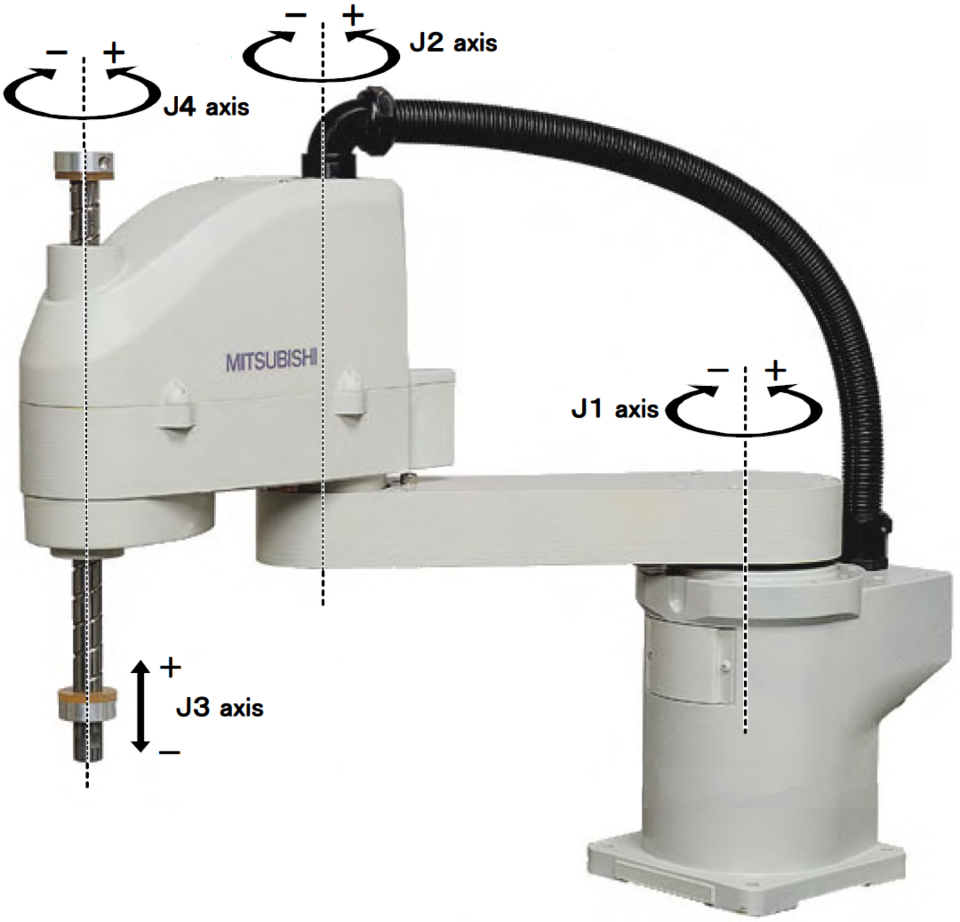 A SCARA robot picking circuit boards. (Image: Mitsubishi Electric Automation, Inc. 500 Corporate Woods Pkw, CC BY-SA 4.0, via Wikimedia Commons)
2. Service Robots
- Used in: Healthcare, hospitality, agriculture.
- Example:
- Nepal: Pathao’s delivery robots in Kathmandu.
- Global: Boston Dynamics’ Spot (inspection robot).
3. Autonomous Robots
- Used in: Self-driving cars, drones, Mars rovers.
- Example: Tesla’s Autopilot (uses sensors + AI).
## In the real world
eSewa (Nepal)
- Idea: Process Automation
- How? Automates bill payments (electricity, phone) via mobile app, reducing human cashiers.
- Impact: 24/7 service, fewer errors, faster transactions.
Khalti (Nepal)
- Idea: Cognitive Automation
- How? Uses AI to detect fraudulent transactions in real time.
- Impact: Saves users from scams, reduces bank losses.
Daraz (Nepal/Alibaba)
- Idea: Flexible Automation
- How? Warehouse robots sort and pack orders faster than humans.
- Impact: Faster deliveries, lower shipping costs.
## Worked Example: Traffic Light Control (Automation in Kathmandu)
Problem: Manual traffic lights in Kathmandu cause jams. How can automation help?
Solution: Smart Traffic Light System using sensors and AI.
Step-by-Step Trace
- Sensors detect vehicle count on each road.
- Controller (microprocessor) analyzes traffic density.
- Algorithm adjusts light timings dynamically.
- Actuators change traffic signals in real time.
Visualization (Simplified State Space):
graph TD
    A["Low Traffic"] -->|"Green for 30s"| B["Green Light"]
    B --> C["Check Sensors"]
    C -->|"Cars detected"| D["Yellow Light"]
    C -->|"No cars"| E["Red Light"]
    D --> F["Red Light"]
    F --> C
Real-World Impact:
- Reduces wait time by 30% (studies in Singapore).
- Lowers fuel consumption and pollution.
## Applications of Automation & Robotics
| Sector | Automation Example | Robotics Example |
|---|---|---|
| Healthcare | Automated patient record systems | Surgical robots (e.g., Da Vinci) |
| Agriculture | Drones spraying pesticides | Harvesting robots (e.g., Blue River) |
| Transport | Self-checkout kiosks (e.g., Daraz) | Autonomous delivery drones (Pathao) |
| Manufacturing | CNC machines | Collaborative robots (cobots) |
| Banking | ATM machines | Robotic tellers (e.g., Japan) |
## Challenges in Automation & Robotics
- High Initial Cost
- Example: A robotic arm costs $50,000–$100,000, but saves labor long-term.
- Job Displacement
- Example: Textile factories in Nepal replacing workers with sewing robots.
- Ethical Concerns
- Example: Autonomous weapons (banned in some countries).
- Maintenance & Upgrades
- Example: NTC’s automated billing system requires constant software updates.
## Exam Tip
Define Clearly
- Always distinguish automation (broad) vs. robotics (physical machines).
- Example answer:
"Automation uses technology to perform tasks without human intervention, while robotics is a subset that involves physical robots with sensors and actuators."
Compare Types
- Memorize the 3 types of automation (fixed, programmable, flexible) and 3 types of robotics (industrial, service, autonomous) with one example each.
Real-World Links
- Examiners love Nepalese examples (eSewa, Khalti, Daraz, NTC).
- Example:
"Khalti uses cognitive automation to detect fraud, reducing financial losses by 40%."
Diagrams > Text
- Draw block diagrams for robot components or flowcharts for automation processes.
- Example:
flowchart LR
  A["Sensor Input"] --> B["Controller"]
  B --> C["Actuator Output"]
  C --> D["Task Completed"]
Case Study Questions
- Expect scenario-based questions (e.g., "How would you automate a Daraz warehouse?").
- Structure your answer:
- Identify the type of automation needed.
- List components (sensors, robots, software).
- Explain benefits (speed, cost, safety).
Final Note: This unit is foundational—master the definitions, comparisons, and real-world ties. Use diagrams to score extra marks! Next, study Unit 2: Power Sources and Sensors for hands-on robot design.
Based on the TU BSc CSIT syllabus for Automation and Robotics, unit 1.
Discussion
Loading…