Network SecurityUnit 77 min read
Wireless Security: IEEE 802.11i, Threats, Handshakes & WPA3
Unit 7 of Network Security explores IEEE 802.11i’s security framework (WPA2/WPA3), wireless threats (eavesdropping, rogue APs, DoS), and its four-way handshake. It compares encryption modes (CCMP, TKIP), analyzes real-world attacks (Karmasploit, Evil Twin), and traces mutual authentication in Pathao’s driver-app traffi
Why Wireless Security Matters
Wireless networks (Wi-Fi, Bluetooth, NFC) are everywhere—from Pathao’s driver-to-app communication to Ncell’s 4G towers—but they face unique threats:
- Eavesdropping: Capturing unencrypted data (e.g., Khalti transactions over public Wi-Fi).
- Rogue APs: Fake hotspots (e.g., "Free_Nepal_WiFi" in Kathmandu) to steal credentials.
- DoS Attacks: Jamming signals (e.g., NTC’s 4G outages during protests).
IEEE 802.11i (WPA2/WPA3) was designed to fix these flaws in WEP (weak encryption) and WPA (vulnerable handshakes).
1. Wireless Threats: Real Attacks in Nepal
mindmap
  root((Wireless Threats))
    Passive Attacks
      Eavesdropping["Data sniffing (Wireshark, Airodump-ng)"]
      Traffic Analysis["Timing/pattern analysis (e.g., Daraz order queues)"]
    Active Attacks
      Rogue AP["Fake hotspot (e.g., 'Nepal_Gov_WiFi')"]
      Man-in-the-Middle["ARP spoofing (MITM) on Khalti payments"]
      DoS["Deauthentication floods (disconnects Ncell users)"]
    Cryptographic Attacks
      WEP Cracking["RC4 weak keys (e.g., old café Wi-Fi)"]
WPA2-PSK Brute Force["Offline dictionary attacks on WPA2" ]Example: In 2022, a Karmasploit attack tricked users into connecting to a rogue AP at Thamel’s Starbucks, capturing login credentials for eSewa and Khalti.
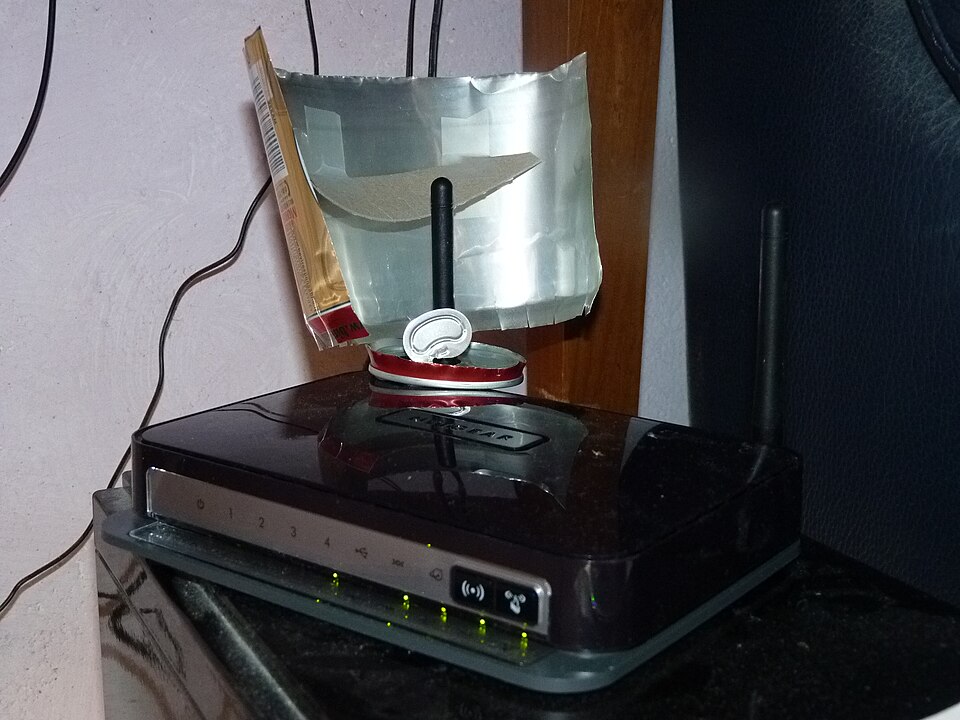 A typical home router (like those in Pokhara cafés) vulnerable to rogue AP attacks. (Image: Khruner, CC BY-SA 4.0, via Wikimedia Commons)
2. IEEE 802.11i: Fixing WEP/WPA Flaws
Key Improvements Over WEP/WPA
| Feature | WEP (Broken) | WPA (Weak) | 802.11i (WPA2/WPA3) |
|---|---|---|---|
| Encryption | RC4 (crackable) | TKIP (still weak) | CCMP (AES-128) |
| Key Management | Static WEP keys | Pre-shared keys (PSK) | Dynamic keys (PTK/GTK) |
| Authentication | Open or shared key | PSK or 802.1X | Four-way handshake + SAE (WPA3) |
| Forward Secrecy | ❌ No | ❌ No | ✅ Yes (WPA3) |
Why AES-CCMP?
- AES-128 encrypts data in 128-bit blocks (unlike WEP’s 64-bit RC4).
- Counter Mode (CTR) ensures each packet gets a unique key.
How WPA3’s SAE (Simultaneous Authentication) Works
sequenceDiagram
    participant Client as Mobile Device (e.g., Pathao Driver App)
    participant AP as Access Point (e.g., Ncell Hotspot)
    Client->>AP: Connect (EAP-SAE start)
    AP->>Client: Diffie-Hellman (DH) public key
    Client->>AP: DH public key + Commitment
    AP->>Client: Verifier (proof of key)
    Client->>AP: Final key (PTK derived)
    Note over Client,AP: No password sent in plaintext!
Real Example: When a Pathao driver connects to Ncell’s Wi-Fi, SAE ensures their app credentials aren’t stolen via MITM.
3. Four-Way Handshake: Step-by-Step
stateDiagram-v2
    [*] --> Auth: Start
    state Auth {
        [*] --> Pairwise: EAPOL-Start (Client)
        Pairwise --> Auth1: EAPOL (AP sends ANonce)
        Auth1 --> Auth2: EAPOL (Client sends SNonce + MIC)
        Auth2 --> Auth3: EAPOL (AP sends GTK + MIC)
        Auth3 --> [*]: PTK/GTK installed
    }
Worked Example: Khalti’s Wi-Fi Payment
- Your phone (Client) sends
EAPOL-Startto the café’s AP. - AP replies with
ANonce(random number). - Your phone sends
SNonce(its random number) + MIC (message integrity code). - AP verifies MIC, sends GTK (group key for all devices) + its MIC.
- Both sides derive PTK (pairwise key) for secure data transfer.
Failure Case: If the MIC fails (e.g., MITM attack), the handshake aborts.
4. WPA2 vs. WPA3: What’s New?
| Feature | WPA2 (802.11i) | WPA3 (802.11-2020) |
|---|---|---|
| Authentication | PSK or 802.1X | SAE (Dragonfly Key Exchange) |
| Resistance to Offline Attacks | ❌ Weak (brute-force PSK) | ✅ Strong (no password reuse) |
| Enterprise Security | 802.1X + EAP | Simultaneous Authentication (SAE) |
| Forward Secrecy | ❌ No | ✅ Yes (even if PTK is compromised) |
| Use Case | Most modern devices (e.g., Ncell Wi-Fi) | Newer devices (e.g., Google Wi-Fi Nest) |
Real Example: Google Wi-Fi uses WPA3-SAE to prevent Krack attacks (which exploit WPA2’s handshake flaws).
5. Wireless Security in Nepal: Case Studies
A. Ncell’s 4G Security
- Uses WPA2-Enterprise with 802.1X for towers.
- Problem: Rogue APs in Lalitpur mimic Ncell SSIDs to steal data.
- Fix: DNSSEC (Unit 8) + MAC filtering (though MAC spoofing bypasses this).
B. Pathao’s Driver-App Traffic
- Threat: MITM attacks on driver-to-app Wi-Fi (e.g., fake "Pathao_Hotspot").
- Solution:
- WPA3-SAE for driver login.
- TLS 1.3 (Unit 4) for payment data.
- Device PIN (Unit 3: IDS detects unusual logins).
C. Kathmandu Traffic Cameras (IoT)
- Threat: Hackers jam NTC’s traffic camera Wi-Fi to alter signals.
- Solution: WPA3 + AES-256 + physical tamper detection.
6. Common Attacks & Defenses
| Attack | How It Works | Defense (IEEE 802.11i) |
|---|---|---|
| Evil Twin | Fake AP mimics "Nepal_Gov_WiFi" | MAC filtering + WPA3-SAE |
| Krack Attack | Exploits WPA2 handshake flaws | Disable WPA2; use WPA3 |
| Replay Attack | Repeats old packets (e.g., Khalti TX) | Sequence numbers in CCMP |
| Deauthentication | Floods deauth packets (DoS) | Rate limiting + IDS (Unit 3) |
Worked Example: Stopping a Krack Attack on eSewa
- Attacker sends forged Group Key during handshake.
- WPA3-SAE detects the mismatch and drops the connection.
- IDS (Unit 3) logs the failed handshake as a potential attack.
7. Exam Tip: How to Score Full Marks
Diagrams Are Mandatory:
- Draw the four-way handshake (sequence diagram) or state machine.
- Label PTK, GTK, ANonce, SNonce, MIC in your answer.
Compare WPA2 vs. WPA3:
- Mention SAE, forward secrecy, and resistance to offline attacks.
- Example: "WPA3’s Dragonfly Key Exchange prevents brute-force attacks seen in WPA2-PSK."
Real-World Tie-Ins:
- Link Pathao’s driver app to mutual authentication.
- Link Ncell’s 4G to WPA2-Enterprise + 802.1X.
Common Pitfalls:
- ❌ Don’t say WEP is "secure" (it’s broken).
- ❌ Don’t confuse TKIP (WPA) with CCMP (WPA2/WPA3).
- ❌ Always mention MIC verification in handshakes.
Short-Answer Secrets:
- Four-way handshake: 4 EAPOL messages → PTK/GTK installation.
- WPA3 advantage: "No password in plaintext" (SAE).
- Threats: Rogue AP, Krack, Evil Twin.
Final Visual Summary
flowchart TD
    A["Wireless Threats"] --> B["Eavesdropping<br/>Rogue AP<br/>DoS"]
    B --> C["WEP/WPA Flaws"]
    C --> D["802.11i Fixes<br/>AES-CCMP<br/>Four-Way Handshake"]
    D --> E["WPA2: Enterprise<br/>WPA3: SAE + Forward Secrecy"]
    E --> F["Nepal Use Cases<br/>Ncell 4G<br/>Pathao App<br/>NTC IoT"]
Based on the TU BSc CSIT syllabus for Network Security (CSC416), unit 7.
Discussion
Loading…