Basic Sociology For Social WorkUnit 212 min read
Major Sociological Perspectives & Their Role in Social Work
Unit 2 of Basic Sociology For Social Work: explores the three core sociological perspectives (structural-functionalism, conflict theory, symbolic interactionism) and their applications in analyzing social problems, inequality, and social work interventions in Nepali society.
TAKEAWAYS:
- The three major perspectives (structural-functionalism, conflict theory, symbolic interactionism) offer distinct lenses to study society, each with strengths and limitations.
- Structural-functionalism views society as a system of interconnected parts (e.g., family, education) working to maintain stability, useful for understanding social institutions like marriage or caste.
- Conflict theory highlights power imbalances and inequality (e.g., class, gender, race), critical for addressing systemic discrimination in social work.
- Symbolic interactionism focuses on micro-level interactions and meaning-making, ideal for analyzing communication and identity formation in marginalized groups.
- Each perspective has real-world applications in social work: e.g., conflict theory explains why women face workplace discrimination, while symbolic interactionism helps design inclusive programs.
- Exam focus: Compare perspectives, apply them to Nepali cases (e.g., gender inequality, caste discrimination), and link to social work practices.
1. Introduction to Major Sociological Perspectives
Sociology offers three dominant theoretical perspectives to explain how society functions and how individuals interact within it. These perspectives are not mutually exclusive but provide complementary insights. Below is a comparison table to clarify their differences:
| Perspective | Key Focus | View of Society | Key Thinkers | Strengths | Limitations |
|---|---|---|---|---|---|
| Structural-Functionalism | How parts of society work together | Society as a stable, interconnected system | Durkheim, Parsons, Merton | Explains social order and stability | Ignores conflict and inequality |
| Conflict Theory | Power, inequality, and social change | Society as a battleground for resources | Marx, Weber, Engels | Highlights oppression and systemic change | Overemphasizes conflict, ignores harmony |
| Symbolic Interactionism | Meaning-making in everyday interactions | Society as a product of individual interactions | Mead, Goffman, Blumer | Focuses on micro-level dynamics | Hard to generalize to large-scale systems |
2. Structural-Functionalism: Society as a System
Definition: Structural-functionalism views society as a complex system where each institution (e.g., family, education, religion) performs specific functions to maintain stability and order. It asks: How does this part contribute to the whole?
Key Concepts:
- Manifest Functions: Intended consequences of social institutions (e.g., schools teach academic skills).
- Latent Functions: Unintended consequences (e.g., schools also socialize children into norms).
- Dysfunctions: Negative consequences that disrupt social stability (e.g., rigid caste systems in Nepal limiting mobility).
Application in Social Work:
- Example: Understanding the family as a social institution.
- Manifest Function: Provides emotional support and socialization.
- Latent Function: Reinforces gender roles (e.g., women as caregivers).
- Dysfunction: Domestic violence or child neglect disrupts family stability.
- Social Work Role: Design interventions to strengthen family functions (e.g., counseling for at-risk families).
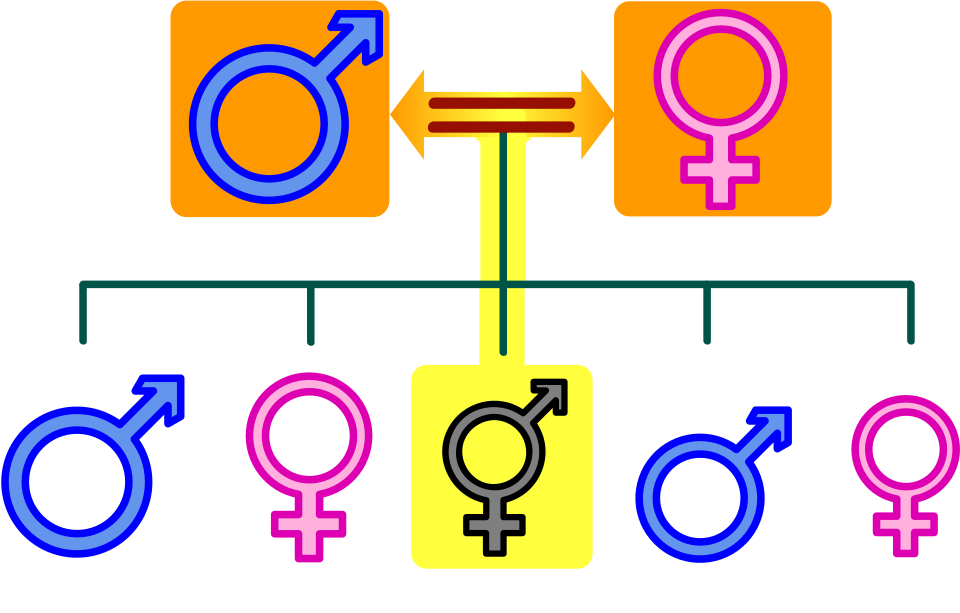 A labelled diagram of a nuclear family showing roles (parent, child) and functions (socialization, economic support). (Image: Mage Whopper, Public domain, via Wikimedia Commons)
Worked Example: Caste System in Nepal
- Structural-Functionalist View:
- Function: Provides social order and hierarchy (e.g., Brahmins as priests, Chhetris as administrators).
- Dysfunction: Perpetuates discrimination (e.g., Dalits face systemic exclusion).
- Social Work Application: Advocate for policies to reduce caste-based discrimination (e.g., affirmative action in education).
3. Conflict Theory: Power and Inequality
Definition: Conflict theory, rooted in Karl Marx’s critique of capitalism, argues that society is divided by unequal power dynamics (class, race, gender). It asks: Who benefits from the current social order, and who is exploited?
Key Concepts:
- Class Conflict: Struggle between bourgeoisie (owners) and proletariat (workers).
- Power Elite: Small groups (e.g., politicians, corporate leaders) controlling resources.
- False Consciousness: Oppressed groups accepting their subordination (e.g., Dalits accepting caste-based jobs).
Application in Social Work:
- Example: Gender Inequality in Nepal
- Conflict Theory Analysis:
- Women are excluded from leadership roles (e.g., only 25% of Parliament seats).
- Patriarchal norms (e.g., dowry, gender-based violence) maintain male dominance.
- Social Work Role:
- Advocate for legal reforms (e.g., Domestic Violence Act 2009).
- Run awareness campaigns on women’s rights (e.g., Khalti’s gender-inclusive financial literacy programs).
- Conflict Theory Analysis:
Worked Example: Child Labor in Kathmandu
- Conflict Theory View:
- Power Dynamics: Wealthy businesses exploit poor families for cheap labor.
- Solution: Social workers can push for labor laws (e.g., minimum wage, child protection acts) and alternative education programs (e.g., Daraz’s vocational training for youth).
4. Symbolic Interactionism: Meaning and Interaction
Definition: Symbolic interactionism focuses on how individuals interpret symbols (language, gestures, objects) to create shared meanings. It asks: How do people define situations and interact in daily life?
Key Concepts:
- Self: Developed through social interaction (Mead’s "I" vs. "Me").
- Role-Taking: Imagining how others see us (e.g., a student role vs. a worker role).
- Dramaturgical Approach (Goffman): Life as a stage where we perform roles (e.g., a doctor’s "professional self").
Application in Social Work:
- Example: Stigma and Mental Health
- Symbolic Interactionist View:
- People with mental illness may internalize negative labels (e.g., "crazy").
- Solution: Social workers use peer support groups to help individuals redefine their identity (e.g., "I am a survivor, not a victim").
- Symbolic Interactionist View:
Worked Example: Pathao Driver Discrimination
- Symbolic Interactionist Analysis:
- Drivers face stigma ("lazy," "uneducated") due to societal stereotypes.
- Social Work Intervention:
- Organize driver empowerment workshops to build confidence.
- Partner with Pathao to create positive narratives (e.g., "Drivers are the backbone of Kathmandu’s economy").
5. Comparing Perspectives: Which One to Use?
| Scenario | Best Perspective | Why? |
|---|---|---|
| Analyzing caste discrimination | Conflict Theory | Highlights systemic power imbalances. |
| Understanding family dynamics | Structural-Functionalism | Explains how family roles maintain stability. |
| Designing inclusive programs | Symbolic Interactionism | Focuses on individual experiences and meaning-making. |
| Exploring workplace gender gaps | Conflict Theory + Symbolic Interactionism | Combines structural inequality with personal narratives. |
Mermaid Diagram:
flowchart TD
    A["Social Problem: Gender Inequality in Nepali Banks"] --> B["Conflict Theory: Who benefits from unequal pay?"]
    B --> C["Symbolic Interactionism: How do women interpret their roles?"]
    C --> D["Structural-Functionalism: How do banks maintain gender norms?"]
    D --> E["Social Work Solution: Policy change + awareness campaigns"]
6. In the Real World
- Khalti’s Financial Inclusion:
- Conflict Theory in Action: Khalti empowers women by providing digital payment access, challenging traditional gender roles where women are often excluded from financial decision-making.
- Symbolic Interactionism: Their marketing campaigns (e.g., "Women Power") help redefine women’s economic roles.
Ncell’s Youth Engagement Programs:
- Symbolic Interactionism: Ncell’s "Digital Literacy for Youth" programs use peer-to-peer learning to help young people gain confidence in technology, reshaping their self-perception.
NEPSE’s Market Regulations:
- Structural-Functionalism: NEPSE’s role in maintaining market stability (e.g., preventing crashes) aligns with functionalist views of institutions ensuring order.
- Conflict Theory: Critics argue NEPSE’s policies favor wealthy investors, perpetuating economic inequality.
7. Exam Tips
Compare Perspectives:
- Always contrast structural-functionalism, conflict theory, and symbolic interactionism in your answers. Use a table like the one above.
- Example: "While structural-functionalism views caste as a stable social institution, conflict theory argues it perpetuates oppression."
Apply to Nepali Cases:
- Gender inequality: Use conflict theory to explain workplace discrimination.
- Caste system: Use structural-functionalism to discuss its functions/dysfunctions.
- Traffic in Kathmandu: Use symbolic interactionism to analyze how drivers and pedestrians interpret road rules.
Link to Social Work:
- For every perspective, ask: How can social workers address the issue? (e.g., policy advocacy, counseling, community organizing).
- Example: "Conflict theory helps identify systemic barriers to women’s education, so social workers can push for scholarships and safe schools."
Use Real Examples:
- Cite Nepali institutions (e.g., Ncell’s digital inclusion, Khalti’s gender programs) or global cases (e.g., Google’s diversity initiatives).
- Avoid vague answers; ground your analysis in concrete examples.
Avoid Overgeneralization:
- Don’t say "conflict theory explains everything." Instead, choose the right lens for the problem.
- Example: "Symbolic interactionism is better for understanding how individuals cope with stigma, while conflict theory explains systemic causes."
Final Note: This unit is highly examinable because it blends theory with real-world application. Focus on comparing perspectives, applying them to Nepali cases, and linking to social work practices. Use examples from daily life (e.g., traffic, caste, gender) to make your answers vivid and memorable.
Based on the TU BSW syllabus for Basic Sociology For Social Work, unit 2.
Discussion
Loading…