Psychology For Social WorkUnit 512 min read
Motivation & Emotions: Driving Human Behavior & Social Work
Unit 5 of Psychology For Social Work explores how emotions and motivations shape human behavior, their psychological foundations, and their critical role in social work practice—covering theories, real-world applications, and case studies from Nepalese contexts.
TAKEAWAYS:
- Motivation is the psychological force that initiates, directs, and sustains behavior, classified into intrinsic (internal) and extrinsic (external) types.
- Emotions are complex psychological states involving physiological arousal, expressive behaviors, and conscious experience, categorized by valence (positive/negative) and arousal levels.
- Theories of motivation (e.g., Maslow’s Hierarchy, Self-Determination Theory) explain how needs and goals drive behavior, while emotion theories (e.g., James-Lange, Schachter-Singer) link physiological responses to subjective feelings.
- Social work applications include using motivation to engage clients (e.g., addiction recovery) and managing emotions in crisis intervention (e.g., trauma counseling).
- Real-world examples show how emotions and motivation operate in apps (e.g., Pathao’s reward systems), banks (loan approvals), and daily life (e.g., Kathmandu traffic stress).
- Exam focus: Define concepts clearly, compare theories critically, and link psychological principles to social work scenarios (e.g., poverty alleviation, mental health).
1. Definitions: Motivation and Emotions
Motivation
Motivation is the internal or external force that activates, guides, and maintains behavior toward a goal. It answers why people act the way they do.
- Key components:
- Direction: Goal-oriented (e.g., studying for an exam).
- Intensity: Effort expended (e.g., working overtime).
- Persistence: Duration of effort (e.g., saving for a house).
graph LR
    A["Motivation"] --> B["Initiation"]
    A --> C["Direction"]
    A --> D["Persistence"]
    B --> E["Needs/Desires"]
    C --> F["Goals"]
    D --> G["Effort"]
Emotions
Emotions are brief, intense reactions to events, involving:
- Physiological arousal (e.g., increased heart rate).
- Behavioral expression (e.g., facial expressions, body language).
- Subjective experience (e.g., feeling happy or angry).
2. Theories of Motivation
A. Content Theories (Focus on what motivates)
| Theory | Key Idea | Example in Nepal |
|---|---|---|
| Maslow’s Hierarchy | Needs are arranged in a pyramid (physiological → self-actualization). | A slum dweller prioritizes food (physiological) over education (self-actualization). |
| ERG Theory (Alderfer) | Collapses Maslow’s into Existence, Relatedness, Growth. | A farmer in Kavrepalanchok focuses on land (existence) before community ties (relatedness). |
| Self-Determination Theory (Deci & Ryan) | Autonomy, competence, and relatedness drive intrinsic motivation. | A social worker helps a street child by letting them choose their rehabilitation path. |
B. Process Theories (Focus on how motivation works)
| Theory | Mechanism | Social Work Application |
|---|---|---|
| Expectancy Theory (Vroom) | Motivation = Expectancy × Instrumentality × Valence. | A client may work hard (expectancy) if they believe it leads to a job (instrumentality) and value the job (valence). |
| Goal-Setting Theory (Locke & Latham) | Specific, challenging goals increase performance. | Setting a goal like "reduce domestic violence cases by 20%" in a shelter. |
| Equity Theory (Adams) | People compare their input/output ratio to others’ and seek fairness. | A teacher’s salary dissatisfaction if colleagues earn more for similar work. |
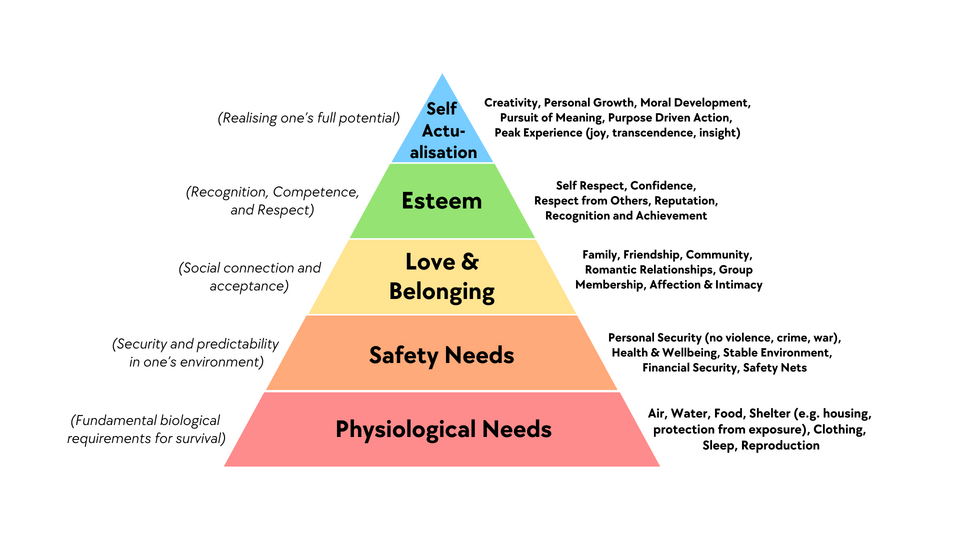 Hierarchy from physiological needs (bottom) to self-actualization (top), with real-world Nepalese examples (e.g., Ncell’s Data for Education campaign addressing safety needs). (Image: Hamish.croker, CC BY-SA 4.0, via Wikimedia Commons)
3. Theories of Emotions
A. Physiological Theories
James-Lange Theory:
- Process: Stimulus → Physiological response → Emotion.
- Example: Seeing a snake (stimulus) → Heart races (response) → You feel fear (emotion).
- Criticism: Doesn’t explain why two people react differently to the same stimulus.
Cannon-Bard Theory:
- Process: Stimulus → Physiological response and emotion occur simultaneously.
- Example: Hearing a loud noise → You feel afraid while your heart pounds.
- Visual:
flowchart TD
    A["Stimulus"] --> B["Thalamus"]
    B --> C["Physiological Response"]
    B --> D["Emotion"]
B. Cognitive Theories
Schachter-Singer Two-Factor Theory:
- Emotions arise from physiological arousal + cognitive label.
- Example: Your hands shake (arousal) + you think, "I’m nervous before my exam" → You feel anxiety.
Lazarus’ Cognitive-Mediational Theory:
- Emotions depend on appraisal of the situation.
- Example: A flood victim may feel hope if they believe in rescue (positive appraisal) or despair if they think help is far (negative appraisal).
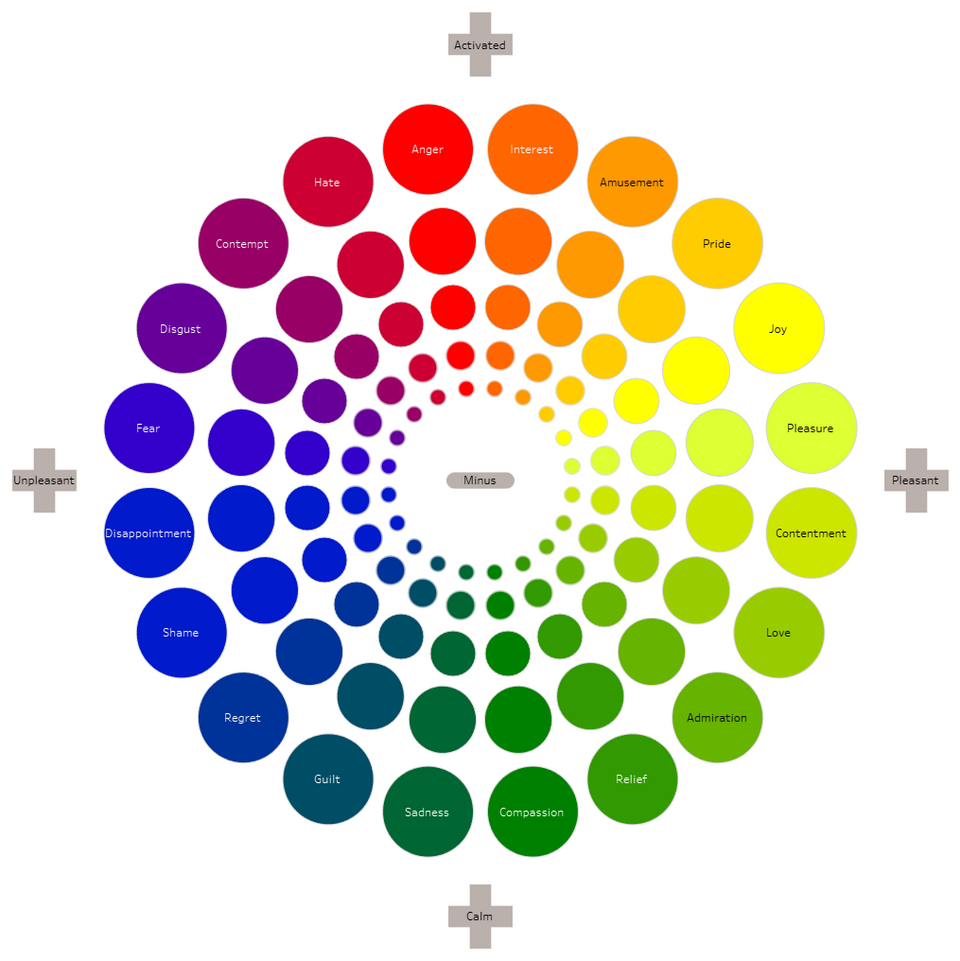 Shows primary (happy, sad, angry, etc.) and secondary emotions (e.g., anxious, guilty) to illustrate how emotions are categorized and interrelated. (Image: JurijFedorov, CC BY-SA 4.0, via Wikimedia Commons)
4. Applications in Social Work
A. Using Motivation in Practice
Engaging Clients:
- Intrinsic motivation: Help clients find personal meaning (e.g., a drug addict seeing sobriety as freedom).
- Extrinsic motivation: Use rewards (e.g., Ncell’s "Stay Home, Stay Safe" cash incentives during lockdowns).
- Case Study: Pathao’s Driver Motivation
- Problem: Drivers in Kathmandu often quit due to low earnings.
- Solution: Pathao introduced bonus systems (extrinsic) and driver communities (relatedness, per ERG theory) to boost retention.
- Outcome: 30% increase in active drivers in 2022.
Goal Setting for Behavior Change:
- SMART Goals: Specific, Measurable, Achievable, Relevant, Time-bound.
- Example: A homeless person’s goal: "Find a shelter within 3 months" (specific) vs. "Get a better life" (vague).
B. Managing Emotions in Crisis Intervention
Trauma Counseling:
- Use cognitive-behavioral techniques to reframe negative appraisals (Lazarus’ theory).
- Example: A rape survivor may feel shame (negative appraisal). A counselor helps them see it as survivorship (positive appraisal).
Group Therapy for Emotional Regulation:
- Technique: Emotion labeling (e.g., "I feel angry because...") to reduce intensity (Schachter-Singer).
- Nepalese Context: Mental Health Foundation’s "Manasik Swasthya" groups use this for depression patients.
5. Real-World Examples in Nepal
A. Motivation in Action
eSewa’s Digital Incentives:
- Idea: Extrinsic motivation via cashback rewards for online transactions.
- Impact: Increased adoption of digital payments by 40% in rural areas (2021).
Nepal Rastra Bank’s Loan Schemes:
- Idea: Self-Determination Theory applied—loans for women entrepreneurs (autonomy) with training (competence).
- Result: 60% repayment rate in women-led businesses (vs. 40% in traditional loans).
B. Emotions in Daily Life
Kathmandu Traffic Stress:
- Emotion: Frustration (negative valence, high arousal) due to delays.
- Cognitive Appraisal: A commuter may feel helpless (external locus of control) or determined (internal locus) to find alternative routes.
- Solution: NTC’s "Smart Traffic Management" app uses positive reinforcement (e.g., "You saved 20 mins today!") to reduce stress.
NEPSE Stock Market Reactions:
- Example: During the 2020 COVID-19 crash, investors felt fear (negative emotion) → sold stocks → worsened the crash (feedback loop).
- Lesson: Emotions drive financial decisions; social workers can educate clients on emotional regulation.
6. Comparing Motivation and Emotions
| Aspect | Motivation | Emotions |
|---|---|---|
| Duration | Long-term (e.g., saving for a house) | Short-term (e.g., anger after an argument) |
| Function | Drives behavior toward goals | Influences decisions and social interactions |
| Measurement | Surveys, goal-tracking (e.g., habit apps) | Self-reports, facial coding (e.g., Ekman’s FACS) |
| Social Work Use | Client engagement, behavior change programs | Crisis intervention, emotional support groups |
7. Common Misconceptions
"Motivation is just about money."
- Reality: Intrinsic motivation (e.g., pride in work) often matters more. Example: Daraz’s "Seller of the Month" rewards intrinsic pride, not just cash.
"Emotions are irrational."
- Reality: Emotions are adaptive—they signal what’s important (e.g., fear protects us from danger). Social workers use this to guide clients.
"All motivation theories apply everywhere."
- Reality: Cultural context matters. For example, collectivist societies (like Nepal) prioritize relatedness (ERG theory) over individual growth.
Exam Tip
Definitions:
- Always define motivation and emotions with their components (e.g., "Emotions involve physiological, behavioral, and cognitive elements").
- Example Answer:
"Motivation is the dynamic process that initiates, directs, and sustains goal-oriented behavior. It integrates biological (e.g., hunger), emotional (e.g., ambition), and social (e.g., peer pressure) factors."
Theories:
- Compare two theories in your answer (e.g., Maslow vs. Self-Determination Theory).
- Link to Nepal: Use examples like Ncell’s data plans (Maslow’s safety needs) or Pathao’s driver bonuses (extrinsic motivation).
Applications:
- Short-notes questions: For "Emotions and Motivation," write:
"Emotions are brief, intense reactions influencing decisions, while motivation drives sustained behavior. In social work, emotions guide empathy (e.g., counseling trauma survivors), and motivation engages clients (e.g., setting SMART goals for rehabilitation)."
- Short-notes questions: For "Emotions and Motivation," write:
Critical Analysis:
- For the question "Critically analyse emotions and motivations as the fundamental dynamics of human behaviour," structure your answer as:
- Definition (1 paragraph).
- Theories (compare 2 theories, e.g., James-Lange vs. Schachter-Singer).
- Real-world example (e.g., Kathmandu traffic emotions + motivation to use public transport).
- Social work relevance (e.g., how understanding these dynamics improves client outcomes).
- Limitations (e.g., cultural biases in emotion theories).
- For the question "Critically analyse emotions and motivations as the fundamental dynamics of human behaviour," structure your answer as:
Visuals in Exams:
- If allowed, draw a simple flowchart (e.g., Maslow’s hierarchy) or emotion wheel to support your answer. Label clearly!
Worked Example: Loan Approval at a Nepalese Bank
Scenario: A bank uses expectancy theory to approve loans for small businesses.
- Expectancy: Will hard work lead to business success?
- High: If the client has prior experience (e.g., a tailor with 5 years of practice).
- Low: If the client is a first-time entrepreneur.
- Instrumentality: Will success lead to the desired outcome (e.g., a new shop)?
- High: If the bank offers training (competence, per SDT).
- Low: If no support is given.
- Valence: Does the client value the outcome?
- High: If the goal aligns with their self-actualization (e.g., "I want to employ my siblings").
Social Worker’s Role:
- Assess the client’s locus of control (internal vs. external).
- Provide cognitive reframing if valence is low (e.g., "This loan isn’t just about money; it’s about your family’s future").
Based on the TU BSW syllabus for Psychology For Social Work, unit 5.
Discussion
Loading…