Psychology For Social WorkUnit 78 min read
Stress, Coping, and Well-being: Types, Processes, and Management
Unit 7 of Psychology For Social Work explores stress (types, causes, and physiological effects), coping mechanisms (problem-focused vs. emotion-focused), well-being (subjective and objective dimensions), and evidence-based stress management techniques for social workers. Includes real-world applications in Nepal (e.g.,
TAKEAWAYS:
- Stress is a transactional process (Lazarus & Folkman) where demands exceed resources, triggering physiological (HPA axis) and psychological responses.
- Coping strategies are context-dependent: problem-focused (changing the stressor) vs. emotion-focused (managing reactions).
- Subjective well-being (SWB) = cognitive (life satisfaction) + affective (positive/negative emotions) + social (community integration).
- Well-being models (e.g., PERMA by Seligman) link psychological needs (autonomy, competence) to resilience.
- Social work applications: trauma-informed coping (e.g., for child laborers), workplace stress interventions (e.g., NTC call-center employees).
- Exam tip: Always link definitions to real examples (e.g., "A Daraz delivery person’s time pressure is an acute stressor triggering the fight-or-flight response").
Stress: The Body’s Alarm System
Stress is not just negative—it’s a transaction between a person and their environment (Lazarus & Folkman, 1984). When perceived demands exceed resources, the body activates the Hypothalamic-Pituitary-Adrenal (HPA) axis, releasing cortisol and adrenaline. Prolonged stress disrupts immune function, increases inflammation, and harms cognitive performance.
Types of Stress
mindmap
root((Stress Types))
Acute
"Short-term (e.g., exam day)"
Chronic
"Long-term (e.g., poverty, caregiving)"
Eustress
"Positive stress (e.g., wedding planning)"
Distress
"Negative stress (e.g., job loss)"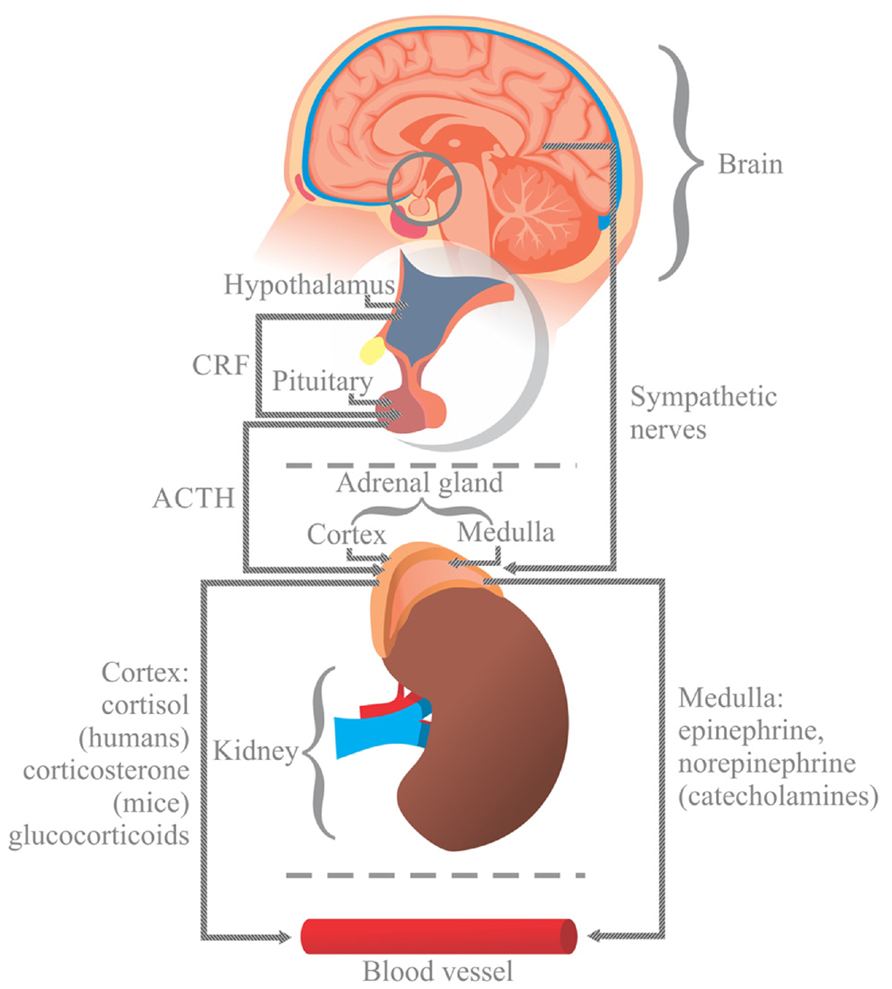 Shows the HPA axis (hypothalamus → pituitary → adrenal glands) and cortisol release. (Image: Campos-Rodríguez R, Godínez-Victoria M, Abarca-Rojano E, Pac, CC BY 3.0, via Wikimedia Commons)
Worked Example: NTC Call-Center Stress
- Stressor: High call volume, abusive customers.
- Physiological Response: Elevated cortisol → headaches, insomnia.
- Coping Needed: Problem-focused (training scripts) + emotion-focused (mindfulness breaks).
Coping: Toolkit for Survival
Coping is dynamic—it changes with context. Social workers must assess whether clients use:
- Problem-Focused Coping: Directly addressing the stressor (e.g., budgeting for a single mother).
- Emotion-Focused Coping: Managing emotional reactions (e.g., journaling for a grieving widow).
- Avoidance Coping: Short-term relief but long-term harm (e.g., substance use).
Comparison Table: Coping Strategies
| Strategy | When to Use | Example (Nepal Context) | Risk |
|---|---|---|---|
| Problem-Focused | Controllable stressors | Negotiating rent for a slum dweller | Overwork if stressor persists |
| Emotion-Focused | Uncontrollable stressors | Meditation for a traffic policeman | Emotional numbing |
| Avoidance | Immediate relief needed | Skipping therapy for a depressed teen | Worsens underlying issue |
Well-Being: Beyond Happiness
Well-being has two dimensions:
- Subjective Well-Being (SWB): Personal judgments of life satisfaction and happiness.
- Components:
- Cognitive: "I am satisfied with my life" (scale: 1–10).
- Affective: Ratio of positive/negative emotions (e.g., joy vs. anger).
- Social: Community ties (e.g., Dalit youth in a support group).
- Components:
- Objective Well-Being: Measurable outcomes (health, income, safety).
Seligman’s PERMA Model (Positive Psychology):
graph LR
  PERMA["PERMA Model"]
  P["Positive Emotion"] --> PERMA
  E["Engagement"] --> PERMA
  R["Relationships"] --> PERMA
  M["Meaning"] --> PERMA
  A["Accomplishment"] --> PERMA
Example: A Pathao rider’s well-being improves if they:
- Feel engaged in their work (autonomy).
- Build relationships with coworkers (social support).
- Find meaning in helping others (purpose).
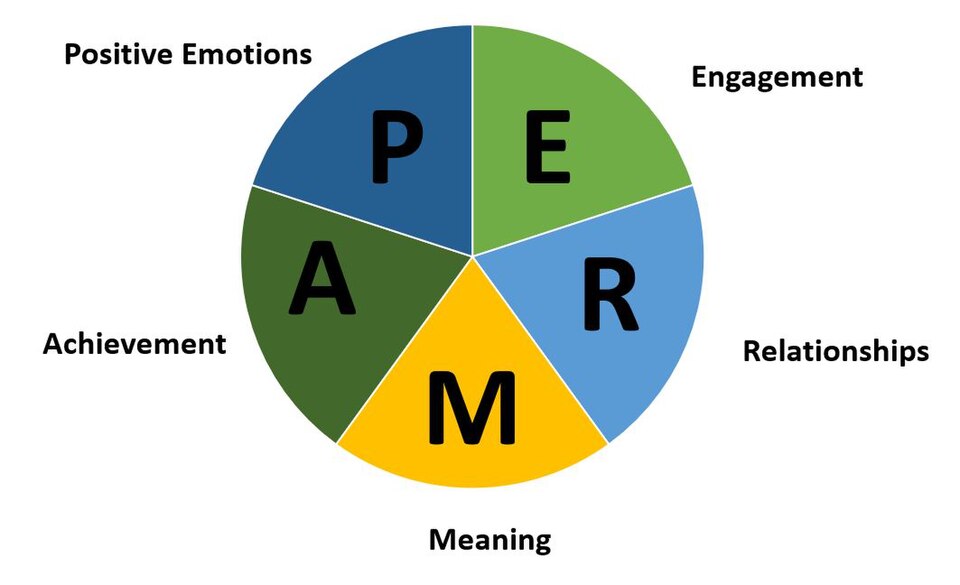 Visualizes the 5 pillars with icons (e.g., handshake for relationships). (Image: U3170318, CC BY-SA 4.0, via Wikimedia Commons)
Stress Management for Social Workers
Social workers face secondary trauma (vicarious stress from clients). Evidence-based techniques:
- Cognitive Restructuring: Challenge negative thoughts (e.g., "I failed this case" → "I learned for next time").
- Mindfulness: Focus on the present (e.g., 5-minute breathing exercises between clients).
- Social Support: Peer supervision groups (e.g., TU Social Work Association).
- Physical Activity: Reduces cortisol (e.g., hiking in Nagarkot for NGO workers).
Worked Example: Kathmandu Traffic Police Stress
- Stressor: Daily chaos, public aggression.
- Intervention:
- Problem-focused: Advocate for better infrastructure.
- Emotion-focused: Weekly debrief sessions with colleagues.
- Well-being boost: Community policing (meaning + relationships).
In the Real World
- eSewa App: Uses problem-focused coping for users stuck in payment loops. Their "Help Center" guides users through troubleshooting (reducing distress).
- NTC Employees: Experience chronic stress from understaffing. The company introduced emotion-focused coping via counseling hotlines and flexible breaks.
- Daraz Delivery Riders: Face acute stress from tight deadlines. Some use avoidance coping (e.g., skipping meals), while others join rider unions for social support (problem-focused).
Exam Tip: How to Score Full Marks
- Define + Example: Always pair definitions with Nepali-relevant examples.
- ❌ "Stress is a response to demands."
- ✅ "Stress is a transactional response to demands (Lazarus & Folkman). For example, a Khalti customer service agent experiences acute stress during peak hours when call volume spikes, triggering the HPA axis and cortisol release."
- Link to Social Work: Show how concepts apply to practice.
- Example: "A social worker using cognitive restructuring with a client who says, ‘I’ll never recover from my husband’s death’ would challenge this thought by asking, ‘What small step could you take today to honor his memory?’"
- Compare Models: Use tables for coping strategies or well-being components (PERMA vs. SWB).
- Avoid Vague Language: Replace "people feel stressed" with specific mechanisms (e.g., "prolonged cortisol exposure damages the hippocampus, impairing memory").
- Use Key Terms: Underline or bold transactional model, HPA axis, subjective well-being, and PERMA in your answer.
Common Pitfalls
- Confusing stress and distress: Stress can be eustress (positive). Example: A student’s exam stress might motivate them to study harder.
- Ignoring cultural context: In Nepal, collectivist values mean social support (e.g., family networks) is a primary coping mechanism, unlike individualistic cultures.
- Overlooking objective well-being: Don’t just discuss happiness—mention health outcomes (e.g., lower blood pressure in well-supported communities).
Practice Question with Model Answer
Question: "Discuss the techniques of stress management with examples from Nepal." Model Answer: Stress management techniques are categorized into cognitive, behavioral, and physiological methods. In Nepal:
- Cognitive Techniques:
- Reframing: A NEPSE trader losing money might reframe the loss as "an opportunity to diversify investments."
- Behavioral Techniques:
- Time Management: Bank employees in Kathmandu use the Pomodoro Technique (25-minute work sprints) to reduce overwhelm during peak hours.
- Physiological Techniques:
- Progressive Muscle Relaxation: Traffic police in Lalitpur practice this to lower cortisol levels during rush hours. Social Work Application: Workers can teach group meditation in slum communities to combat chronic stress from poverty. For example, a Red Cross volunteer might lead weekly sessions where participants focus on breath while discussing shared challenges.
Visual: Include a mindfulness exercise flowchart (e.g., "Step 1: Sit comfortably → Step 2: Focus on breath → Step 3: Notice bodily sensations").
flowchart TD
  A["Start"] --> B["Sit Comfortably"]
  B --> C["Close Eyes"]
  C --> D["Focus on Breath"]
  D --> E["Notice Bodily Sensations"]
  E --> F["Return to Present"]
Based on the TU BSW syllabus for Psychology For Social Work, unit 7.
Discussion
Loading…