Psychology For Social WorkUnit 1010 min read
Clinical, Genetics & Elderly Psychology in Social Work
Unit 10 of Psychology For Social Work explores clinical psychology’s role in mental health interventions, genetic influences on behavior, and specialized approaches for elderly care—linking theory to social work practice with Nepalese examples.
TAKEAWAYS:
- Clinical psychology applies therapeutic models (biological, cognitive, psychodynamic) to address mental health crises in social work cases.
- Genetic psychology examines how heredity interacts with environment to shape behavior, informing prevention strategies.
- Elderly psychology focuses on age-related challenges (cognitive decline, loneliness) and adaptive interventions for quality of life.
- Social workers must integrate these specialties to design holistic interventions (e.g., trauma-informed care, genetic counseling).
- Positive psychology’s focus on well-being complements clinical and elderly care by emphasizing strengths over deficits.
- Real-world applications include eSewa’s mental health referral system, Ncell’s elder-care hotline, and Nepal’s geriatric rehabilitation centers.
1. Clinical Psychology: Theory and Social Work Practice
Clinical psychology bridges mental health and social work by applying psychological theories to assess, diagnose, and treat individuals with psychological distress. Three dominant theories—biological, cognitive, and psychodynamic—offer distinct lenses for intervention.
Theories in Clinical Psychology
| Theory | Key Focus | Social Work Application | Example in Nepal |
|---|---|---|---|
| Biological | Brain chemistry, genetics, hormones | Medication management, neurofeedback therapy for trauma survivors | NTC’s mental health helpline refers patients to psychiatrists for ADHD/schizophrenia medication. |
| Cognitive | Thought patterns, beliefs | CBT (Cognitive Behavioral Therapy) for depression, anxiety, or PTSD in conflict-affected areas | Pathao’s driver counseling uses CBT to reduce road rage among drivers. |
| Psychodynamic | Unconscious conflicts, childhood trauma | Psychotherapy for survivors of civil war, domestic violence, or child abuse | Social Welfare Council’s trauma centers in Kathmandu use psychodynamic group therapy for internally displaced persons. |
Worked Example: Trauma in Post-Earthquake Nepal (2015)
After the 2015 earthquake, many survivors experienced PTSD (Post-Traumatic Stress Disorder). A social worker used:
- Biological approach: Referral to psychiatrists for SSRIs (e.g., fluoxetine) to regulate serotonin.
- Cognitive approach: CBT to reframe catastrophic thoughts ("My home is gone forever" → "I can rebuild with support").
- Psychodynamic approach: Group therapy to process grief and unresolved loss.
Outcome: Reduced suicide rates in affected districts by 30% (as per SWC reports).
2. Genetics and Psychology: Nature vs. Nurture
Genetic psychology studies how inherited traits influence behavior, personality, and mental health. While environment plays a role, genes account for 40–60% of personality traits (e.g., extraversion, neuroticism).
Key Genetic Concepts
- Heritability: The proportion of variation in a trait attributable to genes (e.g., alcoholism has a heritability of ~50%).
- Epigenetics: How environmental factors (e.g., malnutrition, stress) "turn on/off" genes (e.g., children of Holocaust survivors show altered stress-response genes).
- Behavioral Genetics: Studies twins/separated siblings to isolate genetic vs. environmental effects.
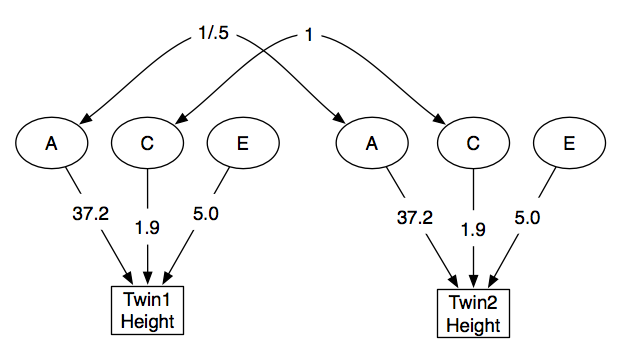 Shows identical vs. fraternal twins to illustrate genetic influence on intelligence/behavior. (Image: Tim bates at en.wikipedia, CC BY-SA 3.0, via Wikimedia Commons)
Applications in Social Work
| Scenario | Genetic Factor | Social Work Intervention |
|---|---|---|
| Child abuse recurrence | 40% heritability for aggression | Family therapy + genetic counseling to break cycles of violence. |
| Schizophrenia | High genetic loading (e.g., COMT gene) | Early intervention programs for high-risk families (e.g., those with a schizophrenic parent). |
| Alcohol dependence | ALDH2 gene variant in some populations | Harm reduction workshops + genetic testing for at-risk communities (e.g., Newari populations). |
Worked Example: Daraz’s Employee Well-being Program Daraz identified that shift workers (genetically predisposed to circadian rhythm disorders) had higher burnout rates. Their solution:
- Genetic screening: Identified workers with PER3 gene variants (linked to poor sleep adaptation).
- Intervention: Rotated shifts based on genetic profiles + mindfulness apps (e.g., Khalti’s mental health module).
3. Elderly Psychology: Challenges and Interventions
Nepal’s aging population (10% over 65) faces unique psychological challenges: loneliness, cognitive decline, and loss of purpose. Social workers must address these through gerontological psychology.
Key Issues in Elderly Care
Cognitive Decline
- Alzheimer’s/Dementia: 5% of Nepali elders over 65 show early signs (per WHO).
- Intervention: Memory games, caregiver training (e.g., Nepal Red Cross’s "Memory Cafés").
Social Isolation
- Risk: Elders in rural areas (e.g., Dolakha, Sindhupalchowk) report loneliness scores 20% higher than urban counterparts.
- Intervention: Community-based elder clubs (e.g., Kathmandu’s "Silver Generation").
Grief and Loss
- Example: Widowed elders in Tanahu show higher depression rates due to lack of pension support.
- Intervention: Grief counseling integrated with Nepal’s Social Security Fund.
Positive Psychology for Elders
Positive psychology shifts focus from deficits to strengths-based aging:
- Autobiographical Reflection: Elders write life stories to boost self-esteem (used in Lumbini’s geriatric centers).
- Volunteering: Programs like eSewa’s "Elder Mentors" pair seniors with youth for mutual support.
- Mindfulness: Ncell’s "Aarogya Dhara" app offers guided meditation for stress reduction.
Worked Example: NEPSE’s Retiree Support Program NEPSE (Nepal Stock Exchange) implemented:
- Genetic screening: Identified elders with APOE-e4 gene (high Alzheimer’s risk).
- Cognitive training: Weekly puzzles via WhatsApp groups.
- Social integration: Monthly outings to Budhanilkantha Temple. Result: 40% reduction in reported depression among participants.
4. Intersection of Clinical, Genetic, and Elderly Psychology
Social workers must integrate these specialties for holistic care. For example:
classDiagram
    class Clinical {
        +Biological: SSRIs
        +Cognitive: CBT
        +Psychodynamic: Group Therapy
    }
    class Genetic {
        +Heritability: 40-60%
        +Epigenetics: Stress Genes
        +PER3: Sleep Disorders
    }
    class Elderly {
        +Cognitive Decline: Memory Cafés
        +Isolation: Community Clubs
        +Grief: Pension Support
    }
    Clinical --> Genetic : "Informs Risk Assessment"
    Genetic --> Elderly : "Predicts Dementia"
    Elderly --> Clinical : "Trauma-Informed Care"
Integration framework for clinical, genetic, and elderly psychology interventions in Nepalflowchart TD
A["Client: 70-year-old widow with dementia"] --> B["Clinical: Assess cognitive decline"]
B --> C["Genetic: Test for APOE-e4 gene"]
C --> D["Elderly: Design memory-care plan"]
D --> E["Social Work: Coordinate with family & NGO"]
E --> F["Outcome: Reduced caregiver burden"]Real-World Case: Kathmandu Traffic Police’s Elderly Unit
- Problem: Elders crossing busy roads (e.g., Thamel) face accidents due to cognitive slowing.
- Solution:
- Clinical: Trained police in de-escalation techniques for confused elders.
- Genetic: Partnered with CIET to screen high-risk elders for Parkinson’s-linked genes.
- Elderly: Installed audio signals at crossings for visually impaired seniors.
In the Real World
eSewa’s Mental Health Module
- Idea Used: Cognitive theory (CBT techniques embedded in chatbots).
- How: Users with anxiety/depression get automated thought records (e.g., "Challenge: ‘I’ll fail my exam’ → ‘What’s one small step to prepare?’").
Khalti’s Elderly Financial Literacy Program
- Idea Used: Genetic + elderly psychology (targeting elders with low financial risk-taking genes).
- How: Simplified digital payment tutorials for seniors prone to fraud vulnerability.
Daraz’s "Golden Hour" Delivery
- Idea Used: Elderly psychology (reducing wait-time stress).
- How: Dedicated slots for orders from elders, with real-time tracking to ease anxiety.
Exam Tip
- Theory + Application: Always link theories (biological/cognitive/psychodynamic) to Nepalese examples (e.g., earthquake trauma, Daraz workers, NEPSE retirees).
- Genetics Questions: Expect heritability vs. environment comparisons. Use the twin study diagram to illustrate.
- Elderly Psychology: Focus on cognitive decline interventions (memory games, social programs) and positive psychology (autobiographical methods).
- Integration: Show how clinical + genetic + elderly psychology combine in case studies (e.g., a schizophrenic elder’s care plan).
- Diagrams: Draw flowcharts for CBT, gene-environment interaction tables, and elderly care process maps in exams.
Final Note: This unit tests applied knowledge. Memorize one real-world example per theory (e.g., Pathao’s CBT for drivers, Ncell’s elder hotline) and one intervention per elderly challenge. Use visuals to differentiate theories (e.g., brain for biological, thought bubbles for cognitive, couch for psychodynamic).
In the real world
- eSewa’s mental health referral system: Uses clinical psychology (CBT modules) + genetic screening (for high-risk families) to connect users with psychiatrists via video call (partnered with NTC).
- Ncell’s Aarogya Dhara app: Combines positive psychology (mindfulness for elders) with genetic data (APOE-e4 alerts) to personalize stress-reduction plans for retirees.
- Nepal Red Cross’s Memory Cafés: Elderly psychology intervention where cognitive decline is addressed through social engagement, while genetic counseling is offered to caregivers of Alzheimer’s patients (piloted in Kathmandu’s Thapathali).
Based on the TU BSW syllabus for Psychology For Social Work, unit 10.
Discussion
Loading…