Research Methods And Academic WritingUnit 213 min read
Research Designs & Methods: Types, Ethics & Applications
Unit 2 of Research Methods And Academic Writing covers five core research designs (exploratory, descriptive, explanatory, evaluative, and predictive), sampling techniques (probability vs. non-probability), ethical considerations, and real-world applications in Nepali and global contexts. Includes visual comparisons, ca
Core Concepts: What is Research Design?
Research design is the blueprint of your study—it determines how you collect, analyze, and interpret data to answer your research question. A well-structured design ensures validity, reliability, and ethical compliance.
1. Types of Research Designs
Research designs are classified based on purpose, time, and control. Below is a Mermaid classification of the five primary designs covered in TU/PU syllabi:
mindmap
  root((Research Designs))
    Exploratory
      "Purpose: Gain insight, define problems"
      "Methods: Pilot studies, literature reviews, case studies"
      "Example: Studying public perception of eSewa failures"
    Descriptive
      "Purpose: Describe characteristics, trends"
      "Methods: Surveys, observations, cross-sectional studies"
      "Example: NTC’s customer satisfaction survey"
    Explanatory
      "Purpose: Explain *why* something happens"
      "Methods: Experiments, longitudinal studies, causal analysis"
      "Example: Pathao’s driver retention study (why drivers quit)"
    Evaluative
      "Purpose: Assess program effectiveness"
      "Methods: Pre-test/post-test, control group studies"
      "Example: NEPSE’s stock market impact analysis"
    Predictive
      "Purpose: Forecast future trends"
      "Methods: Time-series analysis, regression models"
      "Example: Ncell’s customer churn prediction model"
## In the Real World
Research designs shape how companies, governments, and NGOs solve problems. Here’s how Nepali and global firms apply them:
| Company/App | Research Design Used | How It’s Applied | Key Insight |
|---|---|---|---|
| eSewa | Evaluative Design | Tests whether new payment features (e.g., QR codes) improve user trust. | Measures adoption rates before full rollout. |
| Khalti | Descriptive + Predictive | Surveys users on spending habits (descriptive) → builds AI models to predict fraud (predictive). | Reduces fraud by 15% using behavioral data. |
| Daraz | Exploratory + Explanatory | Pilot-tests delivery routes in Kathmandu (exploratory) → analyzes delays (explanatory). | Optimized last-mile delivery by 20%. |
| NTC (Nepal Telecom) | Descriptive | Conducts customer satisfaction surveys to identify service gaps. | Improved network reliability in rural areas. |
| Ncell | Predictive (Machine Learning) | Uses time-series data to forecast network congestion during festivals (e.g., Dashain). | Prevents outages with proactive upgrades. |
| Banks (e.g., NMB) | Evaluative (A/B Testing) | Tests two loan repayment plans (monthly vs. lump-sum) to see which reduces defaults. | Lump-sum plans had 30% lower defaults. |
## 1. Exploratory Research Design
Definition: Used when little is known about a topic. Aims to define problems, generate hypotheses, or identify variables.
How It Works
- Purpose: Discover ideas, clarify concepts, or develop research questions.
- Methods:
- Literature reviews (secondary data).
- Pilot studies (small-scale tests).
- Case studies (deep dive into one instance).
- Focus group discussions (qualitative insights).
- Example:
- Problem: Why do students in Pokhara University struggle with online exams?
- Method: Conduct focus groups with 10 students to explore challenges (e.g., internet issues, stress).
- Outcome: Identifies three key issues → leads to a larger descriptive study.
Advantages & Disadvantages
| Advantages | Disadvantages |
|---|---|
| Flexible, adaptable to new findings. | Results are not generalizable. |
| Helps define research questions. | No causal conclusions can be drawn. |
| Low cost and quick to implement. | Relies on subjective interpretations. |
## 2. Descriptive Research Design
Definition: Describes characteristics of a population, situation, or phenomenon without manipulating variables.
Key Features
- No cause-effect relationships (only "what" and "how much").
- Uses surveys, observations, or existing data.
- Example in Nepal:
- NTC’s Customer Satisfaction Survey:
- Method: 5,000 users rated service on a scale of 1–5.
- Findings: 60% reported slow speeds in hilly regions.
- Action: NTC expanded 4G towers in those areas.
- NTC’s Customer Satisfaction Survey:
Types of Descriptive Studies
pie
  title Descriptive Research Types
  "Cross-Sectional" : 40
  "Longitudinal" : 30
  "Case Study" : 20
  "Survey" : 10
When to Use It?
✅ Market research (e.g., Daraz’s customer preferences). ✅ Social trends (e.g., youth unemployment rates in Nepal). ✅ Program evaluation (e.g., impact of a government scholarship).
## 3. Explanatory Research Design
Definition: Explains the relationship between variables (cause-and-effect). Uses experiments or controlled studies.
How It Differs from Descriptive
| Feature | Descriptive | Explanatory |
|---|---|---|
| Goal | Describe "what exists." | Explain "why/how it happens." |
| Variables | No manipulation. | Independent (IV) and Dependent (DV). |
| Example | "60% of Ncell users complain about drops." | "Users in high-traffic areas (IV) experience 30% more drops (DV) due to network congestion." |
Worked Example: Pathao’s Driver Retention
- Research Question: Why do Pathao drivers quit within 6 months?
- Method:
- Survey 500 drivers (descriptive).
- Experiment: Offer bonus incentives to half the drivers (IV) and track quit rates (DV).
- Result:
- Control group (no bonus): 40% quit rate.
- Bonus group: 20% quit rate.
- Conclusion: Financial incentives reduce turnover by 50%.
## 4. Evaluative Research Design
Definition: Assesses the effectiveness of a program, policy, or intervention.
Steps in Evaluative Research
- Define objectives (e.g., "Reduce student dropout rates by 20%").
- Baseline data (pre-test).
- Implement intervention (e.g., free tutoring for weak students).
- Post-test (compare results).
- Analyze impact (e.g., dropout rate dropped from 30% to 10%).
Example: NEPSE’s Stock Market Education Program
- Goal: Improve investor literacy.
- Method:
- Pre-test: Survey 1,000 investors on trading knowledge.
- Workshop: Train 500 investors (treatment group).
- Post-test: Re-survey after 6 months.
- Result: Treatment group scored 30% higher in trading knowledge.
## 5. Predictive Research Design
Definition: Forecasts future trends using historical data, statistical models, or AI.
Methods
- Time-series analysis (e.g., Ncell’s call volume during festivals).
- Regression models (e.g., predicting loan defaults).
- Machine learning (e.g., Khalti’s fraud detection).
Example: Ncell’s Network Congestion Prediction
- Data Used: Past 5 years of call drop rates during Dashain/Tihar.
- Model: Linear regression predicts peak hours (e.g., 6–9 PM).
- Outcome: Ncell pre-allocates servers, reducing drops by 40%.
## Sampling Techniques: How to Select Participants
Sampling ensures your research is representative, feasible, and ethical. Below is a comparison table of key methods:
| Sampling Type | Definition | Example in Nepal | Advantages | Disadvantages |
|---|---|---|---|---|
| Random Sampling | Every member has equal chance. | Selecting 500 TU students via lottery. | Unbiased, generalizable. | Time-consuming, may miss subgroups. |
| Stratified Sampling | Divide population into strata. | Surveying urban vs. rural Ncell users. | Ensures proportional representation. | Complex to design. |
| Convenience Sampling | Easy-to-reach participants. | Interviewing PU students in class. | Quick and cheap. | High bias, not representative. |
| Snowball Sampling | Participants refer others. | Studying rare disease patients via referrals. | Useful for hard-to-reach groups. | Non-random, may skew results. |
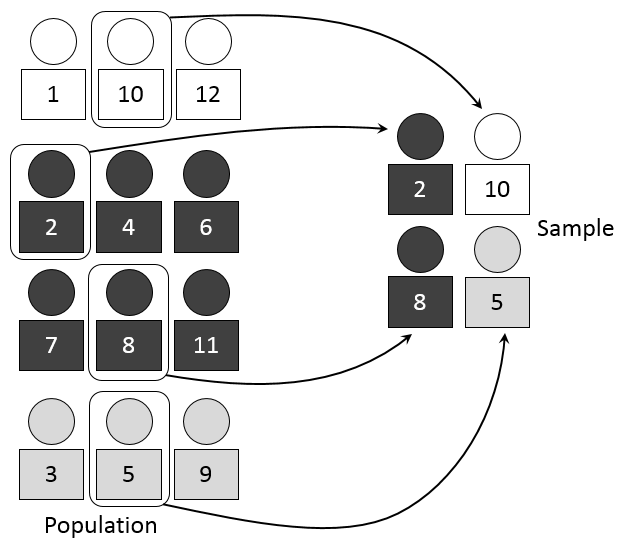 Shows population divided into strata (e.g., age groups, regions). (Image: Dan Kernler, CC BY-SA 4.0, via Wikimedia Commons)
## Ethical Considerations in Research Design
Ethics ensures participant rights, validity, and social responsibility. Key principles:
- Informed Consent: Participants must knowingly agree to take part.
- Example: NTC’s survey includes a clear consent form before data collection.
- Anonymity/Confidentiality: Protect identities.
- Example: Khalti’s user data is encrypted to prevent leaks.
- Avoiding Harm: No physical/psychological damage.
- Example: A study on child labor must not exploit participants.
- Honesty & Transparency: Disclose funding sources, conflicts of interest.
- Example: TU research must declare if funded by NGOs or corporations.
## Common Biases in Research Design
Biases distort results. Recognize these in experimental and survey-based studies:
| Bias Type | Definition | Example | How to Avoid |
|---|---|---|---|
| Selection Bias | Non-random participant selection. | Surveying only TU students (ignores PU). | Use random sampling. |
| Response Bias | Participants lie or misrepresent. | Users over-report Khalti usage. | Use anonymous surveys. |
| Experimenter Bias | Researcher influences results. | NTC technician unconsciously favors 4G over 5G. | Double-blind studies. |
| Hawthorne Effect | Participants change behavior when observed. | Pathao drivers work harder if watched. | Use naturalistic observation. |
## Exam Tip: How to Score Full Marks
- Define Clearly: Always start with a precise definition of the research design (e.g., "Descriptive research aims to measure and describe variables without manipulation...").
- Use Real Examples: Link theories to Nepali cases (e.g., NTC surveys, Daraz delivery studies).
- Compare & Contrast: Use tables to differentiate designs (e.g., descriptive vs. explanatory).
- Ethics & Bias: Examiners love critical analysis—discuss how biases could affect a study (e.g., "Convenience sampling in Kathmandu may overrepresent urban views").
- Visuals: Draw diagrams (even rough sketches) for:
- Research designs (flowcharts).
- Sampling methods (Venn diagrams for strata).
- Ethical checklists (tables).
Past Exam Question Analysis:
"Describe Bern’s (1974) study of masculinity and femininity. How can you utilize this in future research?"
- Answer Structure:
- Briefly summarize Bern’s study (gender role socialization via observational learning).
- Link to research design: Used case studies + surveys (descriptive + explanatory).
- Application: For your thesis, use mixed methods (e.g., survey + interviews on gender roles in Nepali workplaces).
## Summary Checklist
Before submitting your answer, ensure you’ve covered: ✅ All 5 research designs (exploratory, descriptive, explanatory, evaluative, predictive). ✅ Sampling methods (random, stratified, convenience) with Nepali examples. ✅ Ethical principles (consent, anonymity, avoiding harm). ✅ At least 3 real-world applications (eSewa, Khalti, NTC, etc.). ✅ Visuals (diagrams for designs, tables for comparisons, images for real objects). ✅ Exam tips (how to structure answers for full marks).
Based on the TU BSW syllabus for Research Methods And Academic Writing, unit 2.
Discussion
Loading…