Hospitality Operations and ManagementUnit 810 min read
Hospitality Marketing: Strategies, Mix & Digital Trends
Unit 8 of Hospitality Operations and Management explores the core principles of marketing in the hospitality industry, including the 7Ps of the marketing mix, segmentation, targeting, and positioning (STP), digital marketing tools, and branding strategies—with real-world applications from Nepali and global hotels, reso
What is Hospitality Marketing?
Hospitality marketing is the process of identifying, anticipating, and satisfying guest needs profitably while differentiating a business in a competitive market. Unlike traditional marketing, it focuses on experiences, service quality, and emotional connections rather than just products.
Key Characteristics of Hospitality Marketing
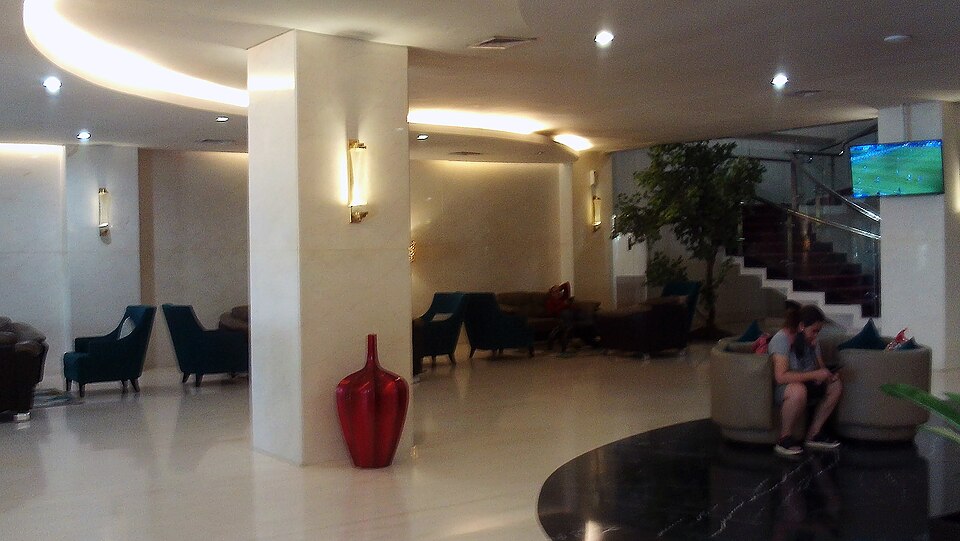 A typical hospitality setting where marketing strategies are applied to enhance guest experience. (Image: Firzafp, CC BY-SA 4.0, via Wikimedia Commons)
1. The 7Ps of Hospitality Marketing Mix
The extended marketing mix (7Ps) is critical in hospitality, where service quality and guest experience are paramount.
| Traditional 4Ps | Extended 3Ps (Hospitality-Specific) | Definition & Example |
|---|---|---|
| Product | Service | The core offering (e.g., a hotel room, spa treatment). Example: A 5-star hotel in Kathmandu offers butler service as a premium add-on. |
| Price | Place | Distribution channels (online, travel agencies, direct bookings). Example: Daraz Travel and eSewa offer discounted hotel packages. |
| Promotion | People | Staff training, customer service, and guest interactions. Example: Himalayan Java trains staff to provide personalized coffee recommendations. |
| Place | Process | Check-in, reservation, and complaint-handling systems. Example: Kathmandu’s Hyatt Regency uses mobile check-in to reduce wait times. |
| — | Physical Evidence | Tangible elements (lobby design, uniforms, brochures). Example: Dwarika’s Hotel uses traditional Nepali decor to attract cultural tourists. |
2. Segmentation, Targeting, and Positioning (STP)
A. Market Segmentation
Dividing the market into homogeneous groups based on:
- Demographics (age, gender, income)
- Psychographics (lifestyle, interests)
- Geographics (location, climate)
- Behavioral (travel frequency, loyalty)
Example: A budget hotel chain (e.g., Hotel Everest) targets backpackers with:
- Price-sensitive promotions
- Hostel-like amenities (shared bathrooms, dormitory-style rooms)
- Location near tourist hubs (Thamel, Pokhara)
B. Targeting Strategies
| Strategy | Description | Nepali Example |
|---|---|---|
| Undifferentiated | Mass marketing (one strategy for all) | NTC’s budget hotels (same basic services everywhere) |
| Differentiated | Tailored marketing for multiple segments | Kathmandu’s Radisson Blu (business vs. leisure travelers) |
| Concentrated | Focus on one niche | Lumbini’s Buddha Resort (pilgrim-focused luxury) |
C. Positioning
Creating a unique identity in the guest’s mind. Example:
- Dwarika’s Hotel → "Heritage & Luxury" (traditional Nepali architecture + 5-star service)
- Hotel Himalaya → "Adventure & Nature" (near Chitwan National Park, trekking packages)
3. Digital Marketing in Hospitality
A. Online Booking Platforms
| Platform | Role in Marketing | Nepali Example |
|---|---|---|
| Booking.com | Global visibility, competitive pricing | Hotel Everest (Thamel) listed here |
| eSewa | Local bookings, mobile payments | Kathmandu’s Hyatt offers eSewa discounts |
| Daraz Travel | Bundled deals (hotel + flight) | "Pokhara Package" (hotel + paragliding) |
B. Social Media & Content Marketing
- Instagram & Facebook: Visual storytelling (e.g., Hotel Yak & Yeti posts trekking routes).
- YouTube: Virtual tours (e.g., Dwarika’s Hotel 360° room views).
- Blogs & SEO: Attracting organic traffic (e.g., "Best Trekking Teahouses in Nepal" by Himalayan Java).
4. Branding & Customer Loyalty
A. Branding Strategies
| Type | Definition | Example |
|---|---|---|
| Product Branding | Associating with a product (e.g., Marriott’s "Bullets" loyalty program) | Nabil Bank’s "Nabilaya" hotel partnerships |
| Service Branding | Emphasizing service quality (e.g., Ritz-Carlton’s "Ladies and Gentlemen Serving Ladies and Gentlemen") | Kathmandu’s Radisson Blu’s 24/7 concierge |
| Corporate Branding | Company-wide identity (e.g., Accor’s "All. The World. Accor.") | Dwarika’s Hotel’s "Heritage Luxury" |
B. Loyalty Programs
- Points-based: Hyatt’s World of Hyatt (free upgrades, room credits).
- Membership tiers: Marriott Bonvoy (Silver → Gold → Platinum).
- Local example: Nabil Bank’s "Nabilaya" hotel partners offer cashback on bookings.
5. Promotional Strategies
A. Sales Promotions
| Type | Example in Hospitality |
|---|---|
| Discounts | eSewa’s "Book Now, Pay Later" for hotels |
| Freebies | Complimentary breakfast at mid-range hotels |
| Bundles | "Romantic Package" (hotel + dinner + spa) at Dwarika’s |
B. Public Relations (PR) & Events
- Press releases for new openings (e.g., Kathmandu’s Sofitel launch).
- Sponsorships (e.g., Hotel Himalaya sponsoring Everest Marathon).
- Experiential marketing (e.g., Himalayan Java’s "Coffee Tasting Events").
## In the Real World
eSewa & Daraz Travel
- Idea Used: Digital Distribution (Place in 7Ps)
- How? These platforms use dynamic pricing algorithms to adjust hotel rates in real-time based on demand (e.g., higher prices during Dashain/Tihar or peak trekking season).
Himalayan Java (Kathmandu)
- Idea Used: People & Process (7Ps)
- How? Their "Java Baristas" are trained to remember regular customers’ coffee orders, turning a simple transaction into a personalized experience.
Nabil Bank’s Nabilaya Hotel Partnerships
- Idea Used: Branding & Loyalty Programs
- How? Nabil Bank customers get exclusive discounts at partner hotels (e.g., Hotel Yak & Yeti), while hotels gain high-net-worth guests.
Dwarika’s Hotel (Kathmandu)
- Idea Used: Positioning & Physical Evidence
- How? Their traditional Newari architecture and "Heritage Luxury" branding attract cultural tourists, setting them apart from modern chain hotels.
## Worked Example: Marketing Plan for a Mid-Range Hotel in Pokhara
Hotel: Hotel Himalaya (3-star, near Lakeside) Target Segment: Backpackers & Nature Lovers Marketing Strategy:
| 7P Element | Strategy | Execution |
|---|---|---|
| Product | Unique selling proposition (USP) | "Adventure Base Camp" – Free trekking gear rental, guided hikes |
| Price | Competitive pricing | 20% discount for eSewa bookings, seasonal promotions (e.g., monsoon discounts) |
| Promotion | Digital & local PR | Instagram reels of sunrise views, partnerships with Pokhara’s travel bloggers |
| Place | Online & offline distribution | Booking.com, Daraz Travel, and walk-in bookings |
| People | Staff training | "Guest of the Day" awards for employees who exceed expectations |
| Process | Seamless check-in | Mobile check-in via WhatsApp, 24/7 front desk |
| Physical Evidence | Ambiance | Rooftop café with lake views, traditional Nepali decor |
Expected Outcome: ✅ 30% increase in bookings from digital marketing ✅ Higher repeat visits due to loyalty programs ✅ Strong local reputation as the "best budget adventure hotel"
## Exam Tip
How This Unit is Tested in TU Exams
Definitions & Concepts (20%)
- Expect short-answer questions on:
- Difference between marketing mix (4Ps vs. 7Ps)
- STP model explanation
- Digital marketing tools in hospitality
- Expect short-answer questions on:
Case Studies & Applications (30%)
- Scenario-based questions (e.g., "How would you market a new eco-lodge in Chitwan?")
- Compare two hotels’ marketing strategies (e.g., Dwarika’s vs. Hotel Everest).
Diagrams & Flowcharts (20%)
- Draw and explain:
- 7Ps of marketing mix
- STP process
- Customer loyalty pyramid
- Draw and explain:
Short Essays (30%)
- Common topics:
- "Why is digital marketing crucial for Nepali hotels?"
- "How does branding influence guest decisions?"
- "Analyze the marketing strategies of a 5-star vs. budget hotel."
- Common topics:
Pro Tips: ✔ Use real examples (e.g., eSewa, Daraz, Himalayan Java) in answers. ✔ Relate theories to Nepali hospitality (e.g., seasonality affects marketing). ✔ Practice drawing diagrams—examiners love structured visuals!
Final Thought: Hospitality marketing is not just about selling rooms—it’s about selling memories. Whether it’s eSewa’s seamless bookings, Himalayan Java’s coffee culture, or Dwarika’s heritage charm, the best marketers understand their guests’ emotions and deliver experiences, not just services.
Good luck with your exams! 🚀
Based on the TU BTTM syllabus for Hospitality Operations and Management, unit 8.
Discussion
Loading…