Hospitality Operations and ManagementUnit 114 min read
Hospitality Industry: Definitions, Types, Trends & Nepal’s Role
Unit 1 of Hospitality Operations and Management explores the hospitality industry’s scope, classifications, key sectors (lodging, food, travel), global trends, and Nepal’s position. Learn definitions, industry structure, growth drivers, and real-world applications through case studies and visuals.
TAKEAWAYS:
- Hospitality is a service-driven industry combining lodging, food, travel, and entertainment to meet guest needs.
- It is classified into five core sectors: accommodations, food & beverage, travel & tourism, recreation, and events.
- Global trends like sustainability, technology (AI, mobile check-ins), and experiential travel shape modern hospitality.
- Nepal’s hospitality sector is growing rapidly, driven by tourism (UNESCO sites, trekking, MICE), but faces challenges like infrastructure and seasonality.
- Key performance indicators (KPIs) like occupancy rate, ADR (Average Daily Rate), and RevPAR measure success.
- Ethics and CSR (Corporate Social Responsibility) are critical for long-term sustainability in hospitality.
1. Definition and Scope of Hospitality Industry
Hospitality is the art and science of making guests feel welcome and valued. It encompasses all services that enhance guest experiences, from lodging and dining to entertainment and travel. Unlike manufacturing, hospitality is intangible—guests pay for experiences, not physical products.
Key Characteristics of Hospitality:
mindmap
root((Hospitality Industry))
Characteristics
Intangible: Services (not physical goods)
Perishable: Unsold rooms/menus = lost revenue
Inseparable: Production & consumption happen simultaneously
Heterogeneous: No two guest experiences are identical
Labor-Intensive: High reliance on skilled workforce
Core Sectors
Accommodations: Hotels, resorts, hostels
Food & Beverage: Restaurants, cafes, bars
Travel & Tourism: Airlines, tour operators, travel agencies
Recreation: Theme parks, spas, entertainment venues
Events: Conferences, weddings, corporate events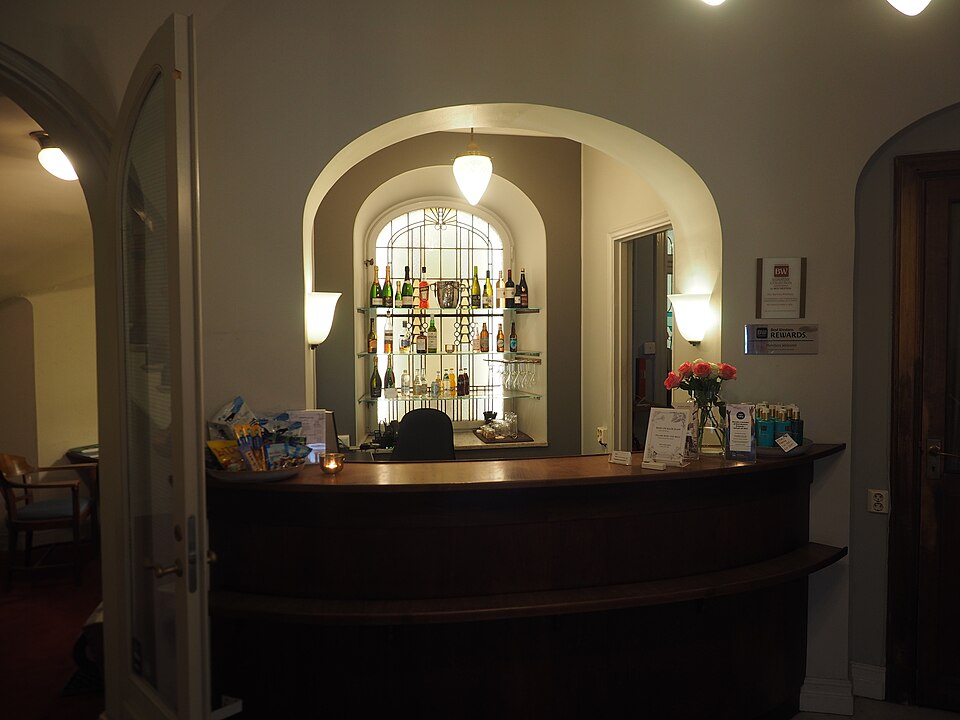 A typical front desk where guests interact with staff, illustrating the inseparable nature of hospitality services. (Image: JIP, CC BY-SA 4.0, via Wikimedia Commons)
2. Classification of the Hospitality Industry
The industry is divided into five primary sectors, each with distinct operations and revenue models:
| Sector | Examples | Key Functions | Revenue Model |
|---|---|---|---|
| Accommodations | Hotels, resorts, hostels, guesthouses | Room allocation, housekeeping, front office, security | Room rates, F&B upsells |
| Food & Beverage (F&B) | Restaurants, bars, cafes, catering | Menu planning, kitchen operations, service staff, inventory management | à la carte, buffet, memberships |
| Travel & Tourism | Airlines, tour operators, travel agents | Itinerary planning, ticketing, visa assistance, transport coordination | Commission, package tours, loyalty programs |
| Recreation | Theme parks, spas, golf courses | Entertainment, wellness services, guided activities | Entry fees, memberships, add-ons |
| Events | Conference centers, wedding venues | Event planning, AV services, catering, decor, guest coordination | Venue rental, service charges |
Worked Example: Consider Daraz Nepal (an e-commerce platform). While not a traditional hospitality business, it uses hospitality principles in its:
- Customer service: Live chat support, easy returns (like a hotel’s guest complaints system).
- Logistics: Timely delivery (similar to a restaurant’s prompt service).
- Loyalty programs: Discounts for repeat buyers (akin to hotel membership perks).
3. Global Trends Shaping Hospitality (2020–2024)
The industry is evolving due to technology, sustainability, and changing consumer preferences. Key trends include:
A. Technology Integration
AI and Chatbots
- Example: WhatsApp Business API used by hotels (e.g., Hotel Yak & Yeti) for instant guest queries.
- How it works:
- Advantages: 24/7 service, reduced wait times, cost savings.
- Disadvantages: Lack of human touch, potential miscommunication.
Mobile Check-ins and Keyless Entry
- Example: Khalti Pay integration at hotels like Dwarika’s Hotel allows guests to check in via mobile and unlock doors using QR codes.
- Process:
Big Data and Personalization
- Example: Google’s Hotel Ads uses past guest data to suggest personalized offers (e.g., "We noticed you love trekking—here’s a 10% discount on our Everest View Room").
B. Sustainability and Eco-Friendly Practices
Green Hotels
- Example: Himalayan Java’s Hotel in Pokhara uses solar energy, rainwater harvesting, and organic waste recycling.
- Why it matters:
- Reduces carbon footprint.
- Attracts eco-conscious travelers (e.g., trekkers, NGOs).
- Can increase ADR (Average Daily Rate) by 15–20%.
Zero-Waste Initiatives
- Example: The Thamassos Resort (Cyprus, but applicable globally) bans single-use plastics and composts all organic waste.
- Impact:
C. Experiential and Wellness Tourism
Wellness Retreats
- Example: The Spa at Dwarika’s Hotel offers yoga, meditation, and Ayurvedic treatments.
- Revenue Streams:
- Day passes: NPR 2,500
- Retreat packages: NPR 15,000–50,000
- Corporate wellness programs: NPR 100,000+
Cultural and Adventure Tourism
- Example: Nepal’s trekking lodges (e.g., Lukla’s Teahouse Lodges) combine hospitality with adventure.
- Guest Journey:
D. Rise of Alternative Accommodations
| Type | Examples | Pros | Cons |
|---|---|---|---|
| Hostels | Go Stay Hostels | Budget-friendly, social atmosphere | Less privacy, shared facilities |
| Homestays | Airbnb in Kathmandu | Local culture, personalized service | Variable quality, safety concerns |
| Serviced Apartments | The Residence (Pokhara) | Long-term stays, kitchen facilities | Higher cost than hotels |
| Eco-Lodges | Annapurna Eco Lodge | Sustainability, nature immersion | Limited amenities, remote locations |
4. Hospitality Industry in Nepal: Opportunities and Challenges
Nepal’s hospitality sector is booming due to tourism but faces structural challenges.
A. Growth Drivers
Tourism Boom
- UNESCO Sites: Kathmandu Valley, Lumbini, Sagarmatha National Park.
- Trekking: Everest Base Camp, Annapurna Circuit (300,000+ foreign arrivals annually).
- MICE (Meetings, Incentives, Conferences, Exhibitions): Kathmandu’s International Convention Centre.
Digital Transformation
- Online Bookings: Nepal Tourism Board’s partnership with Booking.com and Agoda.
- Mobile Payments: eSewa/Khalti for hotel payments (reduces cash handling).
Government Initiatives
- Visa on Arrival: Easier for tourists from India, Bangladesh, and SAARC nations.
- Infrastructure Projects: Kathmandu’s Ring Road expansion, Pokhara’s airport upgrades.
B. Key Challenges
| Challenge | Impact | Possible Solutions |
|---|---|---|
| Seasonality | 80% revenue in peak season (Oct–Nov) | Diversify with MICE, wellness tourism |
| Infrastructure Gaps | Poor roads, unreliable electricity | Public-private partnerships (e.g., NTC + hotels) |
| Skilled Labor Shortage | High turnover, low training standards | TAAH (Tourism and Adventure Activities Hub) vocational programs |
| Overdependence on Foreign Tourists | COVID-19 hit hard (2020: -77% arrivals) | Promote domestic tourism (e.g., Nepal Rail scenic routes) |
Case Study: Himalayan Java’s Success in Pokhara
- Strategy: Combined eco-friendly practices with tech integration.
- Solar-powered operations (reduced electricity bills by 40%).
- Mobile app for bookings (increased direct reservations by 35%).
- Result:
- Occupancy rate: 85% (vs. industry average of 60%).
- Guest reviews: 4.8/5 on TripAdvisor (highlighted sustainability).
5. Key Performance Indicators (KPIs) in Hospitality
Hospitals measure success using financial and operational metrics:
| KPI | Formula | Target Range | Example Calculation |
|---|---|---|---|
| Occupancy Rate | (Total Rooms Sold / Total Rooms Available) × 100 | 70–90% (luxury: 90%+) | 150 rooms sold / 200 available = 75% |
| Average Daily Rate (ADR) | Total Room Revenue / Total Rooms Sold | Varies by location | NPR 500,000 / 150 rooms = NPR 3,333/night |
| Revenue Per Available Room (RevPAR) | ADR × Occupancy Rate | NPR 2,500–5,000 (Pokhara) | NPR 3,333 × 75% = NPR 2,500 |
| Food Cost Percentage | (Total Food Cost / Total Food Sales) × 100 | 28–35% (ideal) | NPR 100,000 cost / NPR 300,000 sales = 33.3% |
| Guest Satisfaction Score (GSS) | Survey-based (1–10 scale) | 8.5–9.5 (excellent) | 90% guests rate 9/10 → GSS = 8.9 |
Worked Example: Calculating RevPAR for a Kathmandu Hotel
- Given:
- Total rooms: 100
- Rooms sold: 80
- Total revenue: NPR 8,000,000
- Steps:
- ADR = NPR 8,000,000 / 80 = NPR 100,000/night.
- Occupancy Rate = (80/100) × 100 = 80%.
- RevPAR = NPR 100,000 × 80% = NPR 80,000.
Why RevPAR Matters:
- Helps compare profitability across hotels of different sizes.
- Used by Nepal Investment Bank to assess loan applications for hospitality projects.
6. Ethics and Corporate Social Responsibility (CSR) in Hospitality
Hospitals must balance profit with social responsibility. Key CSR areas:
A. Environmental Responsibility
- Example: Hotel Yak & Yeti in Kathmandu:
- Actions: Banned plastic straws, installed water purifiers, partnered with Clean Up Nepal.
- Impact: Reduced waste by 60%, attracted eco-tourists.
B. Community Engagement
- Example: The Himalayan Hotel (Pokhara):
- Actions: Hires local Sherpa guides, donates to Pokhara’s flood relief.
- Benefit: Improved local reputation, repeat business from community members.
C. Fair Labor Practices
- Example: Dwarika’s Hotel (Kathmandu):
- Actions: Fair wages, gender diversity in leadership, employee training programs.
- Result: 30% lower staff turnover than industry average.
Mermaid Diagram: CSR Framework in Hospitality
mindmap
  root((CSR in Hospitality))
    Environmental
      Waste reduction
      Energy efficiency
      Sustainable sourcing
    Social
      Community development
      Fair wages
      Employee training
    Economic
      Local supplier partnerships
      Ethical tourism
    Governance
      Transparency
      Compliance with laws
## In the Real World
eSewa and Online Hotel Bookings
- How it uses hospitality ideas: eSewa’s QR-based payments at hotels (e.g., Hotel Everest View) mirror keyless entry systems, reducing check-in time by 40%.
- Guest experience: Scans QR → pays → gets room key instantly (like a mobile check-in).
Pathao’s Delivery Service and F&B Partnerships
- How it uses hospitality ideas: Pathao’s restaurant partnerships (e.g., Momo joints in Kathmandu) rely on:
- Food safety standards (like hotel kitchens).
- Customer feedback loops (similar to guest complaint systems).
- Impact: Increased F&B sales by 25% for small restaurants.
- How it uses hospitality ideas: Pathao’s restaurant partnerships (e.g., Momo joints in Kathmandu) rely on:
Nabil Bank’s Travel Loans for Hospitality Startups
- How it uses hospitality ideas: Nabil Bank offers low-interest loans to:
- Homestay owners (e.g., Kathmandu’s Thamel area).
- Trekking lodge operators (e.g., Lukla’s lodges).
- Loan terms:
- Interest rate: 8–10% (vs. 12% for general loans).
- Repayment: 3–5 years, tied to occupancy rates.
- How it uses hospitality ideas: Nabil Bank offers low-interest loans to:
## Exam Tip
This unit is heavily tested in TU exams through:
Definitions and Classifications (5–10 marks):
- Expect questions like: "Define hospitality and classify its five sectors with examples."
- Tip: Use the mindmap and table from this note for quick recall.
Case Studies and KPI Calculations (10–15 marks):
- Example Question: "A 50-room hotel in Pokhara had 40 rooms sold at NPR 12,000/night. Calculate its ADR, occupancy rate, and RevPAR. Comment on its performance."
- Tip: Always show step-by-step calculations and compare with industry benchmarks.
Trends and Nepal’s Hospitality Sector (10 marks):
- Common Questions:
- "Discuss three global trends in hospitality and how they apply to Nepal."
- "What are the challenges faced by Nepal’s hospitality industry? Suggest solutions."
- Tip: Use the growth drivers/challenges table and Himalayan Java case study for structured answers.
- Common Questions:
Ethics and CSR (5 marks):
- Example Question: "How can a Nepali hotel practice CSR? Give two examples with local businesses."
- Tip: Link to real examples like Hotel Yak & Yeti or Dwarika’s Hotel.
Final Advice:
- Memorize KPI formulas (Occupancy Rate, ADR, RevPAR).
- Relate theory to Nepal (e.g., trekking lodges, Pokhara hotels).
- Practice numericals—exams often include calculation-based questions.
Based on the TU BTTM syllabus for Hospitality Operations and Management, unit 1.
Discussion
Loading…