Culture And Social Psychology For TourismUnit 19 min read
Social Psychology & Tourism: Definitions, Models & Real-World Links
Unit 1 of Culture And Social Psychology For Tourism explores the intersection of social psychology and tourism, defining key concepts like tourist behavior, motivation theories (Maslow’s hierarchy), and the product adoption curve, while linking them to real-world applications in Nepal (e.g., eSewa, Daraz, NTC) and glob
TAKEAWAYS:
- Social psychology explains why tourists behave the way they do (e.g., safety needs driving travel choices) and how cultural norms shape tourism experiences.
- Maslow’s hierarchy (physiological → self-actualization) directly applies to tourist motivations (e.g., NTC’s "safe travel" ads target safety needs).
- The product adoption curve (innovators → laggards) shows why some destinations (e.g., Pokhara) grow faster than others (e.g., remote Himalayan villages).
- Commonsense segmentation (e.g., budget vs. luxury tourists) helps businesses like Daraz tailor marketing (e.g., discounts for backpackers).
- Interpersonal attraction (similarity, proximity) explains why tourists prefer group tours (e.g., Pathao’s "local guide" feature).
- Transition zones (e.g., Kathmandu’s Thamel) are where cultural clashes and adaptations occur, critical for sustainable tourism.
1. Defining Social Psychology in Tourism
Social psychology studies how individuals’ thoughts, feelings, and behaviors are influenced by others—critical for tourism because tourists are rarely alone. Their decisions (e.g., choosing a hotel, complaining about service) depend on:
- Cultural norms (e.g., Nepali tourists tipping less than Westerners).
- Group dynamics (e.g., solo travelers vs. family tourists).
- Perceived risks (e.g., safety concerns after earthquakes affecting travel to Kathmandu).
2. Maslow’s Hierarchy of Needs in Tourism
Abraham Maslow’s 5-tier pyramid explains tourist motivations by prioritizing needs:
- Physiological (food, shelter) → e.g., budget travelers choosing hostels over hotels.
- Safety (security, health) → e.g., NTC’s "traffic safety" campaigns for domestic tourists.
- Social (belonging, love) → e.g., WhatsApp groups for group tours (e.g., "Everest Base Camp Trek 2024").
- Esteem (status, recognition) → e.g., luxury tourists flying private to Lukla.
- Self-actualization (growth, purpose) → e.g., volunteering in Annapurna Conservation Area.
WORKED EXAMPLE: eSewa’s Targeting Strategy
- Physiological/Safety: Promotes "online ticket booking" to avoid crowds at NTC offices.
- Social: "Book with friends" feature for group discounts.
- Esteem: "VIP customer service" for premium users.
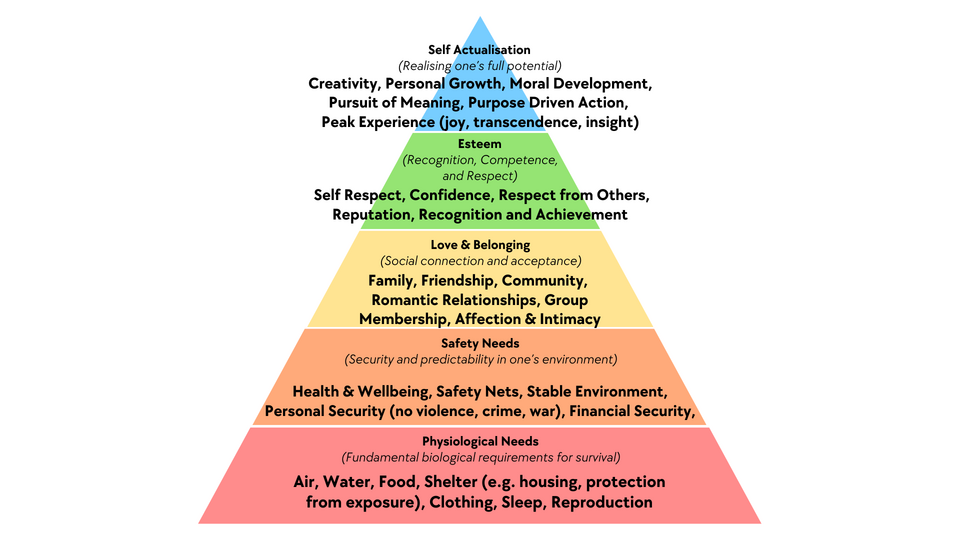 Highlights tourism-specific examples for each level. (Image: Hamish.croker, CC BY-SA 4.0, via Wikimedia Commons)
3. The Product Adoption Curve in Tourism Destinations
Not all tourists adopt a destination at the same rate. The 5-stage curve (Rogers, 1962) applies to tourism:
| Stage | % of Tourists | Example (Nepal) | Example (Global) |
|---|---|---|---|
| Innovators | 2.5% | First foreigners to Pokhara | Early backpackers to Bhutan |
| Early Adopters | 13.5% | Luxury trekkers (e.g., Himalayan Glacier Trek) | Digital nomads in Bali |
| Early Majority | 34% | Budget trekkers (e.g., Annapurna Circuit) | Cruise tourists in Caribbean |
| Late Majority | 34% | Domestic tourists (e.g., Chitwan safaris) | Senior travelers to Europe |
| Laggards | 16% | Remote villages (e.g., Dolpo) | Off-grid retreats in Patagonia |
WHY IT MATTERS:
- Marketing focus: Pokhara University’s tourism programs teach businesses to target early adopters (e.g., Instagram influencers) to drive growth.
- Infrastructure planning: NTC prioritizes roads in areas with early majority adoption (e.g., Kathmandu-Pokhara highway).
4. Commonsense Segmentation in Tourism
Tourists can’t be grouped by age/gender alone. Commonsense segmentation uses observable behaviors:
- Psychographic: Lifestyle-based (e.g., "adventure seekers" vs. "cultural explorers").
- Behavioral: Purchase patterns (e.g., last-minute bookers vs. planners).
- Benefit-seeking: Why they travel (e.g., relaxation, status, learning).
TABLE: Commonsense Segments in Nepalese Tourism
| Segment | Example Tourist Profile | Preferred Product | Marketing Hook |
|---|---|---|---|
| Budget Backpackers | 20–30 yrs, solo, <$50/day | Hostels, trekking permits | "Cheapest Everest views" (Daraz) |
| Luxury Trekkers | 40–60 yrs, families, >$200/day | Private guides, helipads | "Exclusive Annapurna views" (eSewa) |
| Digital Nomads | 25–40 yrs, remote workers | Coworking spaces (e.g., Hub Kathmandu) | "Fast Wi-Fi in Thamel" (Ncell) |
| Religious Pilgrims | All ages, group-based | Muktinath, Lumbini permits | "Blessed journey packages" (banks) |
5. Interpersonal Attraction in Tourism
Tourists are drawn to others based on:
- Proximity: Tourists in group tours (e.g., Pathao’s "local guide" feature) feel safer.
- Similarity: Language/culture (e.g., Nepali tourists bonding over dal bhat).
- Physical Attractiveness: Guides with "friendly faces" get better reviews (e.g., TripAdvisor).
- Reciprocity: Tourists tip guides who smile first (e.g., Chitwan jeep safari drivers).
REAL-WORLD LINK: WhatsApp Groups for Trekkers
- How it works: Groups like "Annapurna Trek 2024" use interpersonal attraction to:
- Share similarity (e.g., "I’m a beginner too!").
- Reduce proximity anxiety (e.g., "Meet at Thamel bus park").
- Tourism impact: Reduces solo travel risks (e.g., getting lost in Pokhara).
6. Transition Zones in Tourism
Definition: Areas where tourist culture meets local culture, creating friction or synergy. Examples:
- Physical: Thamel (Kathmandu) – crowded, commercialized.
- Cultural: Lumbini – Buddhist pilgrims vs. Hindu tourists.
- Temporal: Dashain/Maha Shivaratri – festivals attracting both locals and foreigners.
CHALLENGES:
- Annoyance: Locals complain about "tourist behavior" (e.g., littering in Nagarkot).
- Opportunities: Transition zones drive economic growth (e.g., souvenir shops in Bhaktapur).
7. Perpetual Tourism: The Dark Side
Definition: Over-tourism leading to environmental/social degradation (e.g., Everest litter, Kathmandu traffic). Causes:
- Uncontrolled product adoption (laggards become too many).
- Lack of commonsense segmentation (e.g., mass-market treks damaging trails). Solutions:
- Quotas: Like NTC’s "limited permits for Annapurna Base Camp."
- Psychological pricing: eSewa’s "off-peak discounts" to spread visitors.
In the Real World
eSewa’s Psychological Targeting
- Idea: Maslow’s safety needs + product adoption curve.
- How: Promotes "online bus tickets" to avoid NTC office crowds (safety), targeting early adopters (tech-savvy youth) first.
Pathao’s "Local Guide" Feature
- Idea: Interpersonal attraction (proximity/similarity).
- How: Matches tourists with guides who speak their language (e.g., Mandarin for Chinese tourists), increasing trust.
Daraz’s "Backpacker Packs"
- Idea: Commonsense segmentation.
- How: Bundles trekking gear for budget travelers (e.g., "Pokhara Trek Essentials"), addressing physiological/safety needs.
Exam Tip
- Models > Definitions: Always apply Maslow’s hierarchy or the product adoption curve to Nepalese examples (e.g., "How does NTC use safety needs to market domestic travel?").
- Link Theory to Practice:
- For interpersonal attraction, discuss real apps (WhatsApp groups, Pathao guides).
- For transition zones, analyze Thamel vs. Bhaktapur (contrast over-tourism vs. cultural preservation).
- Avoid Vague Answers:
- ❌ "Tourists have different motivations." ✅ "Budget tourists prioritize physiological needs (e.g., hostels in Pokhara), while luxury tourists seek esteem (e.g., private jeeps in Chitwan)."
- Diagrams Save Marks: Draw Maslow’s pyramid or the product adoption curve in exams—even if not perfect, it shows understanding.
- Past Paper Patterns:
- Short answers: Define commonsense segmentation or transition zones with one Nepalese example.
- Long answers: Combine two concepts (e.g., "How does interpersonal attraction influence product adoption in Pokhara’s trekking industry?").
KEY VISUAL SUMMARY:
Based on the TU BTTM syllabus for Culture And Social Psychology For Tourism (TTM343), unit 1.
Discussion
Loading…