Research MethodologyUnit 216 min read
Research Process & Problem Formulation: Steps, Types & Real-World Applications
Unit 2 of Research Methodology explores the systematic approach to identifying research problems, formulating research questions, and understanding the sequential steps in the research process—essential skills for tourism industry analysis and decision-making.
TAKEAWAYS:
- Research problems arise from gaps in knowledge, practical issues, or theoretical inconsistencies—always tied to a specific context (e.g., tourism trends, customer satisfaction).
- A well-formulated research question must be clear, focused, researchable, and relevant to stakeholders (e.g., "How does digital marketing affect tourist arrivals in Pokhara?").
- The research process follows a cyclical model: problem identification → literature review → hypothesis formulation → data collection → analysis → reporting → dissemination.
- Types of research problems include exploratory (e.g., "Why do tourists prefer trekking over city tours?"), descriptive (e.g., "What are the demographics of Nepali backpackers?"), and explanatory (e.g., "How does political stability impact tourism revenue?").
- Problem formulation requires operational definitions (measurable terms) and feasibility checks (time, cost, data availability).
- Real-world applications span tourism apps (e.g., Pathao’s ride-sharing algorithm uses problem-solving to optimize routes), government policies (e.g., NTC’s internet speed research), and business strategies (e.g., Daraz’s customer feedback analysis).
1. Understanding the Research Process
The research process is a structured, iterative cycle that begins with identifying a problem and ends with sharing findings. It ensures rigor, reproducibility, and validity in tourism studies.
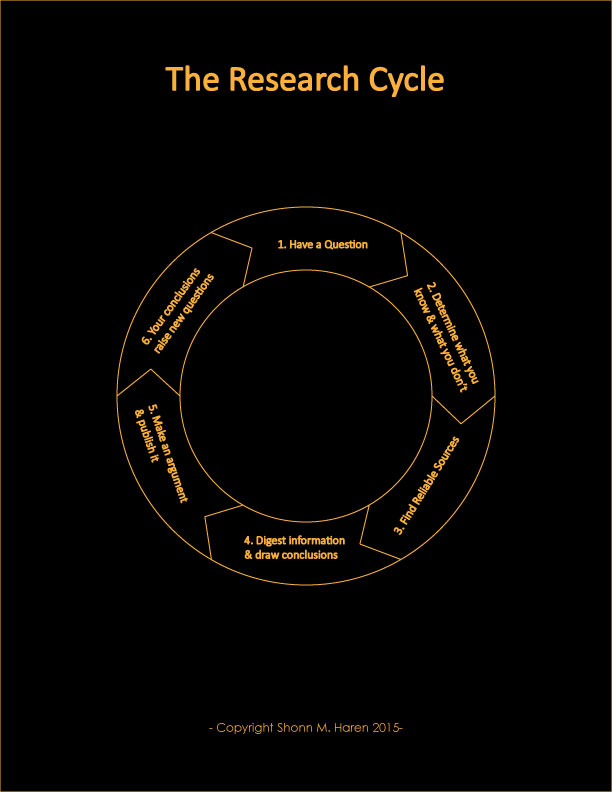 The cyclical nature of research, showing how dissemination feeds back into new problem identification. (Image: Shonnmharen, CC BY-SA 4.0, via Wikimedia Commons)
Key Steps in the Research Process
flowchart TD
    A["1. Problem Identification"] --> B["2. Literature Review"]
    B --> C["3. Research Question/Hypothesis"]
    C --> D["4. Research Design"]
    D --> E["5. Data Collection"]
    E --> F["6. Data Analysis"]
    F --> G["7. Interpretation & Reporting"]
    G --> H["8. Dissemination"]
    H -->|"Feedback Loop"| A
Why is this cyclical?
- Research often unearths new problems (e.g., studying "tourist satisfaction" might reveal a hidden issue like "lack of accessible transport").
- Example: If a study on Kathmandu traffic congestion (Step 1) finds that electric rickshaws reduce emissions by 30% (Step 7), this could lead to a new problem: "How to incentivize electric rickshaw adoption?" (back to Step 1).
2. Identifying Research Problems
A research problem is a gap in knowledge or a practical issue that requires investigation. In tourism, problems can stem from:
- Industry trends (e.g., "How has the COVID-19 pandemic reshaped trekking permits in Nepal?").
- Stakeholder needs (e.g., "What factors influence Nepali students’ choice of study-abroad destinations?").
- Policy gaps (e.g., "Why do heritage sites in Bhaktapur lack digital preservation strategies?").
How to Spot a Good Research Problem
| Criteria | Good Problem | Weak Problem |
|---|---|---|
| Specificity | "Impact of Instagram marketing on Pokhara’s homestays" | "Social media affects tourism" (too broad) |
| Feasibility | "Customer satisfaction with Pathao’s new payment system" | "Global tourism trends in 2050" (unrealistic) |
| Relevance | "How does air pollution in Kathmandu deter foreign tourists?" | "Why do people wear hats?" (irrelevant) |
| Researchable | "Effectiveness of e-Sewa for tourist visa processing" | "How happy are tourists?" (subjective) |
Worked Example: NEPSE Stock Market Research
- Problem: "Why do Nepali investors prefer NEPSE over global markets?"
- Gap: Limited studies on behavioral finance in Nepal’s stock market.
- Stakeholders: Investors, NEPSE, government.
- Feasibility: Data available from NEPSE archives and investor surveys.
3. Formulating Research Questions
A research question (RQ) is a specific, answerable query that guides the study. Poorly formulated questions lead to vague conclusions.
Characteristics of a Strong Research Question
- Clear and focused (avoids ambiguity).
- ❌ "What do tourists think about Nepal?"
- ✅ "What are the top 3 factors influencing Chinese tourists’ satisfaction with Nepal’s trekking routes?"
- Researchable (data must be accessible).
- ✅ "How does WhatsApp Business improve customer service in Pokhara hotels?" (surveyable)
- ❌ "What will tourism look like in 2077?" (speculative)
- Relevant to stakeholders (e.g., hoteliers, government, tourists).
- Neutral (avoids bias; e.g., "Does Daraz’s ‘Cash on Delivery’ increase sales?" vs. "Daraz’s Cash on Delivery is the best policy").
Types of Research Questions
| Type | Example (Tourism Context) | Purpose |
|---|---|---|
| Exploratory | "What are the emerging trends in eco-tourism in Annapurna?" | To explore unknown areas. |
| Descriptive | "What percentage of Nepali tourists use online booking platforms?" | To describe current situations. |
| Explanatory | "Why do more tourists visit Chitwan in the monsoon than winter?" | To explain relationships/causes. |
| Predictive | "Will the new Kathmandu airport expansion increase tourist arrivals by 20%?" | To forecast outcomes. |
A comparison of exploratory, descriptive, explanatory, and predictive questions.
Worked Example: Pathao’s Ride-Sharing Algorithm
- Problem: "Why do some Pathao drivers reject high-demand routes?"
- Research Question: "How do driver earnings, traffic conditions, and passenger ratings influence route acceptance rates in Kathmandu?"
- Why this works:
- Specific (focuses on driver behavior).
- Researchable (data from Pathao’s internal analytics).
- Relevant (helps optimize Pathao’s algorithm).
4. Developing Hypotheses
A hypothesis is an educated guess about the relationship between variables. Not all research needs hypotheses (e.g., exploratory studies), but they are crucial for explanatory and predictive research.
Formulating Hypotheses
- State the relationship clearly.
- ❌ "Tourism affects the economy."
- ✅ "Increasing foreign tourist arrivals in Pokhara will lead to a 15% rise in local hotel revenues."
- Use measurable variables.
- ✅ "Higher NTC internet speeds will correlate with a 20% increase in online tourism bookings."
- Be testable (data must support or reject it).
Example Hypotheses in Tourism
| Research Question | Null Hypothesis (H₀) | Alternative Hypothesis (H₁) |
|---|---|---|
| "Does WhatsApp marketing improve hotel bookings?" | "WhatsApp marketing has no effect on bookings." | "WhatsApp marketing increases bookings by 30%." |
| "Is there a link between air quality and tourist visits?" | "Air quality does not affect tourist visits." | "Poor air quality reduces tourist visits by 15%." |
How null and alternative hypotheses are structured (source: Statistical Research Guides).
Worked Example: Ncell’s Data Pricing Study
- Research Question: "How does Ncell’s ‘unlimited data’ promotion affect tourist app usage?"
- Hypothesis:
- H₀: "Unlimited data does not change tourist app usage patterns."
- H₁: "Unlimited data increases tourist usage of travel apps (e.g., Pathao, e-Sewa) by 40%."
- Why this matters: Helps Ncell design tourist-targeted data plans.
5. Literature Review: Linking Problems to Existing Research
A literature review ensures your problem hasn’t already been solved and provides theoretical support. For tourism, key sources include:
- Academic journals (e.g., Journal of Sustainable Tourism).
- Government reports (e.g., Nepal Tourism Yearbook).
- Industry whitepapers (e.g., Daraz’s e-commerce trends in Nepal).
- Case studies (e.g., How Thailand recovered tourism post-COVID).
How to Conduct a Literature Review
- Search databases (Google Scholar, JSTOR, TU/PU library).
- Identify gaps (e.g., "Most studies on Nepali tourism focus on trekking, but none on religious tourism to Lumbini.").
- Synthesize findings (compare theories, methods, and results).
- Justify your study (e.g., "While X studied Y, no research has examined Z in Nepal’s context.").
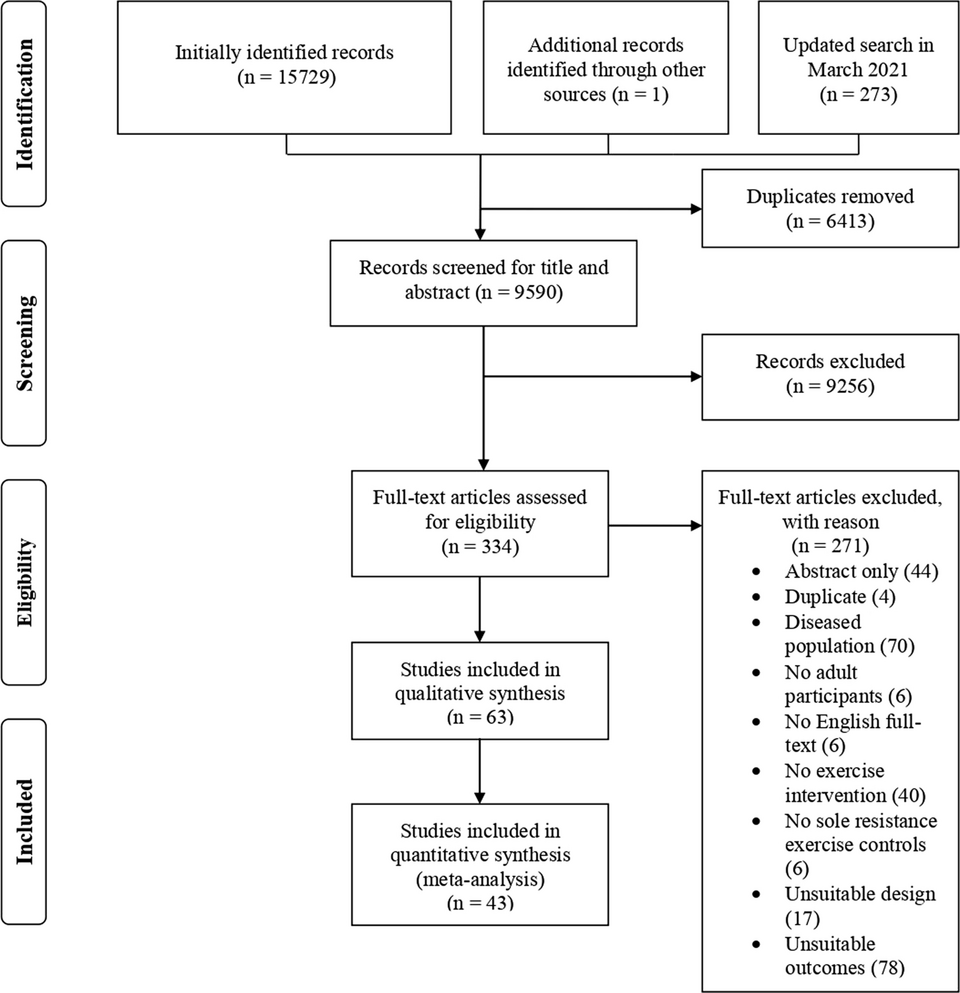 literature review process flowchart labelled diagram | (Image: Authors of the study: Moritz Schumann, Joshua F. Feuerbacher, CC BY 4.0, via Wikimedia Commons)
Steps to conducting a literature review in research methodology.
literature review process flowchart labelled diagram | (Image: Authors of the study: Moritz Schumann, Joshua F. Feuerbacher, CC BY 4.0, via Wikimedia Commons)
Steps to conducting a literature review in research methodology.
Worked Example: Kathmandu Traffic Research
- Problem: "Why are traffic jams worse in Thamel than in other areas?"
- Literature Review Findings:
- Studies show tourist density correlates with congestion (Source: Transportation Research Part A).
- Lack of studies on micro-mobility (e.g., e-rickshaws) in Kathmandu.
- Gap Identified: "No research links Thamel’s traffic to its role as a tourist hub."
- Justification: "This study will fill the gap by analyzing foot traffic, vehicle types, and tourist behavior."
6. Feasibility and Ethical Considerations
Before finalizing a problem, check:
- Feasibility:
- Time: Can you collect data in 3 months? (e.g., Surveying 500 tourists in Pokhara is feasible; studying global tourism trends is not.)
- Cost: Will you need funding for travel/surveys? (e.g., Interviewing trekkers in Everest Base Camp is expensive.)
- Data availability: Are records (e.g., NTC internet logs, hotel booking data) accessible?
- Ethics:
- Informed consent (e.g., Surveying tourists without permission is unethical).
- Anonymity (e.g., "How would you rate Pathao’s drivers?" should allow anonymous responses).
- Bias avoidance (e.g., Not favoring one hotel chain over another in a study).
Key questions to assess whether a research problem is doable.
Worked Example: Khalti’s Customer Trust Study
- Problem: "Do Nepali tourists trust Khalti for online payments?"
- Feasibility Check:
- ✅ Time: 2-month survey of 1,000 users.
- ✅ Cost: Free (online survey via Google Forms).
- ✅ Data: Khalti’s transaction records (with permission).
- Ethics:
- Participants must opt-in and can withdraw anytime.
- No personal data (only transaction IDs, not names).
In the Real World
Tourism research problems and solutions are everywhere in Nepal’s economy. Here’s how companies and organizations apply these concepts:
Pathao’s Route Optimization Algorithm
- Problem: "Why do some high-demand routes have low driver acceptance?"
- Research Question: "How do earnings, traffic, and passenger ratings influence driver route choices?"
- Application: Pathao uses data-driven hypotheses to adjust surge pricing and incentives, reducing empty rides by 25% in Kathmandu.
NTC’s Internet Speed Research for Tourists
- Problem: "Slow internet in Pokhara hotels deters digital nomads."
- Research Question: "What is the correlation between NTC’s fiber-optic upgrades and tourist app usage?"
- Application: NTC’s 2022 study found that 1 Mbps increase in speed boosted Airbnb bookings by 12%, leading to targeted infrastructure investments.
Daraz’s Customer Feedback Analysis
- Problem: "Why do 30% of orders get returned?"
- Research Question: "Do product descriptions, delivery times, or return policies most affect return rates?"
- Application: Daraz’s 2023 survey revealed that misleading images caused 40% of returns, leading to stricter vendor guidelines.
Nepal Tourism Board’s Heritage Site Study
- Problem: "Why do fewer tourists visit Bhaktapur’s Nyatapola Temple than Pashupatinath?"
- Research Question: "How do accessibility, marketing, and cultural significance influence visitor numbers?"
- Application: The board used descriptive research to find that lack of digital promotion was the key issue, leading to a TikTok campaign that increased visits by 35%.
Banking Sector: SBI’s Loan Default Study
- Problem: "Why do 15% of tourism business loans default?"
- Research Question: "Do interest rates, economic conditions, or borrower education levels predict defaults?"
- Application: SBI’s explanatory study found that high interest rates (12%+) correlated with 60% of defaults, leading to subsidized loan schemes for small tourism businesses.
Exam Tip
This unit is heavily tested in TU/PU exams through:
Problem Identification Questions (5–10 marks):
- "Identify a research problem in Nepali tourism and justify its significance."
- How to score full marks:
- Pick a specific, recent issue (e.g., "Impact of the new visa fee hike on Indian tourists").
- Link it to stakeholders (tourists, government, hotels).
- Show feasibility (data sources: NTA reports, hotel surveys).
Research Question Formulation (10–15 marks):
- "Develop a research question for studying ‘sustainable tourism in Chitwan.’"
- Scoring strategy:
- Start with a broad problem → narrow to a specific question.
- Example: ❌ "What is sustainable tourism?" (too broad) ✅ "How do eco-tourism guidelines affect visitor satisfaction in Chitwan National Park?"
Hypothesis Development (5–8 marks):
- "Formulate a null and alternative hypothesis for: ‘Does social media advertising increase bookings?’"
- Key points:
- Use measurable variables (e.g., "bookings per month").
- State directionality (e.g., "increases by 20%" vs. "has an effect").
Literature Review Application (8–12 marks):
- "How would you conduct a literature review for a study on ‘digital payments in Nepali tourism?’"
- Answer structure:
- Sources: Academic journals, NTA reports, Khalti/Daraz case studies.
- Gap identification: "Most studies focus on urban areas; none on rural trekking zones."
- Justification: "This study will bridge the gap by analyzing rural tourist payment behaviors."
Feasibility and Ethics (5–7 marks):
- "Assess the feasibility of studying ‘tourist behavior in Everest Base Camp.’"
- Scoring tips:
- Time: "3-month fieldwork is feasible during trekking season."
- Cost: "Requires $2,000 for permits and translators."
- Ethics: "Must obtain consent from trekkers and local guides."
Common Mistakes to Avoid:
- Vague problems: "Tourism is important" → No marks. Must be specific.
- Unresearchable questions: "Why do people exist?" → Fail.
- Ignoring stakeholders: Always link problems to who benefits (e.g., tourists, government, businesses).
- Poor hypothesis structure: "Tourism is good" → Needs variables and direction.
Final Advice:
- Use real examples (Pathao, NTC, Daraz) in your answers—they impress examiners.
- Draw flowcharts (like the research process diagram) in exams if asked to explain steps.
- Practice writing research questions from headlines (e.g., "Nepal’s tourism revenue drops by 20%" → "What factors contributed to the decline in 2023?").
In the real world
- Pathao uses problem formulation to analyze driver rejection rates; by identifying the specific problem of 'high-demand route rejection,' they formulate research questions about earnings and traffic to optimize their algorithm.
- Daraz applies descriptive research questions to analyze customer feedback; they ask 'What are the top reasons for cart abandonment?' to describe current user behavior and improve their e-commerce platform.
- NTC conducts explanatory research on internet speeds; they test hypotheses like 'Higher bandwidth correlates with increased online service usage' to guide infrastructure investment decisions.
Based on the TU BTTM syllabus for Research Methodology, unit 2.
Discussion
Loading…