HistoryUnit 213 min read
Kirat & Lichchhavi Kingdoms: Rise, Culture & Legacy
Unit 2 of History explores Nepal’s earliest recorded civilizations—the Kirat dynasty (Yaksha/Yakkhini rulers) and the Lichchhavi empire (golden age of art, trade, and Hinduism)—through their origins, political systems, cultural achievements, and decline, with NEB-style questions and visual timelines.
TAKEAWAYS:
- The Kirat period (pre-300 BCE) introduced Nepal’s first written records (stone inscriptions) and Hindu-Buddhist syncretism under Yaksha/Yakkhini rulers like Jaya Stambha.
- The Lichchhavis (400–750 CE) built Nepal’s first empire, expanded trade via the Kosi and Gandaki rivers, and created iconic temples (e.g., Patan Durbar Square).
- Manadev (605–621 CE) and Amshuvarma (621–640 CE) were Lichchhavi kings who standardized coinage, promoted Hinduism, and left inscriptions in Sanskrit.
- Decline factors: Internal conflicts, Tibetan invasions, and economic shifts (rise of the Gupta Empire) weakened the Lichchhavis by the 8th century.
- Legacy: The Lichchhavis laid the foundation for Newari culture, stone architecture, and Nepal’s political unity before the Malla era.
- NEB focus: Chronology, key kings, cultural contributions, and comparison with Kirat rule are frequently tested in short/long questions.
1. The Kirat Period: Nepal’s First Rulers
Who were the Kirats?
The Kirats were indigenous tribes of Nepal who ruled from ~900 BCE to 300 BCE. Their name comes from the Sanskrit word Kirat (meaning "hunter" or "mountain dweller"). They were animists (worshipped nature spirits) but later adopted Hindu and Buddhist influences.
Key Kirat Rulers and Their Contributions
The Kirats were divided into two main clans:
- Yaksha dynasty (eastern Nepal, ruled from Kiratnagar near present-day Dharan).
- Yakkhini dynasty (western Nepal, ruled from Kiratpur near Pokhara).
Notable Kings:
- Jaya Stambha (6th century BCE): The first Kirat king to leave inscriptions in stone (found in Lumbini). His reign marks the beginning of Nepal’s written history.
- Rudra Deva (5th century BCE): Expanded the kingdom and promoted trade with India.
Political System and Society
- Monarchy: Kings ruled with the help of counsellors and warriors.
- Economy: Based on agriculture, hunting, and trade (especially salt and timber).
- Religion: Initially animist, but later adopted Hinduism and Buddhism due to Indian influence.
- Social Structure:
- Kings and nobles (highest class)
- Warriors and priests
- Farmers, traders, and artisans
- Slaves (captured in wars)
Cultural Achievements
- Language: Spoke Kirat languages (ancestors of modern Newar and Magar languages).
- Art and Architecture: Built wooden palaces and stone inscriptions (earliest examples of Nepal’s writing).
- Literature: Composed oral epics (later written down in Sanskrit).
Decline of the Kirats
By 300 BCE, the Kirats were overpowered by the Lichchhavis (a Hindu-Buddhist dynasty from India). The Gautama Buddha’s visit to Lumbini (6th century BCE) also weakened their influence as people converted to Buddhism.
2. The Lichchhavi Period: Nepal’s Golden Age
Origins of the Lichchhavis
The Lichchhavis were migrants from India (possibly from Vanga or Magadha) who arrived in Nepal around 400 CE. They were Hindu-Buddhist and skilled in governance and trade.
Key Lichchhavi Kings and Their Contributions
The Lichchhavis ruled for ~350 years (400–750 CE). Their empire stretched from Tibet in the north to the Indian plains in the south.
| King | Reign | Key Achievements |
|---|---|---|
| Manadev | 605–621 CE | - First Lichchhavi king to issue gold coins (standardized economy). |
| - Built temples and monasteries in Kathmandu and Patan. | ||
| Amshuvarma | 621–640 CE | - Expanded the empire to include Tibet and parts of India. |
| - Wrote inscriptions in Sanskrit (earliest records of Lichchhavi rule). | ||
| Narendradev | 7th century | - Promoted Hinduism and built Shiva temples. |
| Jayadev | 7th century | - Wrote religious texts and poetry (influenced later Newari literature). |
Political System
- Centralized Monarchy: The king was the supreme ruler, but ministers and councils helped in governance.
- Provincial Administration: The empire was divided into provinces ruled by governors.
- Military: Strong cavalry and infantry to defend against Tibetan and Indian invasions.
Economic Development
- Trade Routes: The Lichchhavis controlled two major trade routes:
- Kosi River Route (connected to Tibet and China).
- Gandaki River Route (linked to India and the Bay of Bengal).
- Exports: Timber, salt, spices, and Nepalese horses (famous in India).
- Imports: Gold, silver, cotton cloth, and Buddhist texts from India.
- Coinage: Introduced gold and silver coins (e.g., Manadev’s gold coins), making trade easier.
Cultural and Religious Contributions
Architecture:
- Built stone temples (unlike the Kirats, who used wood).
- Patan Durbar Square and Kathmandu Durbar Square have Lichchhavi-era temples.
- Stupa-style and pagoda-style temples became iconic.
Art and Sculpture:
- Stone carvings of Buddha, Hindu gods (Shiva, Vishnu), and mythical creatures.
- Bronze statues of Goddess Durga (found in Patan Museum).
Literature and Language:
- Wrote in Sanskrit and Prakrit (ancestors of Newari).
- Jayadev’s poetry influenced later Newari literature.
Religion:
- Hinduism (worship of Shiva, Vishnu, and Devi) became dominant.
- Buddhism (Mahayana) also thrived, especially in Lumbini and Patan.
- Syncretism: Both religions coexisted peacefully.
Decline of the Lichchhavis
By the 8th century CE, the Lichchhavi empire weakened due to:
- Internal conflicts (fights over the throne).
- Tibetan invasions (Tibet became stronger under Songtsen Gampo).
- Economic decline (trade routes shifted to Gupta Empire in India).
- Rise of the Thakuri dynasty (who later ruled Nepal before the Mallas).
3. Comparison: Kirat vs. Lichchhavi Periods
| Feature | Kirat Period (900–300 BCE) | Lichchhavi Period (400–750 CE) |
|---|---|---|
| Origin | Indigenous Nepalese tribes | Migrants from India (Vanga/Magadha) |
| Religion | Animism → Hinduism/Buddhism (later) | Hinduism + Buddhism (syncretism) |
| Writing | Stone inscriptions (Jaya Stambha) | Sanskrit inscriptions (Manadev, Amshuvarma) |
| Architecture | Wooden palaces, no stone temples | Stone temples (Patan Durbar, stupas) |
| Economy | Agriculture, hunting, limited trade | Advanced trade (gold coins, river routes) |
| Decline Cause | Overthrown by Lichchhavis | Tibetan invasions, internal conflicts |
| Legacy | First written records, Hindu-Buddhist mix | Newari culture, stone temples, centralized rule |
4. Solved Example: Tracing the Rise of Lichchhavi Power
Question: "How did the Lichchhavis establish their dominance over the Kirats? Explain with at least three reasons."
Answer: The Lichchhavis overpowered the Kirats due to:
Military Strength:
- The Kirats relied on small tribal armies, while the Lichchhavis had a disciplined, well-trained army with horses and elephants (borrowed from Indian warfare).
- They used better weapons (iron swords, armor) compared to the Kirats’ stone and wooden tools.
Economic and Trade Advantages:
- The Lichchhavis controlled key trade routes (Kosi and Gandaki rivers), making them wealthier than the Kirats.
- They introduced gold and silver coins, which helped in expanding trade and buying loyalty from local chiefs.
Cultural and Religious Influence:
- The Kirats were animists, while the Lichchhavis promoted Hinduism and Buddhism, which were more organized religions.
- The arrival of Buddhist monks (like those who visited Lumbini) converted many Kirats, weakening their traditional rule.
- The Lichchhavis built temples and monasteries, which attracted followers and legitimized their rule.
Political Unity:
- The Kirat kingdom was fragmented (Yaksha and Yakkhini dynasties often fought).
- The Lichchhavis created a centralized government with clear provinces and governors, making their rule more stable.
5. NEB Board-Style Questions
Short Answer Questions (5 marks each)
"Describe the political system of the Kirat period. How was it different from the Lichchhavi system?" Answer:
- Kirat System:
- Decentralized: Ruled by two clans (Yaksha and Yakkhini) with local chiefs.
- No written laws: Relied on oral traditions and tribal customs.
- Weak military: Used hunting weapons (bows, spears) and no cavalry.
- Lichchhavi System:
- Centralized: King + ministers ruled from Kathmandu/Patan.
- Written laws: Sanskrit inscriptions (e.g., Manadev’s records).
- Strong military: Horses, elephants, and iron weapons.
- Kirat System:
"What were the main economic activities of the Lichchhavis? How did trade help their empire grow?" Answer:
- Main Economic Activities:
- Agriculture (rice, wheat, barley).
- Trade (timber, salt, horses).
- Mining (gold, silver, copper).
- Trade’s Role:
- River routes (Kosi, Gandaki) connected to Tibet and India.
- Gold coins (introduced by Manadev) eased transactions.
- Exports (horses, salt) brought wealth and allies.
- Main Economic Activities:
Long Answer Question (10 marks)
"The Lichchhavi period is considered the golden age of ancient Nepal. Justify this statement with examples from politics, economy, and culture." Answer: The Lichchhavi period (400–750 CE) was Nepal’s golden age because of political stability, economic prosperity, and cultural achievements.
Politics:
- First unified empire in Nepal (unlike the fragmented Kirats).
- Strong administration: Provinces ruled by governors, written laws (Sanskrit inscriptions).
- Defense against invasions: Built forts and alliances with Tibet.
Economy:
- Advanced trade: Controlled Kosi and Gandaki routes, exported horses and salt.
- Coinage system: Manadev’s gold coins made trade easier.
- Agricultural growth: Irrigation systems improved food production.
Culture:
- Architecture: Built stone temples (Patan Durbar, stupas).
- Art: Bronze statues of Durga, Buddha sculptures.
- Literature: Sanskrit inscriptions, Jayadev’s poetry.
- Religion: Hindu-Buddhist syncretism (temples for both faiths).
Conclusion: The Lichchhavis modernized Nepal with strong governance, wealth, and culture, making their era the golden age.
6. Exam Tip: How to Score Full Marks
✅ For short questions (5 marks):
- Structure: Use bullet points (not paragraphs).
- Key terms: Always mention kings (Manadev, Amshuvarma), trade routes, coins, temples.
- Comparison: If asked to compare Kirat/Lichchhavi, use a table (like above).
✅ For long questions (10 marks):
- Introduction: State why the topic is important (e.g., "The Lichchhavi period was Nepal’s first golden age...").
- Body: Divide into 3 parts (politics, economy, culture).
- Examples: Use specific names (Manadev’s coins, Patan Durbar, Jayadev’s poetry).
- Conclusion: Summarize in 1–2 sentences.
✅ Common Mistakes to Avoid:
- ❌ Vague answers: Don’t write "They were good rulers." Instead, explain how.
- ❌ Ignoring dates: Always mention reign periods (e.g., Manadev: 605–621 CE).
- ❌ Mixing Kirat/Lichchhavi facts: Keep them separate in comparisons.
7. Quick Revision Summary
timeline
title Ancient Nepal: Kirat to Lichchhavi
900 BCE : Kirat Period Begins (Yaksha/Yakkhini clans)
600 BCE : Jaya Stambha rules; first stone inscriptions
300 BCE : Kirats defeated by Lichchhavis
400 CE : Lichchhavi migration from India
605 CE : Manadev introduces gold coins
621 CE : Amshuvarma expands empire to Tibet
750 CE : Lichchhavi decline (Tibetan invasions)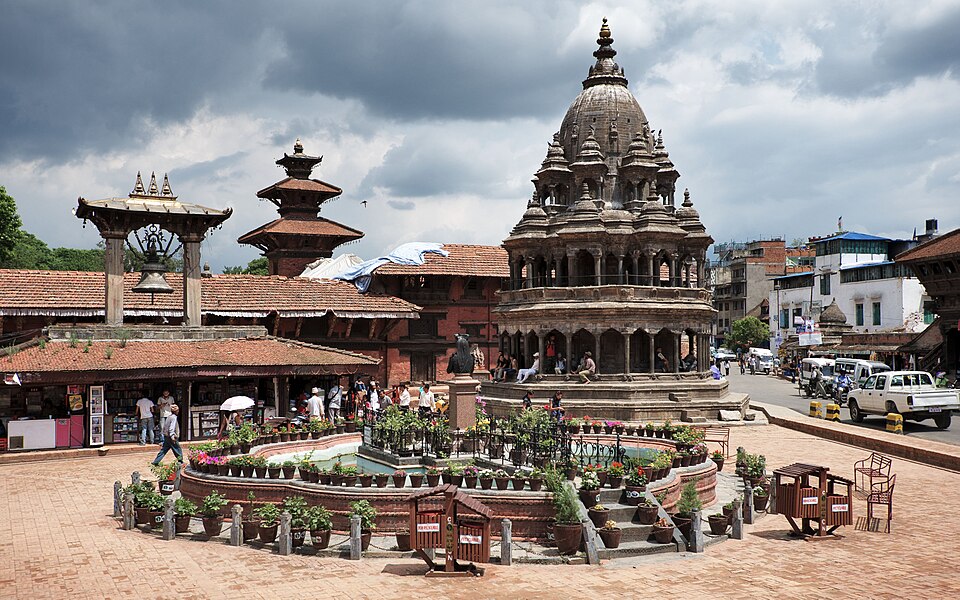 A Lichchhavi-era temple in Patan, showing stone architecture and Hindu-Buddhist design (Image: Alexander Shafir, CC BY-SA 4.0, via Wikimedia Commons)
Based on the NEB +2 Humanities syllabus for History (His), unit 2.
Discussion
Loading…