PsychologyUnit 86 min read
Thinking & Problem Solving: Processes, Barriers & Strategies
Unit 8 of Psychology explores how humans think, solve problems, and make decisions—covering mental processes, obstacles like fixation and functional fixedness, and strategies like algorithms and heuristics, with real-world examples and exam-style questions.
What is Thinking?
Thinking is the mental process of using knowledge, experience, and reasoning to understand, solve problems, or make decisions. It includes:
- Cognitive processes: Memory, attention, language, and imagination.
- Mental representations: Images, symbols, or concepts we use to think.
- Logical reasoning: Drawing conclusions from given information.
mindmap
  root((Thinking))
    Processes
      Problem Solving
      Decision Making
      Creativity
    Components
      Memory
      Attention
      Language
    Types
      Logical
      Abstract
CriticalExample: When you plan your daily routine, you use thinking to decide which tasks to do first, how long each will take, and what order makes sense.
Types of Thinking
Convergent Thinking
- Finding one correct answer from given options.
- Example: Solving a math problem where only one solution exists.
Divergent Thinking
- Generating multiple creative ideas from a single starting point.
- Example: Brainstorming ways to use a brick (not just as a building block).
Critical Thinking
- Analyzing information logically to form judgments.
- Example: Evaluating news sources to check if a story is reliable.
Comparison Table:
| Type | Definition | Example |
|---|---|---|
| Convergent | One correct answer | Multiple-choice test questions |
| Divergent | Many possible answers | "How many uses can you think of for a paperclip?" |
| Critical | Logical evaluation of information | Debating the pros and cons of social media |
Problem Solving: Steps and Strategies
Problem solving is the process of finding solutions to challenges. It involves:
Steps in Problem Solving
- Identify the Problem: Understand what needs to be solved.
- Gather Information: Collect facts and details.
- Generate Possible Solutions: Brainstorm ideas.
- Evaluate Solutions: Choose the best option.
- Implement the Solution: Put the plan into action.
- Review the Outcome: Check if the solution worked.
flowchart TD
  A["Identify Problem"] --> B["Gather Info"]
  B --> C["Generate Solutions"]
  C --> D["Evaluate Solutions"]
  D --> E["Implement Solution"]
  E --> F["Review Outcome"]
Strategies for Problem Solving
Algorithms
- Step-by-step guaranteed method to solve a problem.
- Example: Following a recipe to bake a cake.
Heuristics
- Shortcuts or "rules of thumb" that speed up decision-making.
- Example: Using "first letter" to remember names (e.g., "ROYGBIV" for rainbow colors).
Insight
- Sudden realization of a solution (often called "Aha!" moment).
- Example: Archimedes discovering buoyancy while in a bathtub.
Advantages and Disadvantages:
| Strategy | Advantages | Disadvantages |
|---|---|---|
| Algorithms | Always correct | Time-consuming |
| Heuristics | Fast and efficient | May lead to errors |
| Insight | Creative and sudden | Hard to predict or replicate |
Barriers to Problem Solving
Sometimes, our minds get stuck. Common barriers include:
Fixation
- Being unable to see new uses for an object or new ways to solve a problem.
- Example: Struggling to think of a nail’s uses beyond hammering.
Functional Fixedness
- A type of fixation where we only see an object’s usual function.
- Example: Not realizing a coin can be used as a weight, only as money.
Mental Set
- Using the same old method even when a better one exists.
- Example: Always adding numbers left-to-right, even when right-to-left is faster.
Decision Making
Decision making is choosing between multiple options. Factors that influence it:
Rational Decision Making
- Logical, step-by-step process to make the best choice.
- Example: Comparing prices before buying a phone.
Bounded Rationality
- Making decisions with limited information or time.
- Example: Choosing a restaurant based only on its location, not reviews.
Emotional Influences
- Feelings can bias decisions.
- Example: Buying a car because it reminds you of your childhood.
Creativity
Creativity is the ability to generate new and useful ideas. It involves:
- Fluency: Producing many ideas.
- Flexibility: Switching between different ideas.
- Originality: Coming up with unique solutions.
Example: Designing a new app feature that no one else has thought of.
Exam Tip: How to Score Full Marks
- Define Key Terms: Always start with clear definitions (e.g., "Problem solving is...").
- Use Examples: Relate concepts to real life (e.g., "Like solving a math problem...").
- Compare Strategies: Tables help show differences (e.g., algorithms vs. heuristics).
- Explain Barriers: Use experiments like the candle problem to illustrate fixation.
- Practice Diagrams: Draw flowcharts for problem-solving steps.
- NEB-Style Questions:
- Short Answer: "What is divergent thinking? Give an example." Answer: Divergent thinking is generating multiple creative ideas from one starting point. Example: Brainstorming uses for a brick (e.g., paperweight, plant pot).
- Long Answer: "Explain the barriers to problem solving with examples." Answer: Barriers include fixation (e.g., not seeing new uses for objects), functional fixedness (e.g., only using a coin as money), and mental set (e.g., always solving problems the same way). Use the candle problem experiment to explain functional fixedness.
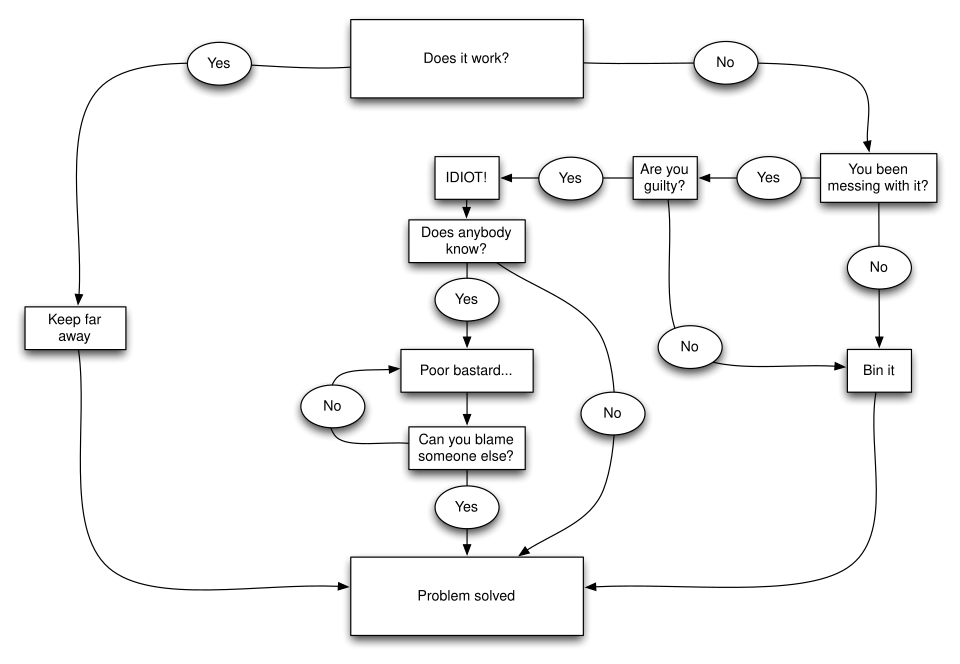 A step-by-step visual of the problem-solving process. (Image: KEBman, Public domain, via Wikimedia Commons)
Based on the NEB +2 Humanities syllabus for Psychology (Psy), unit 8.
Discussion
Loading…