HistoryUnit 107 min read
Contemporary World: Globalization, Terrorism, Climate Change & New Conflicts
Unit 10 of History explores the modern world’s biggest challenges—globalization’s impact, the rise of terrorism, climate change crises, and new forms of conflict—using clear examples, comparisons, and NEB-style questions to prepare students for exams.
TAKEAWAYS:
- Globalization connects economies and cultures but creates inequality and cultural loss.
- Terrorism is a violent tactic by non-state groups, often linked to political or religious grievances.
- Climate change is driven by human activity and threatens ecosystems, economies, and security.
- New conflicts arise from resource wars, cyber threats, and ideological clashes in the 21st century.
- The UN and NGOs play key roles in addressing global challenges like terrorism and climate change.
What is Globalization?
Globalization is the process where countries, economies, and cultures become interconnected through trade, technology, and communication. It started accelerating after the Cold War (1991) when the Soviet Union collapsed and capitalism spread globally.
Key Features of Globalization
mindmap
  root((Globalization))
    Trade
      Goods: Cars, electronics, clothes
      Services: Banking, tourism, call centers
    Technology
      Internet, smartphones, social media
    Culture
      Music, movies, fashion (e.g., K-pop, Hollywood)
    Politics
      Global organizations (UN, WTO, IMF)
    Migration
      People moving for work (e.g., Nepali workers in Gulf countries)
Advantages of Globalization
✅ Economic Growth: Countries trade goods they produce well (e.g., Nepal exports tea, India exports software). ✅ Technology Spread: Poor countries get access to medicine, education (e.g., online classes during COVID-19). ✅ Cultural Exchange: People learn about different traditions (e.g., Nepali festivals on social media).
Disadvantages of Globalization
❌ Inequality: Rich countries get richer; poor countries stay poor (e.g., Africa’s debt to IMF). ❌ Cultural Loss: Local traditions fade (e.g., Nepali languages disappearing due to Hindi dominance). ❌ Environmental Damage: Overproduction of goods pollutes the planet (e.g., plastic waste in rivers).
What is Terrorism?
Terrorism is the use of violence or threats by non-state groups (e.g., ISIS, Al-Qaeda) to frighten governments or societies to achieve political or religious goals.
Types of Terrorism
| Type | Example | Goal |
|---|---|---|
| Religious | ISIS attacks in Iraq | Spread extremist Islam |
| Political | Maoist attacks in Nepal | Overthrow government |
| Economic | Kidnapping for ransom | Fund illegal activities |
| Cyber | Hacking government sites | Disrupt services |
Why Does Terrorism Happen?
🔹 Poverty & Unemployment: People join terrorist groups for money or revenge (e.g., Taliban in Afghanistan). 🔹 Religious Extremism: Groups believe violence is justified for their faith (e.g., 9/11 attacks by Al-Qaeda). 🔹 Political Oppression: Governments suppress people, leading to rebellion (e.g., Maoist insurgency in Nepal).
Climate Change: The Biggest Threat
Climate change is the long-term shift in weather patterns caused by human activities like burning fossil fuels (coal, oil) and deforestation.
Causes of Climate Change
flowchart TD
  A["Human Activities"] --> B["Burning Fossil Fuels"]
  A --> C["Deforestation"]
  A --> D["Industrial Pollution"]
  B --> E["CO2 in Air"]
  C --> E
  D --> E
  E --> F["Global Warming"]
  F --> G["Melting Ice, Rising Seas"]
Effects of Climate Change
🌍 Rising Temperatures: Heatwaves kill people (e.g., Europe 2022 heatwave). 🌊 Rising Sea Levels: Coastal cities flood (e.g., Mumbai, Bangladesh). 🌱 Extreme Weather: More hurricanes, droughts (e.g., Nepal’s 2022 floods). 🐾 Animal Extinction: Polar bears, coral reefs dying.
Who is Most Affected?
🔴 Poor Countries: They have fewer resources to fight climate change (e.g., Maldives may disappear). 🟡 Developing Nations: Agriculture suffers (e.g., Nepal’s farmers lose crops).
New Conflicts in the 21st Century
After the Cold War, new types of conflicts emerged:
1. Resource Wars
💧 Water Conflicts: India vs. Bangladesh over rivers (e.g., Teesta water dispute). 🛢️ Oil Conflicts: Middle East wars (e.g., Iraq, Syria) over oil control.
2. Cyber Wars
💻 Hacking Governments: Russia hacking US elections (2016). 🔒 Espionage: China stealing military secrets from other countries.
3. Ideological Conflicts
🕊️ Democracy vs. Autocracy: US vs. China (e.g., Taiwan dispute). 🏛️ Religious Extremism: ISIS vs. Western governments.
How the World is Trying to Solve These Problems
1. United Nations (UN)
- Role: Solves global issues like terrorism, climate change.
- Example: UN Climate Change Conference (COP26) to reduce carbon emissions.
2. Non-Governmental Organizations (NGOs)
- Role: Help poor countries, fight terrorism, protect environment.
- Example: Greenpeace (environment), Red Cross (disaster relief).
3. International Agreements
| Agreement | Year | Purpose |
|---|---|---|
| Paris Agreement | 2015 | Reduce global warming |
| Kyoto Protocol | 1997 | Cut greenhouse gases |
| UN Security Council | 1945 | Fight terrorism, maintain peace |
Exam Tips for NEB
- Define Key Terms: Always explain globalization, terrorism, and climate change in your own words.
- Use Examples: Mention real cases (e.g., Nepal’s Maoist conflict, ISIS, Paris Agreement).
- Compare & Contrast: Show differences between old (Cold War) and new conflicts (cyber wars).
- Diagrams Help!: Draw flowcharts (e.g., causes of climate change) to score extra marks.
- Link to Nepal: Always relate global issues to Nepal (e.g., climate change affecting agriculture).
NEB-Style Questions & Answers
Short Answer (5 marks)
Q: What are the causes and effects of globalization? A:
- Causes:
- Advances in technology (internet, smartphones).
- Free trade agreements (WTO, NAFTA).
- Falling transport costs (cheaper shipping).
- Effects:
- ✅ Positive: Economic growth, cultural exchange.
- ❌ Negative: Inequality, cultural loss, environmental damage.
Long Answer (10 marks)
Q: How does terrorism affect global security? Discuss with examples. A: Terrorism threatens global security by:
- Creating Fear: Attacks like 9/11 made people afraid to travel.
- Disrupting Economies: Bombings in tourist spots (e.g., Bali 2002) hurt tourism.
- Weakening Governments: Maoist attacks in Nepal made people distrust the government.
- Spreading Extremism: ISIS recruited people online, even from Nepal.
Solutions:
- Stronger intelligence sharing between countries.
- Economic development to reduce poverty (root cause of terrorism).
- UN peacekeeping missions to stop conflicts.
Practice Questions (NEB Style)
- Define globalization. Give two advantages and two disadvantages. (5 marks)
- What are the main causes of climate change? How does it affect Nepal? (7 marks)
- Compare old conflicts (Cold War) with new conflicts (21st century). (8 marks)
- How does the UN help fight terrorism? Give an example. (6 marks)
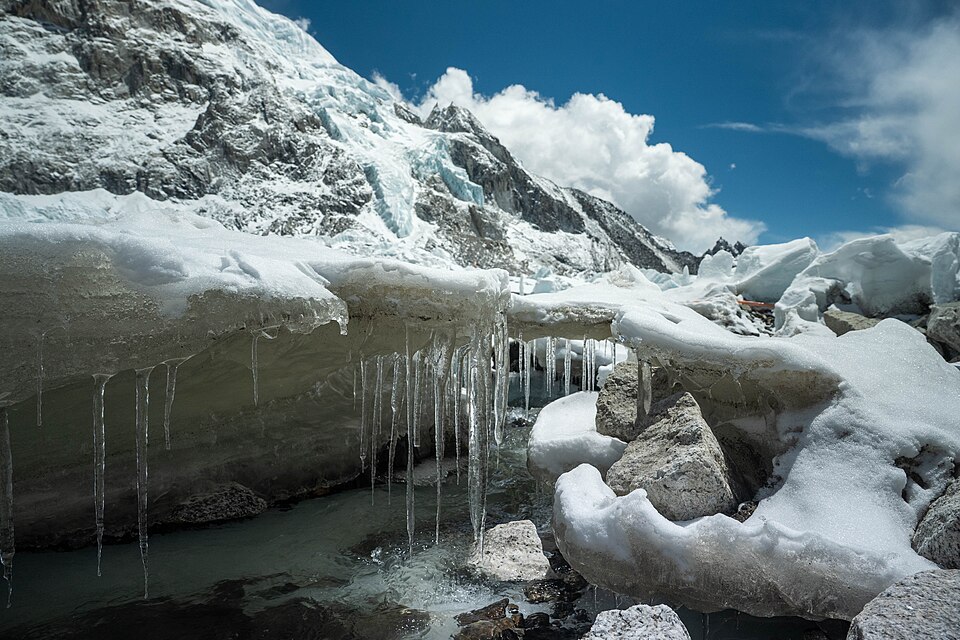 Climate change impact on Nepal (Image: Nirojsedhai, CC BY-SA 4.0, via Wikimedia Commons)
Based on the NEB +2 Humanities syllabus for History (His), unit 10.
Discussion
Loading…