HistoryUnit 99 min read
Decolonization: Causes, Movements & New Nations
Unit 9 of History explains how Asian and African countries broke free from European colonial rule after WWII, focusing on key movements, leaders, and the birth of independent nations like India, Indonesia, and Ghana.
TAKEAWAYS:
- Decolonization was driven by WWII’s weakening of Europe, nationalist movements, and global pressure for self-rule.
- Non-violent protests (e.g., India) and armed struggles (e.g., Algeria) were used to fight colonial powers.
- The UN and Bandung Conference supported decolonization and anti-colonial solidarity.
- Neocolonialism replaced direct rule, keeping former colonies economically dependent.
- Cold War tensions shaped new nations’ alliances (e.g., India’s non-alignment).
- Key leaders like Gandhi, Nkrumah, and Sukarno led independence movements.
Why Did Colonies Want Freedom?
Colonialism had lasted for centuries, but after World War II (1939–1945), European empires (Britain, France, Netherlands) were weakened. Colonized people in Asia and Africa saw their chance to demand independence.
Reasons for Decolonization
How Did Countries Gain Independence?
Different colonies used different methods to break free. Some fought peacefully, while others used armed rebellion.
1. Non-Violent Protests (India, Ghana)
India (1947):
- Led by Mahatma Gandhi and the Indian National Congress (INC).
- Used civil disobedience (e.g., Salt March 1930, Quit India Movement 1942).
- Result: Britain granted independence in 1947, splitting into India (Hindu-majority) and Pakistan (Muslim-majority).
Caption: Gandhi’s peaceful protest against British salt tax (1930).
Ghana (1957):
- Led by Kwame Nkrumah, who organized strikes and boycotts.
- Result: First African colony to gain independence (1957).
2. Armed Struggles (Algeria, Vietnam, Kenya)
Algeria (1962):
- Fought a brutal war (1954–1962) against France.
- Front de Libération Nationale (FLN) used guerrilla tactics.
- Result: France withdrew, Algeria became independent.
Vietnam (1954 & 1975):
- Viet Minh (led by Ho Chi Minh) fought France and later the US.
- Result: Geneva Accords (1954) split Vietnam; full independence in 1975.
Kenya (1963):
- Mau Mau Uprising (1952–1960) was a violent rebellion against Britain.
- Led by Jomo Kenyatta.
- Result: Kenya became independent in 1963.
TABLE: Methods of Decolonization
| Country | Method | Leader | Year of Independence |
|---|---|---|---|
| India | Non-violent protests | Gandhi | 1947 |
| Algeria | Armed rebellion | FLN | 1962 |
| Ghana | Strikes & boycotts | Nkrumah | 1957 |
| Vietnam | Guerrilla war | Ho Chi Minh | 1954/1975 |
| Kenya | Armed uprising | Kenyatta | 1963 |
The Role of the United Nations (UN)
The UN (founded 1945) supported self-determination (right to rule oneself).
- UN Charter (1945) stated that all people have the right to independence.
- Trusteeship Council helped former colonies prepare for self-rule.
- Example: The UN pressured South Africa to end apartheid (racial segregation).
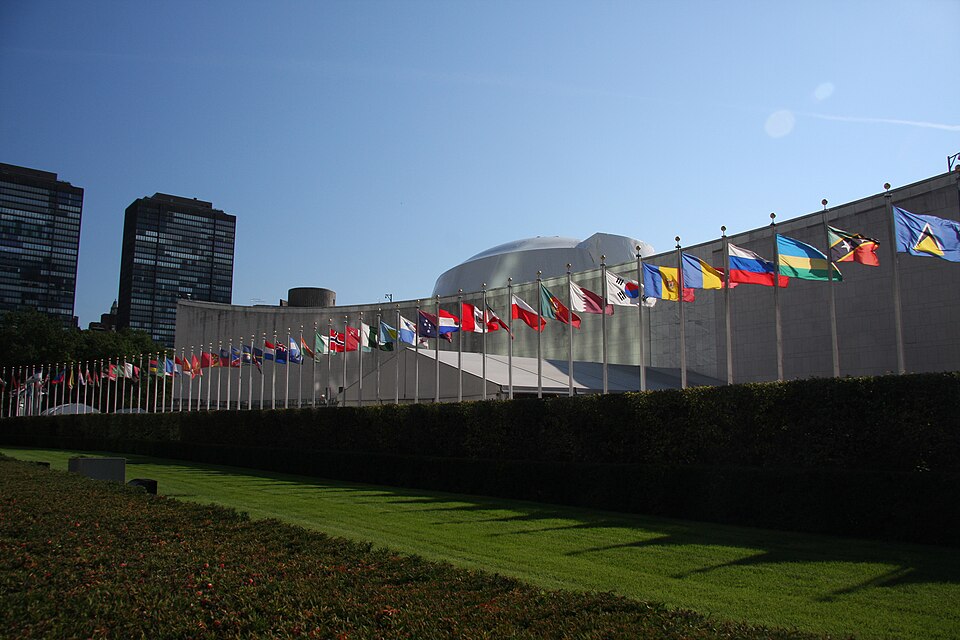 UN General Assembly building (Image: Yerpo, CC BY-SA 3.0, via Wikimedia Commons)
Caption: The UN supported decolonization after WWII.
UN General Assembly building (Image: Yerpo, CC BY-SA 3.0, via Wikimedia Commons)
Caption: The UN supported decolonization after WWII.
The Bandung Conference (1955)
In 1955, 29 Asian and African nations met in Bandung, Indonesia to:
- Promote unity against colonialism.
- Support economic cooperation (e.g., shared trade).
- Reject Cold War alliances (neither US nor USSR).
Key Leaders:
- Jawaharlal Nehru (India)
- Sukarno (Indonesia)
- Gamal Abdel Nasser (Egypt)
Caption: Leaders at the 1955 Bandung Conference (first major anti-colonial meeting).
Neocolonialism: A New Form of Control
After independence, many former colonies faced:
- Economic dependence (still selling raw materials to old colonial powers).
- Foreign debt (forced to borrow from Western banks).
- Political influence (e.g., US/UK backing dictators to control resources).
Example:
- Congo (1960): Gained independence but was controlled by Belgium and US companies.
- Angola/Mozambique: Became independent but faced civil wars funded by Cold War powers.
Cold War Impact on Decolonization
The US and USSR both wanted influence in newly independent nations.
- US supported anti-communist governments (e.g., South Vietnam).
- USSR backed communist movements (e.g., Angola, Mozambique).
- Non-Aligned Movement (1961): Led by India, Yugoslavia, Egypt—stayed neutral in Cold War.
TABLE: Cold War & Decolonization
| Country | Cold War Alliance | Result |
|---|---|---|
| Vietnam | USSR/China support | Communist victory (1975) |
| South Africa | US/UK support | Apartheid ended only in 1994 |
| India | Non-Aligned | Democratic, but poor relations with US |
Key Leaders of Decolonization
| Leader | Country | Method | Legacy |
|---|---|---|---|
| Mahatma Gandhi | India | Non-violent protests | Inspired global peaceful resistance |
| Jawaharlal Nehru | India | Diplomacy & unity | First PM of independent India |
| Kwame Nkrumah | Ghana | Strikes & pan-Africanism | First African president |
| Ho Chi Minh | Vietnam | Guerrilla war | Led Vietnam to communism |
| Patrice Lumumba | Congo | Anti-colonial speeches | Assassinated; symbol of struggle |
Exam Tip: How to Score Full Marks
Understand Causes:
- Always mention WWII, nationalism, and UN pressure as key reasons.
- Example answer start:
"Decolonization happened because European powers were weakened after WWII, and nationalist leaders like Gandhi and Nkrumah demanded independence."
Compare Methods:
- India (peaceful) vs. Algeria (violent)—explain why each chose their method.
Link to Cold War:
- Many questions ask how US/USSR influenced new nations.
- Example:
"The US supported South Vietnam to stop communism, while the USSR backed Angola’s MPLA."
Memorize Key Dates:
- India (1947), Ghana (1957), Algeria (1962), Vietnam (1954/1975).
Use Maps & Tables:
- If the question asks about regions, draw a simple map showing:
- British colonies (India, Africa)
- French colonies (Algeria, Vietnam)
- Dutch colony (Indonesia)
- If the question asks about regions, draw a simple map showing:
Analyze Leaders’ Roles:
- Example:
"Gandhi’s Salt March (1930) showed that mass protests could force Britain to negotiate."
- Example:
NEB Board-Style Questions (Practice)
Short Answer (5 marks)
- Explain two reasons why India gained independence in 1947.
- What was the Bandung Conference, and why was it important?
- How did armed struggles differ from non-violent protests in decolonization?
Long Answer (10 marks)
- "Decolonization was both a political and economic struggle." Explain with examples from Asia and Africa.
- How did the Cold War affect the independence movements in Vietnam and Congo?
Final Note: Decolonization was a global movement that reshaped the world. Many new nations faced challenges (poverty, wars, neocolonialism), but they also gained sovereignty and global voice. Study the leaders, methods, and Cold War links—these are high-score topics in NEB exams!
Based on the NEB +2 Humanities syllabus for History (His), unit 9.
Discussion
Loading…