Life Skill EducationUnit 137 min read
Entrepreneurship & Employability: Ideas, Skills, Jobs & Business
Unit 13 of Life Skill Education explores how to turn ideas into jobs or businesses, key skills for employability, and the difference between being an employee vs. an entrepreneur. Learn about business planning, risk-taking, and how to start small—with real-life examples and NEB-style questions.
TAKEAWAYS:
- Entrepreneurship means starting your own business to solve problems or meet needs, while employability is the set of skills that make you a good hire.
- A business plan is a roadmap: it explains your idea, target customers, costs, and how you’ll make money.
- Risk vs. reward is key—entrepreneurs take calculated risks for bigger gains, but employees trade stability for steady income.
- Soft skills (communication, teamwork) and hard skills (technical abilities) both matter for getting and keeping a job.
- Small businesses (like local shops or home-based services) are easier to start than big companies but require smart planning.
- NEB exams test definitions, comparisons (employee vs. entrepreneur), and short-answer scenarios—practice linking ideas to real life.
What Is Entrepreneurship?
Entrepreneurship is the process of starting and running your own business to create products or services that people need. It’s not just about making money—it’s about solving problems or improving lives.
Key Traits of an Entrepreneur
mindmap
  root((Entrepreneur Traits))
    Creativity["Creates new ideas"]
    Risk-Taker["Accepts challenges"]
    Persistence["Works hard even when things are tough"]
    Problem-Solver["Finds solutions"]
    Goal-Oriented["Plans for success"]
Example: Imagine you notice that students in your area struggle to find affordable stationery. You start a small shop selling notebooks, pens, and books at lower prices. This is entrepreneurship!
Employability: Skills for Jobs
Employability refers to the skills and qualities that make you a good employee. Employers look for both hard skills (like typing or coding) and soft skills (like communication and teamwork).
Hard Skills vs. Soft Skills
| Hard Skills | Soft Skills |
|---|---|
| Technical abilities (e.g., typing, coding) | Communication (speaking/writing) |
| Industry-specific knowledge (e.g., accounting) | Teamwork and collaboration |
| Certifications (e.g., driving license) | Problem-solving and adaptability |
Example: A graphic designer needs hard skills like Adobe Photoshop and soft skills like working with clients to understand their needs.
Employee vs. Entrepreneur: Key Differences
| Feature | Employee | Entrepreneur |
|---|---|---|
| Income | Fixed salary/wages | Variable (depends on business) |
| Risk | Low (employer takes risks) | High (you take risks) |
| Work Hours | Set by employer | Flexible but often long |
| Decision-Making | Follows boss’s orders | Makes own decisions |
| Growth | Limited by job role | Unlimited (can expand business) |
Example:
- Employee: You work 9–5 at a bank, earn a fixed salary, and follow your manager’s instructions.
- Entrepreneur: You open a café, work long hours, and decide menu prices, but also handle all risks (e.g., low sales).
Starting a Small Business: Step-by-Step
- Identify an Idea
- What problem can you solve? (e.g., no good cafés in your area)
- Write a Business Plan
- Include: product/service, target customers, costs, pricing, and how you’ll advertise.
- Find Funding
- Save money, borrow from family, or apply for small loans.
- Register Your Business
- Follow government rules (e.g., get a trade license in Nepal).
- Start Small and Improve
- Begin with a small shop or home-based service, then grow.
Example Business Plan Outline:
flowchart TD
  A["Business Idea: Mobile Phone Repair Shop"] --> B["Target Customers: Students & Office Workers"]
  B --> C["Costs: Tools, Rent, Salaries"]
  C --> D["Pricing: Rs. 500–Rs. 2000 per repair"]
  D --> E["Advertising: Social Media & Local Flyers"]
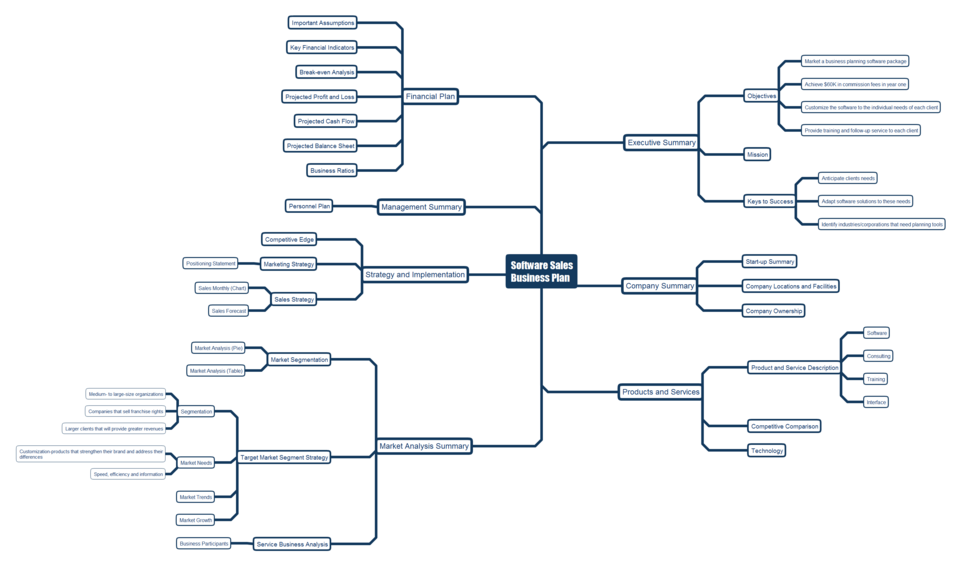 A simple template for a small business plan. (Image: CC BY-SA 4.0, via Wikimedia Commons)
Risks and Rewards of Entrepreneurship
| Risks | Rewards |
|---|---|
| Losing money if business fails | Freedom to make your own decisions |
| Long working hours | Potential for high profits |
| Uncertain income | Personal satisfaction from success |
| Handling all responsibilities | Chance to innovate and grow |
Example:
- Risk: Your bakery might not sell enough cakes, leading to losses.
- Reward: If successful, you could expand to a chain of bakeries!
Employability Skills in Action
To get a job, you need to showcase your skills. Here’s how:
- Resume Writing
- List your education, skills, and work experience clearly.
- Mock Interviews
- Practice answering questions like:
- "Tell me about yourself."
- "What are your strengths and weaknesses?"
- Practice answering questions like:
- Networking
- Attend job fairs, connect with professionals on LinkedIn.
Example Resume Tip: Instead of writing "Good at computers," say:
"Proficient in Microsoft Office and Google Workspace; trained in basic graphic design using Canva."
NEB-Style Questions and Answers
Short Answer (5 marks)
Q: What are the three key differences between an employee and an entrepreneur? A:
- Income: Employees earn fixed salaries; entrepreneurs earn variable income.
- Risk: Employees face low risk; entrepreneurs take high risks.
- Decision-Making: Employees follow orders; entrepreneurs make their own decisions.
Long Answer (10 marks)
Q: Explain the steps to start a small business in Nepal. Give an example. A:
- Idea: Choose a business that meets local needs (e.g., a tuition center).
- Plan: Write a simple plan with costs (e.g., rent, teacher salaries) and pricing (e.g., Rs. 1000/month per student).
- Funding: Save Rs. 50,000 or borrow from family.
- Register: Get a trade license from the local municipality.
- Start: Rent a small room, hire teachers, and advertise in schools.
- Grow: Use profits to expand (e.g., add more subjects or classes).
Example:
"I started a tuition center in my neighborhood. I charged Rs. 1000/month, advertised in local schools, and within a year, added science classes. Now, I earn Rs. 20,000/month."
Exam Tip: How to Score Full Marks
- Define Key Terms
- Always explain terms like entrepreneurship, employability, and business plan in your own words.
- Use Examples
- NEB loves real-life scenarios. Relate answers to local businesses (e.g., tea shops, tailoring, farming).
- Compare and Contrast
- Questions often ask for differences between employees and entrepreneurs—use tables or bullet points.
- Practice Short Answers
- For 5-mark questions, write 3–4 clear points with brief explanations.
- Link to Nepal
- Mention local opportunities (e.g., "In Nepal, many young people start small businesses like mobile repair shops.").
Summary Checklist
Before the exam, ask yourself: ✅ Can I define entrepreneurship and employability? ✅ Do I know the steps to start a small business? ✅ Can I compare an employee and an entrepreneur in a table? ✅ Have I practiced writing a short business plan? ✅ Do I understand the risks and rewards of being an entrepreneur?
Final Thought:
"Entrepreneurship is not for everyone, but employability skills help everyone. Whether you work for someone else or start your own business, planning and hard work are key!"
Based on the NEB +2 Humanities syllabus for Life Skill Education (LSE), unit 13.
Discussion
Loading…