Life Skill EducationUnit 610 min read
Health & Nutrition: Balanced Diet, Malnutrition, Food Safety & Hygiene
Unit 6 of Life Skill Education explores the science of nutrition, how to plan balanced meals, recognize malnutrition, and practice food safety—essential skills for lifelong health and well-being.
TAKEAWAYS:
- A balanced diet includes carbohydrates, proteins, fats, vitamins, minerals, and water in the right proportions for energy, growth, and disease prevention.
- Malnutrition (undernutrition or overnutrition) weakens the body and mind, and Nepal faces both due to poverty and changing diets.
- Food safety (cleanliness, proper storage, cooking) prevents diseases like diarrhea and food poisoning.
- Hygiene habits (handwashing, safe water, clean surroundings) reduce illness and improve quality of life.
- Nutrition labels help choose healthier foods by comparing calories, fats, sugars, and nutrients.
- Local foods (dal bhat, millets, vegetables) are often more nutritious and sustainable than processed imports.
What is Nutrition?
Nutrition is the science of how your body uses food to grow, stay healthy, and have energy. Food gives us nutrients—substances our body needs to work properly. Without the right nutrients, we get sick, tired, or weak.
Types of Nutrients
Every food has macronutrients (needed in large amounts) and micronutrients (needed in small amounts). Here’s how they help:
Balanced Diet: The Nepalese Plate
A balanced diet means eating different foods in the right amounts to stay healthy. The Nepalese diet (dal bhat, tarkari, achar) is naturally balanced if we add variety.
How to Plan a Balanced Meal
- Grains (50%): Rice, millet, wheat (energy).
- Proteins (20%): Dal, meat, fish, eggs (muscle repair).
- Vegetables (20%): Spinach, carrots, cabbage (vitamins).
- Fats (10%): Mustard oil, ghee, nuts (energy storage).
- Fruits & Water: Always include!
Example of a Balanced Nepali Meal:
| Food Item | Nutrient Provided | Why It’s Needed |
|---|---|---|
| Dal Bhat | Carbs + Proteins | Energy + muscle growth |
| Tarkari | Vitamins (A, C) | Strong immunity |
| Achar | Probiotics (gut health) | Digestion |
| Curd/Yogurt | Calcium + Protein | Bones & teeth |
| Fresh Juice | Vitamin C | Fights infections |
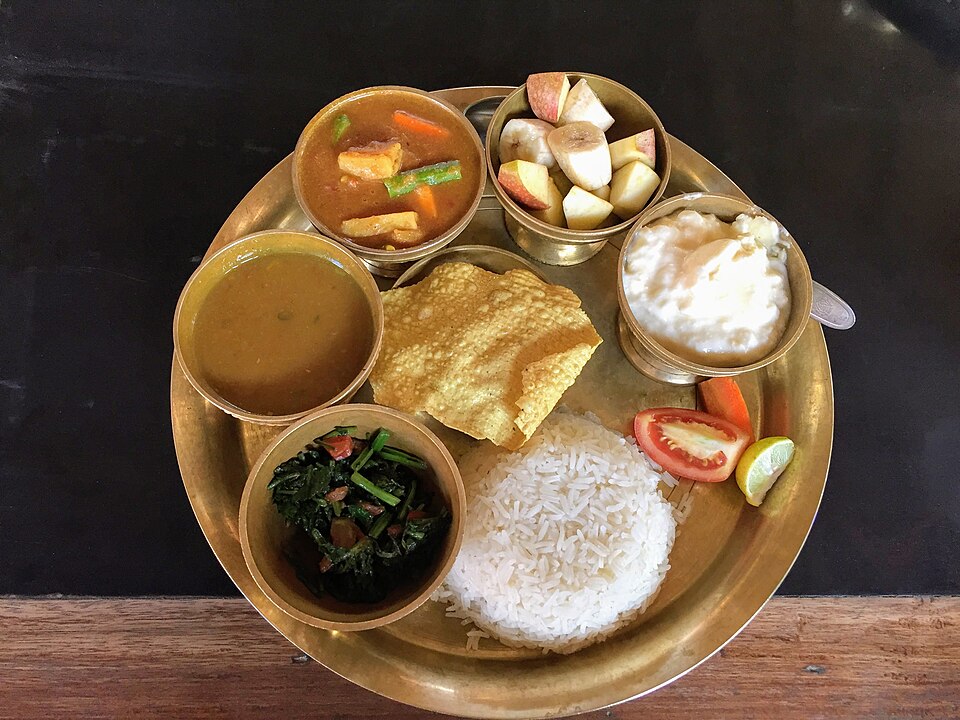 A traditional Nepali meal with all food groups. (Image: Subhashish Panigrahi, CC BY-SA 4.0, via Wikimedia Commons)
Malnutrition: When Nutrition Goes Wrong
Malnutrition happens when the body doesn’t get enough (undernutrition) or too much (overnutrition) of key nutrients.
Types of Malnutrition
| Type | Cause | Effects | Common in Nepal Due To... |
|---|---|---|---|
| Undernutrition | Not enough food/poor diet | Weakness, stunted growth, frequent illness | Poverty, lack of diversity in food |
| Overnutrition | Too much junk food/sugar | Obesity, diabetes, heart disease | Urban lifestyles, fast food culture |
| Micronutrient Deficiency | Lack of vitamins/minerals | Night blindness (Vit A), anemia (iron) | Monotonous diets (e.g., only rice) |
How to Prevent Malnutrition?
✅ Eat diverse foods (don’t rely only on rice or dal). ✅ Grow your own veggies (home gardens help). ✅ Avoid junk food (chips, soda, fried snacks). ✅ Eat local foods (millets, soybeans, leafy greens). ✅ Check for signs early (weight loss, tiredness, slow healing).
Food Safety: Keeping Food Safe to Eat
Unsafe food causes foodborne diseases like diarrhea, typhoid, or cholera. 40% of Nepali children under 5 get sick from unsafe food!
How Food Gets Contaminated
Food Safety Rules (The 4 Cs)
- Clean: Wash hands, utensils, and surfaces.
- Example: Wash hands before cooking and after using the toilet.
- Cook: Heat food properly to kill germs.
- Example: Cook meat at 70°C+ (no pink inside!).
- Chill: Store food at below 5°C (refrigerator).
- Example: Don’t leave dal bhat out for hours.
- Separate: Keep raw and cooked foods apart.
- Example: Use different knives for raw meat and veggies.
Hygiene: The First Step to Good Health
Poor hygiene spreads diseases. Diarrhea kills more Nepali children than any other disease!
Key Hygiene Habits
| Habit | How to Do It | Why It Matters |
|---|---|---|
| Handwashing | Wash with soap for 20 seconds | Removes germs before eating/cooking |
| Safe Water | Boil or filter water | Kills parasites (e.g., amoeba) |
| Clean Surroundings | Sweep, dispose waste properly | Stops pests (rats, flies) from spreading germs |
| Toilet Hygiene | Use toilet paper/water, wash hands | Prevents diarrhea & worm infections |
Reading Nutrition Labels
Food labels tell you what’s inside the packet. Learn to read them to choose healthier options.
What to Look For
| Label Term | What It Means | Healthy Choice? |
|---|---|---|
| Low Fat | ≤3g fat per 100g | Better than "full-fat" |
| High Sugar | >15g sugar per 100g | Avoid (e.g., biscuits, sodas) |
| Fortified | Extra vitamins/minerals added | Good (e.g., iodized salt) |
| Organic | No pesticides/chemicals | Healthier but often pricier |
Example Label Analysis:
Product: Biscuit
Serving Size: 30g
Calories: 140
Fat: 8g (High!)
Sugar: 12g (Avoid!)
Fiber: 1g
→ Verdict: Not healthy! Too much fat and sugar.
Common Nepali Food Myths (Busted!)
❌ "Only meat gives protein." ✅ Truth: Dal, eggs, and even soybeans have protein too!
❌ "Skipping breakfast saves calories." ✅ Truth: Skipping breakfast makes you hungrier later and may lead to overeating.
❌ "Drinking milk makes you fat." ✅ Truth: Fat comes from too much sugar/fried food, not milk!
❌ "Eating spicy food burns fat." ✅ Truth: Spicy food doesn’t burn fat—only exercise does!
Exam Tip: How to Score Full Marks in NEB LSE
NEB exams test concepts + real-life application. Here’s how to maximize marks:
1. Short Answer Questions (2-5 marks)
- What is a balanced diet? → Define + give 3 food examples from Nepal.
- How does malnutrition affect children? → Mention stunted growth + weak immunity.
- List 2 food safety rules. → Clean + Cook (or Chill/Separate).
Example Answer (5 marks):
"A balanced diet includes carbohydrates (rice), proteins (dal), fats (oil), vitamins (vegetables), and minerals (leafy greens). In Nepal, dal bhat with tarkari provides most nutrients. Lack of variety causes malnutrition, leading to diseases like anemia (iron deficiency) and kwashiorkor (protein deficiency in children)."
2. Long Answer Questions (10-15 marks)
- Explain food safety with examples from Nepal. → Use the 4 Cs + real Nepali mistakes (e.g., leaving food uncovered, reusing water for cleaning).
- How can a student prevent malnutrition? → Diet + hygiene (eat diverse foods, wash hands, grow veggies).
Example Answer (10 marks):
*"Food safety prevents diseases like diarrhea. The 4 Cs are key:
- Clean: Wash hands before cooking (many Nepalis skip this).
- Cook: Meat must be fully cooked (raw chicken causes salmonella).
- Chill: Store dal bhat in the fridge (leaving it out breeds bacteria).
- Separate: Use different plates for raw and cooked food. Example: In Kathmandu, street food stalls often reuse water for cleaning, spreading germs. Boiling water and washing hands can stop this."*
3. Practical/Application Questions
- Design a balanced meal for a school student. → Use the food pyramid + Nepali foods (e.g., roti, dal, salad, curd).
- How would you teach a village about food safety? → Posters, handwashing demos, clean water filters.
Quick Revision Checklist
Before the exam, ask yourself: ✔ Can I draw a food pyramid and label it? ✔ Do I know 3 causes of malnutrition in Nepal? ✔ Can I spot unsafe food in a picture? ✔ Do I remember the 4 Cs of food safety? ✔ Can I read a nutrition label and pick a healthier option?
Good luck! 🌟 (Remember: Health starts with what you eat—and how you eat it!)
Based on the NEB +2 Humanities syllabus for Life Skill Education (LSE), unit 6.
Discussion
Loading…